The landscape of B2B marketing technology is notoriously complex and often characterized by a sprawling collection of tools that, while once strategically sound, can become costly and inefficient over time. Heinz Marketing, a prominent consultancy in the B2B space, is championing the transformative potential of agentic Artificial Intelligence (AI) to address this pervasive challenge. Their research and development efforts are focused on creating AI agents capable of conducting comprehensive tech stack assessments, a process that has historically consumed significant resources and time, thereby unlocking greater leverage and strategic agility for marketing teams.
The Problem: A Museum of Martech Decisions
The average B2B marketing technology stack is frequently described as a “museum of decisions that made sense at the time.” This sentiment highlights a common reality: platforms are adopted based on immediate needs or executive directives, leading to an accumulation of tools that may not be fully utilized, may overlap significantly with existing solutions, or may fail to deliver on promised integration capabilities, particularly for complex attribution models. The inevitable consequence is a substantial financial outlay with a diminished return on investment.
This issue is underscored by data from Gartner’s 2025 Marketing Technology Survey, which revealed a concerning trend: organizations are now utilizing only 49% of their martech stack’s capabilities, a decline from 56% the previous year. This statistic implies that over half of the investment in marketing technology is not actively contributing to marketing output, representing a significant drain on budgets and resources. Historically, the rigorous process of auditing, mapping, and evaluating these stacks has been a laborious, multi-week undertaking. This complexity often leads to the postponement of such critical reviews, as the sheer scale of the task can be daunting.
The Solution: Agentic AI as a Martech Navigator
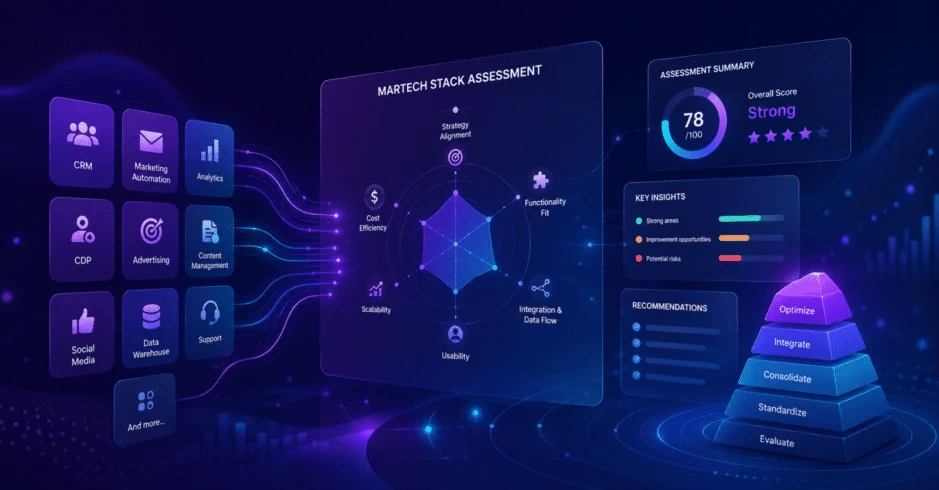
Heinz Marketing’s approach centers on developing “agentic AI,” a sophisticated form of AI that goes beyond mere task automation to perform complex analyses and make informed recommendations. Unlike generative AI tools that might assist in drafting vendor evaluation emails, agentic AI is designed to conduct the evaluation itself. This involves a deep dive into an organization’s existing tools, their intended functionalities, their actual usage, identification of redundancies, assessment of integration challenges, and pinpointing of critical gaps. The outcome is a structured, actionable assessment that can inform strategic decision-making.
The significance of this capability for B2B marketers cannot be overstated. Strategic decisions regarding the marketing technology stack represent one of the highest leverage points for marketing leaders. A well-optimized stack empowers teams to operate with speed and clarity, driving campaign effectiveness and market responsiveness. Conversely, a bloated, fragmented, or underutilized stack can impede progress, slowing down every campaign and initiative. Traditionally, conducting a thorough evaluation necessitated either expensive consulting engagements or diverting valuable internal resources from revenue-generating activities. Agentic AI, according to Heinz Marketing, fundamentally alters this equation by offering a more efficient and accessible pathway to stack rationalization.
Introducing the Resources & Tech Agent
Building on their previous work in developing AI agents for market analysis, as detailed in an earlier post on “How to Start Using AI Agents for Market Analysis,” Heinz Marketing is now focusing on an agent specifically designed to address the tech stack. This “Resources and Tech Agent” is envisioned as a purpose-built AI that can systematically assess a B2B marketing organization’s technology and resource footprint.
The core capabilities of such an agent would include:
- Comprehensive Inventory Mapping: Automatically compiling a complete list of all marketing technology tools currently in use, including software subscriptions, licenses, and associated costs.
- Functional Overlap Identification: Analyzing the capabilities of each tool to identify areas of significant overlap, highlighting redundant functionalities that could be consolidated.
- Gap Analysis: Determining where critical marketing functions are not adequately supported by existing technology, thereby revealing unmet needs.
- Integration Risk Assessment: Evaluating the compatibility and seamlessness of existing integrations, flagging potential points of failure or data silos.
- Usage and ROI Evaluation: Assessing the actual utilization rates of different tools and, where possible, correlating usage with marketing outcomes and return on investment.
- Vendor Performance Review: Analyzing contract terms, support levels, and user feedback to gauge vendor performance and identify potential areas for renegotiation or replacement.
- Emerging Technology Scouting: Identifying relevant new technologies that could enhance current capabilities or address identified gaps, aligned with strategic objectives.
The output of this agent would be a comprehensive “Resources & Tech Assessment Brief.” This structured document would provide a clear overview of the current stack, detailed function-by-function coverage, identified redundancies and gaps, an analysis of integration risks, and a prioritized list of actionable recommendations, ready for presentation to a strategy team.
The Unseen Costs of Martech Bloat
The true cost of a sprawling marketing technology stack extends far beyond the software subscription fees. The most significant impact is often the “dragging effect” it has on daily operations. Teams can find themselves spending valuable cycles working around tool limitations or navigating complex workflows instead of focusing on core marketing activities. Reporting processes become more cumbersome and time-consuming when data is scattered across multiple platforms. Onboarding new team members also becomes a more protracted affair, with a significant portion of their initial weeks dedicated to learning an intricate and potentially disjointed toolchain, delaying their contribution to strategic initiatives.
Manual stack assessments, while necessary, are inherently time-consuming. The right agentic AI approach promises to compress this process into a matter of days, delivering results with a speed and consistency that manual methods cannot match. This consistency is crucial, especially when presenting findings to executive leadership or a board. A structured, agent-produced brief can anticipate many of the questions that might arise, providing a defensible foundation for recommendations.
Furthermore, agentic AI can transform stack rationalization from a periodic, often chaotic, undertaking into a repeatable practice. As marketing strategies evolve, teams grow, and budgets shift, the technology stack needs to adapt. By enabling regular, efficient re-evaluations – perhaps quarterly – organizations can maintain an optimized and cost-effective martech environment, moving from an aspirational ideal to a practical reality.
Building the Agentic AI Tech Stack Agent: Key Considerations
The effectiveness of an agentic AI in performing tech stack analysis hinges on several critical factors that differentiate a truly valuable tool from a superficial one:
- Data Ingestion and Standardization: The agent must be capable of ingesting data from a wide array of sources, including financial records, software inventories, usage logs, and vendor documentation, and then standardizing this disparate information into a coherent format.
- Contextual Understanding: Beyond simply listing tools, the agent needs to understand the specific business context, strategic goals, and operational workflows of the B2B marketing organization. This allows for more nuanced evaluation of tool relevance and effectiveness.
- Algorithmic Sophistication: The AI must employ advanced algorithms for pattern recognition, anomaly detection, and predictive modeling to identify subtle overlaps, predict integration issues, and forecast potential future needs.
- Interoperability and Integration: The agent itself must be designed to integrate seamlessly with existing enterprise systems and data sources, ensuring a smooth flow of information.
- Security and Compliance: Given the sensitive nature of financial and operational data, robust security protocols and compliance with relevant data privacy regulations are paramount.
Implications for Marketing Leadership
For Chief Marketing Officers (CMOs) and Vice Presidents of Marketing, the advent of agentic AI in tech stack management offers a powerful new capability. The persistent questions regarding technology spend, the integration of AI into the existing stack, and the need for consolidation can be addressed with concrete, data-driven answers. An honest and thorough stack assessment could be completed within a week, providing a clear picture of current capabilities and future needs. This allows leaders to defend technology investments that demonstrably contribute to business objectives and to identify and divest from underperforming or redundant solutions, particularly crucial during budget season.
For revenue and operations leaders, this development also clarifies the underlying issues in data infrastructure. Many challenges attributed to attribution and reporting are, in fact, symptomatic of a poorly optimized tech stack. By surfacing these issues explicitly, agentic AI provides a clear starting point for remediation, leading to more accurate insights and improved decision-making.
Agencies and consultants managing multiple clients can also leverage this technology to enhance their service offerings. Tech stack assessment, often a standalone, time-intensive project, can be integrated into broader engagements, increasing the scale and consistency of their analytical work without a proportional increase in headcount.
The Indispensable Role of Human Judgment
Despite the remarkable capabilities of agentic AI, Heinz Marketing emphasizes that the technology is designed to augment, not replace, human decision-making. The agent’s role is to meticulously map the existing landscape, identify patterns, and present data-backed insights. The critical strategic decisions – such as whether to sunset a tool favored by the sales team but outgrown by marketing, the execution of change management plans, vendor negotiations, or the sequencing of complex stack migrations – remain firmly within the purview of human strategists.
Agentic AI empowers marketing leaders by providing them with a defensible starting point: factual data, structured analysis, and a clear framework for discussion. The nuanced understanding of organizational politics, the ability to “read the room,” and the creative problem-solving required to navigate complex internal dynamics are uniquely human strengths. The best marketing strategists, Heinz Marketing posits, do not wish to spend their days cataloging software; they want to dedicate their time to strategic thinking, advising, and innovation. Agentic AI liberates them to do precisely that, by handling the heavy lifting of data analysis and operational mapping.
Heinz Marketing’s Vision for the Future
Heinz Marketing is actively engaged in building and refining AI agents across various facets of their client work, with tech stack assessment identified as a particularly high-leverage application. They are approaching this development with deliberate caution, recognizing that an inaccurate analysis from an AI agent could be more detrimental than no analysis at all.
The firm’s vision is that marketing organizations that embrace agentic AI as a core operational infrastructure, rather than a peripheral experiment, will be best positioned for success in the coming years. These organizations will possess the agility to rapidly transition from identifying a challenge to formulating a grounded, actionable solution, repeatedly and effectively. Agentic AI is seen as the key enabler of this sustainable pace, with a clear-eyed understanding of resources and technology serving as the essential foundation.
For marketing leaders, CMOs, growth leaders, and agencies contemplating the integration of agentic AI into their operations and technology stacks, Heinz Marketing invites dialogue. They believe that sharing insights and experiences will be crucial in navigating this evolving landscape. Discussions can be initiated by reaching out to [email protected]. The future of B2B marketing technology management is being shaped by AI, promising a more efficient, strategic, and data-driven approach to an increasingly complex ecosystem.