

In an era where digital landscapes are increasingly dictated by algorithmic precision and automated decision-making, the discipline of Conversion Rate Optimization (CRO) is undergoing a fundamental transformation. Dzifa Mensah, a prominent specialist with over a decade of experience spanning web development, growth marketing, and cross-continental experimentation, has emerged as a leading voice advocating for a "human-first" approach to data. Her recent insights highlight a critical shift in the industry: as artificial intelligence (AI) takes over the mechanical aspects of testing, the value of human judgment and psychological intuition has reached an all-time high.
Mensah’s career trajectory reflects the broader evolution of the digital economy. Having navigated the distinct requirements of Software as a Service (SaaS), e-commerce, and the non-profit sector, she argues that the "scientific method"—hypothesis, testing, and learning—is the only reliable way to bridge the gap between corporate assumptions and actual user desires. For Mensah, optimization is not merely a technical exercise in increasing click-through rates; it is the rigorous practice of "making every interaction meaningfully better."
The Strategic Integration of Artificial Intelligence in Workflows
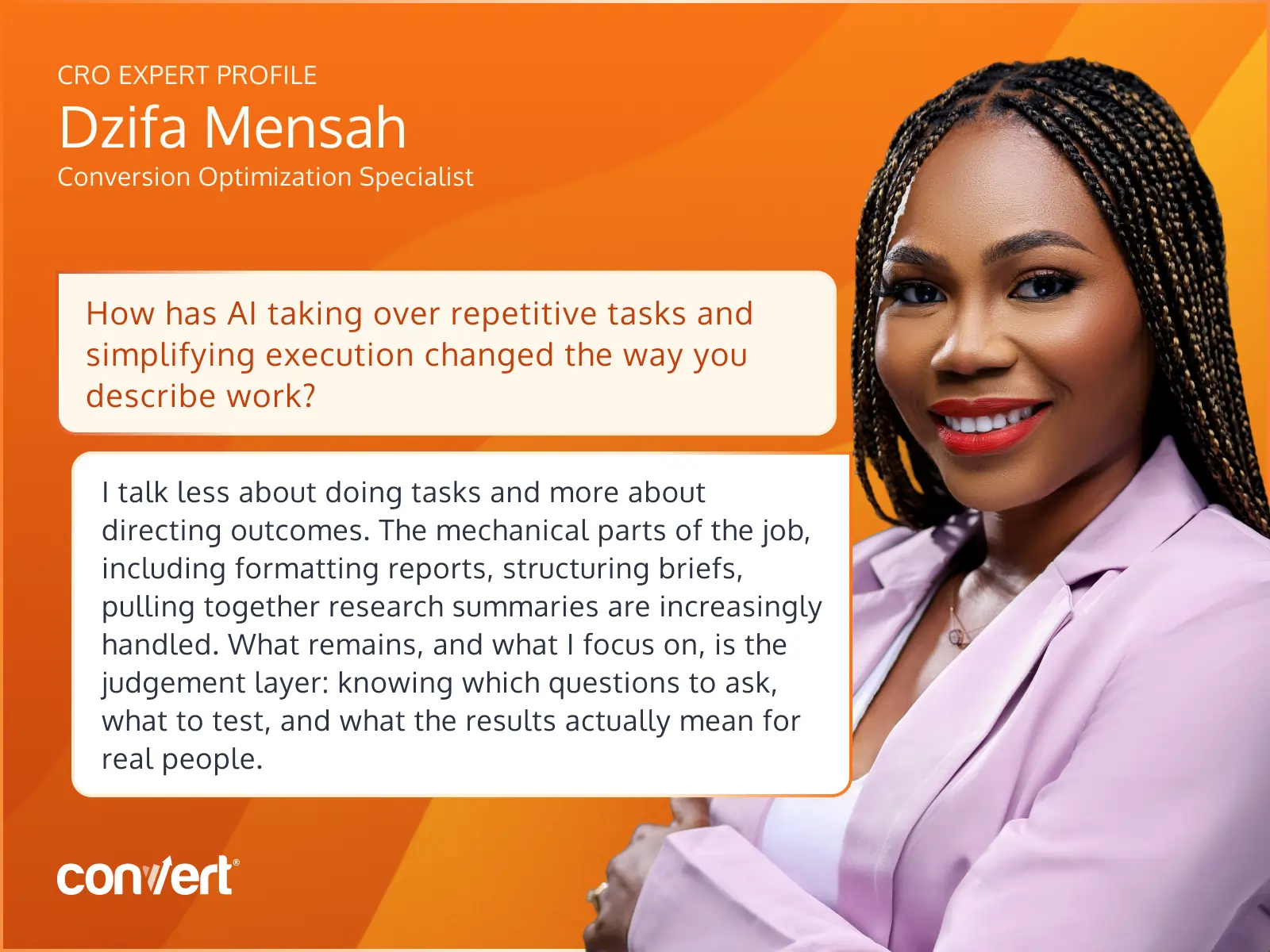
The rise of generative AI and machine learning has prompted many in the marketing sector to fear obsolescence. However, Mensah views these tools as essential "thinking partners" rather than replacements. In the contemporary CRO workflow, the pre-test phase—traditionally the most labor-intensive period—has been revolutionized. Where practitioners once spent dozens of hours manually consolidating quantitative data from analytics platforms with qualitative research from user interviews, AI now surfaces patterns and contradictions with unprecedented speed.
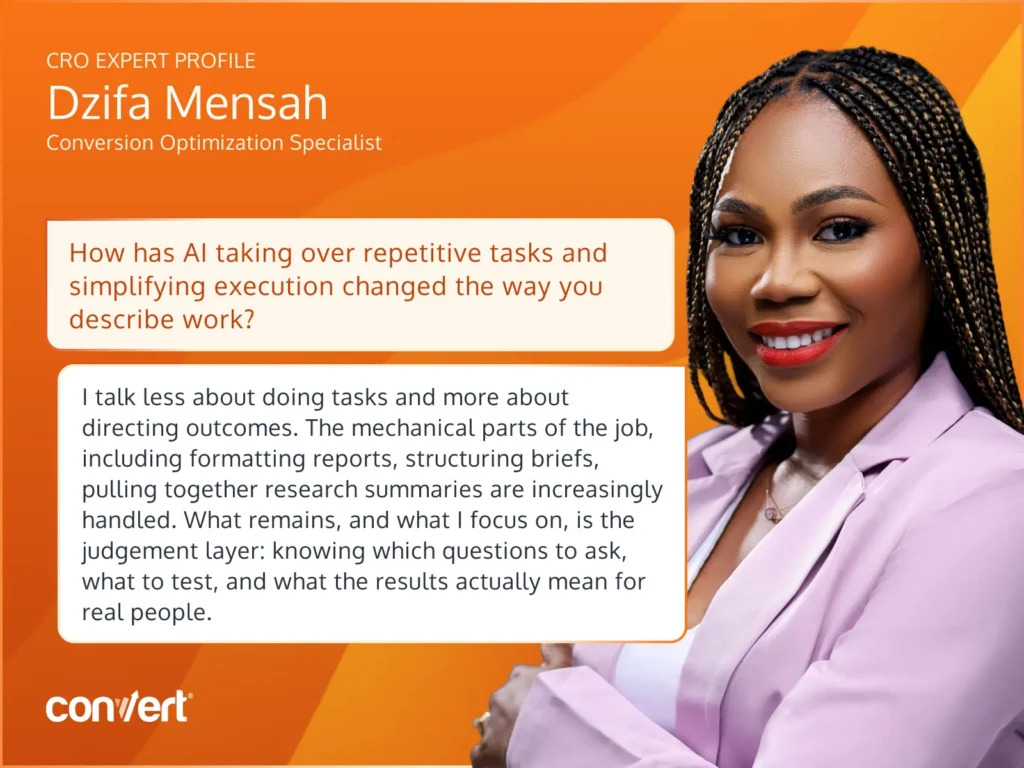
This efficiency allows specialists to translate raw data into sharper hypotheses. Beyond the analytical phase, Mensah identifies a significant shift in stakeholder management. AI is now utilized to draft test announcements and translate complex technical reports into narratives that resonate with non-technical executives. This shift marks a transition from "doing tasks" to "directing outcomes." By automating the formatting of reports and the structuring of briefs, practitioners are freed to focus on the "judgment layer"—the critical determination of which questions are worth asking in the first place.
The Localization Fallacy: A Case Study in Cultural Context
One of the most significant contributions to the field of experimentation is Mensah’s work on multivariate testing across international boundaries. In a landmark experiment involving French, English, and German versions of a single value proposition, Mensah challenged the industry assumption that similar demographics would react similarly to the same digital stimulus.

The results were telling: only the English-language website reached statistical significance. This outcome served as a humbling reminder to the digital marketing community that localization is a process that extends far beyond literal translation. Cultural context shapes how individuals interpret information, how they establish trust with a brand, and ultimately, how they act on a call to action.
Data from global marketing studies support this observation, suggesting that even minor nuances in copy tone or color theory can lead to a 20% to 30% variance in conversion rates between European markets. Mensah’s findings underscore the necessity of treating every geographical market as a unique psychological ecosystem rather than a translated copy of a primary site.
The Charity Sector: Optimizing for Generosity vs. Convenience
Perhaps the most complex application of CRO occurs within the charity sector, a field Mensah describes as the intersection of emotion, empathy, and trust. Unlike e-commerce, where the goal is often to reduce friction and increase the convenience of a purchase, optimizing for donations requires a fundamental rethink of what "conversion" means.
In the non-profit world, the user’s decision is rooted in generosity rather than self-interest. This necessitates a move away from standard "urgency" tactics—such as countdown timers or stock alerts—which can often backfire by appearing manipulative in a philanthropic context. Instead, optimization in this sector focuses on the "trust-building" journey. Mensah’s work suggests that transparency, storytelling, and the emotional resonance of the cause are the primary levers for conversion. This highlights a broader trend in CRO: the move toward "Ethical Optimization," where the long-term relationship with the user is prioritized over short-term metric spikes.
The Global CRO Market and Future Implications
The global Conversion Rate Optimization software market was valued at approximately $1.2 billion in 2022 and is projected to reach over $3.5 billion by 2030, according to industry analysts. This growth is driven by the increasing cost of customer acquisition (CAC) across platforms like Meta and Google. As it becomes more expensive to drive traffic to a website, the internal efficiency of that website becomes the primary driver of profitability.
However, as the tools for A/B testing become more accessible and automated, the "barrier to entry" for running a test has vanished. This has led to a "noise" problem, where companies run hundreds of insignificant tests that do not contribute to a deeper understanding of the customer. Mensah warns that practitioners who treat every test as a mere "metric chase" will struggle to provide value in an AI-driven future.
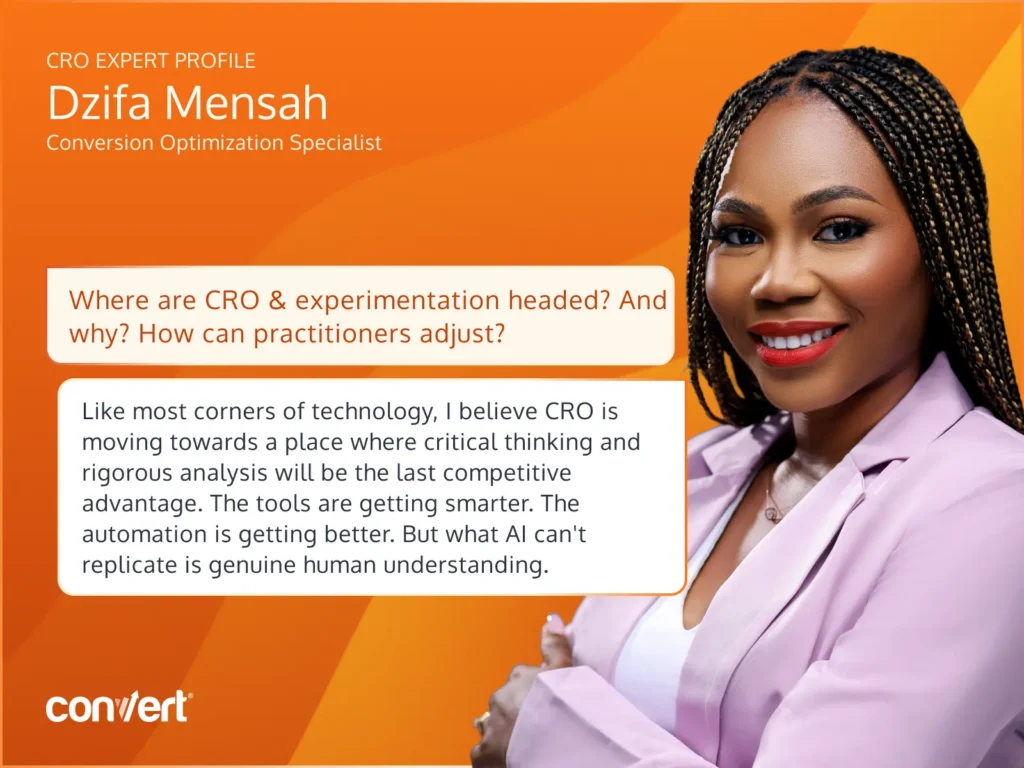
The future of the discipline, according to Mensah, lies in the ability to sit with a user during research and notice the "hesitation in their voice"—a detail that no dashboard can currently capture. Critical thinking and rigorous analysis are being positioned as the final competitive advantages in a world of automated execution.
Chronology of a Shift: From Web Development to Judgment Layer
The evolution of Mensah’s professional philosophy mirrors the timeline of the digital marketing industry over the last decade:
- The Technical Era (2010-2015): Focus on web development and the ability to build functional interfaces. The "tester" was often a developer who could hard-code variations.
- The Growth Marketing Era (2015-2020): Focus on "hacks" and rapid experimentation. The rise of low-code A/B testing tools allowed non-technical marketers to enter the field, leading to a surge in volume but often a decrease in test quality.
- The Analytical Era (2020-2023): Focus on data science and statistical significance. The industry began to realize that "winning" tests were often false positives without rigorous mathematical backing.
- The Human-AI Synthesis (2024 and beyond): The current phase, where AI handles the mechanical execution and data processing, while the human specialist focuses on psychology, ethics, and strategic direction.
Official Responses and Industry Sentiment
The sentiments expressed by Mensah are echoed by other leaders in the experimentation space. Organizations such as CXL and Speero have increasingly emphasized the "psychology of persuasion" over the "mechanics of the tool." Industry consensus suggests that the "Full-Stack Experimenter"—someone who understands data, design, and psychology—is the most sought-after profile in the current job market.
Stakeholders within major SaaS and e-commerce firms are also shifting their KPIs. Instead of asking "How many tests did we run this month?", forward-thinking executives are asking "What did we learn about our customer’s behavior this month?" This change in questioning reflects a broader understanding that a "failed" test (one that yields a negative result) is often more valuable than a "winning" test if it prevents a company from making a multi-million dollar strategic error.
Broader Impact: The "Thinking" Craft
As the interview with Dzifa Mensah concludes, the overarching theme is clear: the craft of optimization is moving from the fingers to the mind. The ability to interpret what results actually mean for "real people" remains a uniquely human capability.
For practitioners looking to adjust to this new reality, the advice is consistent: double down on analytical instincts, stay curious about user psychology, and view every experiment as a building block in a larger narrative of human understanding. In the high-stakes world of digital conversion, the most sophisticated algorithm is still no match for a well-placed "why."
The digital economy’s reliance on CRO is only expected to deepen as privacy regulations (such as the phasing out of third-party cookies) make it harder to target users externally. In this environment, the "on-site" experience becomes the final frontier for brand differentiation. Specialists like Mensah are not just optimizing buttons; they are architecting the digital relationships of the future.







