The landscape of search engine optimization (SEO) has undergone a seismic shift, particularly concerning the role and utilization of meta descriptions. Once a cornerstone for enticing organic search clicks, these brief textual summaries are now subject to a more dynamic and content-driven approach by search engines like Google, especially with the advent of generative artificial intelligence (AI). While Google has increasingly relied on its algorithms to dynamically generate search snippets directly from page content, official statements and expert opinions suggest that meta descriptions are far from obsolete, retaining a valuable, albeit nuanced, role in a website’s visibility and user engagement strategy.
Historically, search engine optimization efforts heavily emphasized the meta description tag. For years, website owners and SEO professionals meticulously crafted these short, descriptive summaries, aiming to encapsulate the essence of a web page and persuade potential visitors to click through from the search engine results page (SERP). The logic was straightforward: a compelling meta description, packed with relevant keywords and a clear call to action, would directly translate into higher click-through rates (CTRs) and, consequently, improved organic traffic. This era saw meta descriptions as a primary tool for influencing user perception and driving traffic, acting as a digital storefront window for every indexed page.
However, the evolution of search algorithms, particularly Google’s focus on delivering the most relevant and contextually accurate answers to user queries, has led to a significant change in how these snippets are generated. In recent years, Google has increasingly prioritized extracting information directly from the on-page content. This means that for many searches, Google’s algorithms will dynamically select the most pertinent sentences or phrases from a webpage to construct a snippet, often ignoring the pre-written meta description altogether. This shift is driven by Google’s commitment to providing users with the most accurate and up-to-date information, and its algorithms are designed to interpret the content’s context in relation to the specific search query.
The question of whether meta descriptions are still necessary has become a point of discussion and strategic re-evaluation within the SEO community. Google’s own Search Central blog offers a nuanced perspective on this matter. According to official documentation, Google does still utilize meta descriptions, though their prominence has diminished. The blog states, "Google primarily uses the content on the page to automatically determine the appropriate snippet. We may also use descriptive information in the meta description element when it describes the page better than other parts of the content." This indicates a conditional usage; meta descriptions are still considered, but only when they demonstrably offer a superior summary compared to algorithmically generated content.
Furthermore, Google’s guidance explicitly recommends maintaining meta descriptions for critical URLs. The Search Central post advises, "…at the very least, create a description for the critical URLs like your home page and popular pages." This endorsement, however qualified, underscores that these elements retain a functional purpose for key pages that represent a brand or offer significant user value.
Adding to this perspective, John Mueller, a prominent Search Advocate at Google, provided further insight during a recent discussion on Reddit. When asked about the utility of meta descriptions, Mueller suggested, "…sometimes it [a meta description] helps you to figure out a clear focus for a page. Overall, I think it’s still worthwhile to do so for individual pages that you care about, but it’s definitely not a requirement." This statement reinforces the idea that while not a mandatory ranking factor, meta descriptions can serve as a valuable organizational tool for webmasters and a potential signal for search engines when they accurately reflect the page’s core purpose. Mueller’s commentary suggests that the act of writing a meta description can itself be beneficial for internal content strategy, forcing clarity on a page’s subject matter.
The consensus among many SEO practitioners is that there is virtually no downside to including meta descriptions, especially for strategically important pages. The prevailing advice is to continue implementing them for key landing pages, category pages, and product pages. These types of pages are often rich in critical information – detailed service or product descriptions, technical specifications, customer reviews, and testimonials – that can be challenging for algorithms to condense accurately and concisely into a user-friendly snippet. In such cases, a well-crafted meta description can act as a vital bridge, ensuring that essential information is presented effectively to potential visitors.
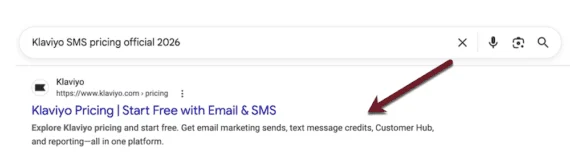
A practical example illustrating the continued relevance of meta descriptions can be observed in the case of Klaviyo’s SMS pricing page. The meta description for this page reads: "Explore Klaviyo pricing and start free. Get email marketing sends, text message credits, Customer Hub, and reporting – all in one platform." When a search query like "Klaviyo SMS pricing official 2026" was performed, both Google’s search result snippet and AI language models like ChatGPT reportedly utilized this meta description. This observation, supported by visual evidence (an image accompanying the original report showing the SERP), demonstrates that when a meta description is well-written and accurately reflects the page’s content, it can still be the preferred source for snippet generation, even by sophisticated AI systems. This suggests that meta descriptions can serve as a crucial input for both traditional search engine algorithms and emerging AI-driven content summarization tools.
The shift in Google’s snippet generation practices has naturally led to a re-evaluation of how meta descriptions should be written. In the past, the emphasis was heavily on keyword stuffing to ensure a page ranked for specific terms. However, with Google’s increasing ability to understand semantic search and context, the focus has moved towards creating descriptions that are both informative and compelling for users. For high-intent pages, such as product detail pages or those offering specific services, the goal remains to provide a concise yet comprehensive overview that encourages a click.

For large, data-driven websites with vast inventories, such as e-commerce platforms with thousands of products, manually crafting meta descriptions for every single page is an unfeasible task. In these scenarios, Google recommends a programmatic approach. This involves using AI platforms like ChatGPT or Claude, or specialized applications that leverage these models, to generate meta descriptions at scale. However, this automated process requires careful oversight and prompting to ensure accuracy and relevance.
The advent of Generative AI platforms has introduced new possibilities and challenges. While these tools can efficiently generate content, including meta descriptions, the human element remains indispensable. The original article emphasizes the need for manual review by humans, particularly for pages that experience higher traffic, feature popular products, or drive significant conversions. This human oversight is critical to ensure that AI-generated descriptions align with brand voice, marketing objectives, and factual accuracy. The implications here are significant: AI can augment the process, but it cannot fully replace the strategic thinking and quality control that human expertise provides.
In essence, the current state of search and AI indicates that both Google and generative AI platforms are geared towards presenting snippets and answers that directly benefit users. When a meta description effectively serves this purpose by providing a clear, concise, and accurate summary of a page’s content, it is likely to be utilized. The ability of sites to control their appearance in Google’s SERPs has become more complex, with algorithms playing a larger role. However, meta descriptions remain a tangible tool that webmasters can use to influence this presentation, particularly for pages where detailed or nuanced information needs to be effectively communicated.
The implications of this evolving dynamic extend beyond mere SEO tactics. For businesses, a well-optimized meta description can still be a powerful differentiator in a crowded digital marketplace. It acts as a crucial first impression for potential customers navigating the complexities of search results. By providing a clear and compelling summary, businesses can guide users to the most relevant information, thereby improving user experience and increasing the likelihood of conversion.
The chronological progression of meta description usage highlights a significant shift in the search engine optimization paradigm. From its early days as a direct influencer of search rankings and user clicks, it has transitioned into a more nuanced tool. Initially, meta descriptions were a primary target for keyword optimization, aiming to directly match search queries. This period, roughly spanning the late 1990s and early 2000s, saw meta descriptions as a crucial element in on-page SEO, with search engines giving them significant weight.
As search engine algorithms became more sophisticated, particularly with the introduction of semantic analysis and natural language processing, the direct impact of meta descriptions on rankings diminished. Google, in particular, began to focus more on the overall quality and relevance of page content. This led to the trend of dynamic snippet generation, where algorithms would pull relevant text directly from the page based on the user’s query. This evolution was noticeable throughout the 2010s, with an increasing number of SERPs featuring dynamically generated snippets rather than meta descriptions.
The recent emergence and rapid integration of generative AI into search and content creation have introduced a new layer of complexity. AI models, like those powering chatbots and advanced search features, are capable of processing and summarizing vast amounts of text. This has led to a renewed interest in structured data and clear, concise summaries. While AI can independently generate summaries, the original meta description often serves as a highly curated and authoritative source of information, especially for specific product pages or technical documentation. This has led to the current situation where meta descriptions are still considered valuable, but their role is more about providing a clear signal to both search engines and AI models, rather than being a direct ranking factor.
The ongoing debate around meta descriptions underscores a broader trend in digital marketing: the interplay between human strategy and artificial intelligence. While AI can automate and scale many tasks, human oversight, strategic thinking, and creativity remain paramount. In the context of meta descriptions, this means that while AI can help generate them efficiently for large websites, the strategic decision of what information to highlight and how to phrase it for maximum user appeal still rests with human professionals. The implication is that the value of meta descriptions lies not just in their technical implementation but in the strategic intent behind their creation.
The continued use and recommendation of meta descriptions by Google, coupled with their observed utility in AI-generated snippets, paint a picture of enduring relevance. While their function has evolved from a primary ranking signal to a valuable descriptive element, their ability to influence user perception, guide search algorithms, and inform AI summarization tools remains significant. For businesses and content creators, understanding this nuanced role and continuing to craft effective meta descriptions for their most critical pages is a prudent strategy for maintaining visibility and engaging users in the ever-evolving digital landscape. The key takeaway is that while search engines and AI are becoming increasingly autonomous, a well-crafted meta description acts as a powerful, human-authored guide, ensuring that a page’s essence is accurately and compellingly communicated.