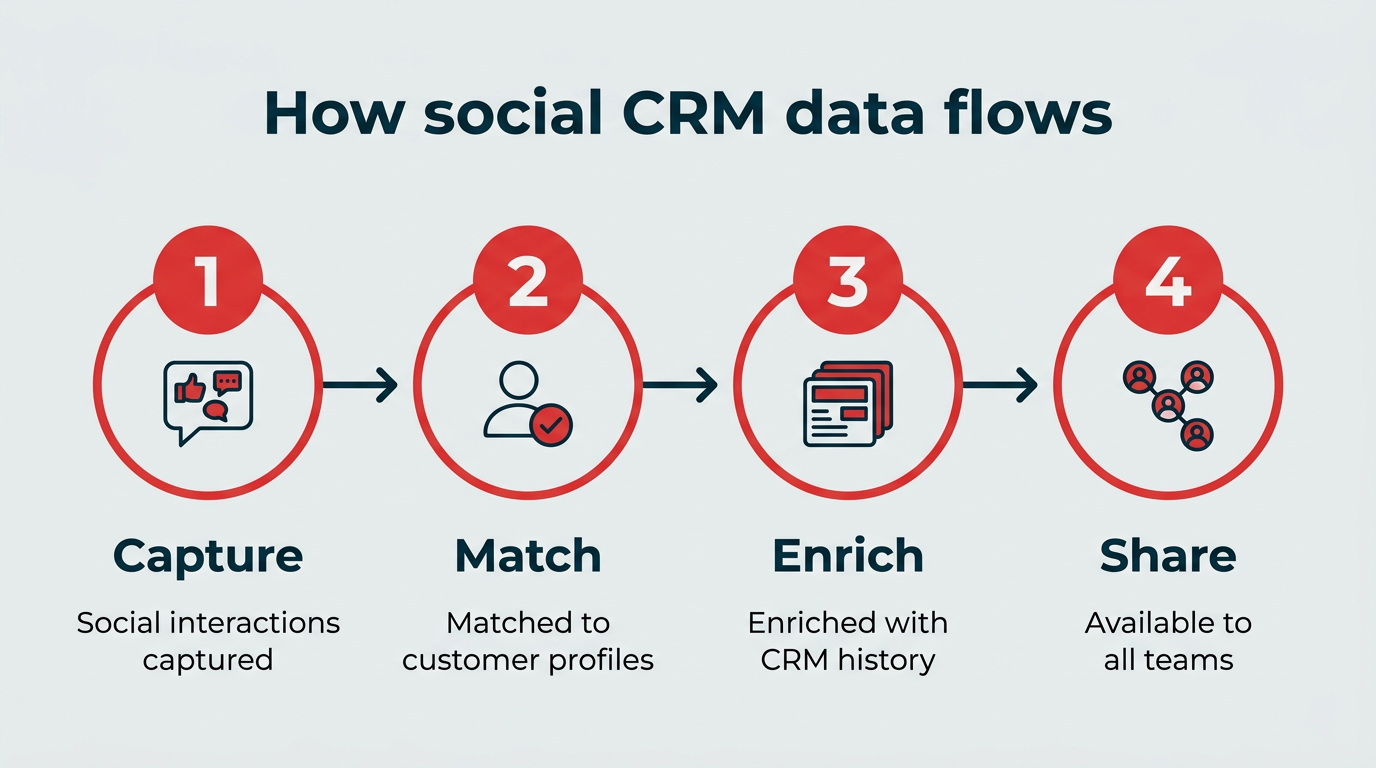
The landscape of customer relationship management is undergoing a significant transformation, driven by the pervasive influence of social media and the accelerating adoption of artificial intelligence. Social Customer Relationship Management (Social CRM) represents a strategic evolution, integrating real-time social media interactions—such as comments, direct messages, brand mentions, and sentiment signals—directly into traditional CRM systems. This integration provides businesses with a holistic, dynamic view of their customers, prospects, and leads, empowering customer-facing teams with unprecedented context and enabling more effective, personalized engagement.

The Evolution of Customer Engagement: From Traditional to Social CRM
Historically, CRM systems focused on structured data derived from past customer actions: email correspondence, purchase history, support tickets, and phone call logs. This traditional approach provided a valuable, albeit retrospective, view of customer interactions. However, the exponential growth of social media platforms has fundamentally altered how customers engage with brands. Today, social channels are often the first point of contact for inquiries, complaints, product comparisons, and purchase decisions.

This shift necessitated a new paradigm. Social CRM emerged to bridge the gap between static customer records and dynamic, real-time social conversations. It takes the insights gleaned from social listening tools, including nuanced sentiment analysis and wider conversational trends, and enriches existing CRM profiles. The distinction is critical: traditional CRM is largely reactive and historical, while social CRM is proactive, relationship-focused, and leverages real-time data.
| Traditional CRM | Social CRM |
|---|---|
| Focuses on past actions | Focuses on real-time conversations |
| Tracks structured data | Tracks structured + unstructured data |
| Usually managed by one team | Shared across marketing, sales, and support |
| Mostly reactive | Proactive and relationship-focused |
| Channel focus: email and phone | Channel focus: social platforms |
| Data freshness: historical | Data freshness: real-time |
The implementation models for Social CRM vary, encompassing built-in social tools within existing CRM platforms, standalone social media management platforms that integrate with CRMs, and increasingly, hybrid social operating systems. The latter, exemplified by platforms like Hootsuite Social OS, natively handle listening, publishing, and engagement, augmented by AI-powered insights, which are then fed into connected CRM systems like Salesforce or Microsoft Dynamics 365. This blurs the lines between social tools and CRM, typically to the benefit of cross-functional teams.
The Critical Role of Social CRM in 2026 and Beyond
The relevance of Social CRM is amplified by the current digital landscape and future projections. By 2026, social platforms are not merely secondary communication channels but primary touchpoints where significant customer interactions occur. Consumers expect brands to be present and responsive in these spaces. Data from Forrester’s Global Customer Experience Index reveals a widening gap between the customer experience brands intend to deliver and what customers actually receive. Social media often makes this gap publicly visible.
Responsiveness is a key differentiator. According to Hootsuite’s Social Media Consumer Report, 53% of respondents prioritize quick responses to direct questions and comments on social media. Conversely, a failure to interact or respond to community engagement leads to disengagement, with 32% of consumers unfollowing brands that neglect their social communities. This highlights the tangible cost of inaction.
Furthermore, the sheer volume of social interactions has rendered manual data input impractical. A Social CRM setup that once relied on human agents copying notes into a CRM field is unsustainable at today’s scale. Automation, powered by intelligent integrations and AI, is essential for connecting social data to customer records, making it usable and actionable. This ensures that valuable insights from thousands of daily interactions are not lost but rather contribute to a richer, more comprehensive customer profile.
Key Benefits: Enhancing Customer Experience and Operational Efficiency
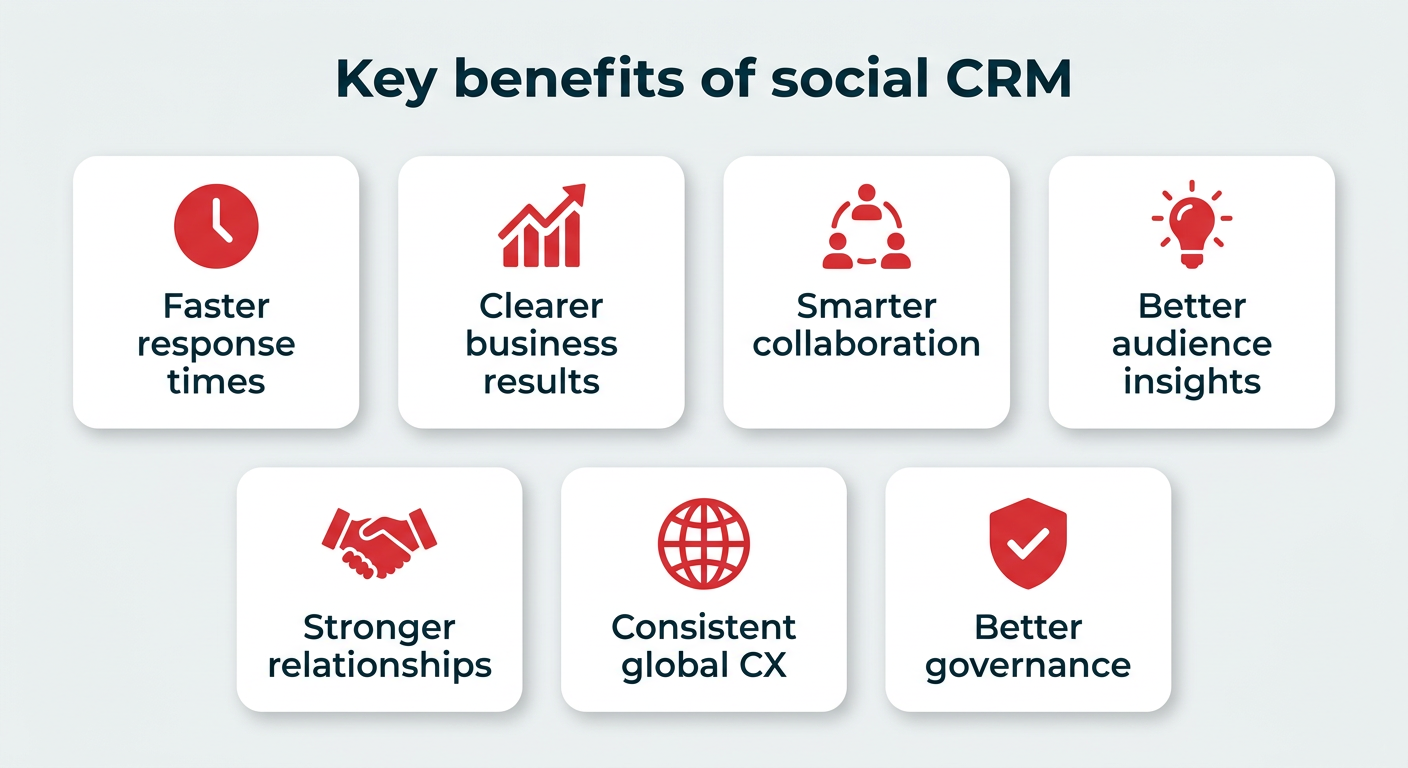
Social CRM tools consolidate customer conversations, enabling marketing, sales, and customer service teams to maintain consistent messaging, avoid redundant efforts, and stay aligned. The primary benefits manifest in several critical areas:
- Faster Response Times: With 37% of consumers expecting a response on the same day, instant context provided by Social CRM can be the difference between a resolved issue and a lost customer. By centralizing interactions and customer history, teams can address inquiries swiftly and effectively.
- Clearer Business Results: Linking social activity to CRM data allows for more accurate attribution of social marketing efforts to actual business outcomes like purchases or subscriptions, proving social ROI.
- Smarter Collaboration: Breaking down departmental silos, Social CRM ensures all customer-facing teams have access to the same comprehensive customer view, fostering consistent and coordinated engagement.
- Better Audience Insights: Beyond individual customer interactions, Social CRM, especially with integrated social listening, provides a wider lens into market trends, competitor activities, and evolving customer needs.
- Stronger Relationships: Personalized, timely, and relevant interactions, facilitated by a deep understanding of customer history and preferences, naturally lead to stronger customer loyalty and advocacy.
- Consistent Global Customer Experience: For brands operating across diverse regions, Social CRM helps maintain a unified brand voice and service quality across different languages and cultural contexts.
- Improved Governance and Compliance: Centralized management of social interactions ensures adherence to brand guidelines, regulatory requirements, and data privacy policies.
Navigating the Landscape: Types and Implementation
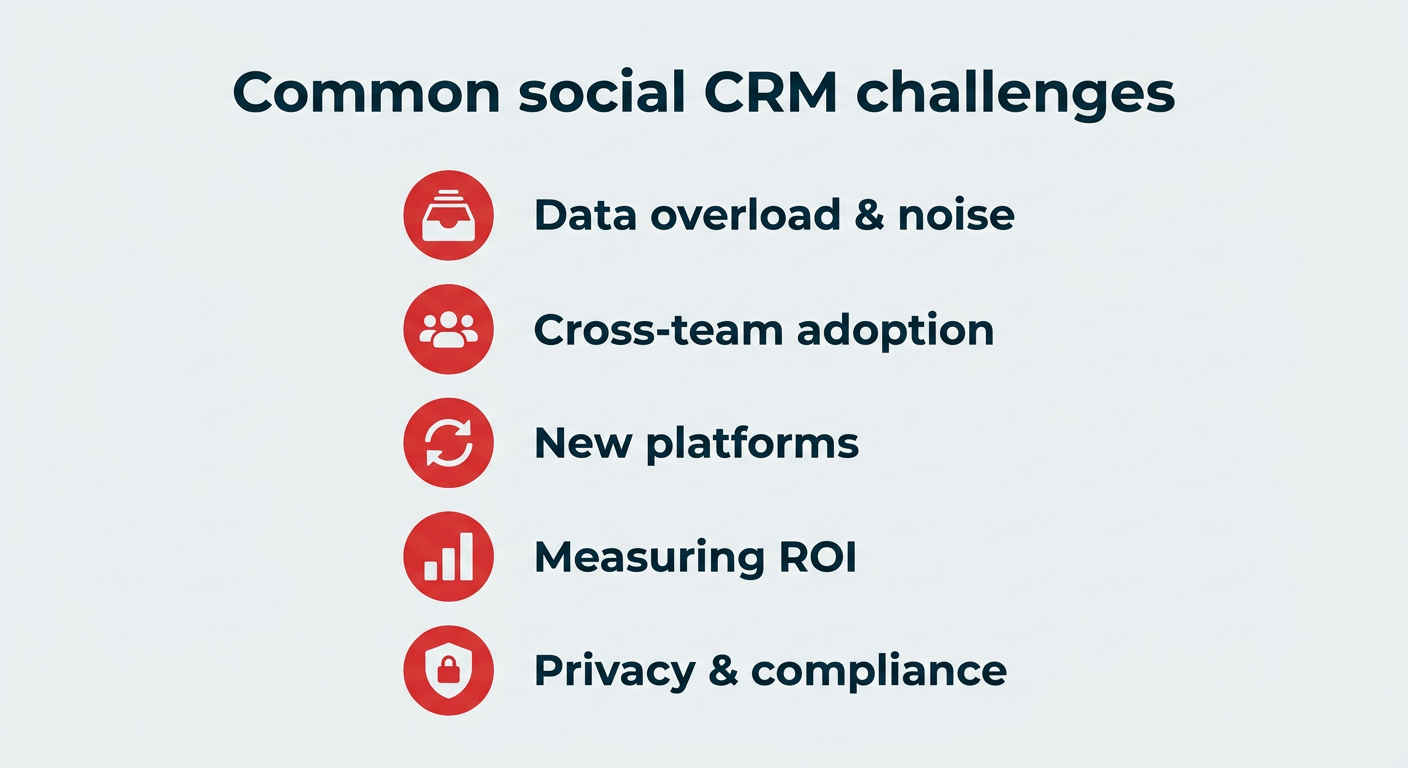
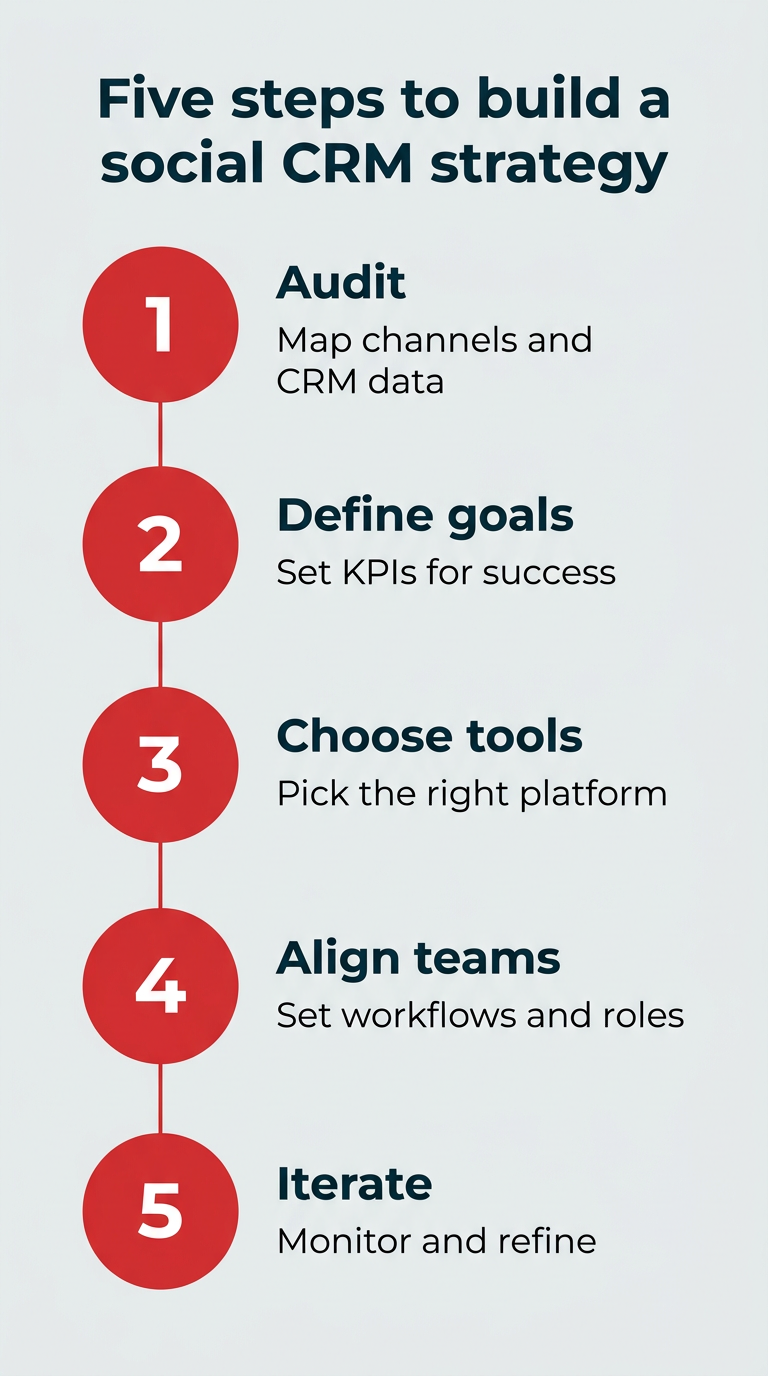
Implementing an effective Social CRM strategy requires a structured approach to address challenges such as managing data volume, ensuring cross-team adoption, and keeping pace with rapidly evolving social platforms. The process typically involves five key steps:

- Audit Current Setup: Begin by mapping existing social channels and the data residing in the CRM to identify gaps and areas where social insights can add the most value.
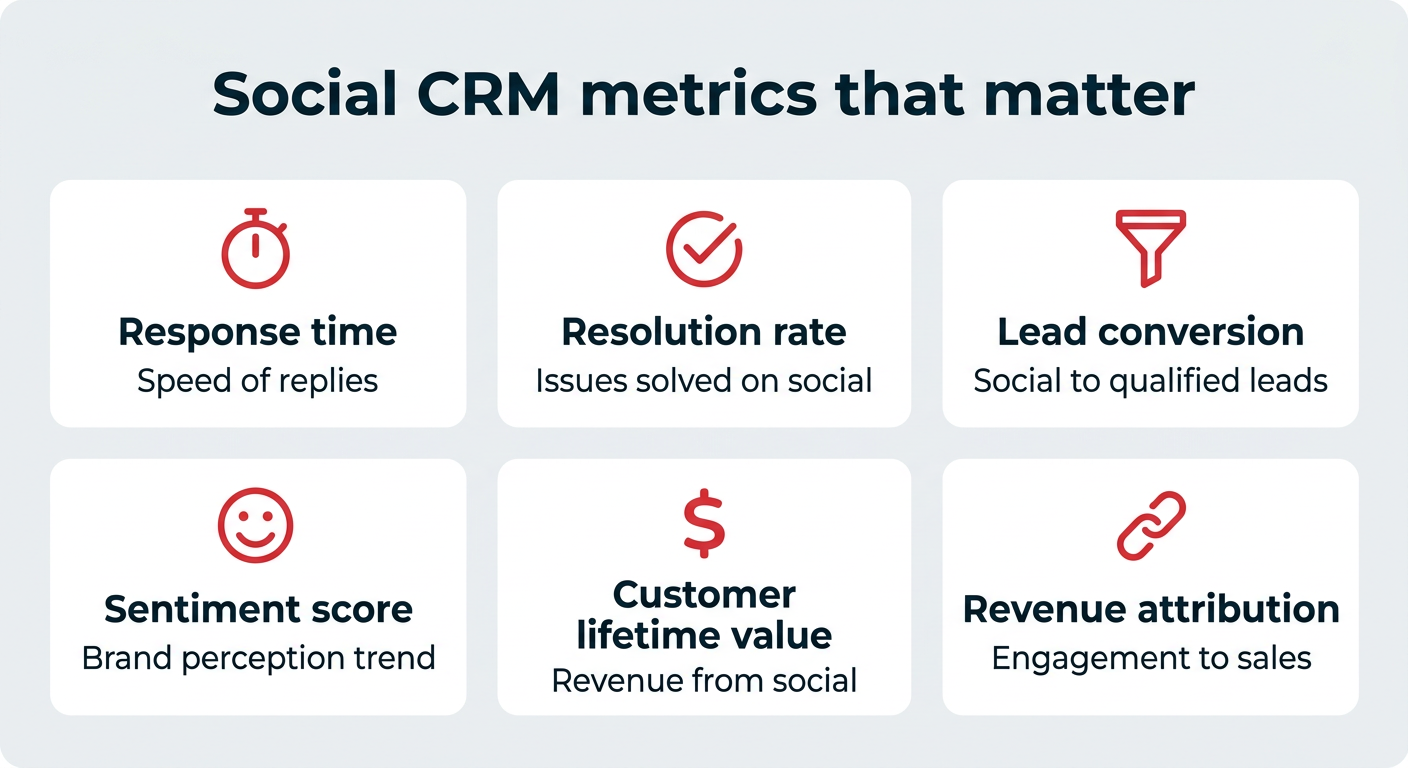
- Define Goals and KPIs: Clearly articulate success metrics, whether focusing on accelerated support, enhanced lead qualification, or more impactful content. Key Performance Indicators (KPIs) like response time, resolution rate, lead conversion rate, sentiment score, customer lifetime value (CLV), and revenue attribution are crucial.
- Choose Tools and Integrations: Select platforms that seamlessly connect social conversations to the CRM, minimizing manual data transfer. Solutions like Hootsuite offer comprehensive social media management, listening, and engagement, with integrations into leading CRMs.
- Align Teams on Workflows: Establish clear roles, routing rules, and response guidelines across marketing, sales, and support to ensure consistent handling of social interactions.
- Monitor, Measure, and Iterate: Regularly review KPIs and adjust the strategy based on ongoing learning. AI-driven insights can shorten this feedback loop, flagging shifts before they appear in traditional reports.
The AI Revolution in Social CRM
Artificial intelligence is fundamentally reshaping Social CRM, transforming how businesses process, interpret, and act upon social data. Gartner now defines CRM sales platforms as inherently AI-driven systems, underscoring this shift. AI handles the sorting, analysis, and prioritization that once consumed significant manual effort, making customer data actionable in real-time.
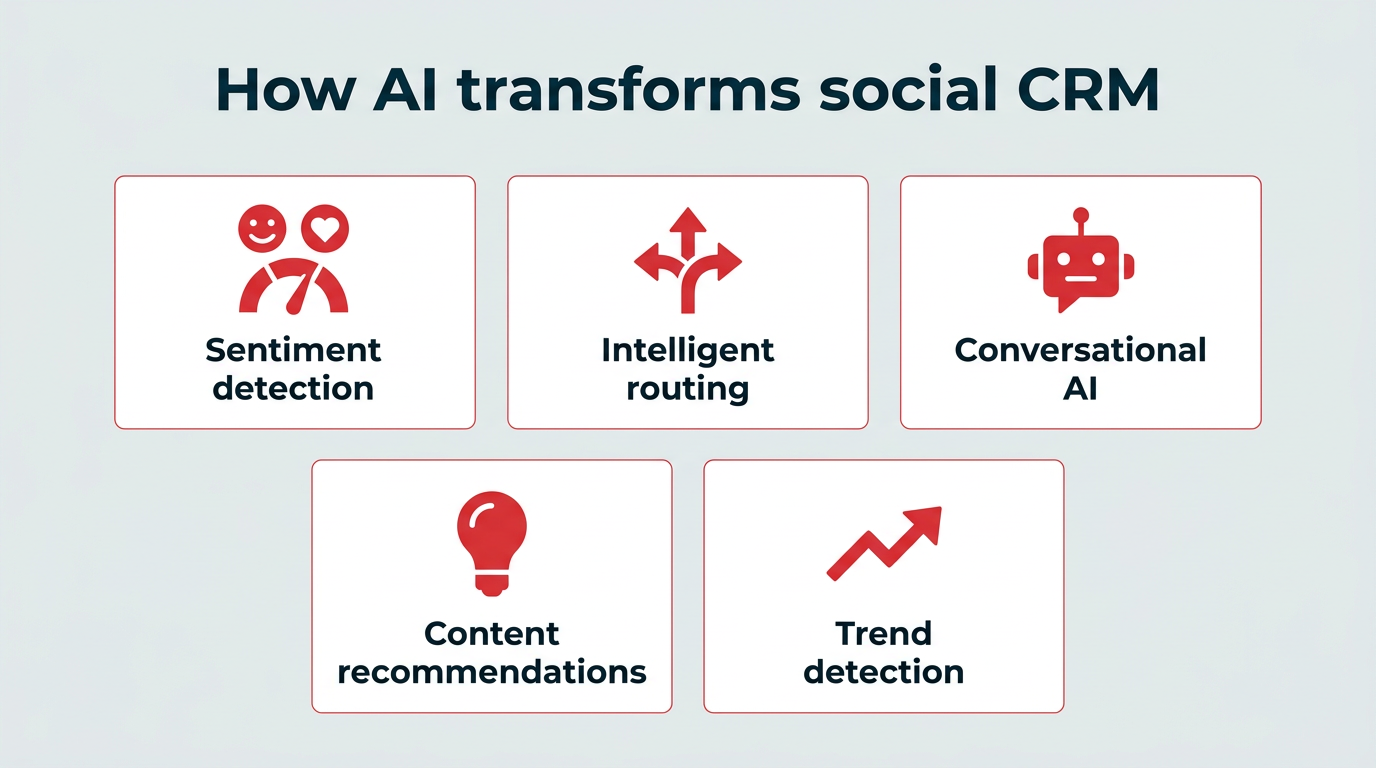
Key areas where AI significantly impacts Social CRM include:
- Sentiment Analysis: AI algorithms can instantly detect the emotional tone of social interactions, categorizing comments as positive, negative, or neutral, and flagging urgent issues.
- Intelligent Routing: Based on sentiment, keywords, and user history, AI can automatically route social messages to the most appropriate team or agent for resolution, improving efficiency and response times.
- Predictive Analytics: AI can analyze social engagement patterns to identify potential leads, predict customer churn, or anticipate emerging trends, informing proactive strategies.
- Automated Responses: For routine inquiries, AI-powered chatbots can provide instant, accurate responses, freeing human agents to focus on complex issues.
- Content Generation and Optimization: AI can analyze audience preferences and trending topics from social data to suggest or even generate relevant content ideas, enhancing marketing efforts.
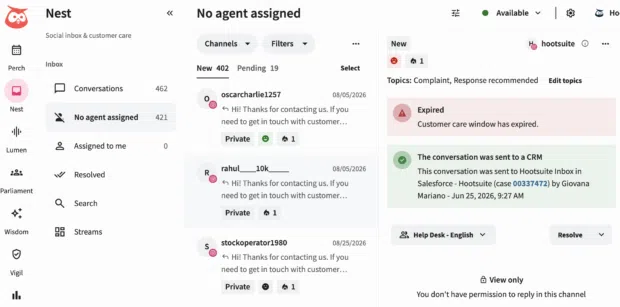
Platforms like Hootsuite Social OS exemplify this integration, where Lumen handles AI-powered listening and insights, Nest centralizes social conversations, and Wisdom, the AI agent layer, connects these signals to actions across integrated systems. The goal is not to replace human interaction but to augment it, ensuring agents have comprehensive context before engaging. However, Forrester cautions that poorly implemented AI self-service can damage customer experience, emphasizing the need for a balanced approach.

AI-powered social listening, in particular, strengthens Social CRM by converting unstructured social conversations into actionable signals. Unlike manual monitoring, AI models can detect subtle nuances like sarcasm, emotional drivers, and topic clusters across multiple languages and markets simultaneously. This allows teams to identify frustration trends early, optimize campaigns, and pivot strategies in real-time.
Social CRM Across Departments: Customer Service, Sales, and Marketing
The benefits of Social CRM extend across core business functions:
Customer Service:
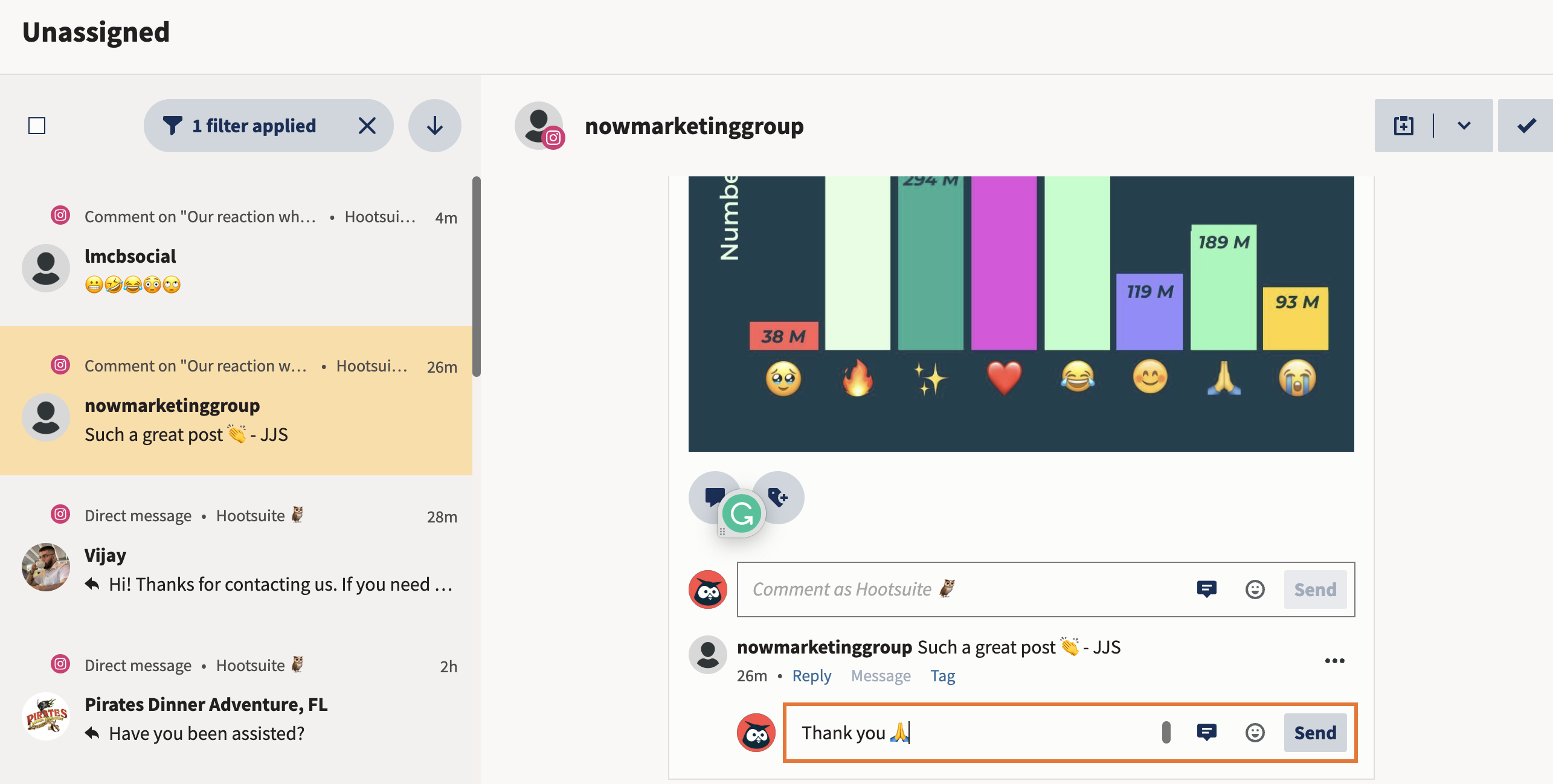
Social CRM significantly enhances customer service by improving relationship quality and enabling faster, smarter responses. Research consistently shows a positive correlation between using social media for CRM and improved customer relationship quality, largely due to personalized and timely interactions. For instance, brands like Starbucks effectively leverage Social CRM by responding quickly and publicly to negative feedback on platforms like Instagram, offering immediate assistance or moving conversations to private channels for follow-up. This proactive engagement builds trust and demonstrates brand responsiveness.
By connecting social messages to comprehensive customer profiles, Social CRM tools allow customer support teams to view a customer’s full history across channels. This context eliminates the need for customers to repeat themselves, leading to consistent, personalized, and efficient support. Automated routing, as seen in Hootsuite’s Nest, directs urgent issues based on topic, sentiment, and account priority, preventing delays and improving resolution rates.
Sales:
Social CRM is a potent tool for lead generation and nurturing. Social connections can evolve into qualified leads when insights from social interactions are integrated with CRM records. A prospect engaging with multiple product posts, saving comparative content, and sending pricing inquiries provides rich intent signals that traditional contact lists often miss. This allows sales representatives to prioritize outreach based on genuine interest, rather than alphabetical order or outdated lead scores.
For example, KiwiCo successfully used insights from Instagram Reels engagement to connect with audiences authentically, recognizing Reels as a significant acquisition lever when understanding audience needs. Social CRM also enhances lead qualification by adding social activity to profiles, giving sales teams a deeper understanding of prospects’ interests and pain points. AI further refines this by scoring leads based on engagement patterns, guiding reps to the most promising social conversations. Nurturing remains crucial, with offers like newsletters or helpful resources keeping relationships warm until conversion. Measuring the value of social leads involves tagging them in the CRM to integrate into standard pipeline reporting, allowing for accurate assessment of win rates, deal sizes, and sales cycle lengths, thereby justifying social media budget allocations, especially for social ads.
Marketing:
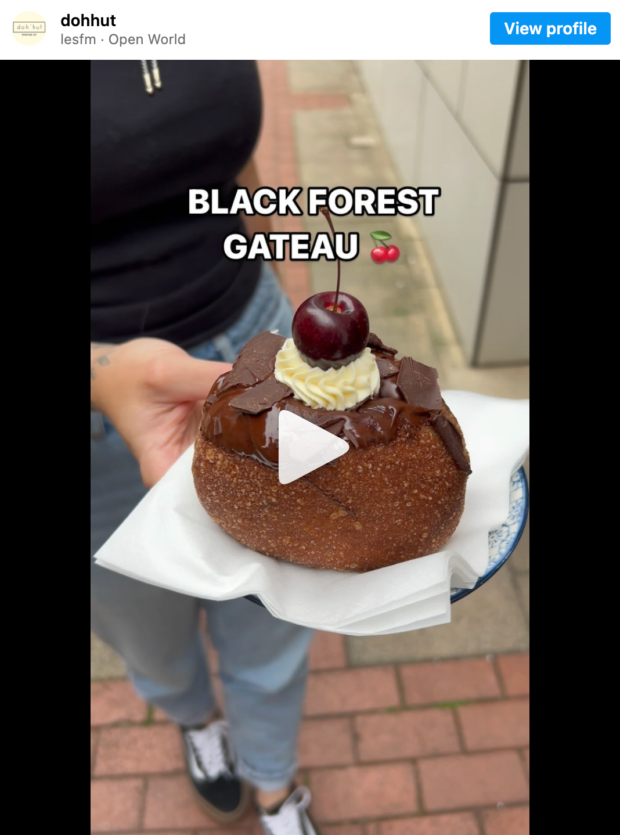
Social CRM provides a fuller picture of customer expectations, enabling marketing teams to create more targeted and relevant content. Instead of guesswork, marketers can address the specific needs and interests their target audience has already expressed on social media. The Hootsuite Consumer Report indicates that 40% of respondents unfollow brands that post boring or irrelevant content. Social CRM helps retain these hard-earned followers by informing content strategy. For example, dohhut’s Instagram Reels, featuring doughnuts being torn open to reveal fillings, directly address audience curiosity, driving high engagement (over 1,300 likes and 57 comments on a recent Reel).
Social listening tools integrated with Social CRM expand marketing insights beyond direct engagement. They track mentions, keywords, hashtags, industry trends, and competitor activities, providing a wider understanding of public sentiment. Lumen, an AI-powered listening tool, accelerates this by identifying emerging topics and sentiment shifts across languages and markets in real-time. This intelligence informs content calendars, strengthens messaging, and optimizes customer engagement strategies, moving listening from a reporting exercise to an active input for marketing decisions. Finally, by linking social activity to CRM data, Social CRM quantifies the true impact of social marketing efforts, addressing the challenge faced by 33% of respondents in Hootsuite’s 2024 Social Trends Report regarding the unsatisfactory connection between social and business metrics. This enables clearer proof of social ROI and continuous improvement of marketing strategies.
Measuring Success: Key Metrics and Integrations
Tracking the right metrics is crucial for demonstrating the value of Social CRM:
- Response Time: Average time taken to respond to social inquiries.
- Resolution Rate: Percentage of social issues resolved effectively.
- Lead Conversion Rate: Percentage of social leads that convert to customers.
- Sentiment Score: Overall emotional tone of social interactions.
- Customer Lifetime Value (CLV): The total revenue a customer is expected to generate over their relationship with a brand.
- Revenue Attribution: Directly linking social activities to sales revenue.
These metrics provide a comprehensive view of how Social CRM drives business value.

Integration with existing tech stacks is paramount for Social CRM to function effectively. This is typically achieved through:
- Native Connectors: Built-in integrations provided by CRM or social platforms.
- APIs: Application Programming Interfaces that allow different software systems to communicate and exchange data.
- Third-Party Integrations: Connectors developed by external vendors to bridge systems.
The goal is to eliminate manual data transfer, ensuring social history is accessible within the systems teams already use, such as Salesforce or Microsoft Dynamics 365. Hootsuite, for instance, offers over 100 apps and integrations, alongside MCP connectors that allow AI tools to query social data directly, streamlining workflows and enhancing team efficiency.

Leading Social CRM Tools in the Market
The market offers several robust Social CRM tools, each with distinct strengths:

| Tool | Best for | Starting Price | Hootsuite Integration |
|---|---|---|---|
| Hootsuite | All-in-one social media management, listening, engagement | $99/user/month | Native |
| HubSpot | Full-funnel marketing, sales, and service | Free / $20/month per seat | Yes |
| Salesforce | Enterprise sales and AI-driven insights | $25/user/month | Yes |
| Microsoft Dynamics 365 | Customizable, modular CRM systems | $65/user/month | Yes |
| SugarCRM | Flexible, customizable CRM focus | $19/user/month | Yes |
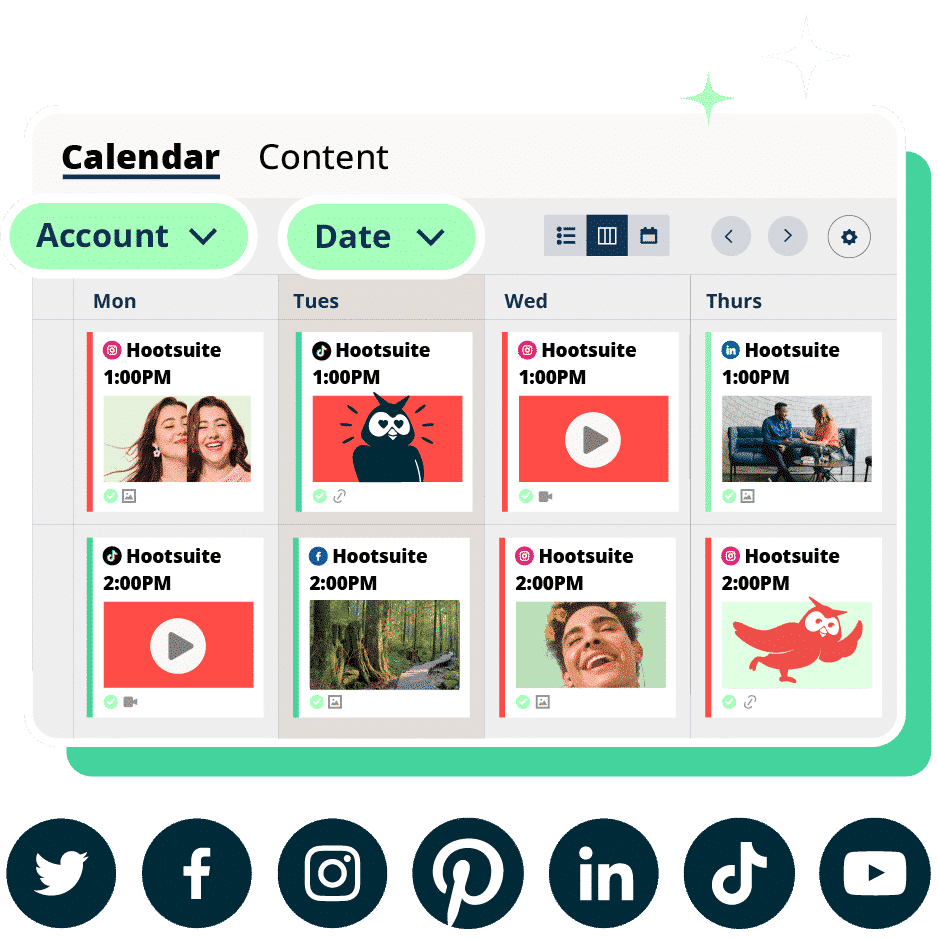
Hootsuite: A comprehensive Social OS that centralizes social CRM conversations from all connected channels into a single inbox. It offers robust social listening (Lumen), engagement (Nest), content creation (Perch), and AI-powered action connections (Wisdom). Hootsuite integrates with leading traditional CRM platforms, allowing businesses to leverage their existing tech stack while enhancing social capabilities.
HubSpot: A broad CRM platform managing contacts across the entire pipeline, integrating marketing, sales, and customer service. Its modular "hubs" connect to a Smart CRM, providing tools for social media scheduling, monitoring, and interaction management within a broader customer context.

Salesforce: An enterprise-grade CRM renowned for its sales process guidance and AI-driven insights. Built on its proprietary platform, Salesforce includes conversational AI assistants and offers extensive integration capabilities, allowing social data to enrich sales opportunities and customer profiles.
Microsoft Dynamics 365: A highly customizable CRM system designed to unify teams and provide a holistic customer view. It leverages AI for predictive analytics on customer intent and audience segmentation, making it suitable for businesses seeking modular, scalable solutions.

SugarCRM: A flexible and customizable CRM focused on providing a 360-degree view of the customer. It offers robust sales automation, marketing automation, and customer support functionalities, with options for on-premise or cloud deployment.
In conclusion, Social CRM is no longer an optional add-on but a strategic imperative for businesses aiming to thrive in an increasingly digital and customer-centric world. By integrating social media data with traditional CRM, powered by advanced AI capabilities, organizations can unlock deeper customer understanding, enhance operational efficiency, and cultivate stronger, more profitable relationships. The continuous evolution of social platforms and AI technologies ensures that Social CRM will remain a dynamic and vital component of future business success.