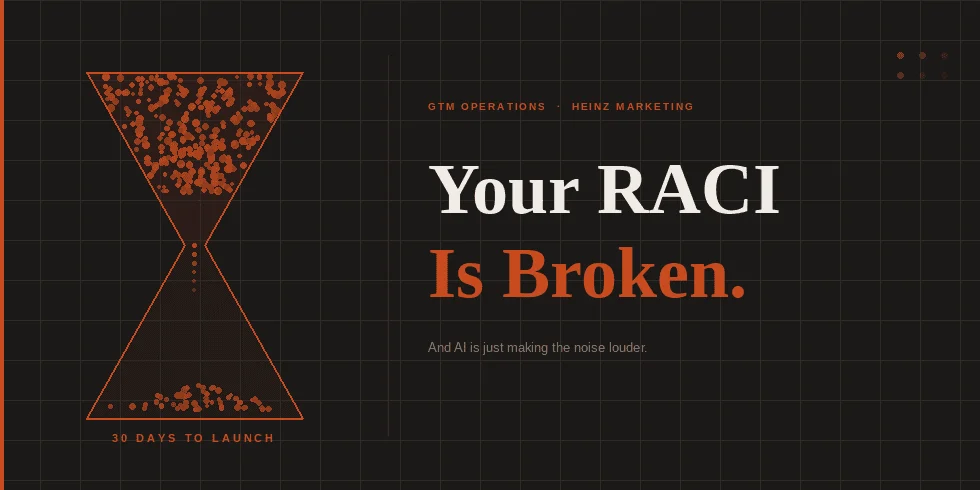
The marketing technology landscape has exploded in recent years, offering unprecedented capabilities to campaign teams. From sophisticated AI-powered content generation and image creation to rapid research summarization and brief drafting, the tools at marketers’ disposal are more powerful than ever. Yet, paradoxically, the time it takes for a marketing campaign to move from initial approval to live deployment remains stubbornly protracted, often stretching to four to six weeks. This persistent bottleneck, despite significant technological investment, points to deeper, more fundamental operational inefficiencies, primarily centered around broken RACI (Responsible, Accountable, Consulted, Informed) matrices, insufficient pre-campaign groundwork, and a lack of clear decision-making authority. These issues transform review cycles into protracted strategic debates, derailing efficiency and delaying market impact.
Payal Parikh, VP of Client Services at Heinz Marketing, highlights this pervasive irony. "Teams are investing heavily in AI tools, while the operational fundamentals underneath them are still broken," Parikh stated in a recent analysis. "Faster output doesn’t help when the process around it is a mess. If anything, AI is making some of these problems worse." The core issue, she explains, is not a deficiency in available technology but a breakdown in foundational project management and decision-making processes that are exacerbated, rather than solved, by the increased output generated by these new tools.
The Illusion of Speed: AI and the Amplification of Inefficiencies
The proliferation of AI in marketing, while promising enhanced productivity, has inadvertently amplified pre-existing organizational dysfunctions. Consider the typical B2B marketing team, where Parikh observes a common scenario: "everyone is listed as ‘accountable.’" This diffused accountability, often including campaign managers, directors, VPs, demand generation leads, and even CMOs and CEOs within the same review threads, creates a situation where numerous stakeholders offer opinions without a single, empowered individual holding the ultimate decision-making authority.
"The team thinks they’re moving faster because they’re producing more," Parikh elaborated. "But output isn’t progress without a clear decision-maker." When AI tools generate multiple variations of copy, subject lines, or visual concepts – for instance, five copy variants instead of one, or three subject line approaches – the sheer volume of options to be reviewed increases exponentially. This leads to more feedback rounds, extended "what if we tried…" discussions, and a consequently sliding launch date. The initial intention behind listing multiple individuals as "accountable" might have been to ensure comprehensive input, but in practice, it fosters a committee-like environment where consensus is difficult to achieve, and AI merely provides more fuel for debate.
Pre-Campaign Foundations: The Neglected Bedrock of Efficiency
The critical problems, according to Parikh’s analysis, often manifest long before a campaign enters its review cycle. By the time a campaign reaches this stage, it is frequently already compromised. This can stem from a variety of foundational oversights: a campaign brief being drafted after creative work has already commenced, the absence of proper Salesforce campaign setup, or the use of outdated or improperly segmented audience lists. The ad-hoc addition of UTM parameters at the last minute, or the assumption of channels without explicit confirmation in the campaign strategy, are further indicators of a lack of pre-planning.
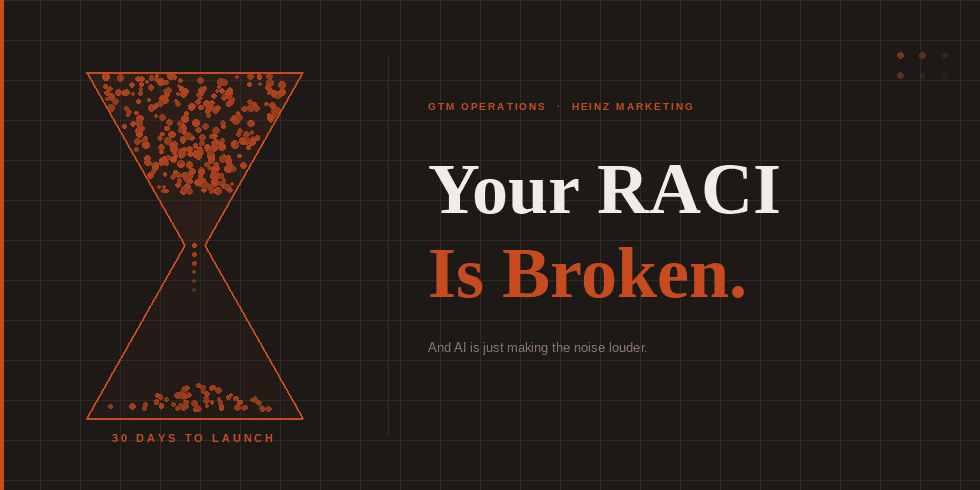
Mid-campaign content changes can dramatically accelerate execution problems and lead to launch delays. When fundamental elements are not solidified before execution begins, each review round becomes an opportunity to re-litigate the initial strategy. AI’s ability to rapidly generate alternative content further exacerbates this, fostering a "keep reviewing until we feel good" loop that seems to have no end. When compounded by conflicting priorities, where key approvers are juggling multiple campaigns, the stage is set for protracted 30-day cycles that defy easy explanation and are difficult to bring to a decisive conclusion.
The "Boring" Fix: Implementing Readiness Gates for Streamlined Execution
Parikh argues that the solution to these persistent delays is not another technological tool but the implementation of a "readiness gate." This is a straightforward checkpoint that must be cleared before any campaign is allowed to touch an execution platform. Such a gate forces clarity on crucial questions that are often avoided: Is the Salesforce structure established? Is there a single individual with final decision-making authority? Is the target audience definitively correct? Is the asset list locked to prevent mid-review changes?
While seemingly rudimentary, teams often bypass these essential steps, perceiving them as administrative overhead. This ultimately leads to significantly longer review periods. Heinz Marketing has developed a practical "Campaign Readiness Checklist" that serves as a template for ensuring all necessary prerequisites are met before execution commences:
Campaign Readiness Checklist: A Framework for Timely Deployment
STRATEGY & OWNERSHIP
- Campaign brief is finalized and signed off with no open strategic questions.
- One approver is designated with explicit final authority, eliminating committee decision-making.
- Conflicting priorities are resolved, and the campaign window is frozen on the calendar.
- RACI matrix is documented specifically for this campaign, not inherited from previous initiatives.
AUDIENCE & TARGETING
- Target audience/segment is clearly defined, validated, and ready for loading.
- List is current and has not been recycled from a prior campaign without thorough review.
- Suppression lists are updated and verified.
TECHNICAL SETUP
- Salesforce/CRM and Marketing Automation Platform (MAP) campaign records are created and correctly named according to established conventions.
- All channels are configured, with clear ownership assigned for each channel.
- UTM parameters are built, documented in a master sheet, and have undergone quality assurance.
- Landing pages/forms are live, tested, and correctly connected to the CRM.
CONTENT & ASSETS
- All content pieces are finalized, with a commitment to no asset swaps after this point.
- Copy and visuals have been approved by the designated final approver.
- Emails and advertisements are built and have been quality-assured within their respective platforms.
REPORTING
- Campaign tracking is configured within the designated reporting tool.
- Success metrics and baselines are clearly defined in the campaign strategy before launch.
Parikh concludes that achieving faster campaign deployment hinges on cleaner handoffs, tighter ownership, and diligent completion of the foundational pre-work that makes the execution phase appear seamless. "Faster campaigns come from cleaner handoffs, tighter ownership, and doing the boring pre-work that makes execution feel obvious," she stated.
Implications for the Future of Marketing Operations
The persistent challenge of long campaign launch cycles, even with advanced AI tools, underscores a critical imperative for marketing organizations: the prioritization of operational discipline. The findings suggest a widespread need to re-evaluate and reinforce fundamental project management practices. Organizations that fail to address these underlying inefficiencies risk seeing their investments in cutting-edge technology yield diminishing returns.
The implications extend beyond mere time savings. Extended campaign cycles can lead to missed market windows, reduced agility in responding to competitive pressures, and decreased return on marketing investment due to prolonged lead times. Furthermore, the frustration stemming from inefficient processes can negatively impact team morale and productivity.
For B2B go-to-market teams aiming to leverage AI effectively and accelerate their operational velocity, a strategic approach is essential. Heinz Marketing, recognizing this need, has developed an AI Readiness Audit specifically designed to assist these teams. The audit aims to identify bottlenecks and provide actionable recommendations for streamlining processes. As organizations increasingly plan AI investments in the coming months, a thorough assessment of existing operational frameworks will be paramount to ensuring that technological advancements translate into tangible gains in efficiency and campaign effectiveness. The journey from concept to live campaign, while technologically enhanced, still requires a robust and disciplined operational backbone.