

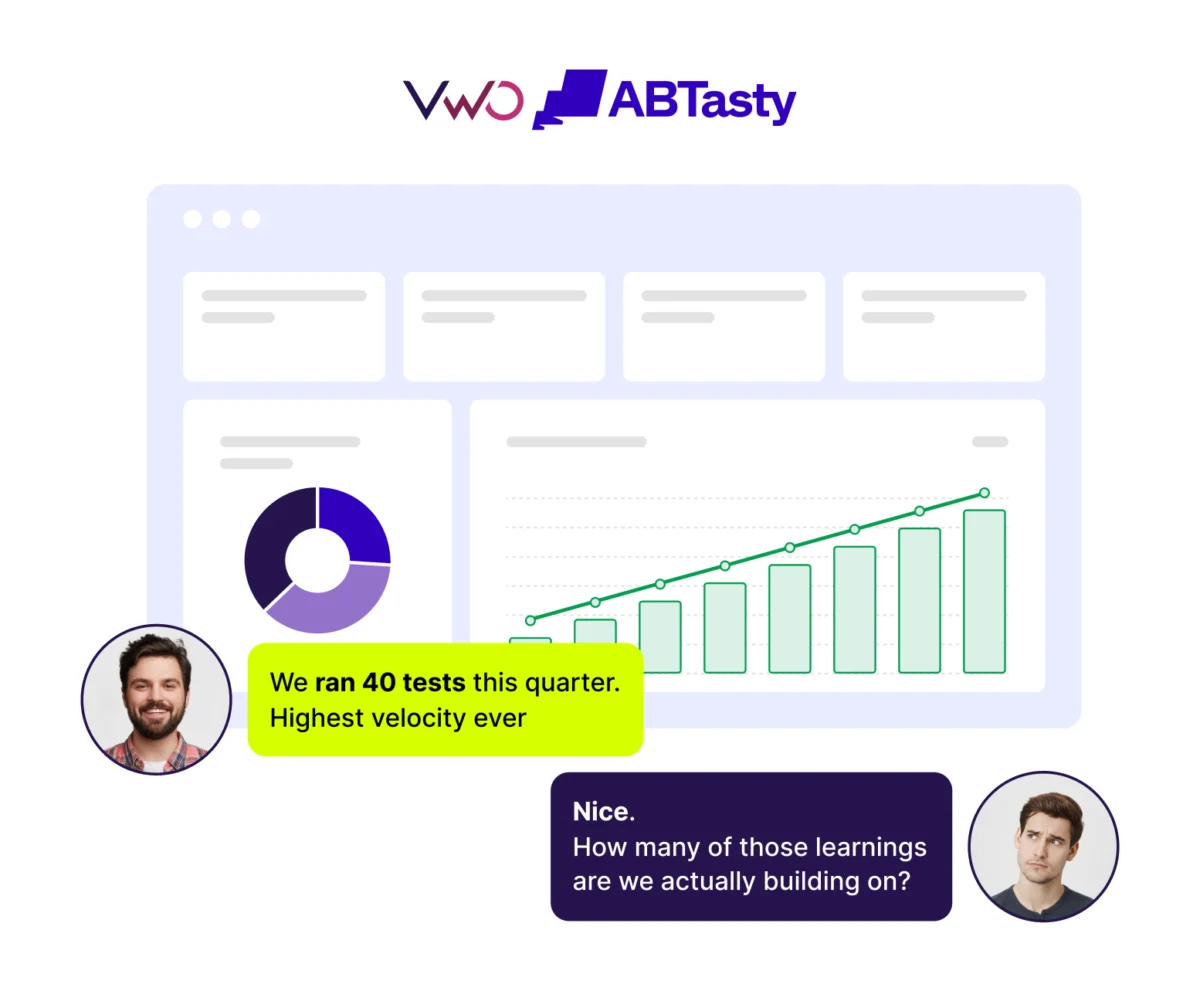
As digital-first enterprises transition from sporadic website tweaks to integrated experimentation cultures, the operational challenges of scaling A/B testing programs have emerged as a significant barrier to sustained growth. What begins as a modest initiative—often managed by a single team using a shared document—frequently encounters a "scaling ceiling" where the very processes that facilitated early success become the primary drivers of institutional friction. The shift from low-volume testing to enterprise-wide experimentation requires a fundamental recalibration of governance, statistical rigor, and technological infrastructure to prevent the degradation of data integrity and the erosion of stakeholder confidence.
The Evolution of Experimentation: From Boutique Tactics to Enterprise Strategy
The lifecycle of a corporate experimentation program typically follows a predictable chronology. In the nascent stage, a small group of practitioners achieves "quick wins" by optimizing high-visibility elements like call-to-action buttons or hero images. These early successes generate the internal political capital necessary to secure more resources and broader interest from other departments, such as product development, marketing, and customer success.
However, as the volume of tests increases and the number of stakeholders grows, the informal systems that once sufficed—such as manual tracking and ad-hoc communication—begin to fracture. Industry data suggests that while high-maturity organizations can run hundreds or even thousands of tests simultaneously, the vast majority of companies struggle to move past the "mid-scale" phase. This plateau is often characterized by a stagnation in win rates and an increase in "flat" results that offer no actionable insights. The transition to a truly scaled program necessitates moving away from a project-based mindset toward a Center of Excellence (CoE) model that prioritizes standardized protocols and centralized knowledge management.
Critical Pitfalls in High-Volume Testing Environments
The move toward higher testing velocity introduces five primary hazards that can compromise the validity of an entire experimentation program. Understanding these pitfalls is essential for leadership teams tasked with overseeing digital transformation.
1. The Trap of Statistical Impatience
In an environment where "velocity" is a Key Performance Indicator (KPI), there is a pervasive temptation to conclude experiments prematurely. When a test shows a positive trend within the first few days, teams may feel pressured to declare a winner to clear the queue for the next experiment.
Statistically, this is a dangerous practice. Conversion rates are subject to "novelty effects" and natural variance, particularly in the early stages of a test. Calling a winner too early significantly increases the probability of Type I errors (false positives). When these "winners" are implemented but fail to deliver the expected lift in downstream revenue or retention metrics, the credibility of the CRO team is diminished. Objective data indicates that tests should ideally run for at least two full business cycles to account for day-of-the-week fluctuations and to reach a robust sample size.
2. The Persistence of Knowledge Silos
As experimentation spreads across different business units, the lack of a shared repository becomes a liability. Without a centralized "vault" of hypotheses, results, and qualitative observations, organizations inevitably repeat the same mistakes.
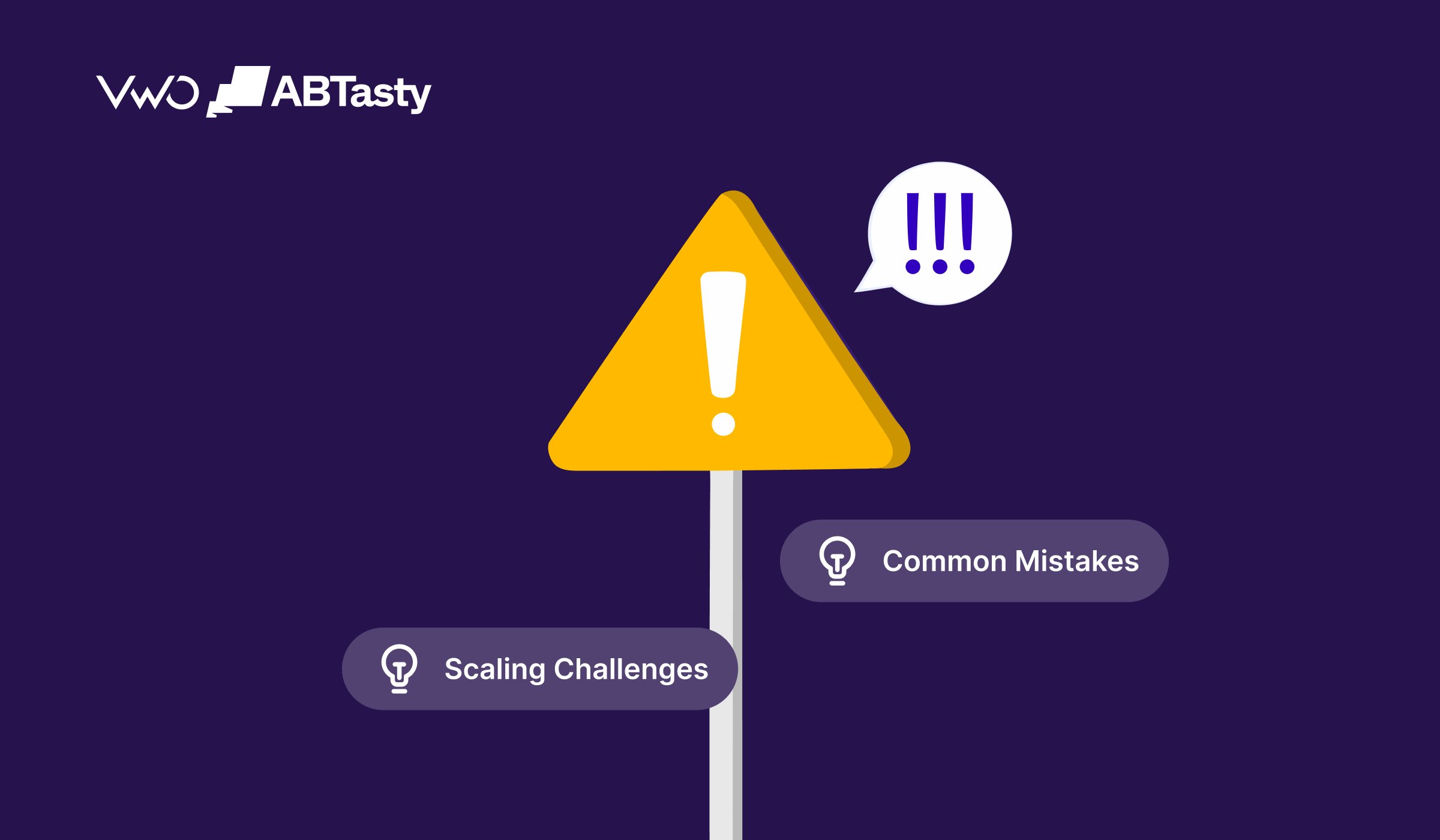
For example, a marketing team may find that a specific discount structure fails to convert high-intent users in the first quarter. If the product team is unaware of this finding, they may attempt a similar pricing experiment in the third quarter, wasting valuable traffic and engineering resources. A scaled program requires a "write-once, read-everywhere" philosophy where every experiment—regardless of its outcome—contributes to a collective intelligence database.
3. Divergent Measurement Standards
Scalability is impossible without standardization. In many fractured programs, different teams utilize different success metrics and significance thresholds. One department might accept an 80% confidence level for "low-risk" UI changes, while a core product team demands 95% for feature rollouts. While some flexibility is necessary, the lack of a unified "source of truth" makes it impossible for leadership to compare the impact of experiments across the organization. Standardizing on a primary metric (such as Average Order Value or Long-Term Value) ensures that all teams are rowing in the same strategic direction.
4. The Complexity of Interaction Effects
At low volumes, the risk of two tests overlapping on the same user is negligible. At scale, this becomes a constant threat to data integrity. When a user is simultaneously exposed to a pricing experiment and a navigation redesign, it becomes mathematically difficult to isolate which change drove the behavior. These interaction effects can lead to "polluted" data, where the results of Test A are skewed by the presence of Test B. Sophisticated programs utilize mutual exclusivity logic to ensure that users are partitioned into distinct experimental tracks, preserving the "cleanliness" of the data.
5. Infrastructure and Tooling Lag
Many organizations attempt to scale their programs using entry-level tools that lack enterprise-grade governance. As the number of users in a testing platform grows, the need for role-based access control (RBAC), audit logs, and automated safeguards becomes paramount. Without these features, the risk of unauthorized changes or accidental test terminations increases. Scaling the scope of experimentation without a corresponding upgrade in tooling is a recipe for operational chaos.
Strategic Perspectives: Leadership and Mindset
The technical hurdles of scaling are often secondary to the cultural ones. Rafael Damasceno, a prominent figure in the conversion rate optimization space, notes that the impact of a CRO team is frequently bottlenecked by the scope of their authority. If leadership views experimentation solely as a "website tool" rather than a "business philosophy," the program will remain confined to superficial UI changes.
To achieve true scale, experimentation must move upstream into product roadmaps and strategic decision-making. This requires an "experimentation mindset" from the C-suite down. When leadership demands data-backed hypotheses for every major initiative—including pricing changes, new feature launches, and onboarding flows—the organization shifts from a "HiPPO" (Highest Paid Person’s Opinion) culture to one rooted in empirical evidence.
Sarah Fruy, an expert in scaling personalization, emphasizes that the operational overhead of a cross-functional program is significant. She argues that the transition from a "scrappy" team to an enterprise function requires a dedicated focus on infrastructure. This includes not just software, but also the human processes—such as weekly "test debriefs" and cross-departmental planning sessions—that keep the program aligned with broader business goals.
Supporting Data and Industry Benchmarks
A 2023 analysis of enterprise experimentation programs revealed that organizations with a centralized Center of Excellence (CoE) reported a 30% higher win rate compared to those with decentralized, ad-hoc testing structures. Furthermore, companies that documented every experiment in a shared repository saw a 40% reduction in "redundant testing" over a 24-month period.

The financial implications of statistical rigor are equally stark. Research into false positives suggests that implementing a "winning" variation that is actually a false positive can cost a mid-sized e-commerce retailer upwards of $500,000 in lost potential revenue annually, due to the opportunity cost of not implementing a truly effective change.
The Path Forward: Frameworks for Sustainable Growth
To avoid the common pitfalls of scaling, organizations should adopt a structured framework for growth. This includes:
- The Pre-Launch Charter: Before any test goes live, teams must lock in their parameters—minimum sample size, primary metric, and duration. This prevents "data peeking" and the premature conclusion of tests.
- Mutual Exclusivity Groups: Utilizing platform features to prevent overlapping tests on the same audience segments to ensure data purity.
- The Shared Learning Loop: Implementing a system where every experiment concludes with a "learning summary" that is distributed to all stakeholders, regardless of whether the test was a "win," "loss," or "inconclusive."
- Connecting to the North Star: Every experiment in the backlog should be mapped to a specific business objective. If a test does not clearly support a core KPI, it should be deprioritized in favor of higher-impact initiatives.
Broader Impact and Implications for the Future
The ability to scale A/B testing is no longer a competitive advantage; it is a requirement for survival in an increasingly volatile digital economy. As artificial intelligence and machine learning begin to play a larger role in automated experimentation, the human elements of governance and strategic alignment will become even more critical.
Organizations that successfully navigate the complexities of scale will be able to pivot faster, understand their customers more deeply, and allocate their resources with greater precision. Conversely, those that fail to build the necessary infrastructure will find themselves buried under a mountain of unreliable data and missed opportunities. The future of digital growth belongs to the "experimentation-first" enterprise—one that treats every customer interaction as an opportunity to learn, validate, and improve.







