


In the rapidly evolving landscape of digital commerce and product management, the ability to iterate quickly and accurately has become a primary differentiator for enterprise organizations. Apurva Sandbhor, Manager of Platform & Product Experimentation at The Home Depot, recently shared a comprehensive blueprint for scaling experimentation programs within the "CRO Perspectives" series. Her insights provide a critical roadmap for leaders attempting to navigate the complexities of large-scale testing, the integration of artificial intelligence, and the preservation of human judgment in data-driven decision-making. As organizations move toward more sophisticated operating models, Sandbhor’s approach emphasizes that the foundation of success lies not in the volume of tests conducted, but in the structural integrity of the platforms and the cultural alignment of the teams behind them.
The Shift from Manual Execution to Platform-First Strategy
A common pitfall for growing organizations is the tendency to address scaling challenges by increasing headcount without addressing underlying architectural friction. Sandbhor argues that scaling a team without a corresponding evolution in platform architecture merely compounds operational noise. In an enterprise environment like The Home Depot, which manages a massive digital footprint and complex logistics, manual testing processes eventually hit a ceiling.

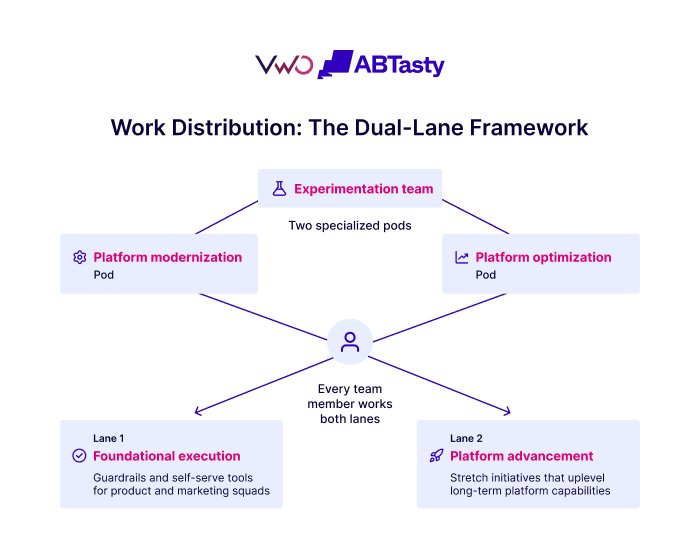
To combat this, Sandbhor introduces a "Dual-Lane" framework for work distribution. This model decouples day-to-day enablement from core innovation. The first lane, "Experimentation Enablement," focuses on providing product squads with the tools, training, and standardized processes they need to run tests independently. The second lane, "Experimentation Innovation," is dedicated to the long-term advancement of the platform itself—building features like automated statistical guardrails and server-side capabilities. This separation ensures that the central experimentation team does not become a bottleneck for reactive, transactional requests, but instead acts as a force multiplier for the entire organization.
Architectural Integrity: Speed Without Compromise
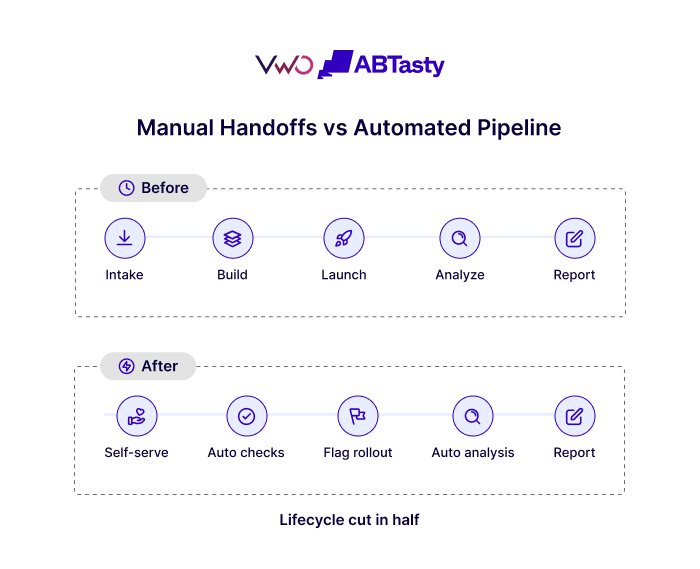
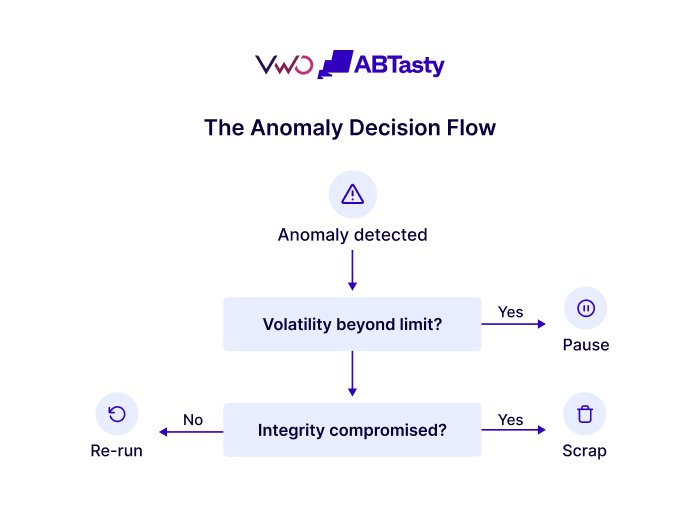
In the quest for velocity, many teams sacrifice data integrity, leading to false positives and misguided product strategies. Sandbhor posits that true velocity is achieved by automating guardrails directly into the ingestion pipeline. By integrating proprietary statistical engines, organizations can identify Sample Ratio Mismatch (SRM) and traffic anomalies in real-time. This automation reduces the end-to-end testing lifecycle significantly—sometimes by as much as half—by eliminating the need for manual data cleaning and repetitive QA cycles.
The transition to modernized architecture often involves a hybrid approach between client-side and server-side experimentation. While client-side testing is effective for front-end UI changes, server-side testing allows for deeper product experimentation, such as testing search algorithms or backend logic. However, Sandbhor warns that moving to server-side testing requires a high degree of maturity. It demands a robust change management plan, clear stakeholder incentives, and a culture that prioritizes data-driven decisioning over intuitive guessing.

The Technical Requirements for Scaling
To support this level of sophistication, Sandbhor highlights several non-negotiable elements for a product-driven infrastructure:
- Embedded Statistical Guardrails: Automated systems that flag errors before they lead to costly decisions.
- End-to-End Pipelines: Seamless workflows that bridge the gap between product squads, QA teams, and data analysts.
- Decoupled Deployment: Using feature flags and modernized architecture to separate code deployment from feature activation, allowing for safer rollouts.
Redefining Success: Moving Beyond Win Rates
One of the most provocative aspects of Sandbhor’s philosophy is her critique of "win rates" as a primary KPI for experimentation programs. In many corporate environments, teams are incentivized to report high win rates, which often leads to "safe" testing—minor visual tweaks that yield small, predictable gains but fail to drive transformative innovation.
Sandbhor cites Harvard Business School Professor Stefan Thomke’s observation that for every successful online experiment, nearly ten do not yield the expected results. If an organization over-indexes on success, employees will naturally avoid high-risk, high-reward ideas. To foster a healthy experimentation culture, Sandbhor suggests shifting the focus to three alternative metrics:
- Learning Velocity: The speed at which an organization generates high-integrity business insights.
- Risk Mitigation: The ability to prevent flawed features from reaching the entire user base.
- Decision Integrity: The quality of the data used to inform corporate strategy.
By framing a "failed" test as a "Strategic Risk Avoidance" success, experimentation leaders can maintain executive buy-in. For example, if a major feature rollout is stopped because a test showed it would have caused a significant revenue drop, that "loss" is actually a multi-million dollar save for the company. This shift in narrative transforms experimentation from a tactical tool into an ironclad insurance policy for the enterprise.
Case Study: The Perils of Cognitive Friction
Sandbhor illustrates the power of deep-dive analysis through a case study involving a high-visibility checkout optimization at The Home Depot. The team implemented an algorithmic recommendation engine designed to cross-sell accessories during the checkout process. Initial results showed a surprising aggregate drop in cart conversion rates.
Rather than abandoning the initiative, the team conducted segmented deep-dives. They discovered that while the algorithm was effective on product discovery pages, it caused "decision paralysis" in the high-intent checkout path by offering too many choices. By refining the hypothesis and replacing the multi-choice layout with a single, curated bundle, the team was able to eliminate cognitive friction. The subsequent test validated this change, turning a potential revenue loss into a net lift. This example underscores the importance of behavioral nuance and the need for a systematic "insight-to-hypothesis" loop.
The Role of AI and the Persistence of Human Judgment
As artificial intelligence becomes more integrated into experimentation workflows—automating data pulls, building test variants, and enforcing guardrails—the role of the leader is shifting. Sandbhor believes that while AI can commoditize the execution layer, it can never replace human judgment in three key areas:
- Strategic Boundaries: Defining the ethical and long-term goals of the testing program.
- User Psychology: Translating complex human behaviors into novel hypotheses that AI might not perceive.
- Cross-Functional Alignment: Rallying stakeholders around a shared vision and managing the portfolio of risk.
"AI can optimize the path, but humans must choose the mountain," Sandbhor remarks. This perspective suggests that the future of experimentation leadership lies in curation and strategy rather than tool management.
Chronology of Experimentation Maturity
The evolution of an experimentation program typically follows a specific trajectory, as reflected in Sandbhor’s frameworks:
- Phase 1: Reactive Testing. Small teams running isolated A/B tests on front-end elements.
- Phase 2: Centralized Enablement. The establishment of a dedicated team to standardize tools and processes.
- Phase 3: Platform Integration. Moving testing into the core product architecture, utilizing server-side capabilities and automated pipelines.
- Phase 4: Strategic Governance. Shifting the organizational culture toward learning velocity and risk avoidance, with AI handling the tactical execution.
Broader Implications for the E-commerce Industry
The principles shared by Sandbhor have implications far beyond a single retailer. As the e-commerce sector faces increasing pressure from rising customer acquisition costs and volatile consumer behavior, the "guess-and-check" method of product development is no longer viable.
Industry analysts suggest that organizations capable of building automated, high-integrity experimentation platforms will be better positioned to weather economic shifts. By treating experimentation as a continuous engine rather than a series of linear projects, companies can create a compounding library of insights. This library becomes a proprietary asset that informs everything from marketing spend to supply chain adjustments.
In conclusion, the perspective offered by Apurva Sandbhor emphasizes that scaling experimentation is a multidimensional challenge. It requires a sophisticated blend of platform engineering, statistical rigor, and a fundamental shift in how "success" is measured. For enterprise leaders, the message is clear: to move faster, one must first build the systems that make moving fast safe. By prioritizing platform capabilities over headcount and learning value over win rates, organizations can transform their experimentation programs into powerful drivers of long-term strategic growth.







