A shift is occurring in the e-commerce landscape, challenging the long-held belief that aggressive scaling necessitates a proportional increase in headcount. Instead, a growing number of successful online retailers are prioritizing operational leanness and strategic outsourcing to drive profitability, often achieving greater financial health and reduced stress with significantly smaller internal teams. This evolving perspective is supported by recent industry data that highlights a surprising correlation between reduced payroll and increased profit margins, suggesting that efficiency, rather than sheer size, is becoming the key differentiator for sustainable e-commerce success.
The traditional business narrative often equates growth with expansion, a philosophy that typically translates to hiring more employees as revenue increases. This model, while intuitive, can lead to diminishing returns if not managed meticulously. The story of one e-commerce store owner, who opted to drastically restructure his operations, serves as a compelling, albeit anecdotal, illustration of this paradigm shift. Previously managing a team of 35 employees, this owner consistently grappled with solid revenue but persistently tight profit margins, a situation exacerbated by the demanding nature of managing a large workforce.

The turning point for this entrepreneur came with a series of strategic decisions aimed at streamlining operations. By embracing a remote work model, partnering with a third-party logistics (3PL) provider for fulfillment, and transitioning from full-time employees to a fractional workforce of freelancers and contractors, he fundamentally altered his business structure. The result was a dramatic reduction in his internal team to just one full-time employee and eight contractors. This leaner operational framework led to unprecedented profit levels and a significant decrease in his personal stress, demonstrating that a smaller, more agile team can indeed yield superior financial outcomes.
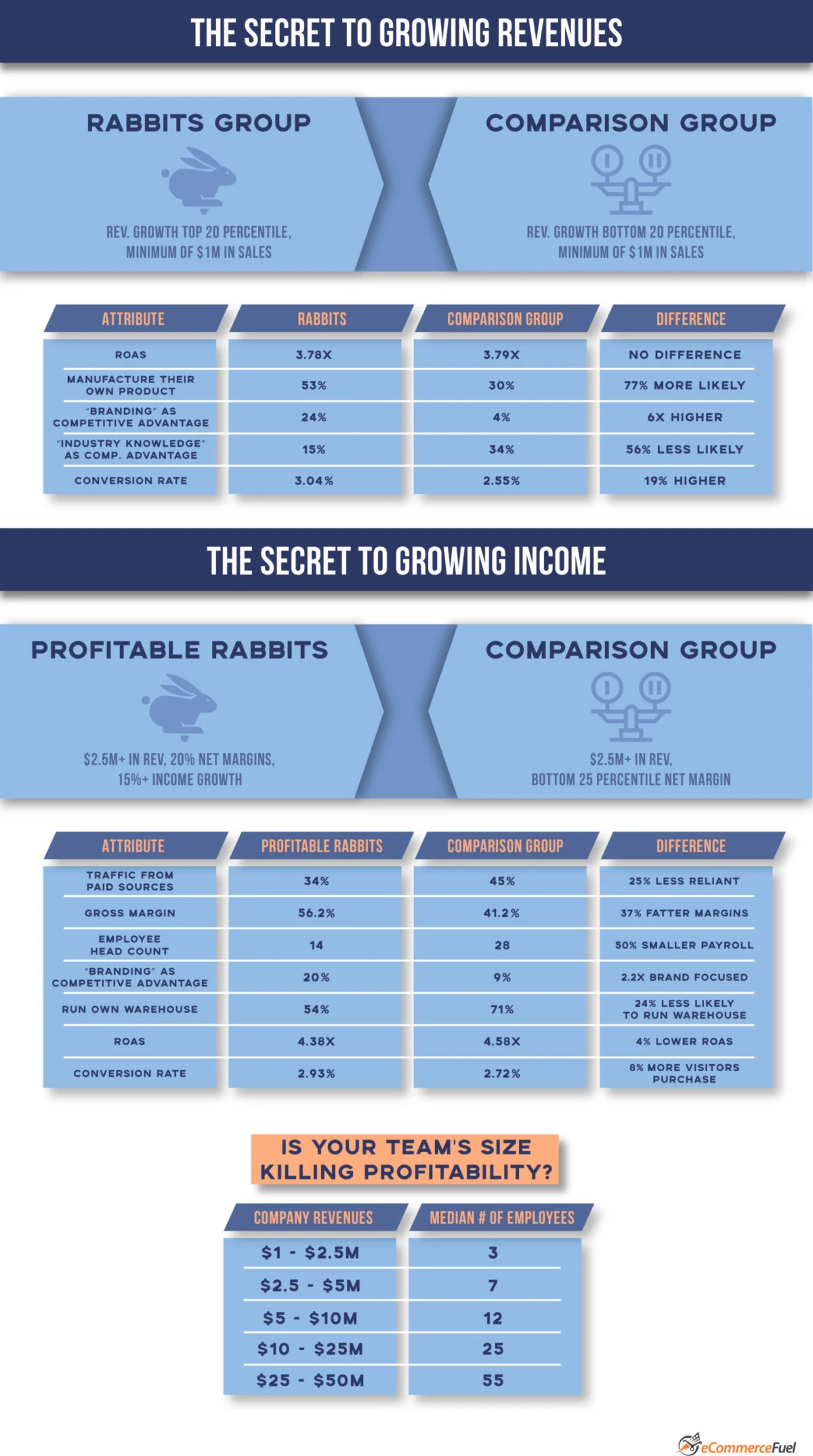
This anecdotal evidence is not an isolated incident. Research conducted by industry analysis firms, examining hundreds of e-commerce businesses, reveals a similar trend. Contrary to expectations that superior marketing prowess would be the primary driver of profitability, the data indicates a more nuanced reality. Studies have found that the Return on Ad Spend (ROAS) and customer acquisition costs (CAC) between top-performing and struggling e-commerce businesses show only negligible differences. This suggests that while effective marketing is crucial, it is not the sole, or even primary, determinant of exceptional profitability.
Instead, the data points towards operational efficiency as the true linchpin of high-performing e-commerce ventures. Top performers in profitability analyses were found to have, on average, half the payroll of their less profitable counterparts. Furthermore, these leading businesses were approximately 25% more likely to outsource their warehouse operations and showed a 25% reduced reliance on paid advertising channels. This indicates a strategic focus on minimizing fixed costs and leveraging external expertise for specialized functions, allowing internal resources to be directed towards core competencies and strategic growth initiatives. The overarching takeaway from this research is that operational leanness consistently outperforms marketing cleverness when it comes to maximizing profit margins.

The concept of operational leanness extends far beyond simply reducing headcount. It encompasses a holistic review of all business overheads, including physical office spaces, underutilized warehouse facilities, and recurring software subscriptions. The post-pandemic business environment has further highlighted the potential for cost savings by re-evaluating the necessity of large physical footprints. Many businesses are discovering that flexible work arrangements can significantly reduce real estate costs, while the strategic utilization of 3PLs can eliminate the need for costly in-house warehousing and fulfillment infrastructure. Similarly, a periodic audit of SaaS subscriptions can reveal redundant or underutilized services that contribute to unnecessary monthly expenses.
A critical filter for evaluating operational efficiency involves identifying core brand competencies. Businesses that excel in profitability tend to be highly intentional about where they allocate their resources. If a company’s unique selling proposition lies in its product design, it is logical to maintain an in-house design team. However, if core operations like packing and shipping do not directly contribute to the brand’s distinctiveness or competitive advantage, outsourcing these functions to specialized providers can be a more cost-effective and efficient solution. This deliberate approach to resource allocation allows profitable businesses to focus on what truly differentiates them in the market, rather than being burdened by non-core operational costs.
The willingness to engage in difficult conversations is another hallmark of highly profitable businesses. Many entrepreneurs postpone critical decisions, such as restructuring teams or divesting non-essential assets, until faced with financial exigency. However, leading businesses proactively address these issues. They conduct regular assessments of their organizational structure, questioning the necessity of each role and the ongoing value of each operational tool. This proactive approach allows them to make informed decisions about resource allocation, ensuring that every expenditure and every position contributes directly to the company’s strategic objectives. The ability to anticipate challenges and make necessary adjustments before they become crises is a key indicator of strong leadership and a robust business strategy.

Beyond operational efficiency and team management, strategic tax planning represents a significant, yet often overlooked, lever for enhancing after-tax profits. Many business owners perceive taxes as an unavoidable fixed cost, a percentage of income that is simply paid. However, a closer examination reveals that proactive and informed tax strategies can lead to substantial savings. By working with CPAs who are adept at identifying opportunities for tax reduction, businesses can retain a far greater portion of their earnings.
Consider the hypothetical scenario of two identical e-commerce businesses, each generating $2.5 million in revenue and $250,000 in profit, with owners in similar personal financial situations. Owner A, who approaches taxes with a standard, reactive mindset, might pay upwards of $75,000 annually. In contrast, Owner B, who employs strategic tax planning, could reduce their tax liability to as low as $21,000. This significant difference, amounting to over $54,000 in annual savings, is achieved not through illicit means, but through a deliberate application of tax-advantaged strategies.
These savings can be realized through various avenues. For instance, implementing profit-sharing plans can allow business owners to contribute substantial amounts to retirement accounts, generating significant tax deductions. Donating appreciated stock to charities, rather than cash, allows business owners to avoid capital gains tax while still receiving a full deduction. Maximizing contributions to Health Savings Accounts (HSAs) provides triple tax advantages – tax-deductible contributions, tax-free growth, and tax-free withdrawals for qualified medical expenses. Furthermore, legally employing children in the business for genuine work performed can provide deductible income for the parents and tax-advantaged savings for the children. Perhaps one of the most underutilized strategies in e-commerce is donating slow-moving or obsolete inventory to charities, allowing for a deduction at fair market value, which can be significantly higher than liquidation values.

The invisibility of these tax-saving opportunities often stems from the fragmented nature of financial reporting. Personal tax returns, business filings, brokerage statements, and payroll reports are often managed in silos, preventing a holistic view of a business’s total tax burden. This lack of a consolidated dashboard can lead business owners to overlook potential savings. While many business owners work with competent accountants who ensure compliance with tax laws, these accountants may not proactively identify and propose tax-saving strategies. The distinction lies between an accountant who processes information and one who actively advises and strategizes for the client’s financial benefit.
A simple yet effective test for evaluating a CPA’s proactive engagement is to recall the last time they independently approached the business owner with a novel tax-saving idea, rather than merely responding to direct questions or fulfilling filing requirements. If such proactive engagement is infrequent or non-existent, it may signal an opportunity to find a CPA who is more invested in the business’s financial optimization. The substantial financial disparities observed between strategic and conventional tax approaches underscore the importance of seeking out advisors who can deliver tangible value beyond basic compliance.
In conclusion, while marketing initiatives continue to capture significant attention and investment within the e-commerce sector, the most impactful drivers of profitability often lie in less glamorous, yet highly effective, operational and financial strategies. By embracing operational leanness, strategically outsourcing non-core functions, conducting rigorous overhead reviews, and engaging in proactive tax planning, e-commerce businesses can significantly enhance their bottom line. The overarching message for entrepreneurs is clear: focusing on keeping more of what is already earned through efficiency and smart financial management can often yield more substantial and sustainable results than solely pursuing top-line revenue growth through aggressive marketing. This evolving understanding of business growth is reshaping the e-commerce landscape, prioritizing sustainable profitability and operational resilience.