Asro
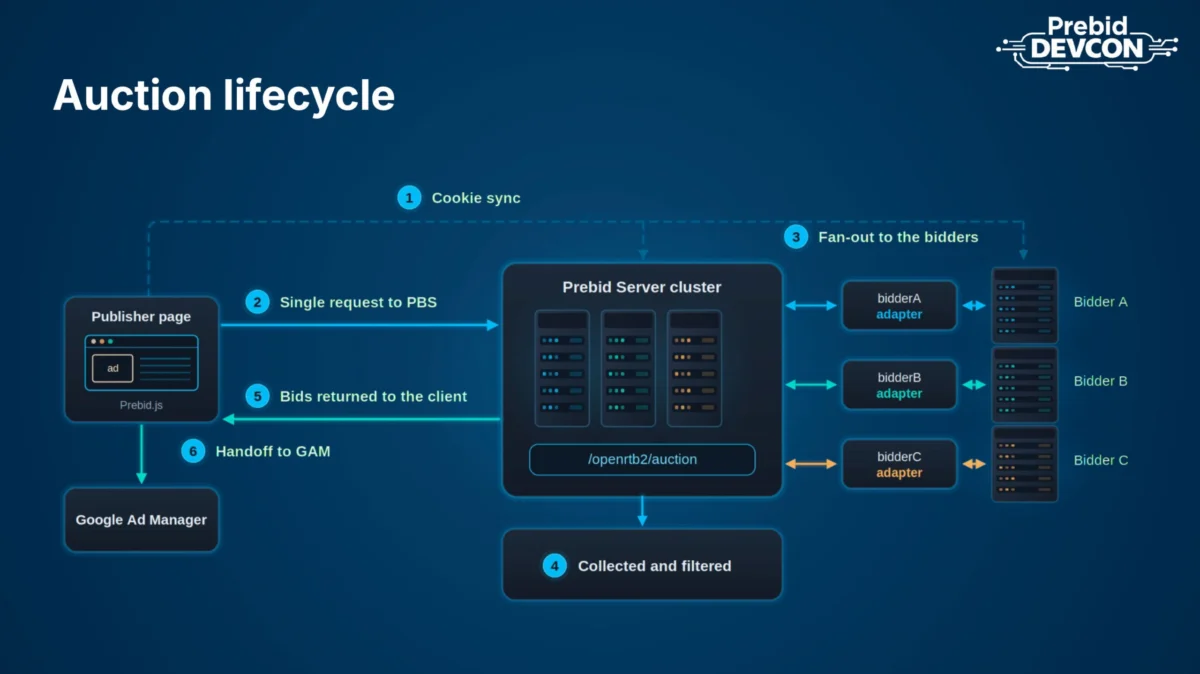
Last month, a federal court mandated that Google integrate with Prebid, a significant development in the ongoing antitrust scrutiny of Google’s ad tech dominance. However, the court’s ruling left the precise technical implementation to be determined. In response, Prebid, the open-source consortium driving the initiative, has proactively put forth its own detailed proposal. The organization is spearheading a paradigm shift in ad auction dynamics, aiming to enable ad servers, including Google’s own, to bid into the Prebid ecosystem, rather than Prebid continuing its current model of bidding into external ad servers. This innovative approach was previewed at the recent Prebid Summit in New York City and is now undergoing a public comment period, with the working group targeting formalization by the end of the first quarter for integration into a future Prebid update.
The genesis of this proposal can be traced back to April, when the working group anticipated the possibility that Google might be compelled to divest its integrated Google Ad Manager (GAM) product. GAM controversially bundles the AdX ad exchange with its ad server, formerly known as DoubleClick for Publishers. While the court ultimately decided against forcing a breakup of GAM in its ruling on Google’s ad tech monopoly, Prebid’s forward-thinking initiative offers a functional equivalent. By reorienting the ad auction to allow ad servers to bid into Prebid, publishers gain direct access to demand from Google AdX without the necessity of employing Google’s proprietary ad server. This effectively achieves the unbundling of GAM, irrespective of the court’s specific remedy.
Furthermore, this proposed framework provides Google with a ready-made mechanism to comply with the Prebid integration requirement stipulated by Judge Leonie Brinkema. The court’s decision mandates that Google must enable publishers to access and utilize Prebid for managing ad server interactions. However, the court did not prescribe the specific technical protocols for these integrations, leaving a critical gap that Prebid has now sought to fill.
Olly Burns, CTO at publisher monetization platform Teal and a co-author of the Prebid proposal, emphasized the strategic importance of Prebid taking the lead. "We want Prebid to be on the front foot," Burns stated in an interview with AdExchanger prior to the summit. "Because if we can set the agenda, we can hopefully influence it to the good," a sentiment aimed at benefiting publishers by fostering greater independence and choice in their ad serving infrastructure. This proactive stance also stems from a concern that Google might not engage in good faith, citing historical instances where industry-wide efforts to integrate with Google’s ad tech initiatives yielded limited results. Burns alluded to previous overhauls by Google that failed to materialize despite significant investment, such as the Privacy Sandbox initiative and its associated APIs (PAPI), which he described as "rubbish." By leading the charge, the Prebid community aims to "maximize the chance of success."
The court’s order requires Google to:
- Provide publishers with access to their ad server technology.
- Allow publishers to choose and implement Prebid.
- Ensure that Google’s ad server technology and ad exchange are interoperable with Prebid.
While these requirements are clear, the mechanisms for achieving them were not. Anticipating this ambiguity, the Prebid working group developed the new auction model with Prebid Server as its core component, laying the groundwork for these critical integrations.

The Mechanics of the Proposed Auction Shift
The crux of Prebid’s proposal lies in fundamentally altering the flow of the ad auction. Currently, Prebid conducts a "pre-auction" to gather bids from various demand sources. The highest bid from this pre-auction is then passed to Google Ad Manager (GAM) to compete within Google’s AdX auction. This sequential process, where Prebid bids into an ad server, has been a cornerstone of Prebid’s functionality since its inception, designed to circumvent the perceived auction constraints imposed by GAM. The name "Prebid" itself reflects this historical context – a preemptive auction designed to feed into the dominant Google ecosystem.
The proposed model flips this dynamic. Under the new framework, ad servers, including GAM, would bid directly into Prebid. This means Google’s AdX would compete within the same unified auction as other Supply-Side Platforms (SSPs) integrated with Prebid. Olly Burns humorously suggested this could even necessitate a name change for Prebid, as the "pre-auction" aspect would become obsolete.
This architectural change holds several critical implications. Firstly, it would directly satisfy all three of the court’s integration requirements by making Google’s auction operate concurrently with others within the Prebid environment. Secondly, it addresses a long-standing structural advantage held by Google. In the previous model, Google’s AdX had visibility into the winning bid price from the Prebid auction before entering its own auction. This visibility allowed AdX demand to strategically outbid Prebid’s winner, often leading to a less competitive outcome for publishers. By having AdX bid directly into Prebid, this information asymmetry is eliminated, theoretically leveling the playing field.
Constantine Mirin, CEO at Postindustria, a firm involved in ad tech development and a participant in Prebid’s working group, noted that this shift could significantly impact GAM’s dominance as a source of publisher revenue. "It will be interesting to see whether GAM becomes less of a dominant source of publisher revenue going forward," Mirin commented.
Enhanced Publisher Control and Transparency
Beyond competitive dynamics, the proposed auction reorientation promises to empower publishers with greater control and transparency. Under the new system, publishers would gain a court-mandated view into Google’s winning and losing bids directly through Prebid. Previously, accessing such granular insights into Google’s demand behavior required publishers to exclusively rely on GAM.
This increased transparency is complemented by significant speed benefits. Publishers currently face delays of up to four hours for GAM analytics, a timeframe that renders insights largely ineffective for real-time market adjustments. "If you plug in your own analytics stack, you can respond to market changes within a minute," Burns explained. "And in an open-auction environment, on a Black Friday, for example, that could be material." This rapid access to data allows publishers to optimize their bidding strategies dynamically, maximizing revenue opportunities in fast-moving markets.
The proposal also aims to weaken GAM’s near-monopolistic grip on the ad server market. The Department of Justice has cited GAM’s market saturation at an estimated 90%. By fostering competition among ad servers and providing publishers with the flexibility to integrate with any analytics adapter, the new model can lead to more tailored business intelligence and customizable dashboards. Eugene Dorfman, a technical partner and solutions architect at Postindustria and a co-author of the Prebid proposal, highlighted this extensibility: "Publishers will get far more flexibility to ‘plug in any analytics adapter,’ including customizable dashboards that weigh more dimensions tailored to their business."

Furthermore, this architectural evolution could pave the way for the adoption of "agentic-first ad servers," making it easier for publishers to implement these advanced solutions. The impact on internet performance is also a significant consideration. Burns asserted that the new model would contribute to a faster internet by consolidating what were previously two separate calls – one to Prebid and one to GAM – into a single, unified call. This reduction in latency, he stated, "pretty much halves the time," addressing concerns that GAM is "one of the worst offenders in slowing the internet down."
The Road Ahead and Potential Challenges
While the proposal has garnered significant interest and was presented as a viable path forward at the Prebid Summit, its successful implementation hinges on several factors, most notably Google’s willingness to adopt the proposed framework. There is a critical distinction between Google integrating with Prebid Server, the server-side solution underpinning this new auction model, and Prebid.js, the browser-based version. Brian Sardo, a senior software engineer at Microsoft who led the presentation of the proposal at the summit, clarified that the new auction framework is specifically designed for Prebid Server. Therefore, its benefits are contingent on Google choosing to integrate with this server-side component.
Prebid members, speaking anonymously at the summit, expressed optimism that Google would integrate with both Prebid Server and Prebid.js. They are also betting that the availability of a pre-built framework for Prebid Server integration, ready before the conclusion of the protracted legal proceedings in Google’s antitrust case, will incentivize Google to adopt it rather than invest in developing a bespoke solution.
However, not all attendees at the summit were convinced of Google’s guaranteed compliance. The possibility remains that Google could opt to integrate solely with Prebid.js, thereby limiting the scope of the proposed auction reorientation. This scenario would mean that the broader benefits of server-side decisioning and unified auctions might not be fully realized.
The public comment period is crucial for addressing lingering questions and concerns within the Prebid community. A notable debate at the summit revolved around the possibility of allowing client-side Prebid auctions to execute after the server-side Prebid Server auction. This would enable client-side bidders to react to server-side bids if they are not running a parallel Prebid Server auction. Patrick McCann, SVP of research at Raptive and chair of Prebid.js, argued against this, stating it would contradict Prebid’s objective of accelerating ad auctions. Sardo further elaborated that keeping auction decisioning server-side protects a publisher’s business logic from being exposed on the client side, where browser companies have greater visibility. Hillary Slattery, senior director of product management, programmatic at the IAB Tech Lab, added that server-side decisioning prevents sensitive information from being transmitted insecurely, ensuring data remains contained within trusted integrations.
Ultimately, the success of Prebid’s ambitious proposal to reshape the ad auction landscape and fulfill the court’s mandate rests on a delicate balance of technical innovation, industry collaboration, and Google’s strategic response. Despite regulatory efforts to curb its influence, Google’s significant weight within the ad tech ecosystem means that its cooperation, or lack thereof, will continue to be a pivotal factor in the evolution of digital advertising.


 Asep Darmawan

 Reynand Wu