Sagoh
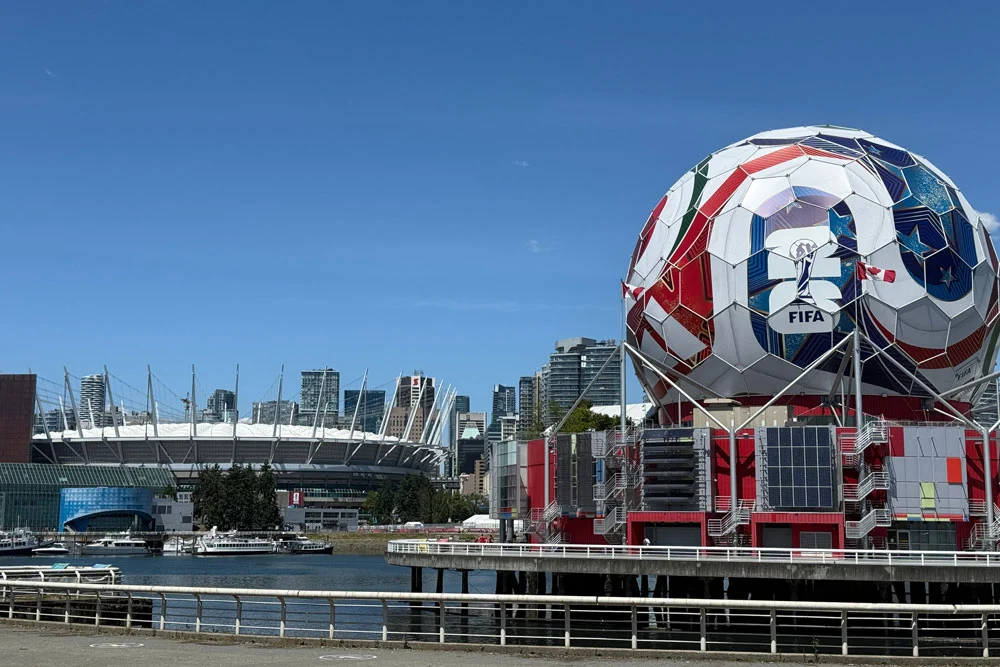
The FIFA World Cup 2026 has redefined the landscape of international sports, marking the first time the tournament has been hosted across three nations—Canada, Mexico, and the United States—and featuring an expanded field of 48 teams. As the tournament progressed from the high-energy group stages to the high-stakes knockout rounds, it became evident that the event was more than a display of athletic prowess; it served as a profound case study in strategic management, resilience, and the necessity of evolution. Observers, including industry experts traveling alongside the fervent "Tartan Army" and other international supporters, have noted that the drama unfolding on the pitch mirrors the complexities and competitive pressures found within the global affiliate marketing sector. By analyzing the tournament’s most significant upsets and triumphs, business leaders can derive critical insights into teamwork, the volatility of market hierarchies, and the dangers of professional complacency.
The Architecture of the 2026 FIFA World Cup
The 2026 iteration of the World Cup represents a significant shift in FIFA’s operational strategy. With 104 matches played over 39 days, the scale of the event required unprecedented logistical coordination. The expansion to 48 teams was initially met with skepticism by some traditionalists who feared a dilution of quality. However, the tournament has instead demonstrated a narrowing of the competitive gap between established footballing giants and emerging nations. This "democratization of excellence" is a recurring theme that resonates deeply with digital marketing professionals, where low barriers to entry and the rapid spread of technology allow smaller players to compete with multinational corporations.
Pillar One: The Limitations of Individual Genius and the Power of Collective Synergy
One of the most striking lessons from the 2026 tournament has been the failure of individual superstardom to overcome cohesive team structures. Despite the immense talent of veteran icons like Croatia’s Luka Modrić and Portugal’s Cristiano Ronaldo, their respective teams struggled when faced with disciplined, collective opposition. Croatia’s inability to bypass a resilient Portuguese side, and Portugal’s subsequent exit at the hands of Spain in the Round of 16, highlighted a fundamental truth: a single point of failure—or a single point of excellence—is insufficient for long-term success.
In the realm of affiliate marketing, this principle is equally applicable. Agencies and brands often fall into the trap of relying on a "super affiliate" or a single marketing channel to drive the majority of their revenue. However, just as a soccer team becomes predictable when it only plays through one star midfielder, an affiliate program becomes vulnerable when it lacks diversity.
Diversification as a Risk Mitigation Strategy
Data from performance marketing audits suggests that programs with a diversified affiliate base—comprising content creators, review sites, influencers, and loyalty platforms—experience 30% less revenue volatility compared to those relying on a single affiliate type. To protect brand integrity and ensure a steady stream of high-quality referrals, marketing managers must view their affiliate roster as a "squad." This requires balancing different "player types," such as:
- Content Affiliates: Providing the long-term SEO and "mid-field" stability.
- Coupon and Deal Sites: Offering the "striker" capability of closing sales quickly.
- Niche Influencers: Acting as "wingers" that provide specialized reach into specific demographics.
The 2026 World Cup has proven that while talent wins games, teamwork and a deep bench win championships. For affiliate managers, this means moving away from a "set and forget" mentality and toward active squad management.
Pillar Two: The Rise of the Underdog and Market Disruption
The 2026 tournament will likely be remembered for the "Rise of the Underdogs." The Group Stage saw debutants like Curaçao hold a powerhouse Ecuador team to a 0-0 draw, a result that defied all statistical projections. Similarly, in the Round of 16, Egypt shocked the world by leading defending champions Argentina 2-0 for the majority of their match. These moments underscore a warning first echoed by ancient strategists: there is no greater danger than underestimating an opponent.
This phenomenon is mirrored in the business world, specifically within the "mattress-in-a-box" industry disruption of the late 2010s and early 2020s. When Nectar Sleep launched its affiliate program in early 2017, it entered a saturated market dominated by established giants like Casper, Saatva, and Purple. To many observers, Nectar was the underdog, facing brands with larger budgets and longer histories.
Case Study: The Nectar Sleep Disruption
However, through aggressive affiliate management and a superior understanding of the performance marketing ecosystem, Nectar Sleep’s program achieved the number one ranking on its affiliate network just one year and five days after launch. It bypassed over 5,000 other brands, including household names like Wayfair, Reebok, and the NFL.
This serves as a factual reminder that being an underdog is not a permanent state of being, nor is it a precursor to mediocrity. In both sports and marketing, the underdog often possesses a level of agility and a willingness to take calculated risks that incumbents, burdened by their own success, often lack. The 2026 World Cup has shown that when an underdog combines tactical discipline with a "nothing to lose" mentality, they can disrupt even the most entrenched hierarchies.
Pillar Three: The Perils of Stagnation and the "Winner’s Curse"
The 2026 World Cup also provided a somber look at the decline of traditional powers. Italy, a four-time champion, failed to qualify for the tournament entirely, marking a prolonged period of crisis for the Azzurri. The Netherlands were eliminated by Morocco in the Round of 32, while Brazil, the perennial favorites, were knocked out by a disciplined Norway side in the Round of 16.
Norway’s success is particularly illustrative. Before 2026, the nation had not qualified for a World Cup in nearly three decades. Their resurgence was not accidental; it was the result of a long-term overhaul of their youth development and tactical approach. Conversely, the exit of Brazil and the Netherlands suggests a failure to adapt to the "new normal" of international football, where physical fitness and defensive organization can often neutralize traditional flair.
The Dynamic Nature of Digital Marketing
The digital marketing landscape is characterized by a similar dynamism. Strategies that generated significant ROI five years ago—such as basic banner ads or unoptimized keyword stuffing—are now largely obsolete. The "online landscape" is in a state of constant flux, driven by:
- Algorithmic Shifts: Changes in search engine and social media algorithms that can devalue existing traffic sources overnight.
- Regulatory Changes: Increased scrutiny on data privacy (GDPR, CCPA) that alters how affiliates can track and target consumers.
- Consumer Behavior: The shift toward video content and "social commerce" that requires affiliates to develop new skill sets.
Marketing professionals who "rest on their laurels" risk the same fate as the Brazilian national team: a sudden and unceremonious exit from the top tier of their industry. Continuous education is not merely a recommendation; it is a survival requirement. Industry conferences, such as the Affiliate Summit in New York, have become essential venues for professionals to recalibrate their strategies and stay ahead of emerging trends.
Chronology of Shocks: The 2026 Tournament Timeline
To understand the broader implications of the 2026 World Cup, one must look at the timeline of events that signaled a shift in the global order:
- June 2026 (Group Stage): Curaçao’s 0-0 draw with Ecuador sets the tone for the tournament, proving that tactical organization can stifle elite attacking talent.
- July 2026 (Round of 32): Morocco’s victory over the Netherlands confirms that African nations have closed the gap with European powerhouses.
- July 2026 (Round of 16): Norway eliminates Brazil, and Egypt pushes Argentina to the brink. These matches highlight the vulnerability of teams that rely on historical reputation rather than contemporary tactical innovation.
- July 2026 (Quarterfinals): Norway enters the final eight as a genuine contender, completing one of the greatest turnarounds in modern sports history.
Broader Impact and Industry Implications
The parallels between the FIFA World Cup 2026 and affiliate marketing emphasize a broader economic shift toward performance-based outcomes. In both arenas, results are objective and measurable. A scoreline does not care about a team’s history, and a conversion rate does not care about a brand’s legacy.
Analysts suggest that the "World Cup Mentality"—characterized by intense preparation, diversification of tactics, and the refusal to underestimate competitors—will become the standard for successful digital enterprises in the late 2020s. As the tournament concludes, the lessons learned on the pitches of North America will likely influence boardroom strategies for years to come.
The primary takeaway for affiliate marketers and business leaders alike is that the environment is perpetually dynamic. Whether it is a striker finding a gap in a four-man defense or a marketer identifying an untapped niche in a crowded marketplace, success belongs to those who view their journey as a continuous process of education and adaptation rather than a final destination. In a world where underdogs can become champions and giants can fall, the only constant is the need for relentless improvement.


 Asro

 Siti Muinah