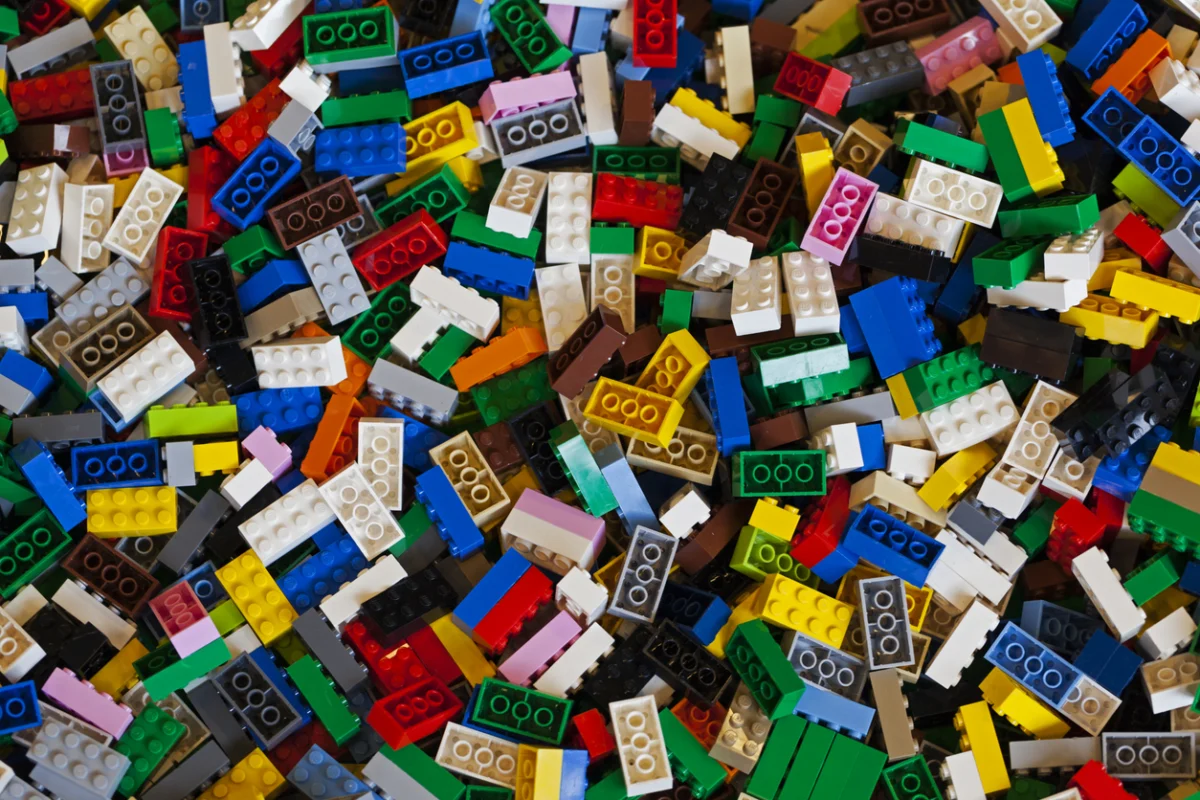
The emergence of high-production, stop-motion animation featuring childhood toys to depict international military conflict has signaled a paradigm shift in the landscape of global crisis communication. Recently, a Tehran-based creative collective known as Explosive Media—comprising fewer than ten digital natives, mostly aged between 19 and 25—released a series of viral videos depicting Iranian missile strikes on Israeli and American targets. The medium of choice was not grainy insurgent footage or formal military broadcasts, but the colorful, tactile world of LEGO-style bricks. Accompanied by a hip-hop soundtrack and an aesthetic reminiscent of Saturday morning cartoons, the campaign achieved a reach estimated at over one billion views across various digital networks.
This phenomenon represents what experts are calling the "Second Outbreak" of crisis communication: a move away from the kinetic reality of war toward a perceptual battleground where nostalgia, irony, and pop culture are weaponized to bypass traditional cognitive defenses. For public relations practitioners, government officials, and corporate reputation managers, this evolution renders traditional crisis playbooks obsolete, as the conflict is no longer fought solely over facts, but over the emotional and symbolic associations of the audience.
The Explosive Media Campaign: A Case Study in Aesthetic Warfare
The campaign spearheaded by Explosive Media utilized a sophisticated understanding of Western digital culture. By repurposing the "Make America Great Again" (MAGA) slogan into "MIGA" (Make Iran Great Again) and integrating the rhetoric of American political figures into viral hooks, the creators successfully mapped regional military objectives onto Western domestic grievances. The production quality was notably high, featuring lighting and editing techniques often associated with major animation studios like Pixar or DreamWorks.
The strategic brilliance of the campaign lay in its "symbolic violence." By replacing human casualties with plastic minifigures and real explosions with stylized cartoon fire, the content avoided the immediate "shock and disgust" response that typically triggers content moderation algorithms on platforms like TikTok, Instagram, and X (formerly Twitter). Instead, it invited "playful" engagement. The irony was layered so heavily that for many young viewers, the distinction between sincere geopolitical propaganda and "trolling" became irrelevant.
Statistical Analysis of the Digital Contagion
According to an analysis by the Canadian Rapid Response Mechanism, the initial month of the Explosive Media campaign saw 83 million confirmed views. However, the true scale of the impact was found in the organic amplification. Broader network estimates from the Institute for Strategic Dialogue (ISD) suggest that the content, through remixes, shares, and reaction videos, crossed the one-billion-view threshold.
Unlike traditional bot-driven disinformation campaigns, much of the momentum was driven by genuine users. Analysis indicates that Western teenagers and young adults were the primary carriers of the content. The reasons for this organic spread include:
- Emotional Resonance: The use of LEGO bricks tapped into deep-seated nostalgic comfort.
- Political Catharsis: The content aligned with existing anti-establishment sentiments or progressive grievances regarding foreign policy.
- Algorithmic Favorability: Because the videos lacked graphic violence, they were promoted by recommendation engines that usually suppress war-related imagery.
A Chronology of the Aesthetic Shift in Propaganda
To understand the gravity of this shift, one must look at the evolution of digital information warfare over the last decade:
- 2014–2016 (The Shock Era): Groups like ISIS utilized high-definition, graphic violence to instill fear and recruit through shock value. These were largely suppressed by platform-wide bans on "Graphic Content."
- 2017–2021 (The Meme Era): State actors began using "shitposting" and low-fidelity memes to influence elections and public opinion. These focused on humor but remained clearly identified as political speech.
- 2022–Present (The Aesthetic Era): The rise of "Explosive Media" and similar entities marks the transition to high-aesthetic, nostalgic, and symbolic content. Here, the propaganda is "wrapped" in the safety of childhood imagery, making it harder to detect and easier to consume.
The Theory of the "Second Outbreak"
Ishola Nasirudeen Ayodele, dean of The School of Impactful Communication, posits that modern crises now involve two distinct outbreaks. The "First Outbreak" is kinetic and tangible: it consists of the physical events—the bombs, the casualties, the corporate failures, or the legal filings. This outbreak is managed through traditional PR methods: fact-checking, press briefings, and official statements.
The "Second Outbreak" is perceptual. It is the silent infection of meaning. It does not ask for permission from borders or fact-checkers; it rides on the symbols of the collective subconscious. When a generation’s emotional immune system is rewritten to associate military hardware with the toys of their youth, the "Second Outbreak" has successfully bypassed the logic-based defenses of the public.
Institutional and Governmental Responses
The scale of the Iranian LEGO campaign forced a shift in how Western institutions respond to digital narratives. Notably, the White House began releasing its own cinematic "hype videos" to counter the aesthetic appeal of adversarial propaganda. This move was an admission that pure fact-checking is insufficient when competing against high-engagement aesthetics.
However, content moderation systems remain largely ill-equipped for this challenge. Algorithms are trained to recognize blood and weapons, but they struggle to interpret the ideological subtext of a plastic brick. This "moderation gap" allows symbolic violence to travel faster and further than factual counter-narratives.
Implications for Corporate Crisis Management
While the Explosive Media case is geopolitical, the underlying mechanics are already infiltrating the corporate world. Brands are no longer just fighting negative news cycles; they are fighting "aesthetic reframing."
For example, a corporate environmental disaster is no longer just a headline; it becomes a Minecraft-style simulation shared by millions, or a Studio Ghibli-inspired animation that frames the corporation as a faceless monster. When a crisis is transformed into "content," it gains a shelf-life and a reach that a standard apology or press release cannot match.
Strategic Recommendations for PR Practitioners
To navigate this new landscape, communication professionals must adopt a "Perceptology" framework—the discipline of perception surveillance. This involves three critical shifts in strategy:
1. Treating Narrative as a Pathogen
Narratives should be analyzed using epidemiological models. Practitioners must trace the "vectors" of a story—the platforms and formats it inhabits—and calculate its reproductive rate (how many new users are reached per share). Identifying "super-spreader" aesthetics, such as LEGO or Minecraft styles, allows organizations to predict which stories will gain the most traction.
2. Competing on Emotion and Aesthetics
In the current digital economy, the most emotionally coherent story wins, not necessarily the most factual one. Organizations must invest in creative talent that understands cultural nuances and visual storytelling. A counter-narrative delivered via a PDF statement will invariably lose to a counter-narrative delivered via a compelling, high-production video.
3. Continuous Emotional Mapping
Reputation management can no longer be reactive. Organizations must continuously track the emotional landscape of their stakeholders—what they fear, what they remember, and what they find comforting. Understanding these triggers before a crisis hits allows for the creation of "reputational reserves" that can be drawn upon when a narrative attack occurs.
The Cultural Significance of "The Horse of Conversation"
The Yoruba proverb, "Proverb is the horse of conversation; when the conversation falters, it is the horse that carries it forward," provides a poignant metaphor for this shift. In the context of modern communication, the "proverb" is the image, the nostalgia, and the aesthetic. Traditional corporate messaging is the conversation, but when the public stops listening to official channels, it is the "horse"—the viral, nostalgic image—that carries the meaning across barriers.
The message that travels the farthest is rarely the most factual; it is the one that tells the most compelling story. In an era where a plastic minifigure can make a missile strike feel like a triumph of justice, the shared perceptual ground of society is under threat.
Conclusion: The New Infrastructure of Perception
The success of the Iranian LEGO campaign demonstrates that perception has become a form of critical infrastructure. The "bricks" are already flying, and the battlefield has moved into the social media feeds of the next generation. For organizations and governments alike, the challenge is no longer just to tell the truth, but to make the truth as aesthetically and emotionally resonant as the fiction that opposes it.
The crisis communication playbook requires a new chapter—one that acknowledges that in the digital age, war is no longer just played with soldiers, but with the very symbols of our childhood. Failure to adapt to this reality ensures that by the time an organization notices the "Second Outbreak," the battle for public perception has already been lost.