

The landscape of digital experimentation is undergoing a fundamental shift as artificial intelligence transitions from a speculative tool to a core component of conversion rate optimisation (CRO) workflows. Katie Faulkner, an Optimisation Strategist at FORJ Digital and the most recent winner of the “SpeakUp to Uplevel” competition—an annual initiative hosted in partnership with Women in Experimentation—has become a central figure in this dialogue. Her recent insights highlight a growing movement within the tech industry to balance rapid automation with the nuanced psychological needs of the “human behind the click.” As businesses increasingly look to data-driven strategies to navigate economic volatility, the methodologies employed by experts like Faulkner provide a blueprint for sustainable growth and digital innovation.
The Interdisciplinary Path to Optimisation
Faulkner’s entry into the field of conversion rate optimisation was characterized by what she describes as a “happy accident,” yet her background reflects the interdisciplinary nature of modern digital marketing. Combining a foundation in science and data with an appreciation for art and customer service, Faulkner’s career trajectory underscores a broader industry trend: the most effective optimisers are those who can bridge the gap between hard analytics and creative empathy.

In the early stages of her career, Faulkner sought a role within digital marketing that could synthesize these disparate interests. Upon the recommendation of a mentor who recognized the potential for CRO to serve as a nexus for data and design, she pivoted into the discipline. This transition mirrors the evolution of the CRO industry itself, which has moved away from simple A/B testing of button colors toward a sophisticated understanding of user behavior and cognitive load. Today, the discipline is increasingly recognized not just as a subset of marketing, but as a critical business function that impacts everything from product development to customer retention.
Redefining the Workflow: AI as a Collaborative Agent
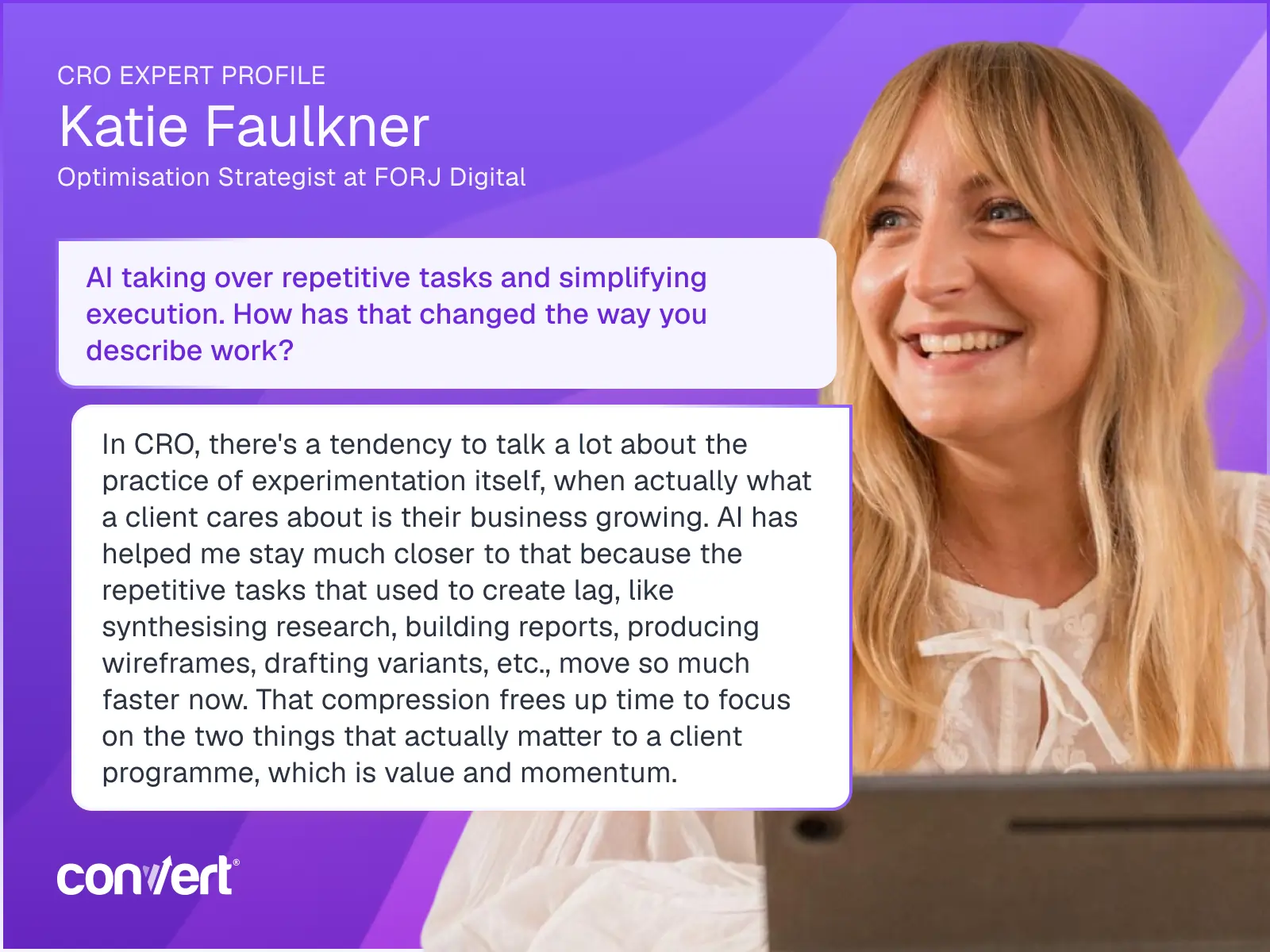
A primary focus of Faulkner’s recent work involves the integration of artificial intelligence into the experimentation lifecycle. Rather than viewing AI as a replacement for human strategists, she advocates for a “middle ground” approach where AI agents function as collaborative team members. In this model, AI is tasked with high-volume, repetitive duties such as synthesizing raw qualitative data, generating initial wireframes from research insights, and drafting variant copy.
By delegating these tasks to AI, optimisation teams can significantly compress the time between hypothesis generation and test execution. Faulkner notes that tasks that previously required days of manual labor can now be completed in minutes. This efficiency does not merely serve to reduce overhead; it fundamentally alters the relationship between agencies and clients. By reducing “lag,” practitioners can maintain momentum, allowing for more “bold and ambitious” experiments that would have previously been stalled by production bottlenecks.

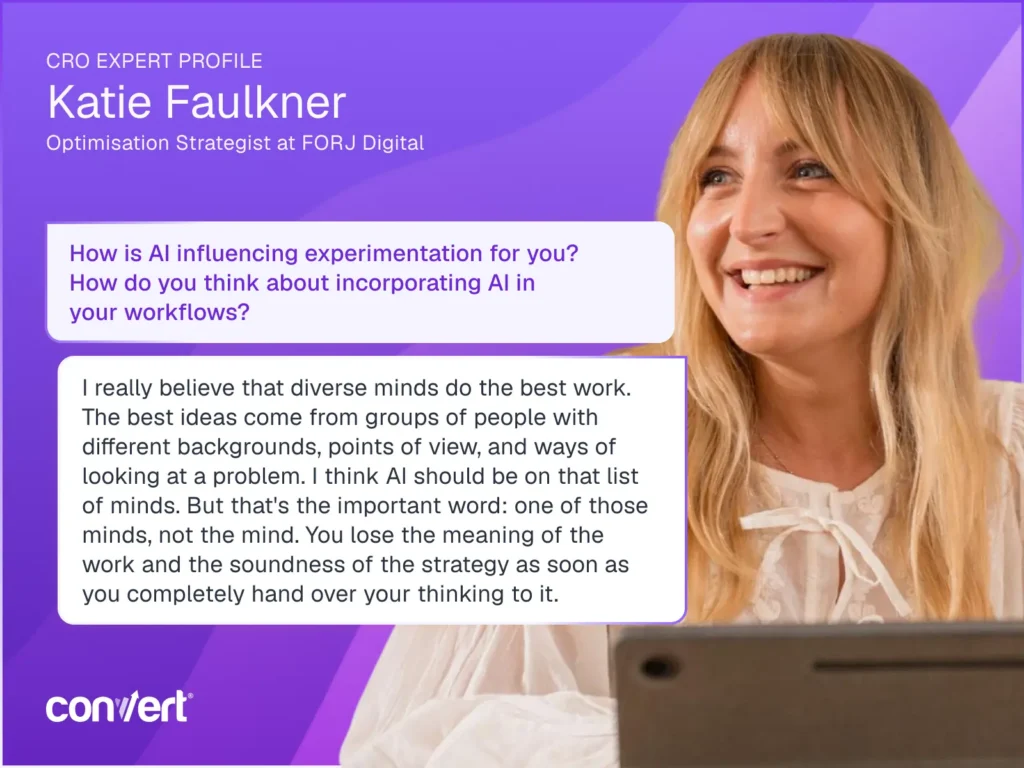
However, Faulkner remains cautious about the total surrender of strategy to automation. She asserts that the soundest strategies emerge from a diversity of perspectives—a “list of minds” that includes AI but is anchored by human intuition. The quality of AI output remains strictly tethered to the quality of human input, specifically the precision of the prompts and the strategic framework provided by the practitioner.
The Future of Web Architecture: From Templates to Dynamic Generation
Looking toward the horizon of 2026 and beyond, the CRO field is expected to move past traditional testing platforms. Faulkner predicts a shift toward “predictive browsing,” where AI is integrated directly into browsers and website backends to anticipate user intent in real time. The logical conclusion of this trajectory is the obsolescence of static website templates.
In this envisioned future, web pages will not load as pre-defined structures. Instead, they will assemble themselves module by module based on a visitor’s real-time behavioral signals, past interactions, and predicted needs. This level of hyper-personalization represents the “invisible experiment,” where the user experience is constantly and imperceptibly refining itself. While some platforms already allow for A/B tests triggered by behavioral signals, the move toward fully generative interfaces represents a paradigm shift in how digital real estate is managed.
Industry data supports this outlook. The global CRO software market is projected to grow at a compound annual growth rate (CAGR) of over 10% through 2030, driven largely by the integration of machine learning and real-time personalization engines. As these technologies mature, the role of the CRO practitioner will shift from manual tester to “architect of algorithms,” overseeing the systems that govern these dynamic experiences.
Bridging the Gap Between Online and In-Person Experiences
Faulkner’s methodology is rooted in solving complex business models where the user journey is often fragmented. One of her notable recent projects involved developing a budget planner for an amusement park. The initiative addressed a common friction point: the discrepancy between a customer’s online booking price and the actual total spend on the day of the visit. By creating a transparent, helpful tool that accounted for “hidden” costs, the project moved the online experience from being merely transactional to being genuinely consultative.
This approach reflects a broader trend in the luxury and retail sectors. Faulkner cites several industry benchmarks as examples of high-level behavioral thinking:
- AO.com: The use of comparison pop-ups triggered by the action of copying a product serial number.
- Charlotte Tilbury: The development of an online “shade finder” that replicates a service previously exclusive to in-person consultations.
- Sézane: A strategy of sorting Product Listing Pages (PLP) by color rather than price or popularity, which reduces cognitive load and encourages a “discovery” mindset.
These examples illustrate that the most successful experiments often occur in the “liminal space” between digital convenience and human interaction. By treating the customer as a person with specific anxieties and needs—rather than a data point in a funnel—businesses can build deeper brand trust.
Building Credibility and Community in a Niche Field
The “SpeakUp to Uplevel” competition, which Faulkner recently won, highlights the importance of visibility for women and underrepresented voices in the experimentation space. Despite the technical nature of the field, Faulkner emphasizes that building professional credibility in 2026 relies heavily on “being human” and fostering authentic connections.
Based in Shropshire, a region not traditionally viewed as a global tech hub, Faulkner has prioritized community-building to overcome the isolation that can occur in niche disciplines. Her success in the “SpeakUp to Uplevel” initiative serves as a case study in how “deep thinking” and quality of insight can outweigh the industry’s typical preference for “speed and volume.” She advocates for a deliberate approach to professional presence, where practitioners allow themselves the time to process information before speaking, thereby ensuring that their contributions are substantive and impactful.
Analysis of Broader Industry Implications
The insights provided by Faulkner suggest that the CRO industry is at a crossroads. As AI lowers the barrier to entry for technical execution, the “value” of a practitioner will no longer be measured by their ability to run tests, but by their ability to interpret the “why” behind the data.
For businesses, the implications are clear: those that continue to rely on static, transactional websites will likely lose market share to competitors who adopt dynamic, AI-driven architectures. However, the transition to these advanced systems requires a robust ethical framework to ensure that predictive algorithms do not become manipulative.
Furthermore, the shift from “process-oriented” conversations to “impact-oriented” conversations—focusing on how experimentation drives business growth rather than just how many tests were run—is a sign of a maturing industry. As Faulkner notes, when a program moves quickly and demonstrates clear value, it builds the institutional trust necessary to take the bold risks that lead to true innovation.

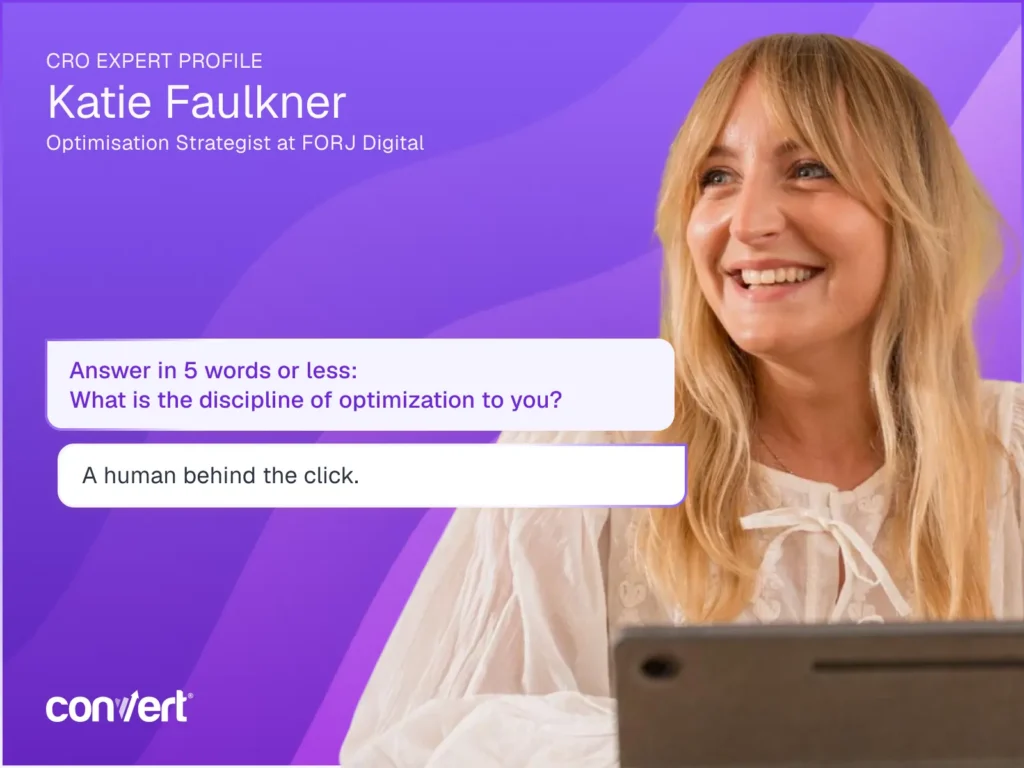
The future of conversion rate optimisation, therefore, is not a choice between human and machine, but a sophisticated integration of both. By maintaining a focus on the “human behind the click” while leveraging the computational power of AI, the next generation of optimisers will be equipped to create digital experiences that are not only more efficient but more resonant with the people they serve. Faulkner’s work at FORJ Digital and her recognition by the Women in Experimentation community signal a move toward this more holistic, value-driven era of digital marketing.







