

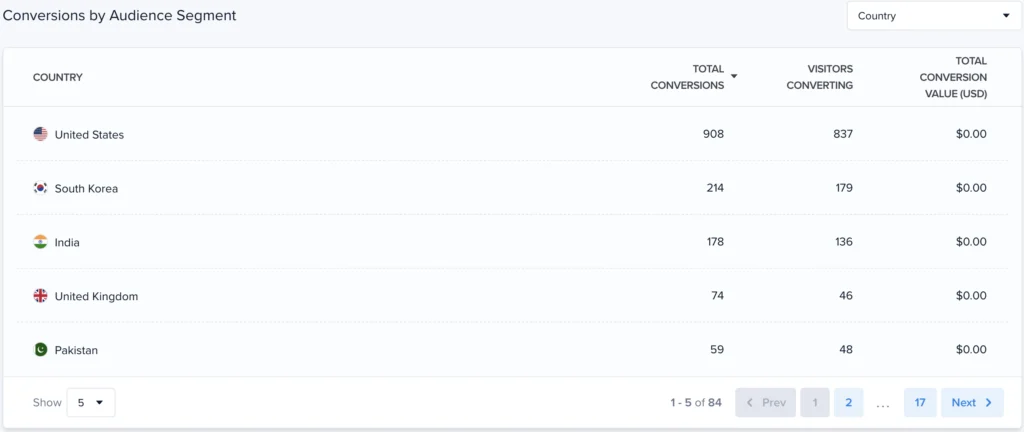
The digital analytics landscape has undergone a significant transformation with the latest update from Crazy Egg, a pioneer in heatmapping and user behavior visualization. The company has officially integrated Audience Segment breakdowns into its Conversion tracking suite, allowing website owners and digital marketers to dissect performance data with unprecedented granularity. This development marks a strategic shift for the platform, moving beyond visual behavioral cues toward a more robust, data-driven framework that directly links user demographics and technical attributes to bottom-line business outcomes.
By enabling this feature, Crazy Egg provides users with the ability to identify which specific visitor groups yield the highest conversion rates. This allows for a more targeted approach to traffic acquisition and user experience (UX) optimization. The update is particularly notable for its ease of implementation, as it requires no additional tracking code or manual configuration. Audience Segment data is applied retroactively to any previously tracked conversions, ensuring that long-term users can immediately access historical insights to inform their future strategies.
Technical Overview and Navigation
The new functionality is housed within the existing “Conversions” module of the Crazy Egg dashboard. To access the segmented data, users are directed to navigate to the Conversions tab and select a specific “Conversion Name” associated with a tracked event, such as a newsletter sign-up, a product purchase, or a lead form submission. Upon selecting the event, a detailed report is generated. By scrolling to the bottom of this report, users will find the new “Conversions by Audience Segment” section.
This section categorizes conversion performance based on several key variables, which typically include device type (desktop, mobile, tablet), browser, operating system, and referral source. By presenting this data in a consolidated view, the platform eliminates the need for complex cross-referencing between disparate analytics tools. The interface is designed to highlight discrepancies in performance, such as a high conversion rate on desktop compared to a significantly lower rate on mobile, which often indicates a technical friction point or a non-responsive design element.
The Strategic Importance of Audience Segmentation
In the current digital economy, aggregate data often obscures the nuances of user behavior. A website might boast a healthy 3% conversion rate, but that figure often hides the fact that one segment may be converting at 10% while another is at 0.5%. The introduction of Audience Segments within Crazy Egg’s conversion reports addresses this “averages trap.”
Digital marketers can now pinpoint exactly where to allocate their advertising budgets. For instance, if the data reveals that users arriving via LinkedIn convert at a rate three times higher than those from Facebook, the marketing team can reallocate spend to maximize Return on Ad Spend (ROAS). Conversely, identifying segments with poor conversion rates allows UX designers to conduct targeted A/B tests to resolve specific hurdles faced by those users, such as slow loading times on specific browsers or poorly scaled buttons on mobile devices.
Chronology of Platform Evolution
Crazy Egg, co-founded by Hiten Shah and Neil Patel in 2005, was one of the first tools to popularize the use of heatmaps to understand how visitors interact with a webpage. Over the last two decades, the platform has evolved through several distinct phases:
- The Heatmap Era (2005–2012): Focus was primarily on visual representations of clicks (Heatmaps) and scroll depth (Scrollmaps).
- The Behavioral Expansion (2013–2018): Introduction of “Confetti” reports, which allowed users to see clicks segmented by referral source, and “Snapshots” for point-in-time analysis.
- The Full-Stack Optimization Phase (2019–2023): The platform integrated A/B testing, session recordings, and basic conversion tracking to compete with high-end enterprise solutions.
- The Granular Insights Era (2024–Present): The current update represents a move toward deep-dive analytics, bridging the gap between simple visual tools and complex data science platforms like Google Analytics 4 (GA4) or Mixpanel.
This latest update is a direct response to the increasing demand for “actionable” data—information that doesn’t just show what happened, but provides a clear path for what to do next.
Supporting Data and Market Context
The move to enhance segmentation comes at a time when the Conversion Rate Optimization (CRO) market is projected to grow significantly. Industry benchmarks suggest that the average e-commerce conversion rate hovers between 2% and 3%. However, companies that utilize advanced segmentation and personalization strategies often see a 10% to 20% uplift in these figures.
Recent studies in the SaaS and retail sectors indicate that:
- Mobile traffic now accounts for over 58% of global web traffic, yet mobile conversion rates often lag behind desktop by as much as 50%.
- Personalized calls-to-action (CTAs) perform 202% better than basic CTAs.
- Segmented marketing campaigns can lead to a 760% increase in revenue for certain industries.
Crazy Egg’s decision to integrate these segments into their conversion reports allows small-to-medium-sized businesses (SMBs) to leverage these statistics without needing a dedicated data science team.
Industry Reactions and Expert Analysis
While Crazy Egg has not released formal statements from external partners, the sentiment among digital agency professionals suggests that this update simplifies the workflow for “growth hackers” and CRO specialists. By housing both the “what” (conversion data) and the “how” (visual behavior) in one place, the platform reduces the “tool fatigue” that often plagues modern marketing departments.
Analytic experts note that the retroactive nature of the data is a significant competitive advantage. Most analytics platforms only begin tracking segmented data from the moment a goal or event is created. Crazy Egg’s ability to overlay existing Audience Segment data onto previously recorded conversions allows for immediate “before and after” comparisons, which is invaluable for assessing the impact of recent site changes.
However, some analysts point out that as privacy regulations like GDPR and CCPA become more stringent, the reliance on browser-based tracking and referral data must be handled with care. Crazy Egg’s approach, which focuses on anonymized behavioral segments rather than individual PII (Personally Identifiable Information), appears to align with current privacy-first trends in the tech industry.
Broader Implications for Digital Marketing
The implications of this update extend beyond simple reporting. It signals a broader trend in the tech industry where “visual analytics” and “hard data” are merging. For years, there was a divide between tools that showed you where people clicked (Crazy Egg, Hotjar) and tools that showed you if they bought something (Google Analytics, Adobe Analytics). This update effectively collapses that divide.
Furthermore, this feature empowers a more democratic approach to data within organizations. Because Crazy Egg’s interface is notably more intuitive than the often-criticized GA4 interface, non-technical stakeholders—such as product managers, content creators, and business owners—can now answer complex questions about user performance independently.
For example, a content manager can now see if a specific blog post is driving conversions among mobile users specifically, rather than just looking at total page views. This level of insight encourages a culture of experimentation and data-backed decision-making.
Future Outlook
As Crazy Egg continues to refine its conversion suite, industry watchers expect further integrations with artificial intelligence and machine learning. Future iterations may include “Automated Insights,” where the platform proactively alerts users to segments that are underperforming or identifies “hidden gems”—segments that are converting well but receiving little traffic.
For now, the addition of Audience Segments to Conversion reports provides a powerful, accessible, and retroactive tool for any organization looking to optimize its digital presence. By focusing on the intersection of user identity (segments) and user action (conversions), Crazy Egg has solidified its position as a critical component of the modern marketing technology stack. The ability to see which visitors have the best conversion rates ensures that businesses are not just driving traffic, but driving the right traffic.







