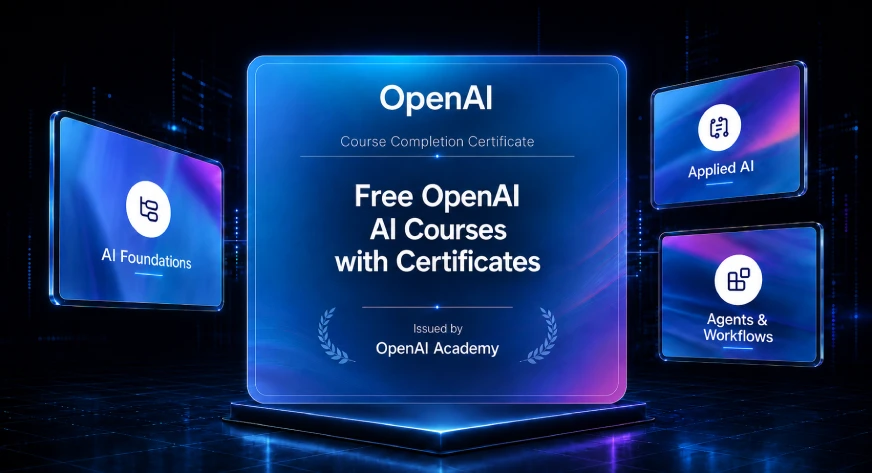
OpenAI, the organization responsible for the development of the industry-leading GPT-4 and ChatGPT models, has officially expanded its educational footprint through the launch of the OpenAI Academy. This new learning platform is designed to provide professionals, developers, and everyday users with a structured pathway to mastering artificial intelligence through a series of specialized courses. Unlike many proprietary training programs that require high subscription fees, the OpenAI Academy offers its curriculum entirely free of charge, providing a formal certificate of completion for those who successfully pass the final assessments. The initiative represents a strategic shift for the San Francisco-based company, moving beyond the provision of AI tools toward the active cultivation of a global workforce capable of navigating an increasingly automated economy.
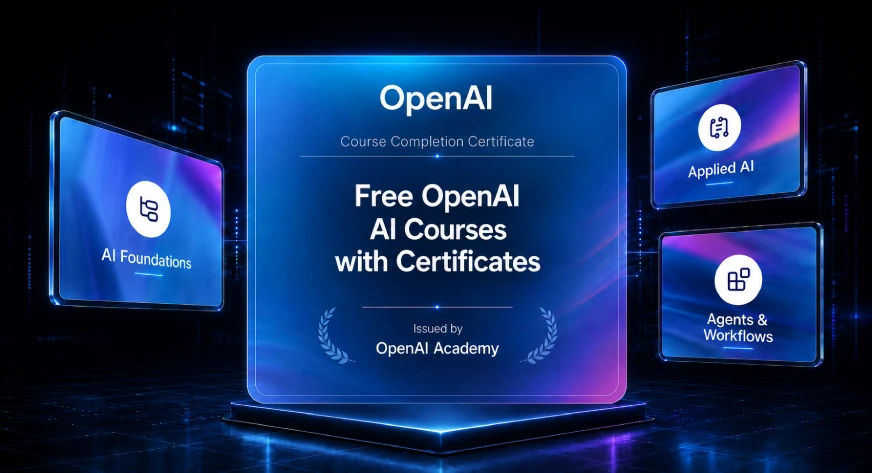
The curriculum is currently structured around three foundational pillars: AI Foundations, Applied AI Foundations, and Agents and Workflows. These courses are designed to take a learner from a state of general curiosity to a level of technical proficiency where they can deploy autonomous agents within a corporate environment. By offering these resources at no cost, OpenAI is positioning itself as a central hub for AI literacy, challenging the traditional dominance of academic institutions and third-party certification providers in the technology sector.
The Evolution of OpenAI’s Educational Mission
The launch of these courses is not an isolated event but rather the culmination of a broader strategy to democratize access to advanced technology. Since the public release of ChatGPT in late 2022, the world has seen a meteoric rise in the demand for AI skills. However, a significant “AI divide” has emerged, where individuals and organizations with high capital have access to the best training, while others are left behind.
In late 2024, OpenAI first announced the “OpenAI Academy” as an initiative aimed at supporting developers and organizations in low- and middle-income countries. This latest iteration of the platform expands that vision to a global audience, focusing on upskilling professionals across all sectors. The timeline of OpenAI’s educational outreach suggests a maturation of the company’s identity—from a research lab to a platform provider, and now to a global educator. This move aligns with the company’s stated mission of ensuring that artificial general intelligence (AGI) benefits all of humanity, a goal that requires the global workforce to understand how to interact with and govern these systems effectively.
Detailed Curriculum Analysis: From Basics to Agents
The OpenAI Academy curriculum is strategically tiered to accommodate different levels of technical expertise, ensuring that the barrier to entry remains low while the ceiling for growth remains high.
1. AI Foundations: Establishing Digital Literacy
The “AI Foundations” course serves as the entry point for the curriculum. It is designed for individuals who have little to no prior experience with generative AI. Rather than focusing on the complex mathematics of neural networks, the course emphasizes practical interaction. It covers the mechanics of Large Language Models (LLMs), the art of “prompting,” and the necessity of adding context to AI queries to improve accuracy.
A critical component of this course is its focus on responsible AI use. As AI hallucinations—instances where a model confidently provides false information—remain a persistent challenge, OpenAI teaches learners how to review and verify outputs. This pedagogical approach shifts the user’s role from a passive recipient of information to an active supervisor of the AI.
2. Applied AI Foundations: Transitioning to Productivity
For professionals who understand the basics but struggle to integrate AI into their daily routines, the “Applied AI Foundations” course offers a pragmatic solution. This segment of the academy focuses on “workflows” rather than individual prompts. It teaches learners how to decompose complex professional tasks into a series of repeatable steps that can be augmented by AI.
In a corporate setting, the value of AI is often lost in fragmented use. This course addresses that by showing how to build checkpoints into AI-driven processes. By the end of this module, learners are expected to be able to use ChatGPT not just as a chatbot, but as a sophisticated productivity tool that handles data synthesis, report drafting, and administrative coordination.
3. Agents and Workflows: The Future of Autonomous Labor
The most advanced offering currently available is the “Agents and Workflows” course. In the current tech landscape, the industry is moving away from simple chat interfaces toward “Agentic AI”—systems that can perform tasks autonomously across different software platforms. This course teaches users how to direct these agents through structured tasks, defining clear boundaries, and setting specific output criteria.
This module is particularly relevant for developers and operations managers. It moves beyond the “one-and-done” prompt model, focusing instead on long-running processes where an AI agent might draft a project plan, research necessary components, and then alert a human supervisor for final approval. This represents the cutting edge of AI implementation in the workplace.
Supporting Data: The Economic Necessity of AI Upskilling
The urgency behind the OpenAI Academy’s launch is supported by a growing body of economic data. According to the World Economic Forum’s (WEF) “Future of Jobs Report,” nearly 44% of workers’ core skills are expected to be disrupted by 2027 due to the rapid advancement of technology, with AI being the primary driver. Furthermore, LinkedIn’s 2024 Global Talent Trends report indicated a 75% increase in the number of recruiters searching for “AI literacy” as a key requirement for non-technical roles.
By providing free certifications, OpenAI is directly addressing the “skills gap” that currently plagues the tech industry. Traditional higher education often moves too slowly to keep pace with the bi-weekly updates seen in the AI sector. Short-form, vendor-certified courses like those offered by the OpenAI Academy provide a more agile alternative for professionals looking to remain competitive in a shifting labor market.
Industry Reactions and Market Context
The tech industry has responded to OpenAI’s educational push with a mix of praise and strategic pivoting. Competitors such as Google and Microsoft have already established similar platforms, such as the Google Cloud Skills Boost and the Microsoft AI Skills Initiative. However, OpenAI’s unique position as the developer of the world’s most recognized AI brand gives its Academy a significant marketing advantage.
Industry analysts suggest that by offering free certificates, OpenAI is building a “moat” around its ecosystem. When professionals are trained specifically on OpenAI’s workflows and agent structures, they are more likely to advocate for the adoption of OpenAI’s enterprise tools within their respective companies. This creates a powerful feedback loop of education and enterprise adoption.
Educational experts have also noted the significance of the “free” aspect of the Academy. “The democratization of AI education is essential to prevent a new class of digital inequality,” says one analyst specializing in ed-tech. “When the most powerful tools in the world are paired with free, high-quality instruction, the potential for global innovation increases exponentially.”
Broader Implications: The Democratization of Expertise
The broader implications of the OpenAI Academy extend beyond individual career advancement. By standardizing AI education, OpenAI is helping to create a common language for AI implementation. When a professional in New York and a developer in Nairobi both hold the same “Applied AI Foundations” certificate, it creates a global standard for what “AI proficiency” looks like.
Furthermore, the focus on “Agents and Workflows” signals a shift in the nature of work itself. We are entering an era where “management” may no longer refer solely to the oversight of humans, but also to the orchestration of digital agents. The OpenAI Academy is essentially training the first generation of these “AI Orchestrators.”
However, the rise of vendor-specific education also raises questions about platform dependency. As more professionals rely on OpenAI for their credentials, the company gains significant influence over the “best practices” of the entire industry. This highlights the importance of the ethical and responsible use modules included in the courses, as the values instilled by OpenAI today will likely govern the AI interactions of tomorrow.

Conclusion: A Strategic Leap Forward
The OpenAI Academy represents a significant milestone in the maturation of the artificial intelligence sector. By offering free, high-quality, and certified education, OpenAI is not only expanding its user base but is also taking responsibility for the societal transition into the AI era.
For the individual professional, the Academy offers a clear, sequential path to relevance in a changing economy:
- AI Foundations for those starting their journey.
- Applied AI Foundations for those looking to optimize their professional output.
- Agents and Workflows for those ready to lead the next wave of autonomous automation.
As the platform continues to evolve, it is expected that more specialized courses—perhaps focusing on AI ethics, data privacy, or industry-specific applications in medicine and law—will be added. For now, the OpenAI Academy stands as a powerful resource for anyone looking to transition from an AI observer to an AI practitioner, providing the tools and the credentials necessary to thrive in the digital future.