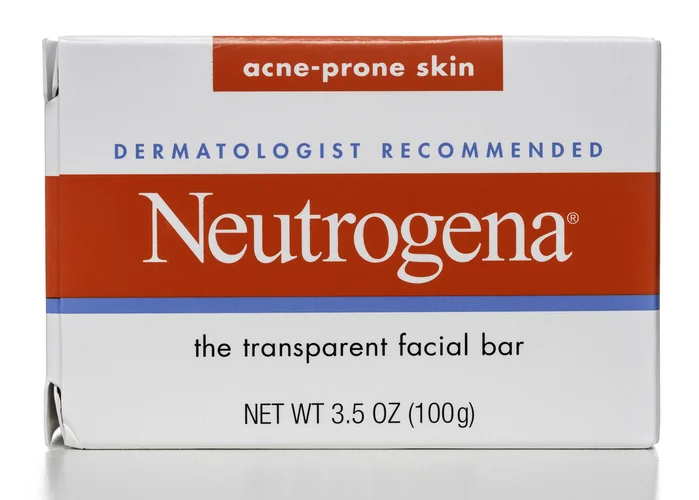
The global skincare giant Neutrogena has officially broken its silence following a week of intense public scrutiny and calls for a consumer boycott. The controversy stems from the resurfacing of allegations made by actress Hayden Panettiere regarding the termination of her long-standing partnership with the brand nearly a decade ago. The crisis, which gained renewed momentum following recent reports regarding Panettiere, has forced the Johnson & Johnson-owned subsidiary to address historical corporate decisions concerning mental health and brand representation. Simultaneously, the digital media landscape is reacting to Google’s rollout of its "Preferred Sources" feature, a strategic attempt to stabilize publisher traffic in an era of AI-generated search results, while the broader U.S. economy faces new questions following Walmart’s latest quarterly earnings report, which signaled a cooling in consumer spending.
Corporate Accountability and the Neutrogena Controversy
The current crisis facing Neutrogena centers on allegations that the brand terminated its contract with Hayden Panettiere in 2015 after she publicly disclosed her struggles with postpartum depression. Panettiere, who had been a prominent face of the brand for years, claimed that the company’s decision was directly linked to her mental health transparency. While the events took place 11 years ago, the recent resurfacing of her comments sparked a viral movement on social media platforms, with critics accusing the brand of stigmatizing mental health.
After several days of mounting pressure and a "blackout" on social media, Neutrogena issued a comprehensive statement via Instagram. The response was structured into three distinct pillars: a direct apology for the 2015 decision, an explanation for the delay in the brand’s response, and a commitment to future advocacy. Notably, the company took full responsibility for the actions of past leadership, acknowledging that the dismissal of Panettiere did not align with the brand’s current values.
The brand’s decision to turn off comments on the apology post drew mixed reactions from PR experts. While it prevented the spread of further vitriol, it also limited the "two-way street" of modern crisis communication. Furthermore, a Community Note on the platform provided additional context, clarifying the timeline of the 2015 events.
The implications of this apology are significant for the beauty and wellness industry. It highlights a shift in corporate responsibility where companies are increasingly held accountable for historical actions. For Neutrogena, the path forward involves more than just words; the company has pledged to partner with community organizations focused on mental health. Industry analysts suggest that the success of this recovery will depend on how quickly the brand can demonstrate tangible support for mental health initiatives, moving beyond the "shiny and happy" imagery typical of skincare advertising to address the holistic well-being of its consumers.
Chronology of the Neutrogena Brand Crisis
The timeline of the current controversy reflects the long-tail nature of corporate reputation in the digital age:
- 2006–2015: Hayden Panettiere serves as a high-profile brand ambassador for Neutrogena, appearing in numerous global campaigns.
- 2015: Panettiere publicly discusses her battle with postpartum depression. Shortly thereafter, her contract with Neutrogena is terminated.
- Early 2024–2026: Panettiere’s past interviews regarding the termination resurface on social media, gaining traction among mental health advocates.
- August 2026: Following the death of Panettiere (as referenced in the recent reports), public outcry reaches a fever pitch, leading to calls for a nationwide boycott of Neutrogena products.
- Thursday, August 2026: Neutrogena breaks its silence with a three-part apology on Instagram, admitting that the 2015 decision was a mistake.
Google’s Preferred Sources: A Lifeline for Digital Publishers
While legacy brands navigate PR crises, the digital publishing industry is grappling with a fundamental shift in how information is consumed. Google has officially launched "Preferred Sources," a new feature designed to mitigate the traffic declines caused by Large Language Models (LLMs) and AI-generated search summaries.
As Google’s own AI summaries and third-party chatbots increasingly provide direct answers to user queries, the traditional "click-through" model that sustains news organizations and content creators has come under threat. Preferred Sources allows websites to embed a dedicated button on their pages, enabling readers to "favorite" a source. Once a site is marked as a favorite, Google’s algorithms prioritize it in Search, Discover, and Google News feeds for that specific user.
Preliminary research into the feature suggests a significant impact on user behavior. Data indicates that users are twice as likely to click on a search result if it is labeled as a "Preferred Source." This move is seen as Google’s attempt to balance its push into AI with the need to maintain a healthy ecosystem of original content providers. However, critics argue that this favors established brands with existing loyal audiences, potentially making it harder for new or independent publishers to break through. For content marketers, the lesson is clear: in an AI-dominated landscape, the value of brand trust and direct audience relationships has never been higher.
The Power of Educational Content: The Jamie Peva Case Study
In a related shift within the social media landscape, a new model for professional branding is emerging—one that prioritizes information over direct sales. Jamie Peva, a real estate agent based in Washington, D.C., has become a primary example of this trend. While many realtors use social media to showcase luxury listings and "hard sell" their services, Peva has focused on the historical architecture and cultural heritage of Georgetown.
By producing high-quality, enthusiastic content about the history of his neighborhood—ranging from presidential anecdotes to local landmarks—Peva has seen a 20% increase in sales. His strategy, which he describes as the "digital version of a refrigerator magnet," focuses on being "passionately useful."
This approach offers a blueprint for brands across industries. By providing value that is independent of a transaction, professionals can build long-term brand affiliation. When followers eventually enter the market for a service, the "useful" content creator is the first person they recall. This pivot from "selling" to "teaching" is proving to be a resilient strategy in a crowded and often cynical social media environment.
Economic Indicators: Walmart’s Slump and the U.S. Consumer
On the macroeconomic front, Walmart’s latest earnings report has sent ripples through the financial sector. The retail giant, often considered a bellwether for the health of the U.S. consumer, reported its smallest sales gain since the pandemic. While comparable in-store and online sales grew by 2.6%, the figure fell short of previous quarters and led to a sharp decline in the company’s stock price, which dropped from $114.73 to $102.50 in the days following the announcement.
Walmart CFO John David Rainey attributed the slowdown largely to external economic pressures, specifically the rising cost of fuel. Rainey noted that consumers are increasingly forced to make "choices between necessities" as gas prices fluctuate. The mention of fuel costs also touched on political sensitivities, as rising energy prices remain a central point of debate in the current administration’s economic policy.
Despite the overall slump, Walmart continues to see a surprising trend: a surge in shoppers from households earning more than $100,000 annually. This suggests a "trading down" effect, where middle- and upper-income earners are seeking out value at big-box retailers to offset inflation. However, if even the world’s largest bargain retailer is seeing a deceleration in growth, it may indicate that the broader U.S. economy is finally cooling after years of post-pandemic resilience.
Analysis: The Interconnectedness of Trust and Economics
The events surrounding Neutrogena, Google, and Walmart, while seemingly disparate, are linked by a common thread: the evolving nature of trust in the modern economy.
For Neutrogena, trust is a matter of moral and social alignment. The brand’s failure to support a high-profile ambassador during a mental health crisis created a reputational deficit that took over a decade to manifest as a full-blown crisis. In today’s market, consumers do not just buy a product; they buy the values of the company behind it.
For Google and its publishers, trust is a functional necessity. As AI threatens to homogenize information, the "Preferred Sources" feature is a recognition that users still value human-led, authoritative brands. For publishers, the goal is no longer just to "rank" on page one, but to be "preferred" by a loyal audience.
Finally, Walmart’s earnings reflect the erosion of consumer confidence in the face of persistent inflation. When trust in the economy falters, even the most robust retailers must pivot. The shift in Walmart’s demographic—attracting wealthier shoppers—shows that value is the new premium.
As we move toward the final quarters of 2026, the corporate world remains in a state of flux. Whether it is through rigorous PR damage control, the adoption of new digital tools, or the navigation of a shifting economy, the premium on transparency and utility has never been greater. Companies that fail to adapt to these expectations—both in how they treat their people and how they serve their customers—face a precarious future in an increasingly discerning marketplace.