

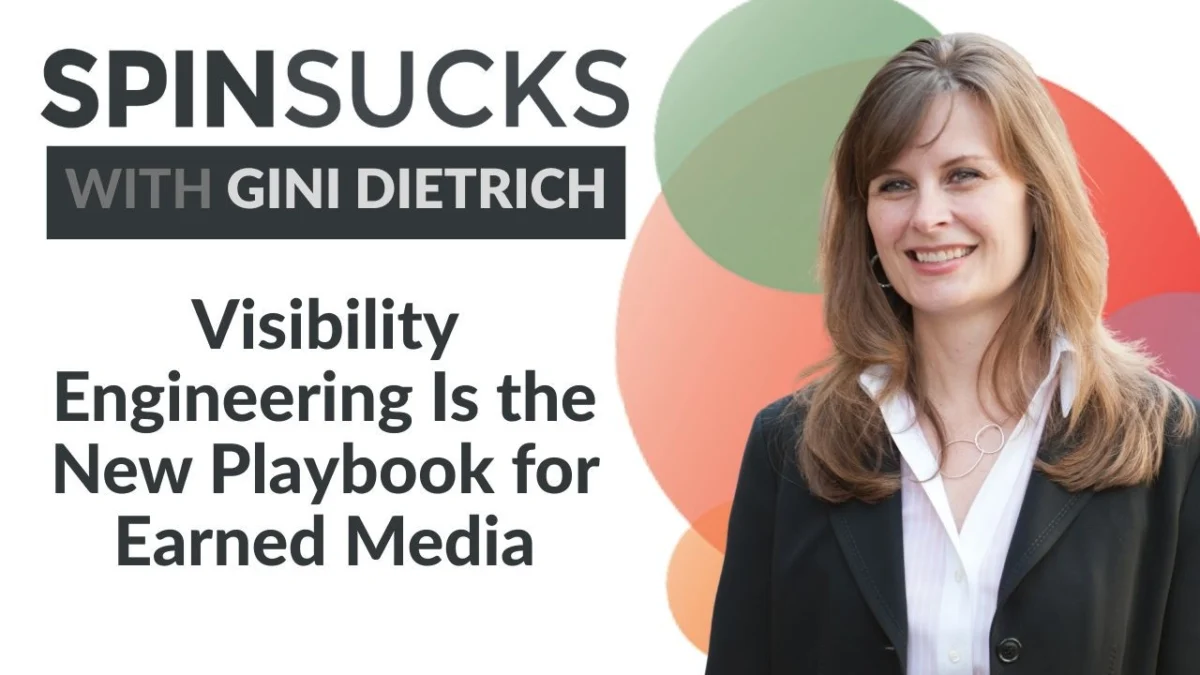
The traditional landscape of public relations and brand communication is undergoing a fundamental transformation as artificial intelligence (AI) fundamentally alters how audiences discover, validate, and trust information. For decades, a high-profile media placement served two primary functions: it was the mechanism for discovery and the ultimate proof of credibility. In this legacy model, a mention in a reputable trade publication or a quote in a national newspaper was often the first point of contact between a brand and a potential client. However, as 2026 approaches, the emergence of "Visibility Engineering" marks a shift away from isolated media wins toward a system of integrated authority designed to satisfy both human scrutiny and algorithmic synthesis.
Under the current paradigm, the journey from awareness to conversion no longer begins exclusively on search engines or company websites. Instead, stakeholders are increasingly turning to Large Language Models (LLMs) such as ChatGPT, Claude, and Gemini to synthesize information, provide recommendations, and curate shortlists of trusted experts. This shift necessitates a move from "disconnected earned media"—where press hits are treated as isolated trophies—to a "credibility loop" that connects owned content with earned validation.
The Evolution of Media Discovery: A Chronological Shift
To understand the necessity of Visibility Engineering, one must look at the timeline of digital discovery. In the early 2000s, the "Press Release Era" dominated, where visibility was a matter of distribution. By the 2010s, the "SEO and Social Media Era" shifted the focus to keywords and viral engagement, where search engine results pages (SERPs) were the primary gatekeepers of authority.
By 2023, the mainstreaming of generative AI introduced the "Synthesis Era." In this current stage, AI systems do not merely provide a list of links; they provide direct answers. If a brand’s expertise is not consistently reinforced across multiple platforms, these AI systems may fail to recognize the brand as a topical authority. Consequently, a single, prestigious media placement, while valuable, is no longer sufficient to maintain a brand’s presence in an AI-generated response. The market has moved from a "discovery-by-link" model to a "discovery-by-association" model.
Understanding the Mechanics of Visibility Engineering
Visibility Engineering is defined as the deliberate practice of connecting owned and earned media to ensure expertise is clear, consistent, and backed by proof across the digital ecosystem. Unlike traditional PR, which often prioritizes the quantity of placements, Visibility Engineering prioritizes the "signal" those placements send to both humans and machines.
In an AI-shaped market, credibility is built on patterns. LLMs are trained to identify repeated signals across diverse sources. When a brand’s owned content (such as deep-dive articles or research papers) aligns perfectly with its earned media (interviews, guest columns, and news mentions), it creates a "reinforcement loop." This consistency makes it easier for AI systems to validate the brand’s expertise and surface it as a "trusted answer" when users query specific topics.
Industry analysts note that "volume" is no longer the winning metric. Instead, the focus has shifted to "citable proof." This involves providing language that is easily repeatable, quotes that offer unique perspectives, and evidence that stands up to cross-referencing by sophisticated algorithms.
The Anchor Hub: The Strategic Foundation of Authority
A critical component of Visibility Engineering is the "Anchor Hub." Most communications teams currently suffer from a surplus of fragmented content—blogs, webinars, and social posts that lack a central throughline. An Anchor Hub corrects this by establishing a deep, defensible "home base" on a company’s website.
An Anchor Hub is not a generic services page or a list of recent news. It is a comprehensive reference entry built around a specific buyer question or industry challenge. It serves as an evidence library that defines the brand’s methodology, provides useful context, and offers citable data.
The strategic value of the Anchor Hub lies in its ability to anchor earned media. Without this foundation, a media placement must carry the full weight of the brand’s credibility on its own. With an Anchor Hub, every byline, podcast appearance, or interview acts as a pointer that reinforces the central source of truth. This creates a durable asset that continues to build authority long after the initial media cycle has ended.
Data Analysis: The Decline of the "Trophy Case" Model
Data from recent marketing surveys suggests that the traditional "trophy case" approach to PR—where companies collect media mentions without integrating them into a broader strategy—is yielding diminishing returns. According to industry benchmarks, over 65% of Google searches are now "zero-click," meaning users find the information they need on the results page or via an AI summary without ever visiting the source website.
Furthermore, internal communications audits reveal that disconnected media hits often fail to influence AI recommendations. If an executive is quoted on Topic A in one publication, but the company’s website focuses on Topic B, the AI perceives a "weak signal," reducing the likelihood that the brand will be cited as a leader in either field.
In contrast, brands that utilize a "credibility loop" see a significant increase in topical association. By aligning earned media with a central Anchor Hub, organizations can ensure that their experts are consistently associated with the right topics, thereby increasing their "share of model"—a new metric measuring how often a brand is mentioned in AI-generated answers compared to its competitors.
Industry Responses and the PESO Model Integration
The shift toward Visibility Engineering is being championed by advocates of the PESO Model® (Paid, Earned, Shared, Owned). Developed by communications expert Gini Dietrich, the PESO Model provides the structural framework for this integrated approach. Professional reactions to this shift have been largely positive among strategic communicators who argue that PR must evolve beyond the "clipbook" mentality.
"The problem isn’t that earned media is dying; it’s that it’s being asked to work in a vacuum," noted one senior communications strategist. "Visibility Engineering is the logical evolution of the PESO Model. It’s about ensuring that the validation we get from third parties (Earned) is directly tethered to the expertise we control (Owned)."
To facilitate this transition, industry groups are scheduled to host various professional development sessions. For instance, a webinar hosted by Qwoted on April 30, 2026, is expected to address how experts can refine their profiles and pitches to support this new model of authority. The focus of these industry discussions is moving away from "how to get a hit" toward "how to build a system of proof."
Broader Impact and Future Implications
The implications of Visibility Engineering extend beyond marketing and PR departments. For C-suite executives, this approach offers a more sustainable way to build personal and corporate brands. By focusing on a single, defensible topic—rather than trying to be visible everywhere at once—leaders can build "compounding authority."
For the broader media ecosystem, this shift may lead to higher-quality contributions. As brands realize that AI systems value depth and consistency over volume, there is an incentive to produce more substantive, research-backed content rather than superficial "thought leadership."
In the long term, the brands that thrive in an AI-driven market will be those that recognize the difference between being "seen" and being "believed." Visibility is a temporary state, often driven by a single news cycle or a viral moment. Authority, however, is a permanent asset built through engineered consistency.
Strategic Recommendations for Implementation
For organizations looking to adopt Visibility Engineering, the process begins with a diagnostic audit. Professionals are encouraged to query AI platforms about their own brands using incognito modes to establish a baseline of their current "AI presence." This reveals whether the brand is currently associated with its desired topics or if the signals are thin and inconsistent.
Following the audit, the next step is the creation of a single Anchor Hub. Rather than attempting to own multiple topics simultaneously, brands should identify one critical buyer question and build the most comprehensive, useful page on the internet for that specific issue.
Finally, all future earned media efforts must be filtered through this hub. Every interview and guest article should be evaluated based on whether it reinforces the "credibility loop." By measuring success through "idea reuse" and AI association rather than simple placement counts, communications teams can ensure they are building a foundation of authority that remains resilient in the face of technological change.
In conclusion, the era of "random visibility" is ending. As AI continues to mediate the relationship between brands and their audiences, the practice of Visibility Engineering provides a necessary roadmap for maintaining relevance. By connecting earned validation to owned expertise, brands can move from the trophy case to the credibility loop, ensuring they remain the trusted answer in an increasingly automated world.









