rifanmuazin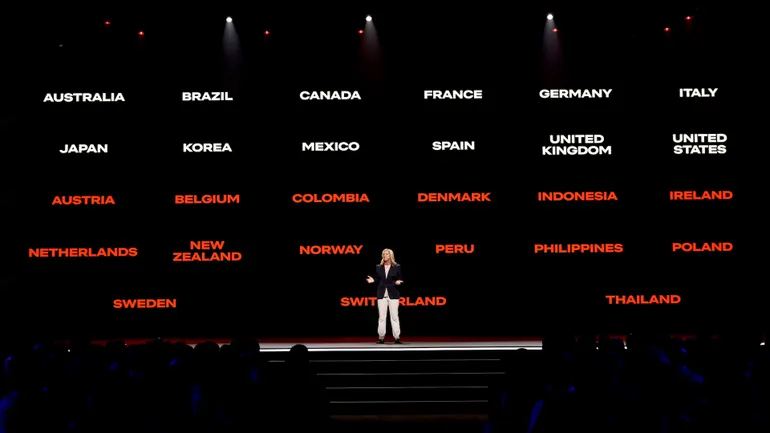
NEW YORK – At its latest upfront presentation, Netflix underscored its evolving role in the advertising landscape, articulating a vision of leveraging technology, entertainment, and expansive scale to connect advertisers with an increasingly engaged and growing global audience. Executives on May 13 presented a robust suite of impressive statistics, alongside the unveiling of new pilot programs and advanced capabilities in areas such as programmatic advertising, agentic artificial intelligence, and data-driven insights. The event, held against the backdrop of a competitive streaming market, aimed to solidify Netflix’s position not just as a player, but as a formidable force in the ad-supported video-on-demand sector.
The presentation, a blend of strategic announcements and star power, featured appearances from notable figures like Florence Pugh and Millie Bobbie Brown. A unique, and perhaps symbolic, element was the inclusion of three canine guests from the Westminster Kennel Club, a nod to Netflix’s upcoming broadcast of the prestigious dog show in 2027, signaling further diversification of its content and advertising opportunities.
Amy Reinhard, Netflix’s president of advertising, articulated the company’s strategic trajectory. "If the last couple of years were about proving we’re a durable player, this year is about establishing ourselves as a more formidable one," Reinhard stated during the presentation. "We’ve proven we’re effective. We’re expanding ads to more places, and we’re ready to compete with anyone." This declaration signals a heightened ambition for the streaming giant as it continues to mature its advertising business.
A Growing, Attentive Audience: The Netflix Advantage
Netflix, which recently transitioned to measuring monthly active viewers, reported a global audience of 250 million monthly active viewers. This figure is not only substantial but also represents a significant growth opportunity for advertisers. A key demographic insight revealed was that over 60% of new sign-ups are opting for the ad-supported plan, indicating a strong consumer appetite for lower-cost access to premium content. Furthermore, the platform boasts a unique audience proposition: nearly half of its members, 44%, who encounter an advertisement on Netflix have not seen that particular ad on traditional broadcast television or other streaming services. This provides advertisers with a valuable avenue to reach new and less saturated consumer segments.
The projected growth of this engaged audience is substantial. By 2027, Netflix plans to expand its ad-supported offerings from an initial 12 countries to an additional 15 markets, including Austria, Belgium, Colombia, Denmark, Indonesia, Ireland, Netherlands, New Zealand, Norway, Peru, the Philippines, Poland, Sweden, Switzerland, and Thailand. This geographical expansion will significantly broaden the reach for advertisers. Beyond traditional video ad inventory, Netflix is also set to introduce new ad opportunities across podcasts and vertical videos globally in 2027. This diversification caters to evolving media consumption habits and provides advertisers with more creative formats. Complementing these expansions, Netflix is also deepening its brand partnerships, including those with its official fan site, Tudum, offering integrated marketing opportunities.
The AI Revolution in Advertising: Netflix’s Technological Edge
Echoing themes from its recent earnings call, Netflix is aggressively integrating artificial intelligence and machine learning into its advertising infrastructure. The company highlighted its long-standing expertise in these technologies, now being repurposed to bolster its ad business. Several high-profile brands, including DoorDash, Target, and TurboTax, have already participated in pilot programs testing AI-powered capabilities designed to enhance the alignment between advertiser creative and Netflix’s content. This sophisticated matching technology is slated for deployment across all ad-supported regions by the end of 2026, promising more relevant and effective ad placements.
Netflix is also pioneering the use of AI agents for the automated management, optimization, and purchasing of ad inventory. This initiative complements its existing AI-driven tools, which assist in developing and refining media plans based on specific brand objectives. Further demonstrating the breadth of its AI integration, the company is utilizing AI to adapt advertising assets for various formats, such as vertical video and interactive pause ads. Moreover, Netflix is actively testing new personalized ad loads and dynamic frequency caps, which adjust in real-time based on individual viewing behavior.
"On top of new inventory, we’re also marrying art and science better than anyone else," Reinhard emphasized. "AI is already making advertising with Netflix easier and more efficient." This strategic focus on AI underscores Netflix’s commitment to providing advertisers with cutting-edge tools that drive performance and streamline campaign execution.
Streamlining Campaigns, Maximizing Impact: The Netflix Ads Suite
The upfront presentation also served as a platform to unveil new tools and capabilities within the Netflix Ads Suite, designed to simplify the entire advertising campaign lifecycle, from planning and buying to measuring outcomes. This comprehensive suite, which was rolled out to all ad-supported territories in the fall, aims to provide advertisers with a more integrated and efficient advertising experience.
The presentation featured insights from Nicolle Pangis, vice president of advertising at Netflix, who joined the company after a notable tenure as CEO of the cable ad sales company Ampersand. Pangis’s background in traditional media sales brings a valuable perspective to Netflix’s evolving advertising operations. "I know the pressure on every dollar is higher than ever, and I also know that you’re looking for fewer, more strategic partners who provide high-quality environments at the scale you need to streamline your buys and drive better results," Pangis stated, directly addressing the needs and challenges of advertisers in the current economic climate.
To facilitate data-driven decision-making, Netflix introduced a new Audience Insights API, enabling advertisers to gain a deeper understanding of member characteristics and viewing behaviors. A complementary Reach Curve API is designed to assist in forecasting campaign reach with greater accuracy. In terms of data collaboration, Netflix has strengthened its commitment to privacy-preserving data sharing by integrating with partners such as Snowflake and Amazon Web Services for data clean room solutions. The company announced plans to add InfoSum as a partner by the end of the year, further expanding its capabilities in secure data collaboration. This collaborative ecosystem also extends to agency partnerships, with Netflix working alongside Dentsu, Horizon, Omnicom, PMG, and Tinuiti on solutions that include planning APIs and clean rooms.
Expanding Programmatic Reach and Proving Performance
A significant development highlighted was the expansion of Netflix’s programmatic capabilities to include Live and Pause Ads, powered by Dynamic Ad Insertion technology. This enhancement allows clients to purchase ad placements through their preferred demand-side platform (DSP) partners. Initially launching in the U.S. and Canada this summer, this offering will see a broader rollout by the end of the year. Furthermore, Netflix is enabling programmatic audience targeting for all ad-supported countries on Amazon DSP by June 1, with similar integrations with Yahoo DSP to follow in the subsequent months. These advancements build upon previously announced partnerships, signaling a clear roadmap for enhanced programmatic access.
In an advertising ecosystem often grappling with the complexities of audience measurement, Netflix is actively positioning itself as a publisher that can demonstrably prove campaign outcomes, moving beyond mere impression metrics. The company presented data indicating that campaigns on Netflix deliver nearly double the brand-building impact of the average TV norm and outperform industry benchmarks for purchase intent by 23% when compared to competitors.
Case studies shared during the presentation underscored these performance claims. Dove, in partnership with Netflix for its campaign around the popular series “Bridgerton,” achieved over 1 billion impressions across seven markets. This campaign, which integrated consumer products and custom ad spots, resulted in an almost 60% increase in new shoppers for Dove products. Similarly, a collaboration between Airbnb and the new series “Nobody Wants This,” focused on promoting the booking platform’s experience offerings, significantly boosted awareness and purchase intent. This partnership delivered a return on ad spend more than double the industry benchmark and contributed to driving bookings.
"It’s no surprise that ads on Netflix drive greater attention, more brand awareness, higher engagement and more search and web visits, but they also drive higher sales, lift purchase intent and return on ad spend, compared to our competitors," Pangis concluded, reinforcing the platform’s efficacy in delivering tangible business results for advertisers. The strategic initiatives announced at this upfront presentation collectively signal Netflix’s ambition to become a dominant and indispensable partner for advertisers seeking to connect with a vast and engaged global audience through innovative technology and compelling content.