rifanmuazin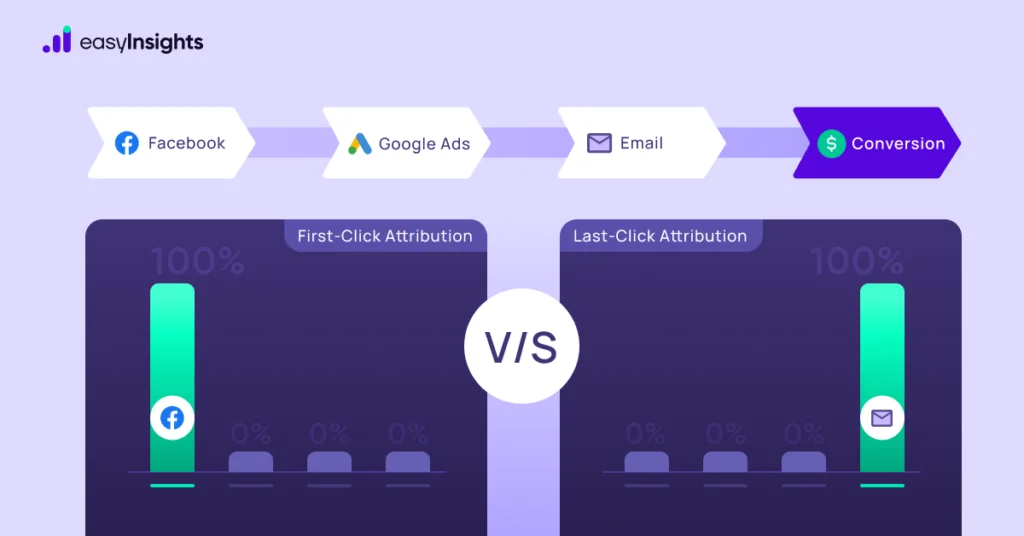
The creation of Pay-Per-Click (PPC) campaigns has been significantly streamlined by advancements in Artificial Intelligence (AI) and sophisticated platform tools, enabling marketers to launch campaigns with unprecedented speed. However, the ease of campaign creation starkly contrasts with the escalating complexity of measuring their true impact and accurately attributing conversions to the right marketing efforts. This challenge has been amplified by evolving consumer behavior, including cross-device journeys and stringent privacy regulations, creating a fragmented landscape where traditional attribution models often fall short. The fundamental question for advertisers has therefore shifted from "which attribution model is correct?" to "which signals can I trust enough to continue investing?"
The digital marketing ecosystem has been in a constant state of flux, with privacy concerns at the forefront. Apple’s App Tracking Transparency (ATT) framework, implemented in 2021, and Google’s own privacy-centric initiatives, such as the deprecation of third-party cookies and the move towards Google Analytics 4 (GA4), have fundamentally altered how user data is collected and utilized. These changes have forced platforms to increasingly rely on modeled data and estimations to fill in the gaps left by reduced tracking capabilities. While these models are an improvement over previous methods, they still operate on assumptions and educated guesses in critical areas, making a singular reliance on them a precarious strategy.
Teams that successfully navigate this environment move beyond a singular, often flawed, view of performance. Instead, they adopt a multi-faceted approach, layering various analytical methods to build a comprehensive understanding of campaign effectiveness. This layered strategy allows them to validate results from multiple angles, fostering greater confidence in their investment decisions.
The Shifting Sands of PPC Attribution
Attribution, at its core, is the process of assigning credit for a conversion to the various touchpoints a customer interacts with along their journey. Historically, the "last-click" attribution model dominated, a simple yet often misleading methodology that credited 100% of a conversion to the very last ad or link a user clicked before converting. While straightforward, this model ignores the crucial influence of earlier touchpoints that may have initiated the customer’s interest or guided them towards the final conversion.
Other common attribution models include:
- First-Click Attribution: Credits the initial touchpoint that brought the user to the site, highlighting the importance of awareness campaigns.
- Linear Attribution: Distributes credit equally across all touchpoints in the conversion path, offering a balanced view but potentially diluting the impact of specific high-performing channels.
- Time Decay Attribution: Assigns more credit to touchpoints that occurred closer to the conversion time, acknowledging that recent interactions might have a greater immediate influence.
- Position-Based Attribution (or U-Shaped): Balances the credit between the first and last touchpoints, typically assigning a larger portion to these two and distributing the remainder to intermediate touchpoints.
- Data-Driven Attribution (DDA): This advanced model, increasingly employed by platforms like GA4, utilizes machine learning to analyze conversion paths and assign credit based on observed patterns and the actual contribution of each touchpoint. It aims to provide a more nuanced understanding of how different channels interact to drive conversions.
However, even sophisticated models like DDA operate within limitations. Tracking windows, the predefined period during which a conversion can be attributed to a click, can exclude valuable interactions. Fragmented mobile data, where users switch between devices, further complicates the mapping of complete customer journeys. Consequently, no single attribution model is universally "correct." Each possesses inherent design flaws and provides an incomplete picture.
Google Analytics 4, for instance, has embraced modeled conversions and data-driven attribution to address some of these challenges. By leveraging predictive analytics and machine learning, GA4 aims to provide a more robust attribution framework than its predecessors. Nevertheless, it’s crucial to remember that even these advanced systems are still models, relying on the data they can access and interpret.
The Perils of Over-Reliance on a Single Attribution Model
The pitfalls of relying on a single attribution model become acutely apparent when examining campaigns that operate across different stages of the marketing funnel. Top-of-funnel (TOFU) activities, such as broad awareness campaigns on platforms like YouTube, generic search queries, or prospecting on paid social media, often do not yield immediate conversions. Under a last-click model, these efforts are likely to be undervalued or deemed inefficient because their impact is indirect and spread over a longer customer journey.
Conversely, branded search campaigns, which target users already familiar with a brand, typically exhibit high Return on Ad Spend (ROAS) and appear to drive conversions effortlessly. This can lead advertisers to disproportionately allocate budget to branded search, creating a perception of high efficiency. However, this overlooks the foundational work done by earlier, TOFU campaigns that built the initial brand awareness and consideration.
This phenomenon can lead to a dangerous cycle:
- Budget Reallocation: As TOFU campaigns appear inefficient, budgets are shifted away from them.
- Short-Term Gains: Branded search and other bottom-of-funnel (BOFU) campaigns show improved immediate results due to increased focus and potentially higher bids.
- Long-Term Stagnation: The decline in awareness-building activities eventually leads to a slowdown in new customer acquisition.
- Increased Customer Acquisition Cost (CAC): As the pool of readily available, high-intent customers shrinks, the cost to acquire new customers rises.
- Demand Harvesting: The business transitions from actively creating demand to passively harvesting existing demand, limiting future growth potential.
Campaigns that are demonstrably effective can be prematurely cut if the chosen attribution model fails to capture their true contribution. The damage often goes unnoticed until revenue pipelines begin to soften, and by then, the lag in attribution reporting means corrective action is taken too late.

Andrew Scheidt, General Manager of Central Air Heating, Cooling & Plumbing, highlights this challenge in service-based businesses where seasonality and urgency can distort performance metrics. "A lot of our highest-value jobs don’t come from a single click," Scheidt explains. "Someone might search during a heatwave, leave, come back days later on a branded search, and then book. If you only look at the last interaction, it looks like brand is doing all the work. But when we’ve pulled back earlier campaigns, call volume drops in ways attribution doesn’t immediately explain. That’s when you realize how much demand was being created upstream." The delay in attribution "catching up" can mean significant damage has already been done to the marketing strategy.
Beyond Clicks: Alternative Metrics for Validating PPC Performance
To counter the limitations of traditional attribution, marketers must incorporate a broader range of metrics that directly correlate with business outcomes and provide a more holistic view of campaign impact. These alternative metrics offer crucial validation for performance, especially when customer journeys are complex and extended.
Key Alternative Metrics for Validation:
- Revenue Lift: This metric measures the increase in revenue directly attributable to a specific campaign or channel, often through controlled experiments like A/B testing or holdout groups. It directly ties marketing spend to top-line growth. For instance, a study by Nielsen found that campaigns with a clear revenue attribution model can demonstrate up to a 15% higher ROI compared to those that don’t.
- Customer Lifetime Value (CLV): Understanding the long-term value of customers acquired through different PPC efforts is critical. A campaign that brings in customers with a higher CLV, even if their initial conversion value is lower, is ultimately more profitable. This metric helps prioritize acquisition channels that deliver sustainable growth.
- Incremental Conversions: This refers to the number of conversions that would not have occurred without a specific marketing intervention. Incrementality testing, by pausing ads in a region, splitting traffic, or running a holdout group, directly measures this. For example, a Facebook study revealed that brands that invest in incrementality testing can achieve 20-30% more efficient ad spend by understanding true incremental impact.
- Engagement Metrics Beyond Conversion: While not direct revenue drivers, metrics like repeat visits, longer time spent on site, document downloads, and feature exploration can indicate high intent and progress in the sales funnel. These are particularly valuable for B2B or high-consideration products.
- Lead Quality and Conversion Rate by Lead Stage: For B2B marketers, tracking the quality of leads generated by PPC campaigns and their progression through the sales pipeline is paramount. A PPC campaign might generate a high volume of leads, but if they are not qualified or do not convert into paying customers, their perceived success is minimal.
In the B2B sector, where sales cycles can be lengthy and involve multiple stakeholders, these alternative metrics are indispensable. Selling complex solutions like contract management software, for example, rarely results in a single-session conversion. Buyers engage in extensive research, compare options, involve internal teams, and revisit product pages multiple times. Observing post-click behavior such as repeat visits, downloads of whitepapers, or extended time spent evaluating features provides far greater insight into a campaign’s effectiveness than a single attributed conversion. Without this contextual understanding, high-intent campaigns might appear underwhelming, even as they are actively advancing deals.
Similarly, in eCommerce, a search for a product like bulk t-shirts might not lead to an immediate purchase. Customers often compare designs, pricing, and delivery options, returning later as direct or branded traffic. Relying solely on immediate conversion data means overlooking how these initial interactions shape purchase intent and reduce friction later in the customer journey.
Incrementality testing offers a powerful way to measure the true impact of PPC campaigns. By pausing ads in specific regions, splitting traffic between different campaign variations, or establishing control groups that do not see the ads, marketers can isolate and quantify the incremental revenue or conversions generated.
Ryan Beattie, Director of Business Development at UK SARMs, operates in a market where customer journeys are non-linear and trust is built over multiple touchpoints. "We’ve had campaigns that looked flat in-platform but were clearly driving demand when we looked at overall revenue and returning users," Beattie notes. "Especially in our space, people don’t convert on the first visit. They research, compare, and come back. If you rely only on platform attribution, you end up undervaluing the campaigns that are actually doing the heavy lifting earlier in that journey." This underscores the critical need to look beyond immediate platform-reported metrics.
Best Practices for Robust PPC Performance Validation
To build a resilient and accurate picture of PPC performance in the current digital landscape, advertisers should implement a combination of strategic techniques and best practices. These approaches prioritize a comprehensive understanding of the customer journey, acknowledging the inherent limitations of data and technology.
Key Techniques and Best Practices:
- Layering Attribution Models: Instead of adhering to a single model, use multiple models (e.g., last-click, first-click, data-driven) in parallel to gain diverse perspectives on channel performance. Compare the insights from each to identify discrepancies and areas of overlap.
- Focus on Incrementality Testing: Regularly conduct incrementality tests to measure the true causal impact of your PPC campaigns. This involves controlled experiments that isolate the effect of advertising on conversions.
- Integrate CRM Data: Connect your CRM system with your analytics platforms to track leads from initial PPC click-through to final sale. This provides a direct line of sight to the revenue generated by specific campaigns and allows for the calculation of CLV.
- Analyze Post-Click Behavior: Go beyond immediate conversions and analyze user engagement metrics such as time on site, pages per session, repeat visits, and engagement with specific content or features. This is particularly important for high-consideration products and services.
- Utilize Conversion Lift Studies: Leverage platform-offered conversion lift studies (available on platforms like Meta and Google Ads) to measure the incremental impact of your campaigns on actual conversions.
- Develop Custom Dashboards and Reporting: Create bespoke dashboards that incorporate a blend of attribution data, incrementality findings, CRM insights, and key business metrics. This provides a consolidated view of performance that is tailored to your specific business objectives.
- Regularly Review and Adapt: The digital marketing landscape is dynamic. Continuously review your attribution strategies, test new methodologies, and adapt your approach based on evolving privacy regulations and platform capabilities.
- Invest in Advanced Analytics Tools: Consider investing in third-party analytics and attribution platforms that offer more sophisticated modeling capabilities and cross-channel attribution insights beyond what native platforms provide.
- Understand Audience Behavior: Deeply understand your target audience’s typical journey. For example, B2B buyers may take weeks or months to convert, while impulse purchases in eCommerce might happen within hours. Tailor your measurement accordingly.
- Establish Clear KPIs Aligned with Business Goals: Define Key Performance Indicators (KPIs) that directly reflect business objectives, such as profitable customer acquisition, increased market share, or enhanced customer lifetime value, rather than solely focusing on vanity metrics.
The Path Forward: Building a Resilient Attribution System
The teams that are adapting and thriving in this complex environment are those building systems that can withstand the inevitable gaps in data. They recognize that perfect attribution is an elusive ideal and that confidence in PPC performance stems from seeing a consistent story emerge from multiple, independent sources.
This involves moving away from a singular reliance on platform-reported conversions and last-click attribution. Instead, advertisers must embrace a holistic view that incorporates a blend of attribution models, incrementality testing, CRM data integration, and an understanding of post-click user behavior. By layering these different lenses through which to view performance, marketers can construct a more accurate and trustworthy narrative of their PPC campaigns’ true value. This approach not only safeguards against the misallocation of marketing budgets but also ensures that valuable, upstream marketing efforts that build brand awareness and customer consideration are appropriately recognized and funded, fostering sustainable business growth in an increasingly privacy-conscious world.