Siti Muinah
The adage that those who fail to learn from history are doomed to repeat it resonates profoundly within the dynamic realm of email marketing, particularly as the high-stakes holiday sale season approaches. Each year, the intricate interplay of sender behavior, consumer response, and mailbox provider (MBP) policies during peak events like Black Friday and Cyber Monday furnishes invaluable insights, ideally driving a continuous cycle of performance enhancement and revenue growth. With the critical Q4 period of 2026 looming, a meticulous examination of last year’s trends in inbox placement rate (IPR) is not merely advisable but essential for marketers across all sectors. Leveraging the comprehensive data gleaned from the Validity Intelligence Network (VIN), this analysis will illuminate the key IPR trends of 2025, project their potential recurrence in 2026, and outline adaptive strategies necessary for senders to maximize their seasonal impact.
The Economic Imperative of Q4 Email Marketing
For many businesses, the fourth quarter represents the zenith of annual revenue generation, with holiday sales often accounting for a significant portion of yearly profits. Email marketing stands as a cornerstone of this seasonal strategy, offering a direct, cost-effective channel to engage customers, announce promotions, and drive conversions. However, this period of immense opportunity is simultaneously fraught with heightened risks. The sheer volume of emails exchanged, the intensified competition for inbox real estate, and the accelerated scrutiny from mailbox providers create a volatile environment where deliverability can make or break a campaign. A robust IPR is paramount; an email that fails to reach the primary inbox is, by definition, an email that cannot convert, representing a direct loss in potential revenue and a potential erosion of sender reputation.
Historically, the holiday season has presented a double-edged sword for email marketers. While the potential for engagement and sales skyrockets, so too does the complexity of maintaining optimal deliverability. Mailbox providers, tasked with protecting their users from unwanted messages, significantly increase their filtering aggressiveness during periods of high email traffic. This means that even established senders with good reputations can find their emails diverted to spam folders or rejected outright if their sending practices deviate from best standards. The lessons learned from previous years, therefore, serve as a critical playbook for navigating this annual challenge.
Unpacking 2025: A Deep Dive into Deliverability Trends
Validity’s 2025 data, derived from the extensive Validity Intelligence Network, brought to light several intriguing trends, some of which challenged long-held conventional wisdom regarding holiday sending practices. These insights offer a crucial retrospective glance at the dynamics of last year’s holiday rush.
The "Danger Window" and Volume Volatility
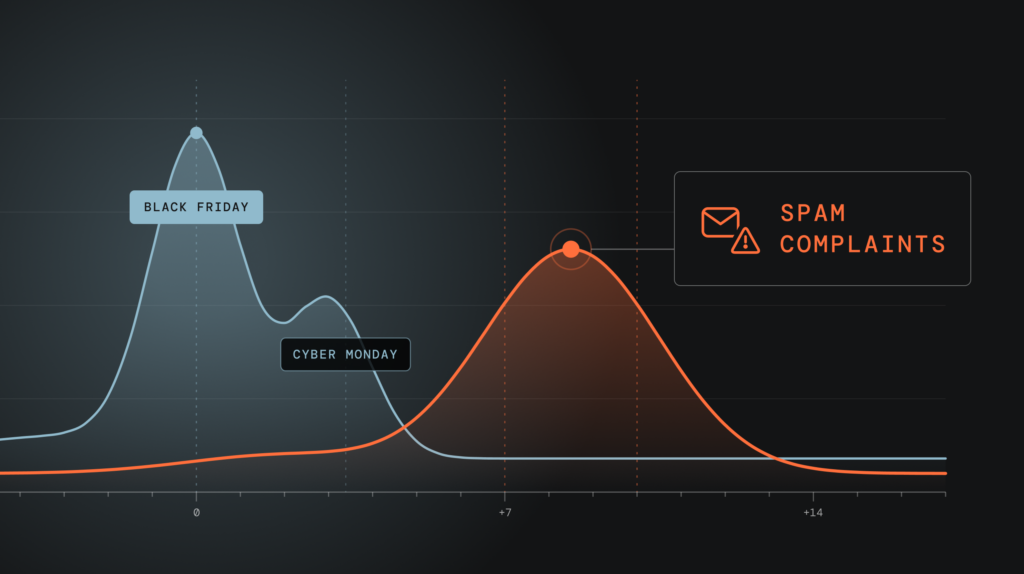
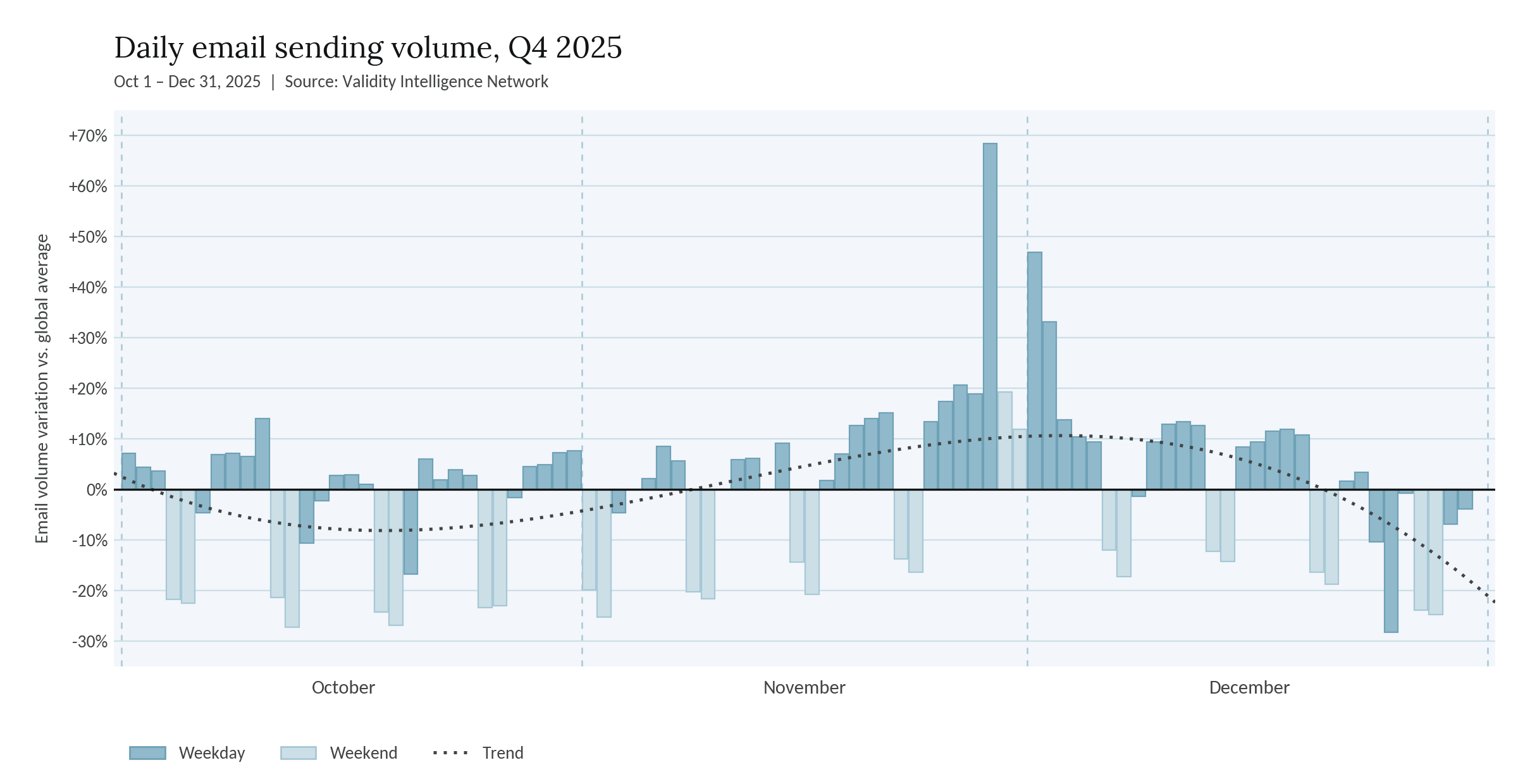
Analysis of Q4 2025 sending patterns revealed a distinct "danger window" that emerged earlier and lasted longer than many marketers might have anticipated. Data showed a significant ramp-up in sending volumes commencing in early November, well before the traditional Black Friday weekend. Sending volumes surged by an average of 35-40% in the weeks leading up to Black Friday 2025 compared to October averages, peaking at over 60% on Black Friday itself and sustaining elevated levels through Cyber Monday and into the first week of December. This pre-emptive surge indicates a strategic shift by marketers to capture early holiday shoppers, but also amplified the pressure on deliverability infrastructure.
The increase in volume, as depicted in the ‘Sending Volume Q4 2025’ data, underscored a critical challenge: while marketers aimed to reach more inboxes, this often came at the cost of quality and reputation. Such dramatic increases in volume, especially if not carefully managed with list segmentation and frequency capping, can trigger red flags for MBPs.
Spam Complaints and User Fatigue
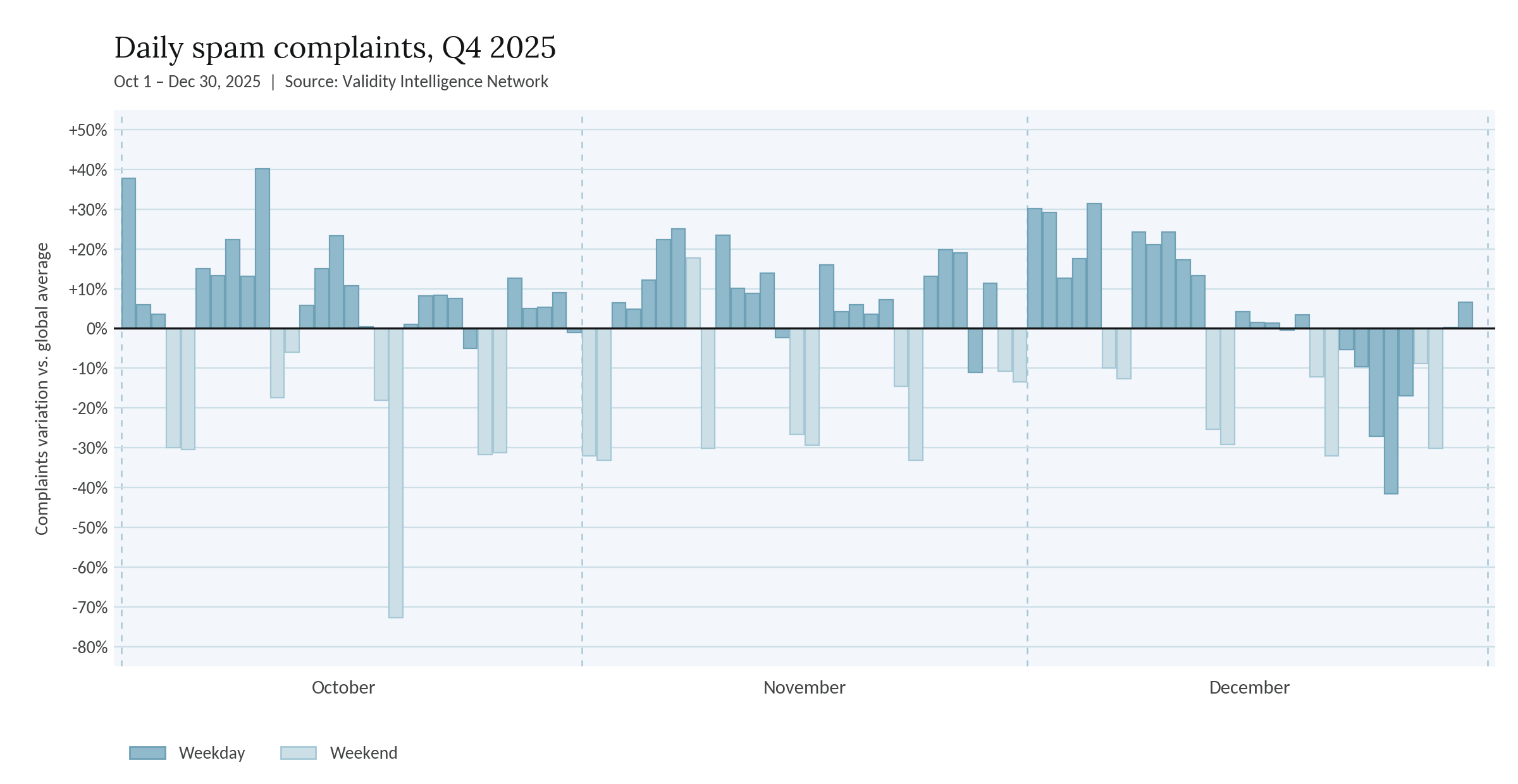
Accompanying the volume spike was a noticeable uptick in spam complaint rates. While a certain degree of complaints is unavoidable with increased sending, the 2025 data illustrated a concerning trend. Spam complaints, which averaged around 0.08% in Q3, climbed to a peak of 0.15% during the Black Friday/Cyber Monday period, as evidenced by the ‘Spam Complaints Q4 2025’ chart. This near-doubling suggests a significant portion of subscribers felt overwhelmed or received irrelevant content. High complaint rates are a direct indicator of subscriber dissatisfaction and are heavily weighted by MBPs in determining sender reputation. A surge in complaints signals to MBPs that a sender’s messages might not be desired, leading to more aggressive filtering. This user fatigue, driven by a deluge of promotional emails, is a critical factor influencing deliverability outcomes.
The Silent Threats: Unknown Users and Rejections
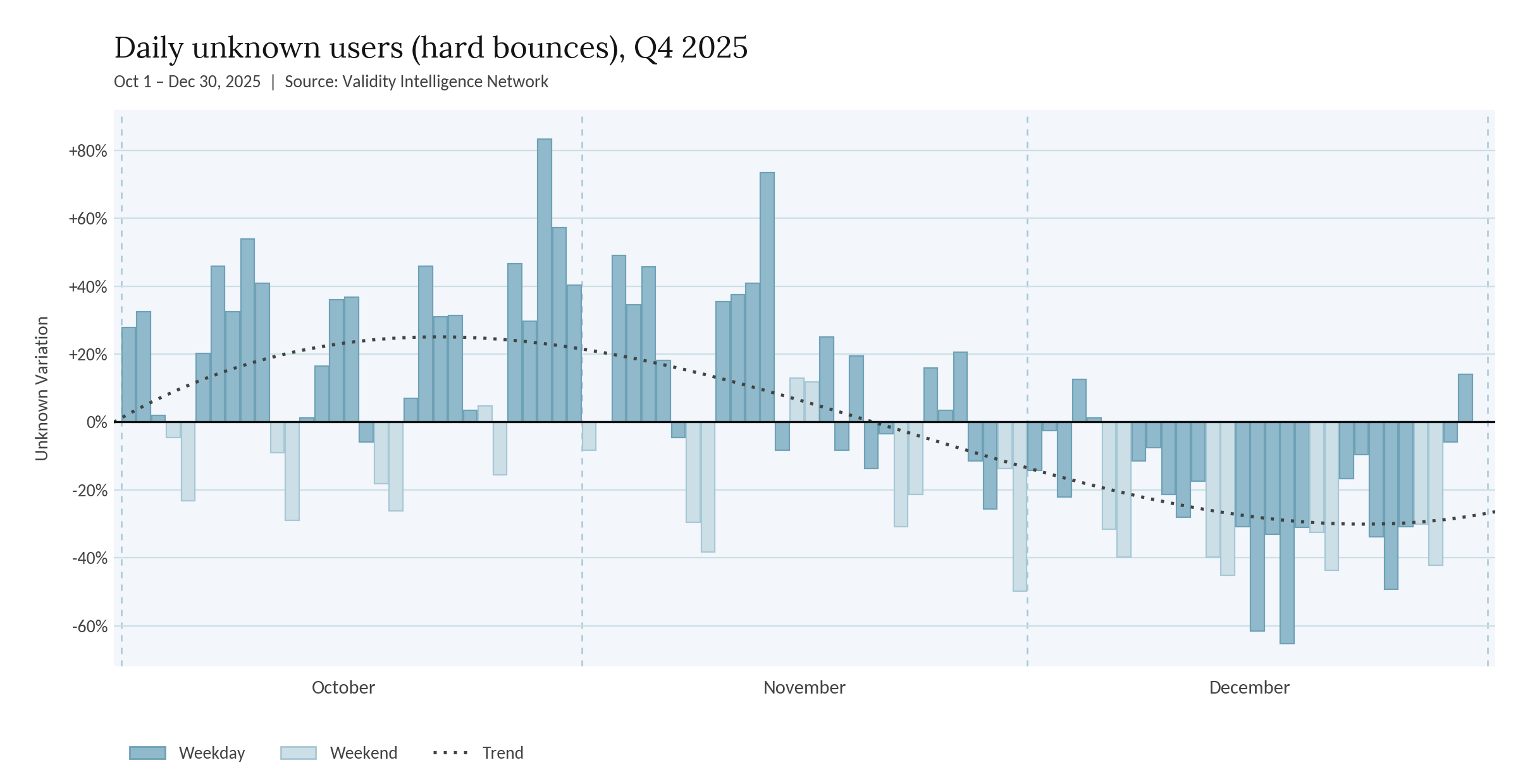
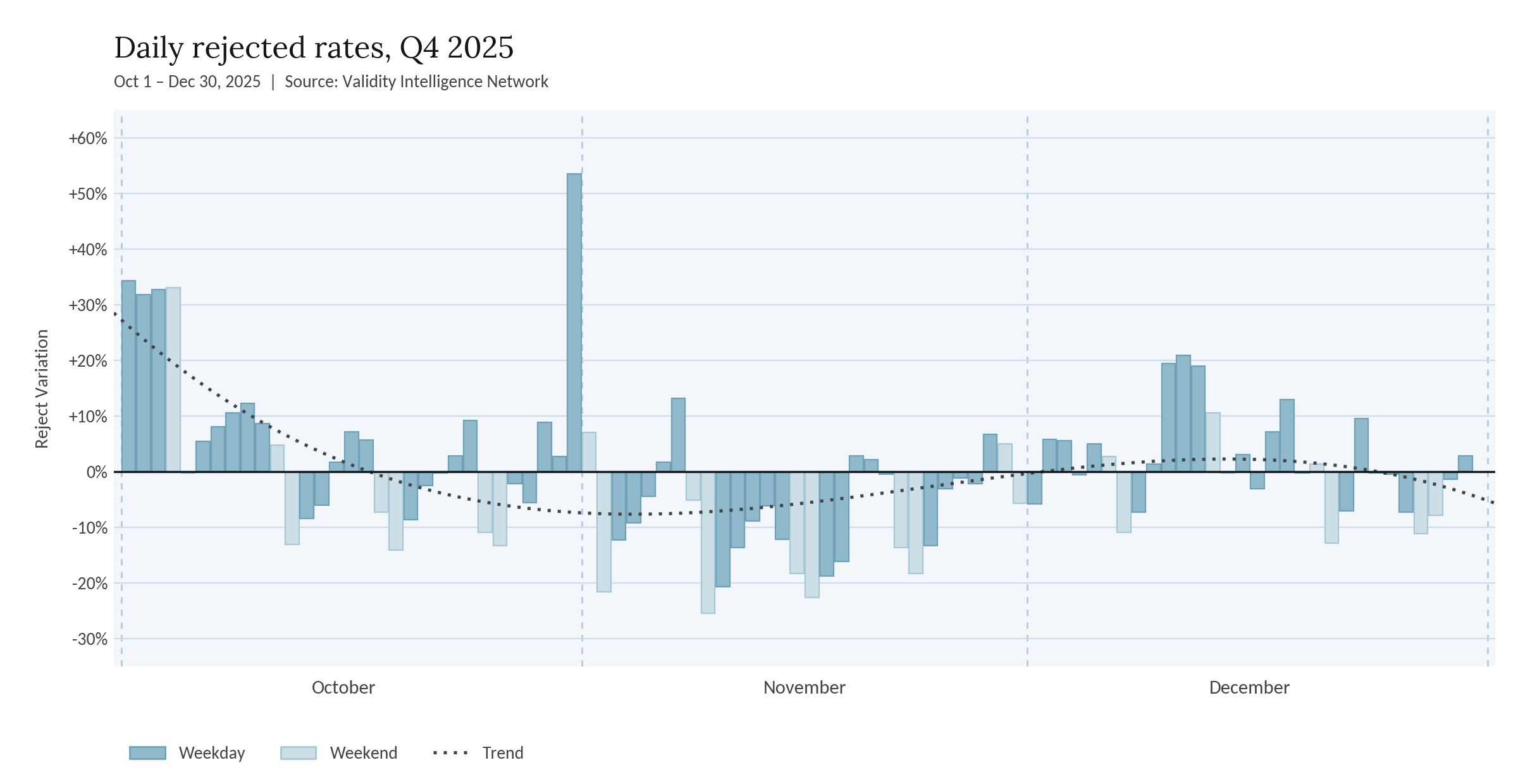
Beyond direct spam complaints, the 2025 data also highlighted the persistent issues of poor list hygiene. The ‘Unknown Users Q4 2025’ chart revealed a significant increase in bounces due to unknown users, climbing by approximately 20% during the holiday peak compared to the preceding quarter. Similarly, the ‘Rejected Q4 2025’ data indicated a 15% rise in temporary rejections, often a precursor to permanent blocking if issues persist. These metrics point to outdated or uncleaned subscriber lists. Sending to invalid email addresses wastes resources, inflates bounce rates, and signals to MBPs that the sender is not maintaining a healthy list, thereby negatively impacting sender reputation and IPR. Mailbox providers interpret a high volume of unknown user bounces as a sign of poor list management, or even malicious sending practices.
The B2B vs. B2C "Holiday Readiness" Gap
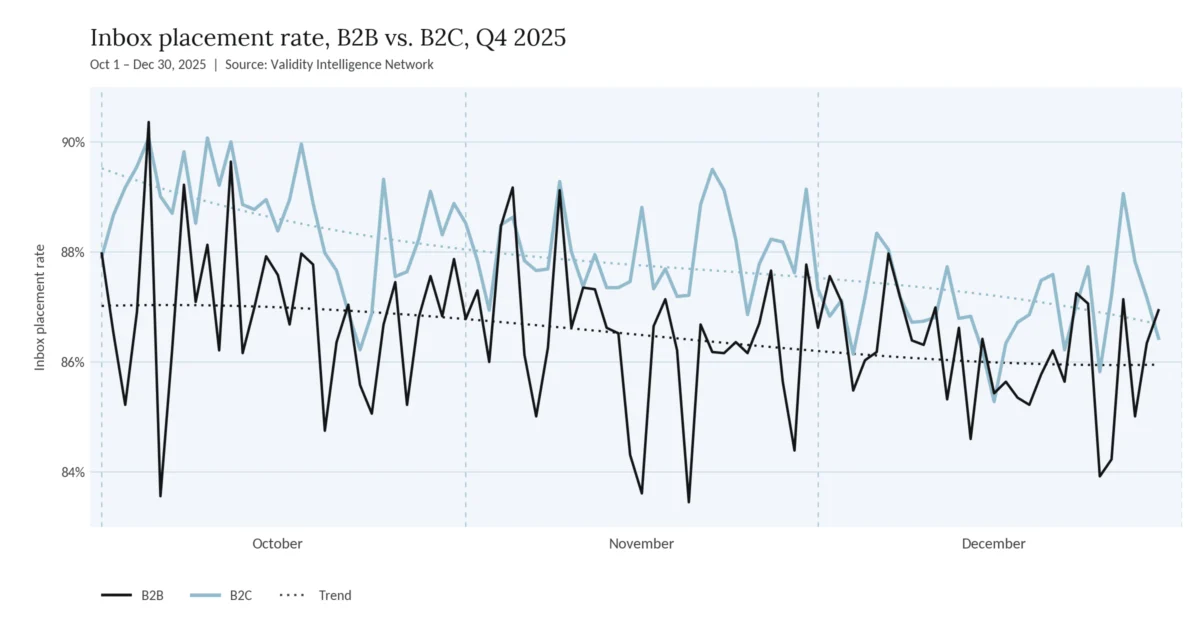
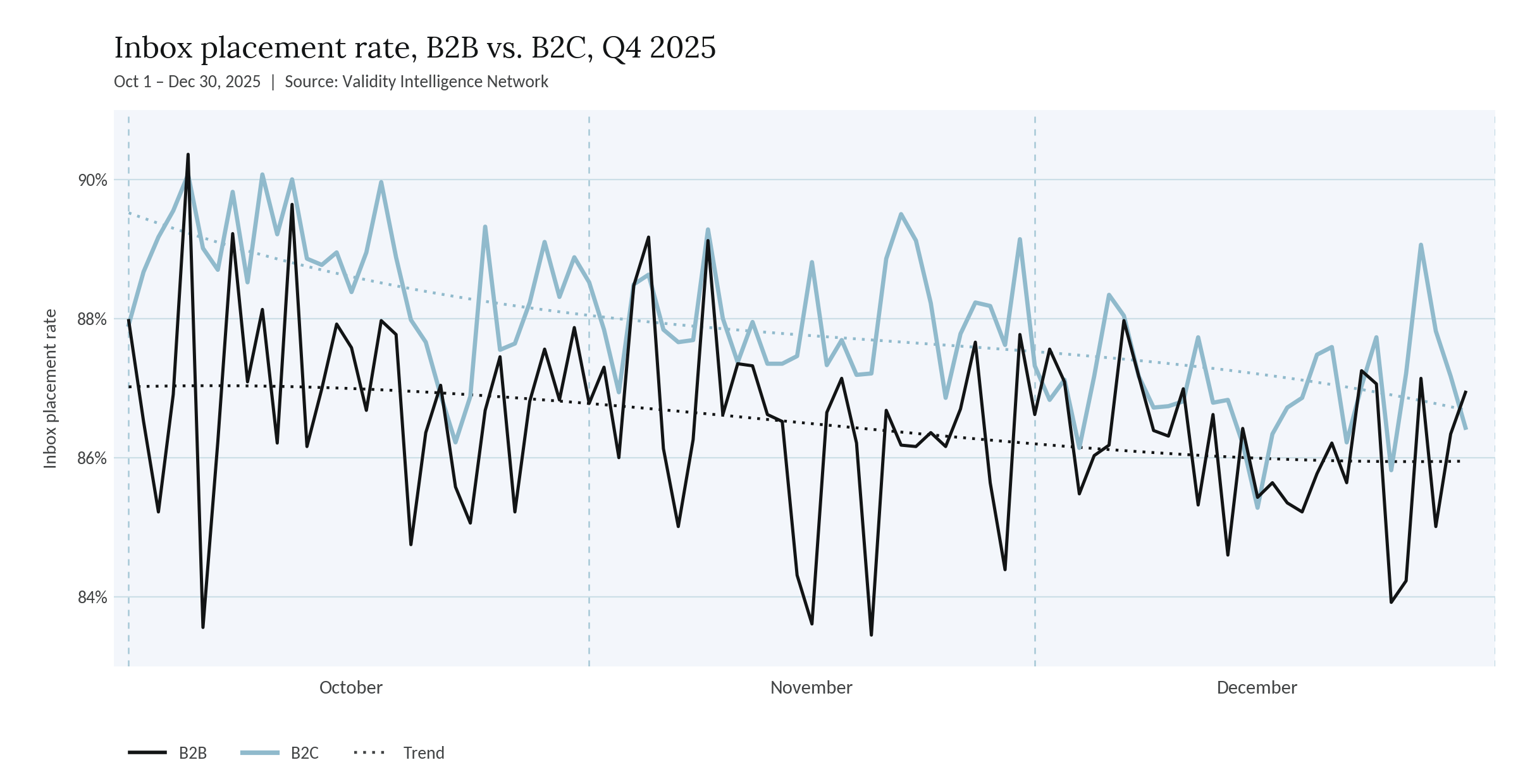
One of the most striking findings from 2025 was the divergence in IPR performance between Business-to-Consumer (B2C) and Business-to-Business (B2B) senders during the critical Black Friday period. As shown in the ‘Inbox Placement B2B vs B2C Q4 2025’ data, B2C placement actually saw a modest rise of three percent on Black Friday itself, while B2B placement suffered a significant seven percent decline.
This disparity can be attributed to several factors. B2C senders are generally more attuned to the nuances of reputation management required during high-volume periods. Their campaigns are typically designed with a higher degree of personalization, engagement-driven content, and often benefit from more sophisticated segmentation strategies honed over years of holiday marketing. Conversely, many B2B senders, whose core business might not align perfectly with Black-Friday-worthy offerings, may engage in "panic sending" or simply lack the same level of expertise in managing deliverability spikes. Furthermore, while deliverability challenges for both B2C and B2B have converged in recent years due to the prevalence of Office 365 and Google Workspace across both sectors, B2B faces an additional layer of scrutiny from corporate spam filters like Proofpoint, which are often more stringent than consumer-grade filters. This suggests that B2B senders need a distinct and more cautious approach to holiday email marketing, potentially even avoiding the peak Black Friday period if their offerings aren’t directly relevant.
The Lasting Penalty of "Panic Sending"
A particularly critical insight from 2025 was the long-term impact of aggressive, high-volume, and high-frequency sending during the holiday rush, often termed "panic sending." While the overall email deliverability landscape was already becoming more challenging for all senders in late 2025, the decline in inbox placement was demonstrably greater for those who engaged in these less disciplined practices.
Specifically, higher-frequency, higher-volume Black Friday senders experienced an IPR decline of 0.019 percent per day post-holiday, compared to a 0.007 percent daily decline for more disciplined senders. While these figures appear small in absolute terms, their cumulative effect over time is substantial. Over a full year, these less disciplined senders faced an additional 4.6 percent loss in inbox placement (a total decline of 6.9 percent versus 2.6 percent for their more cautious counterparts). For revenue leaders, this sustained dip carries a tangible price tag. At an estimated five cents of revenue per email, the additional 4.6 percent loss in inbox placement translates to a cost of $2,300 per one million emails sent by the end of the year. This data unequivocally demonstrates that short-term gains from aggressive sending can be severely offset by long-term damage to sender reputation and, consequently, revenue.
Forecasting 2026: New Challenges and Persistent Realities
While historical data provides a robust foundation, the email marketing landscape is in constant flux. The year 2026 is poised to introduce new variables and intensify existing challenges, making a direct replication of 2025 trends uncertain.
Evolving Mailbox Provider Policies
Major shifts in the email marketing landscape, particularly the increasingly stringent requirements from dominant mailbox providers like Gmail and Yahoo, are set to profoundly impact deliverability in 2026. New policies, which began rolling out in early 2024 and fully implemented in 2025, mandate robust email authentication (SPF, DKIM, DMARC), easy one-click unsubscribe options, and strict spam complaint thresholds. These changes, initially designed to curb unsolicited bulk email, will have an amplified effect during the high-volume holiday season. Senders who have not fully complied with these requirements risk severe deliverability penalties, including direct rejections or automatic routing to spam folders.
Year-to-date (YTD) 2026 data from the Validity Intelligence Network already indicates a more volatile Gmail Inbox Placement Rate compared to previous non-holiday periods. For even well-established senders, Gmail IPR has shown fluctuations between 88% and 92% – a tighter and more unpredictable margin than historically observed. This volatility suggests that MBPs are more sensitive to sender behavior and reputation than ever before, making proactive compliance and continuous monitoring non-negotiable for 2026 holiday success. The ‘Gmail Inbox Placement 2026 YTD’ chart underscores this heightened sensitivity, showing less forgiveness for minor infractions and a faster punitive response to negative signals.
The Privacy Imperative and Its Deliverability Dividend
Paradoxically, the increasing global emphasis on data privacy, epitomized by regulations like GDPR and CCPA, is emerging as a positive force for deliverability. Validity’s research indicates that email programs subject to these new-generation privacy laws generally enjoy significantly better IPRs. The core tenets of these regulations – stronger consent mechanisms, greater transparency in data usage, and broader subscriber choice – inherently align with what mailbox providers seek from responsible senders. By prioritizing explicit opt-in, clear communication about email content, and easy unsubscribe options, marketers naturally build higher-quality lists of engaged subscribers. This proactive approach to privacy not only ensures regulatory compliance but also cultivates a healthier sender reputation, making it a critical strategy to "future-proof" deliverability for the 2026 holiday season and beyond.
Strategic Imperatives for 2026 Holiday Success
Given the insights from 2025 and the evolving landscape of 2026, marketing leaders must adopt a proactive, data-driven approach to their holiday email strategies.
- Prioritize Proactive List Hygiene: Continuous list cleaning is paramount. Regular suppression of unengaged subscribers, removal of invalid email addresses, and re-engagement campaigns for dormant users should be standard practice. This not only improves IPR by reducing bounces and complaints but also ensures marketing efforts are focused on genuinely interested recipients.
- Strategic Volume and Frequency Management: Avoid sudden, drastic increases in sending volume or frequency, especially during the "danger window." Instead, plan a gradual, controlled ramp-up. Utilize segmentation to tailor sending frequency to subscriber engagement levels, ensuring that highly engaged segments receive more frequent communications without overwhelming less active users.
- Enhance Email Authentication: Ensure all email authentication protocols (SPF, DKIM, DMARC) are correctly configured and maintained. These are no longer optional but foundational requirements for reaching the inbox, especially with the stricter MBP policies of 2026.
- Focus on Engagement and Personalization: Generic, mass-blast emails are increasingly ineffective and detrimental to sender reputation. Invest in advanced segmentation and personalization strategies to deliver highly relevant content. Engaged subscribers (those who open, click, and reply) send positive signals to MBPs, bolstering your sender reputation.
- Monitor Deliverability Continuously: Real-time monitoring of IPR, bounce rates, spam complaints, and other key metrics is crucial. Tools that provide granular insights into deliverability across different mailbox providers allow marketers to identify and address issues proactively before they escalate.
- Optimize Content and Calls to Action: Ensure email content is valuable, clear, and avoids "spammy" language or excessive imagery. Clear, concise calls to action improve user experience and engagement. A/B test subject lines, preheaders, and content to optimize for opens and clicks.
- Implement One-Click Unsubscribe: Adhering to the new MBP requirement for one-click unsubscribe is critical. While it might seem counterintuitive to make unsubscribing easier, it prevents frustrated subscribers from marking emails as spam, which is far more damaging to reputation.
- Understand B2B vs. B2C Nuances: B2B senders must recognize their unique challenges. If holiday offerings are not directly relevant, consider alternative strategies or a more targeted approach. Learning from B2C best practices, particularly in engagement and list segmentation, can be highly beneficial. Validity’s recent conversation with Peloton on holiday sending tips, applicable to B2B, on State of Email Tactics, provides valuable insights into this cross-pollination of strategies.
- Leverage Advanced Deliverability Platforms: Manually tracking and managing all these factors can be overwhelming. Platforms like Validity Engage offer automated pre-send checks on data quality, email verification, and rendering, alongside continuous deliverability monitoring across every send. This ensures potential problems are caught before they reach subscribers, safeguarding peak season revenue and reputation. Such tools do the heavy lifting, allowing marketing teams to focus on strategy and content.
Broader Implications for Digital Marketing
The evolving landscape of email deliverability during the holiday season carries broader implications for the entire digital marketing ecosystem. A healthy email program is indicative of a strong brand-customer relationship built on trust and relevance. Poor deliverability not only results in lost sales but also damages brand perception, making future marketing efforts across all channels less effective. In an era where customer attention is a precious commodity, earning and maintaining inbox placement is a testament to a brand’s commitment to respecting its audience.
The insights from the Validity Intelligence Network underscore a fundamental truth: successful email marketing, especially during high-pressure periods, is no longer just about sending emails; it’s about intelligent, permission-based communication. It requires a strategic blend of technical proficiency, data analysis, and a deep understanding of subscriber behavior and mailbox provider expectations.
Conclusion
The lessons gleaned from the 2025 holiday email marketing season provide a clear roadmap for success in 2026. The "danger window" of increased volume and heightened scrutiny, the distinct challenges faced by B2B senders, and the enduring penalty for "panic sending" all underscore the need for a disciplined, data-informed approach. With the added layer of stricter MBP policies and the growing importance of privacy-centric sending, marketers must adapt their strategies with greater precision than ever before. By prioritizing list hygiene, managing sending volumes strategically, enhancing authentication, focusing on engagement, and leveraging advanced deliverability tools, businesses can navigate the complexities of the holiday inbox, safeguard their sender reputation, and ultimately drive superior revenue outcomes in the fiercely competitive Q4 of 2026. Ignoring these lessons would not merely be a repeat of history, but a forfeiture of future opportunity.


 Lina Irawan
 Ali Ikhwan