The platform, formerly known as Twitter, has undergone a significant transformation since its acquisition, leading to a notable shift from its "glory days" as a seemingly indispensable public square. Despite these changes and the accompanying controversies, X remains a potent force in the digital sphere, serving as a critical nexus for real-time discussions, breaking news, and dynamic debates. According to recent filings by its parent company, SpaceX, X continues to attract a substantial global audience, reporting approximately 550 million active users every month. This robust user base demonstrates strong engagement rates across a diverse array of communities, underscoring its enduring relevance as a channel for communication and, crucially, for marketing and promotional activities. Consequently, for brands and marketers aiming to maintain a comprehensive digital presence, X unequivocally warrants inclusion in their promotional ad spend and strategic planning for the coming years, particularly into 2026. However, the efficacy of marketing on X in this new era hinges on a profound understanding of the platform’s evolution and a willingness to abandon outdated tactics in favor of approaches aligned with its current trajectory and future incentives.
The dramatic changes implemented within the application under its new ownership have fundamentally altered the dynamics of reach and engagement. Nikita Bier, X’s head of product, has been vocal about the platform’s shifting focus, emphasizing adjustments designed to incentivize specific types of content and user interaction. These algorithmic recalibrations directly impact how content is discovered and distributed, meaning that brands that proactively adapt their strategies to align with X’s evolving priorities will invariably experience superior performance and achieve greater marketing objectives.
The Transformative Journey of X: A Brief Chronology and Context
To fully appreciate the current state of X and its implications for marketing, it is essential to revisit its recent history. The platform’s journey from Twitter to X began in earnest in October 2022, when Elon Musk completed his acquisition of the social media giant for $44 billion. This acquisition heralded an era of rapid and often disruptive change, driven by Musk’s vision of transforming Twitter into an "everything app" capable of encompassing a wide array of functionalities beyond microblogging, including payments, long-form content, and more.
Initial changes included widespread layoffs, significant alterations to content moderation policies, and the introduction of a revamped subscription service, Twitter Blue (later X Premium), which controversially tied verification checkmarks to paid subscriptions rather than identity. This move, in particular, sparked considerable debate about authenticity and the spread of misinformation, leading to an exodus of some advertisers and a shift in user sentiment.
The most symbolic change occurred in July 2023, when Twitter was officially rebranded to X, shedding its iconic bird logo and its widely recognized name. This rebranding was a clear statement of intent, signaling a departure from its past identity and a commitment to Musk’s broader "everything app" ambition. Concurrently, the platform has seen a continuous rollout of new features, including expanded character limits, video capabilities, creator monetization programs, and the integration of artificial intelligence tools like Grok. These developments, while aiming to innovate and diversify the platform’s offerings, have simultaneously necessitated a complete rethink of digital strategy for anyone leveraging X for business.
Leveraging Premium Features: The Cornerstone of Modern X Marketing
For marketers serious about establishing and maintaining a robust presence on X in 2026, subscribing to its premium tiers, specifically X Premium or ideally X Premium+, is no longer merely an option but a strategic imperative. These subscriptions unlock a suite of advanced features and tools designed to provide unparalleled insights and amplified reach, which are critical in the platform’s current algorithmic landscape.
The basic X Premium package offers several foundational benefits. Primarily, it grants a checkmark to user profiles. While the perceived prestige and indicator of legitimacy associated with this checkmark have diminished since its original purpose, it still offers a baseline level of credibility in the eyes of some users and can help distinguish official brand accounts from impersonators or unverified profiles. More tangibly, X Premium users benefit from a "reply boost," a mechanism that elevates their replies in conversation threads, thereby offering increased exposure opportunities for brand messaging and engagement. Additionally, subscribers gain access to Media Studio, a centralized repository for managing brand assets, scheduling content, and accessing detailed analytics for multimedia posts, streamlining content operations significantly.
However, for companies capable of accommodating the higher monthly fees, X Premium+ represents a superior investment, providing access to a more comprehensive array of marketing assistance features. A standout benefit of X Premium+ is access to X Pro. This powerful dashboard allows users to track keyword mentions in real time, providing an immediate pulse on brand-relevant conversations and emerging topics. X Pro facilitates competitive analysis, crisis management, and the rapid identification of trending discussions pertinent to a brand’s niche.
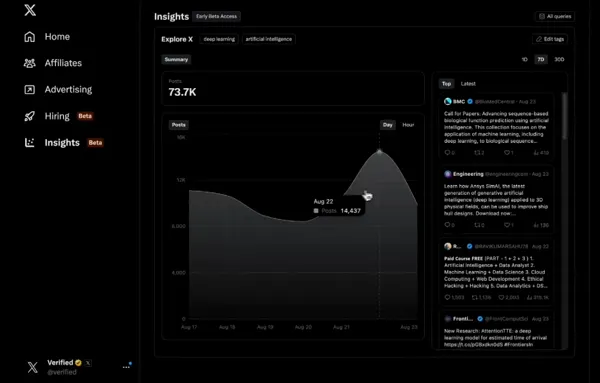
Further enhancing data capabilities, X Premium+ includes access to X’s sophisticated Radar tracking tool. Radar goes beyond simple mention tracking, offering deep insights into conversation and mention velocity over time. This feature can reveal the lifecycle of a trend, identifying its peak engagement periods and potential for sustained interest. It also provides a curated display of relevant posts for key terms, offering qualitative context alongside quantitative data. Crucially, Radar integrates artificial intelligence-powered trend data and information on top creators within specific niches, enabling marketers to identify influential voices and burgeoning topics with precision. This expanded data set is invaluable for contextualizing in-app conversations, informing content strategy, and identifying potential collaboration opportunities.
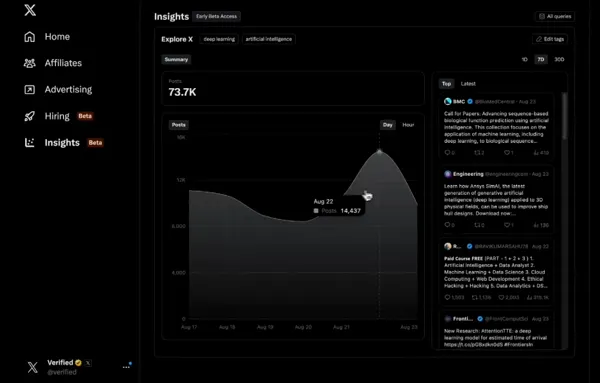
Beyond these analytical tools, X Premium+ subscribers can tap into the capabilities of Grok, X’s proprietary AI chatbot. Grok is designed to leverage X’s real-time data firehose to churn out detailed overviews of topical trends, including identifying key influencers, sentiment analysis, and even generating initial content ideas tailored to specific niches and regions. This AI-powered assistant can significantly accelerate the research phase of campaign development, providing actionable insights that would otherwise require extensive manual analysis.
Crafting a Data-Backed X Marketing Strategy for 2026
Armed with the profound insights garnered from X Premium+ tools, brands are empowered to construct a highly informed and adaptive marketing strategy. The process begins by building a comprehensive overview of relevant discussions within their niche, including detailed trend notes, sentiment analysis, and a curated list of potential influencers to engage.
This data-driven foundation allows brands to strategically connect with identified creators, either directly to forge partnerships for promotional campaigns or to meticulously analyze their audience data to construct detailed audience profiles. Understanding the demographics, interests, and online behaviors of influential creators’ followers can significantly refine target audience segmentation for paid campaigns and organic content alike. Furthermore, observing the content formats that resonate most effectively within a particular niche group, and noting how other brands strategically utilize replies and direct messages, can inform and optimize a brand’s own engagement tactics.
A critical shift in X’s algorithmic focus, repeatedly highlighted by Nikita Bier, is its emphasis on boosting engaging posts. This means that marketers seeking to optimize their X post performance must move beyond merely using posts as hooks for external links. Instead, the current algorithm rewards more descriptive updates and longer threads that provide substantial context and value directly within the platform. Bier explicitly stated that offering more comprehensive information in the post itself, or developing multi-part threads that summarize key points, will yield significantly greater reach for creators than simply posting link URLs alone. This represents a stark departure from historical Twitter approaches, which often encouraged brevity and relied on users clicking links for more information. Marketers must therefore prioritize creating standalone, engaging content on X, designed to maximize time spent on the platform.
Moreover, X has introduced specific penalties for certain content types. Brands must rigorously avoid posting content that includes a watermark from another social media platform, as such posts incur a substantial 90% reach penalty. This policy is clearly aimed at incentivizing original content creation native to X and discouraging cross-platform content recycling. Similarly, X is actively working to reduce the reach of posts that incorporate the word "breaking" in their introduction, a measure likely intended to curb sensationalism and promote more substantive, verified news dissemination. Adhering to these guidelines is paramount for maximizing organic reach and avoiding punitive algorithmic demotions.
Continuous Analysis and Iterative Improvement
Once a data-backed posting strategy is meticulously crafted and deployed, the marketing process shifts into a phase of continuous monitoring, analysis, and refinement. Brands must vigilantly track the performance of their content and adapt their approaches based on real-world engagement data and campaign outcomes.
As with any robust marketing endeavor, it is paramount that strategies are firmly anchored to metrics that directly translate into tangible brand benefits and lead to quantifiable sales actions or website visits. While the specific aims will naturally vary for each brand and campaign—whether it’s lead generation, brand awareness, customer service efficiency, or direct sales—it is critically important to ensure that the chosen Key Performance Indicators (KPIs) are directly aligned with overarching business goals, rather than being solely focused on superficial social media performance points.
The digital landscape, particularly on platforms like X, is susceptible to the influence of bots, and likes can be easily inflated or earned through low-effort, divisive "hot takes." While such tactics might generate fleeting attention or vanity metrics, they rarely contribute to genuine brand equity or sustainable business growth. A truly effective brand strategy on X, therefore, necessitates a clear linkage between platform activity and actual, measurable outcomes. For instance, while reach is undeniably valuable for brand awareness, its direct impact on referral traffic or conversion rates may be limited without a well-defined conversion pathway. Marketers must differentiate between engagement that builds community and engagement that drives commercial results.
Finally, the decision to invest in X as a marketing channel may involve navigating complex ideological perspectives, particularly concerning its ownership and political leanings. For many marketers, the question of "giving money to Elon Musk" can be a contentious point. However, from a purely pragmatic and professional journalistic standpoint, if X demonstrably provides effective reach to a brand’s target market, then a degree of agnosticism regarding platform politics may be a necessary driver of the marketing approach. The ultimate objective of marketing is to connect with the audience where they are, and if X continues to host a significant portion of a brand’s target demographic with high engagement, then its utility as a marketing tool remains undeniable, irrespective of external controversies.
In conclusion, X in 2026 is a dynamic and evolving platform that demands a sophisticated, data-driven, and adaptable approach from marketers. By leveraging its premium tools, understanding its algorithmic shifts, and focusing on creating engaging, platform-native content linked to clear business objectives, brands can effectively navigate its complexities and continue to harness its considerable power for promotional success.