

Despite the proliferation of new digital communication channels, email remains a cornerstone of effective business engagement, offering a direct and owned line to customers. As of May 6, 2026, businesses continue to leverage email for a diverse array of communications, including product announcements, meticulously crafted welcome sequences, regular newsletters, and targeted promotional campaigns. This enduring relevance underscores email’s unique position as one of the few marketing channels where businesses maintain full control over their audience and message delivery.
Recent data from Mailjet’s comprehensive email engagement report highlights this preference unequivocally across major Western markets. The study, encompassing consumers in the U.S., UK, France, Germany, and Spain, reveals that a substantial 75.4% of individuals favor email for receiving promotional messages. Furthermore, 74% express a preference for email for transactional communications—such as order confirmations, shipping updates, and password resets—surpassing all other available channels. This data firmly establishes email not merely as an option, but as the preferred conduit for critical business-to-consumer interactions.
However, the efficacy of email marketing is intrinsically linked to the platform chosen to execute these strategies. The current market is saturated with a vast array of email marketing platforms, each boasting distinct features, pricing models, and target audiences. From lean solutions tailored for burgeoning startups to robust, enterprise-grade systems designed for extensive teams, the selection process can quickly become overwhelming. Some platforms emphasize deep automation capabilities, while others prioritize simplicity and ease of use. This guide, drawing on years of extensive testing and analysis of leading marketing tools, aims to demystify this complex landscape, providing clarity for businesses ranging from solo founders to expanding organizations seeking an email solution that genuinely aligns with their operational needs.
The Enduring Power of Email: A Historical Perspective and Current Trends

Email marketing, often considered a mature technology, has not only withstood the advent of social media and instant messaging but has evolved to become more sophisticated and impactful. Its journey began in the early days of the internet, primarily as a tool for direct communication. Over decades, it transformed from simple bulk sending into a highly segmented, personalized, and automated communication powerhouse.
The early 2000s saw the rise of dedicated email service providers (ESPs) that moved beyond basic mailing lists, introducing features like HTML email design, basic segmentation, and rudimentary reporting. As the digital landscape matured, so too did email platforms, integrating with CRM systems, e-commerce platforms, and analytics tools. The focus shifted from merely sending emails to building comprehensive customer journeys, leveraging behavioral triggers, and delivering highly relevant content at precisely the right moment.
Today, email marketing’s sustained importance is underscored by its impressive return on investment (ROI). Industry benchmarks consistently indicate that email marketing can yield an average ROI of $36 for every $1 spent, making it one of the most cost-effective digital marketing strategies available. This high ROI is a testament to its direct nature, capacity for personalization, and ability to drive conversions across various business models. The control it offers, free from algorithm changes or platform restrictions inherent in social media, further solidifies its strategic value. Businesses own their email lists, providing a resilient foundation for long-term customer relationships and marketing initiatives.
Defining Excellence: Core Criteria for Top-Tier Email Marketing Platforms
In evaluating the myriad of email tools available, a rigorous methodology was applied, involving hours of hands-on testing, campaign setup, automation building, template scrutiny, and integration exploration. Crucially, inclusion in this guide is based solely on merit, free from any financial influence from the listed companies. The modern email marketing landscape demands more than just a "send" button; it requires platforms capable of sophisticated segmentation, precise triggering, and dynamic personalization. Recognizing that many tools either over-engineer for large enterprises or under-deliver for growth-oriented teams, the selection process was narrowed down to five essential attributes:
-
Ease of Use for All Skill Levels: A paramount criterion is an intuitive user interface. Businesses should not require specialized technical expertise or extensive training to begin building lists, crafting campaigns, and automating sends. Platforms that presented clunky interfaces or steep learning curves were excluded, prioritizing those with clean dashboards and straightforward workflows.
-
Robust and Reliable Automation Capabilities: Effective email marketing relies heavily on automation, from welcome emails for new subscribers to post-purchase follow-ups. The selected platforms offer automation features that are not only simple to configure but also consistently reliable in execution, enabling businesses to orchestrate complex customer journeys without requiring custom code.
-
Seamless Integration with Existing Ecosystems: A modern email platform must be a team player, integrating effortlessly with a business’s existing tech stack. This includes critical connections with e-commerce platforms, CRM systems, booking software, and other essential tools. Platforms with robust native integrations, or at least reliable Zapier compatibility, were prioritized to ensure smooth data flow and workflow continuity.
-
Sensible and Scalable Pricing for Businesses: Financial accessibility is a key consideration, particularly for small to medium-sized businesses. The guide emphasizes platforms offering affordable entry-level plans or flexible pay-as-you-go options, avoiding prohibitive commitments or minimum volume requirements. The ability to start small and scale without encountering disproportionate cost increases is fundamental.
-
Capacity for Growth and Future Expansion: As businesses grow, their email marketing needs evolve. The chosen platforms are designed to support increasing campaign volume, expanding subscriber lists, and more complex automation strategies without imposing "sticker shock" or forcing costly migrations. They are selected for their ability to meet businesses where they are currently and grow with them strategically.

Understanding Email Marketing Platform Pricing Models
For businesses operating with finite budgets, a clear understanding of pricing structures is as critical as evaluating feature sets. While many platforms offer "free" tiers, these often come with limitations that can impede growth once subscriber lists or sending volumes increase. Common pricing models include:
- Subscriber-Based Tiers: The most prevalent model, where costs increase with the number of contacts in your database. This can be predictable but may become expensive as lists grow.
- Email Send-Based Tiers: Platforms like Mailjet charge based on the total number of emails sent per month, regardless of list size. This offers predictability if send volume is consistent but can fluctuate with aggressive campaign schedules.
- Feature-Based Tiers: Pricing often scales with the inclusion of advanced features such as advanced automation, A/B testing, CRM integration, or dedicated support. Lower tiers provide basic functionality, while higher tiers unlock a full suite of tools.
- Hybrid Models: Many providers combine elements of the above, perhaps offering a certain number of contacts and emails at each tier, with additional costs for premium features or exceeding limits.
When evaluating these structures, it is crucial to project future needs. A seemingly attractive low-cost plan might quickly become a bottleneck, necessitating a costly and disruptive migration if the chosen platform cannot scale efficiently or affordably.
Spotlight on Leading Email Marketing Platforms for 2026
This section delves into specific platforms, highlighting their strengths and ideal use cases.
Best for Budget-Conscious Teams: Mailjet
Mailjet distinguishes itself by offering a feature-rich platform without imposing contact-based pricing, making it exceptionally attractive for businesses prioritizing cost efficiency. Users pay solely for the volume of emails sent, ensuring predictable expenditure even as subscriber lists expand. Its intuitive UI facilitates the creation and sending of both marketing and transactional emails, alongside forms and landing pages, with minimal learning curve. Mailjet is particularly well-suited for startups and growing teams seeking robust email tools without a prohibitive cost barrier.
- Key Features: Unlimited contacts, drag-and-drop email builder, comprehensive template library, email automation, A/B testing, advanced segmentation, API access for developers, transactional email capabilities, landing page builder, form builder.
- Drawbacks: Some advanced analytics are tiered, interface can feel less modern than some newer competitors.
- Pricing: Free plan (up to 6,000 emails/month, 200 emails/day), Essential (starts at $15/month for 15,000 emails), Premium (starts at $25/month for 15,000 emails), Custom Enterprise plans available.
Best for Getting Started: Mailchimp
Often the first name encountered by newcomers to email marketing, Mailchimp maintains its reputation for being exceptionally beginner-friendly. Its solid free plan, accommodating up to 500 contacts, provides an accessible entry point for launching initial campaigns. While excellent for foundational email marketing, businesses with maturing strategies might find its automation and customization options somewhat limited compared to more specialized platforms.
- Key Features: User-friendly drag-and-drop editor, pre-designed templates, basic automation (welcome sequences, abandoned cart), audience segmentation, landing pages, signup forms, basic analytics.
- Drawbacks: Pricing can become steep as contact lists grow, advanced automation requires higher tiers, customization options for templates can be restrictive.
- Pricing: Free plan (up to 500 contacts), Essentials (starts at $13/month for 500 contacts), Standard (starts at $20/month for 500 contacts), Premium (starts at $350/month for 10,000 contacts).
Best for Digital Creators: Kit (formerly ConvertKit)
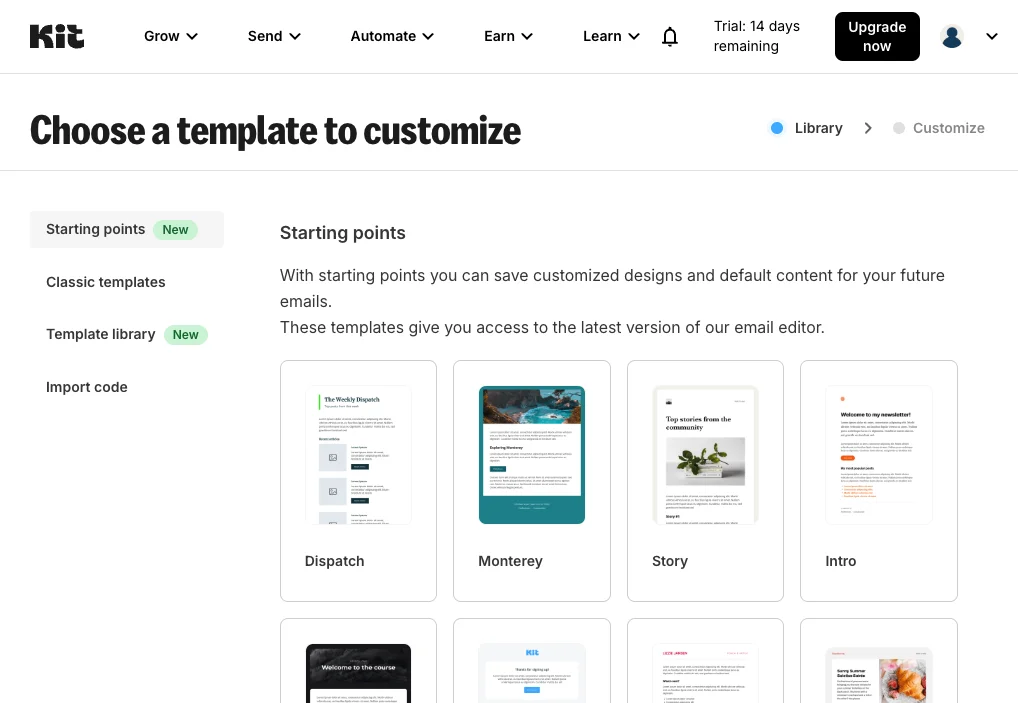
Renamed Kit, this platform is purpose-built for the unique needs of bloggers, YouTubers, and solo entrepreneurs. It excels at list growth and automated follow-ups, even offering a generous free plan supporting up to 10,000 subscribers. However, advanced functionalities like multi-sequence automation and sales funnels are reserved for paid upgrades.
- Key Features: Tag-based subscriber management, visual automation builder, landing pages & forms, e-commerce integrations, customizable email templates (text-focused), broadcast sending, subscriber tagging.
- Drawbacks: More expensive for smaller lists compared to some competitors, template design is minimalist and less visual, limited A/B testing on lower tiers.
- Pricing: Free plan (up to 10,000 subscribers, limited features), Creator (starts at $15/month for 300 subscribers), Creator Pro (starts at $29/month for 300 subscribers).
Best for Social-Savvy Brands: Constant Contact
For businesses aiming to seamlessly integrate email campaigns with their social media presence, Constant Contact offers a compelling solution. Its intuitive drag-and-drop editor ensures ease of use, complemented by consistently high email delivery rates. It’s an ideal choice for brands with a strong Facebook and Instagram presence, though its more advanced plans may pose a cost challenge for smaller operations.
- Key Features: User-friendly drag-and-drop email builder, hundreds of mobile-responsive templates, social media integration and scheduling, event management tools, list building tools (forms, landing pages), e-commerce marketing.
- Drawbacks: Higher pricing tiers can be costly, automation features are less advanced than some competitors, limited free trial period.
- Pricing: Core (starts at $12/month for 500 contacts), Plus (starts at $45/month for 500 contacts).
Best for Long-Standing Reliability: AWeber
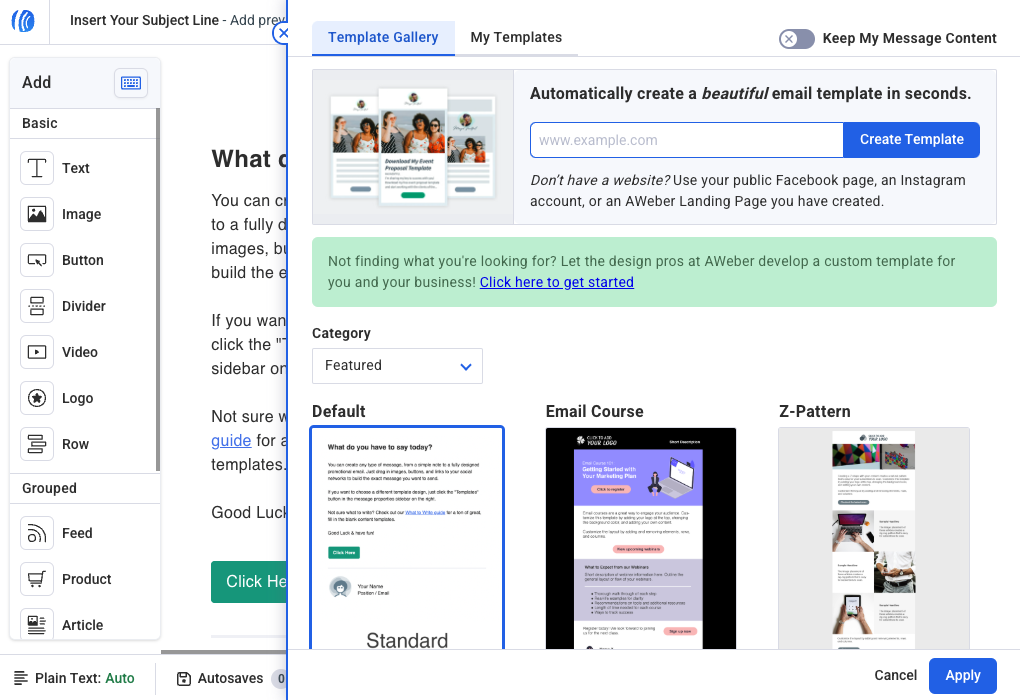
With over two decades in the industry, AWeber has established itself as a trusted partner for solo entrepreneurs and small business owners. Its platform, known for reliability, provides a robust set of features including pre-built templates, automation capabilities, and integrations with platforms like Etsy and YouTube. While not the most cutting-edge in terms of advanced features, it delivers consistently on core email marketing functions, bolstered by solid analytics and testing tools.
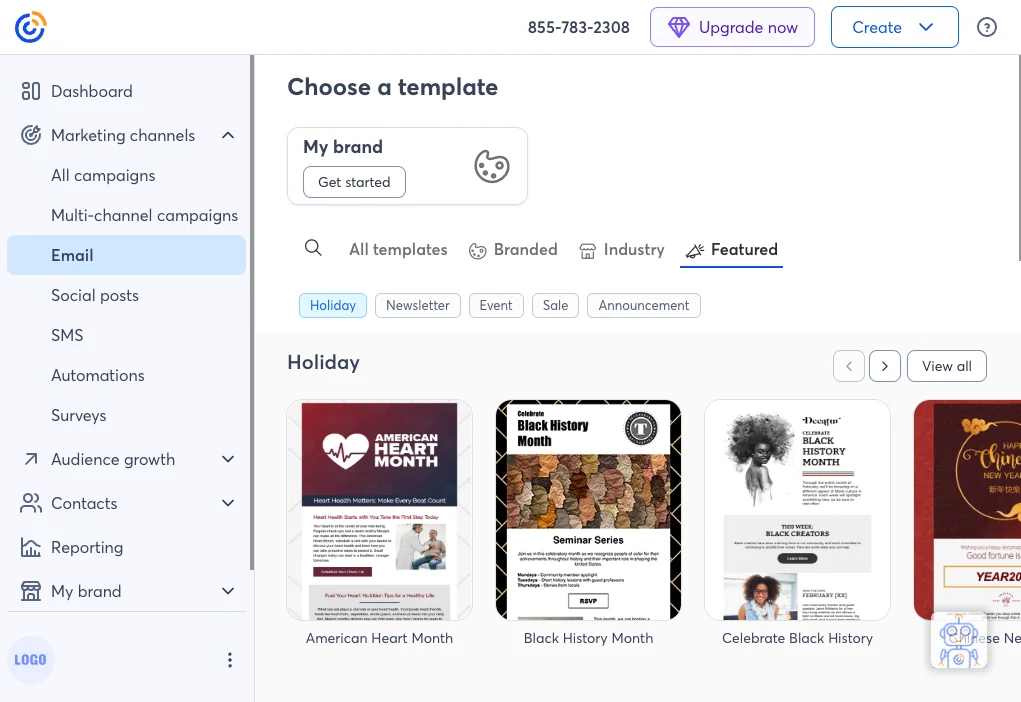
- Key Features: AI-powered email template designer, comprehensive template library, email automation and campaigns, landing page builder, web push notifications, e-commerce integrations, robust analytics.
- Drawbacks: Interface can feel somewhat dated, some advanced features require workarounds or integrations, reporting could be more granular on lower tiers.
- Pricing: Free plan (up to 500 subscribers, 3,000 emails/month), Lite (starts at $14.99/month for 500 subscribers), Plus (starts at $29.99/month for 500 subscribers), Unlimited (custom pricing).
Best for All-in-One Marketing: HubSpot
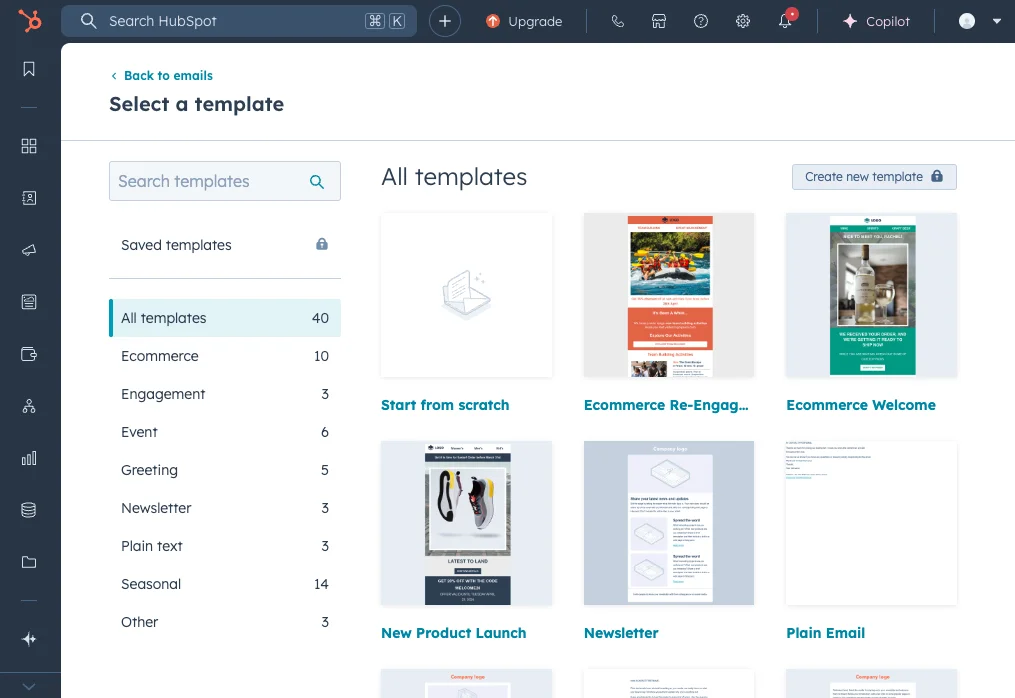
HubSpot transcends the traditional email marketing platform, serving as a comprehensive CRM and marketing suite. It enables businesses to manage contacts, construct automated email workflows, and monitor performance from a single, unified dashboard. The free tier offers surprisingly extensive functionality, though accessing its more advanced automation features typically entails a significant price increase.
- Key Features: Integrated CRM, marketing automation (email, ads, social), sales tools, customer service tools, content management system (CMS), email builder, landing page builder, robust analytics.
- Drawbacks: Can be very expensive for full suite access, steep learning curve for new users, email-only features are basic on lower tiers compared to dedicated ESPs.
- Pricing: Free tools (CRM, marketing, sales, service), Starter CRM Suite (starts at $30/month), Professional (Marketing Hub starts at $800/month), Enterprise (Marketing Hub starts at $3,600/month).
Best for Online Stores: Omnisend
Purpose-built for e-commerce brands, Omnisend offers a holistic omnichannel marketing approach, integrating email with SMS and push notifications directly, even within its free plan. While feature-rich and highly specialized for online retail, it has been noted for having less visually diverse templates and email deliverability that, while good, might not always match the absolute top tier.
- Key Features: E-commerce focused automation (abandoned cart, welcome, browse abandonment), SMS & push notifications, segmentation for e-commerce, product recommendations, pop-ups & forms, integrates with major e-commerce platforms.
- Drawbacks: Deliverability can be inconsistent for some users, template design options are somewhat limited, best value is tied to e-commerce specific use cases.
- Pricing: Free plan (up to 250 contacts, 500 emails/month, 60 SMS), Standard (starts at $16/month for 500 contacts, 6,000 emails, 60 SMS), Pro (starts at $59/month for 500 contacts, unlimited emails, 3,500 SMS).
Best for Multi-Channel Campaigns: Brevo (formerly Sendinblue)
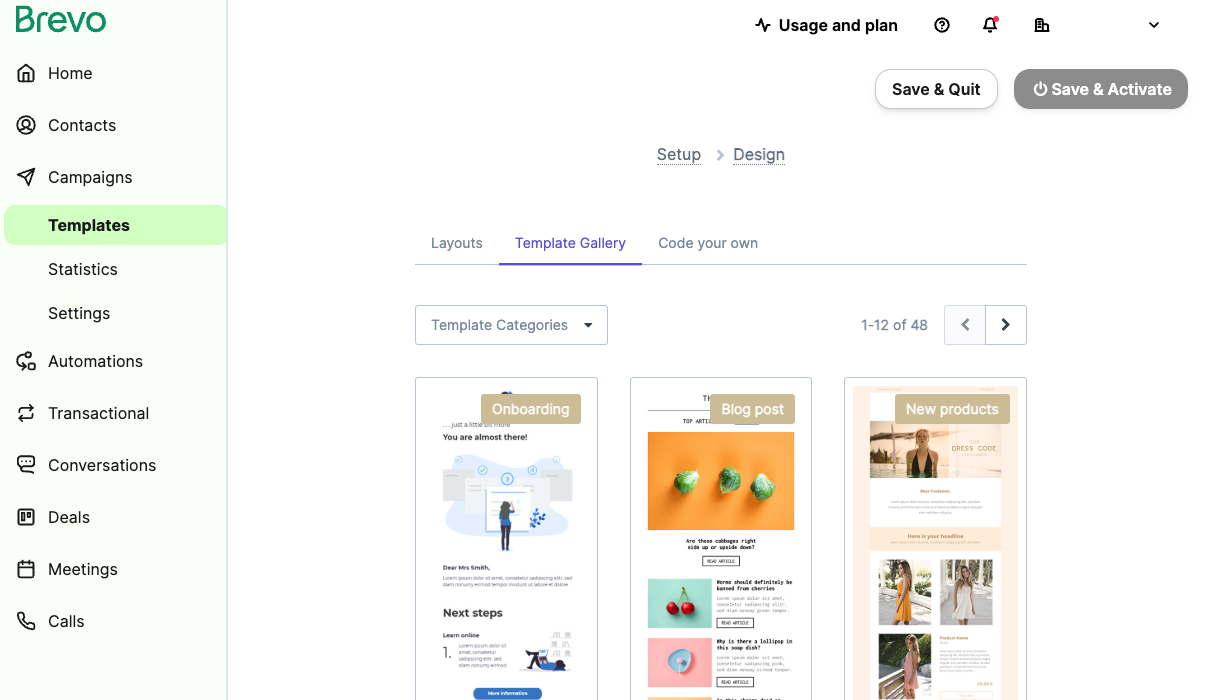
Brevo (formerly Sendinblue) provides a unified platform for managing email, SMS, and live chat, making it an excellent choice for businesses seeking to consolidate their communication channels. Its clean and navigable UI contributes to an efficient user experience. However, access to its most granular analytics and advanced reporting often requires a higher-tier subscription.
- Key Features: Email marketing, SMS marketing, live chat, CRM, marketing automation workflows, transactional emails, landing page builder, signup forms.
- Drawbacks: Advanced analytics are limited on free/lower plans, email template design options can be basic, some features require add-ons.
- Pricing: Free plan (up to 9,000 emails/month), Starter (starts at $25/month for 20,000 emails), Business (starts at $65/month for 20,000 emails), Enterprise (custom pricing).
Best for Serious Automation: ActiveCampaign
ActiveCampaign is a robust solution for businesses that demand sophisticated automation beyond standard email blasts. It integrates advanced marketing automation with a built-in CRM, offering unparalleled control over the entire customer journey. Features like detailed workflows, dynamic content, and intelligent segmentation cater to teams seeking depth and precision. This power, however, comes with a steeper learning curve and a higher price point.
- Key Features: Advanced marketing automation (visual builder), integrated CRM, sales automation, lead scoring, dynamic content, deep segmentation, SMS messaging, site tracking, comprehensive reporting.
- Drawbacks: Can be overwhelming for beginners, higher cost compared to simpler platforms, customer support quality can vary based on plan.
- Pricing: Lite (starts at $29/month for 1,000 contacts), Plus (starts at $49/month for 1,000 contacts), Professional (starts at $149/month for 1,000 contacts), Enterprise (custom pricing).
Strategic Platform Selection: Aligning with Business Use Cases
The optimal email marketing tool is highly contingent on a business’s specific needs, objectives, and operational context. The requirements of a lean small business differ significantly from those of an e-commerce giant or a non-profit organization.
- Small Businesses: For small teams or solo entrepreneurs, the priority is simplicity, affordability, and time-saving tools. Platforms with intuitive dashboards, responsive customer support, and automation that doesn’t demand specialist knowledge are ideal. Pricing models that scale gracefully with growth are a significant advantage.
- E-commerce Brands: Online retailers require features that directly impact revenue. This includes sophisticated abandoned cart recovery emails, personalized product recommendations, and deep integrations with leading e-commerce platforms like Shopify or WooCommerce. Behavioral triggers and highly personalized automations are crucial for maximizing conversion rates.
- Nonprofits: Non-profit organizations must maximize every resource. Email tools offering discounted pricing or dedicated free plans for nonprofits are invaluable. Essential features include customizable templates for diverse campaigns, donor segmentation capabilities, and integrations with fundraising platforms to maintain supporter engagement and streamline communication without overburdening limited staff.
- B2B Companies: For business-to-business entities, email strategy is centered on lead nurturing and pipeline progression. Platforms that integrate seamlessly with CRM systems, support lead scoring, and offer tools for account-based marketing are critical. The deeper the connection between the email platform and the broader sales and marketing stack, the more effective the strategy.
Finalizing Your Decision: A Comprehensive Checklist
Choosing the right email marketing service is a strategic investment that requires careful evaluation of unique needs, goals, and resources. The goal is to strike a balance between functionality, ease of use, and affordability, while ensuring the flexibility to adapt and scale.
To guide this crucial decision, consider the following checklist:
- Core Features: Does the platform offer essential tools like a drag-and-drop editor, segmentation, basic automation, and robust reporting?
- Pricing and Affordability: Does the pricing model align with your budget and anticipated growth without hidden costs or sudden jumps?
- Use Case Alignment: Is the platform specifically suited for your business type (e.g., e-commerce, B2B, creator, nonprofit)?
- Integration Possibilities: Does it integrate with your existing CRM, e-commerce platform, analytics tools, and other critical software?
- Scalability: Can the platform comfortably accommodate your list growth and increasing campaign complexity without forcing a migration?
- Advanced Capabilities: If needed, does it offer features like advanced automation, A/B testing, dynamic content, and lead scoring?
- Analytics and Reporting: Are the reporting features comprehensive enough to track key performance indicators (KPIs) and inform strategic adjustments?
- Deliverability Reputation: Does the provider have a strong track record for ensuring emails reach the inbox rather than spam folders?
- Customer Support: What level of support is offered, and is it responsive and helpful for your team’s needs?
- Compliance: Does the platform assist with adherence to global data privacy regulations (e.g., GDPR, CCPA)?
The right email platform is more than just a sending mechanism; it’s a vital tool for building authentic connections with your audience, fostering loyalty, and driving sustainable business growth. Thorough research, coupled with practical testing of a few shortlisted options, will empower businesses to make an informed choice that propels their digital marketing strategy forward.
Frequently Asked Questions About Choosing an Email Service
For those navigating the complexities of email marketing, or seeking to optimize an existing setup, this FAQ addresses common queries regarding services, features, pricing, and integrations.
What is an email marketing service, and how does it function?
An email marketing service (EMS) or email service provider (ESP) is a software platform designed to help businesses manage and send marketing and transactional emails to their subscriber lists. These platforms typically include a suite of tools such as drag-and-drop email builders, automation workflows, list segmentation, signup form creation, and performance analytics, enabling efficient campaign management without requiring design or development expertise.
What are the typical email sending limits?
Email sending limits vary significantly by provider and plan type. Some higher-tier or enterprise plans offer unlimited emails, while others impose monthly or even daily send caps. It’s crucial to review these limits carefully, especially for businesses with large subscriber lists or frequent bulk sending requirements, to avoid unexpected overage charges or service interruptions.
What are transactional emails, and are they necessary?
Transactional emails are automated, system-triggered messages sent in response to a user’s action or a specific event. Examples include order confirmations, password reset links, shipping notifications, and cart abandonment reminders. For e-commerce businesses, they are essential for providing critical information and improving customer experience. Many email marketing platforms integrate transactional email capabilities into their automation workflows or allow connections via third-party tools.
Are there affordable email marketing services for small businesses?
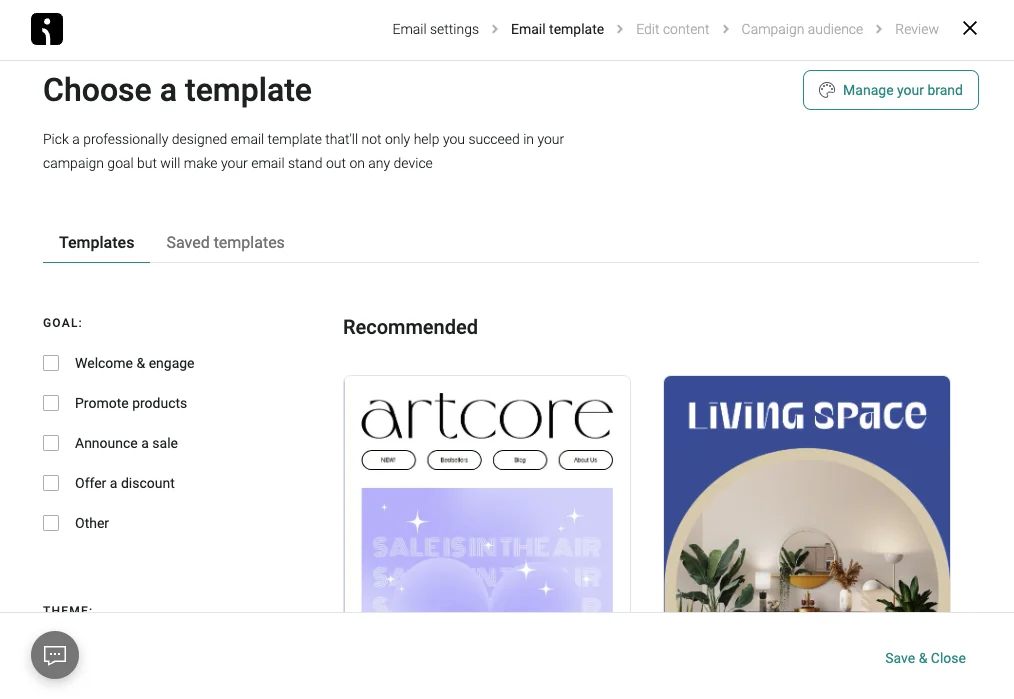
Absolutely. Many providers offer generous "forever-free" plans or entry-level paid plans that include essential features such as email sequences, basic automation, and access to pre-designed templates. Platforms like Mailjet, Brevo, and MailerLite are popular choices for budget-conscious users due to their balance of features and cost-effectiveness.
What advanced features should I consider if I’m beyond the basics?
For businesses looking to elevate their email marketing, prioritize tools offering:
- Advanced Segmentation: Hyper-targeting based on demographics, behavior, and purchase history.
- Behavioral Automation: Triggering emails based on website visits, content engagement, or product views.
- A/B Testing & Optimization: Rigorous testing of subject lines, content, and calls-to-action to improve performance.
- CRM Integration: Seamless syncing of contact data and activity for a unified customer view.
- Personalized Content: Dynamic content blocks that adapt based on individual subscriber data.
These features are particularly beneficial for e-commerce, content creators, and digital product sellers aiming for sophisticated engagement.
Do email marketing tools integrate with existing tech stacks?
The majority of leading email marketing platforms offer extensive third-party integrations with popular tools like Shopify, Salesforce, Google Analytics, and Zapier. Businesses needing deep synchronization for CRM, advertising, or conversion funnel tracking should prioritize platforms with robust native integrations or strong API capabilities.
Which platforms are best for e-commerce email marketing?
For online stores, platforms specifically designed with e-commerce in mind are ideal. Omnisend, Drip, and Klaviyo are strong contenders, offering features like commerce revenue attribution, sophisticated abandoned cart sequences, product-based segmentation, and sales automation workflows tailored to online retailers’ needs.
How critical is email deliverability?
Email deliverability is paramount. Poor deliverability rates mean your emails may end up in spam folders or fail to reach recipients entirely, negating your marketing efforts. Look for platforms with a strong reputation for deliverability, dedicated tools to monitor and improve sender reputation, and options like dedicated IP addresses for high-volume senders.
Can content creators or bloggers use email marketing software effectively?
Definitely. Many tools are highly suited for bloggers, advanced creators, and digital marketers. Features such as email funnels, visually appealing campaign builders, customizable templates, and audience growth tools make them excellent for creators focused on selling digital products or cultivating a loyal subscriber base.
How can campaign performance be tracked?
The best email marketing tools include detailed tracking and real-time performance reports. Users can monitor key metrics such as open rates, click-through rates, conversion rates, and bounce rates. Some platforms also offer ROI tracking, contact scoring, and advanced email KPIs to provide a comprehensive view of campaign success.
Should I consider hiring an email marketing agency?
For small teams or businesses managing complex campaigns, an email marketing agency can provide invaluable expertise in strategy development, content creation, and advanced automation setup. However, many businesses find that a capable email platform combined with robust onboarding services and responsive customer support provides sufficient resources to manage their campaigns effectively.
What are the different types of email marketing?
Email marketing encompasses several strategic types:
- Promotional Emails: Campaigns designed to announce new products, sales, or special offers.
- Newsletters: Regular communications providing valuable content, updates, or industry insights.
- Transactional Emails: Automated messages triggered by user actions (e.g., order confirmations, password resets).
- Welcome Series: Automated sequences introducing new subscribers to a brand or product.
- Re-engagement Campaigns: Emails aimed at reactivating inactive subscribers.
- Automated Workflows: Multi-step email sequences triggered by specific behaviors or events.
The choice of email marketing types depends on specific business goals, target audience, and overall digital marketing strategy.








