Moonshot AI, the Beijing-based artificial intelligence unicorn founded by computer scientist Yang Zhilin, has officially released Kimi K3, a massive 2.8-trillion-parameter model that marks a significant milestone in the open-weight AI landscape. Built on a sophisticated Mixture-of-Experts (MoE) architecture, K3 is designed to deliver near-frontier capabilities in coding, reasoning, and agentic tasks while maintaining a focus on inference efficiency. By making the weights open to the public, Moonshot AI is positioning itself as a major challenger to proprietary models from Western tech giants, offering a high-capacity alternative for developers who require deep integration and self-hosting capabilities.
The release of Kimi K3 comes at a time of intense competition in the large language model (LLM) market, particularly within the segment of "open" models. While Meta’s Llama series and DeepSeek’s various iterations have dominated recent headlines, the sheer scale of K3’s 2.8 trillion parameters places it in a rare class of ultra-large models. Despite its massive total parameter count, the model’s MoE architecture ensures that it remains computationally viable for high-throughput applications by activating only a small fraction of its neural network for any given task.
The Architectural Blueprint: Efficiency at Scale
The defining characteristic of Kimi K3 is its sparse Mixture-of-Experts (MoE) framework. Unlike "dense" models where every parameter is activated for every word or "token" generated, K3 utilizes a routing system that directs information only to the most relevant sub-networks, or "experts."
Technical specifications reveal that K3 contains a total of 896 experts. For each token processed during inference, the model activates only 16 of these experts, representing approximately 1.8% of the total parameter count. This sparsity allows K3 to possess the "knowledge" and reasoning depth of a nearly 3-trillion-parameter system while maintaining the inference speed and cost profile of a much smaller model.
Furthermore, K3 is a native multimodal model, supporting both text and vision inputs from the ground up. This integration allows for more seamless reasoning across different data types, such as interpreting complex diagrams to generate code or analyzing visual data for agentic planning. The model also features a massive 1-million-token context window, enabling it to process entire codebases, long legal documents, or multi-hour transcripts in a single prompt.
Chronology of Moonshot AI and the Path to K3
To understand the significance of K3, one must look at the rapid ascent of Moonshot AI. Founded in early 2023 by Yang Zhilin—a former researcher at Google and Meta and a key contributor to the Transformer-XL and XLNet architectures—Moonshot AI quickly became one of China’s "AI Tigers."
In October 2023, the company launched its initial Kimi chatbot, which gained immediate traction for its industry-leading long-context capabilities. While competitors were struggling with context windows of 32,000 or 128,000 tokens, Kimi was already pushing the boundaries of what users could upload and analyze.
By early 2024, Moonshot AI secured over $1 billion in funding from major investors including Alibaba, Tencent, and Meituan, valuing the company at approximately $2.5 billion. The development of K3 represents the culmination of this massive capital injection and technical expertise, moving beyond simple chat interfaces into the realm of high-end, agentic intelligence capable of autonomous problem-solving.
Strategic Partnerships and Accessibility
Moonshot AI has adopted a dual-track strategy for K3’s deployment. For general consumers and non-technical users, the model is accessible through the standard Kimi application on iOS, Android, and web platforms. This "no-code" entry point allows users to experience the model’s reasoning and vision capabilities without financial or technical barriers.
For the developer and enterprise community, Moonshot AI has partnered with Fireworks AI to provide programmatic access. Fireworks AI offers an OpenAI-compatible API, allowing developers to swap K3 into existing workflows with minimal friction. The pricing structure for K3 on Fireworks AI is divided into three tiers to accommodate different performance requirements:
- Standard Tier: Priced at $3.00 per million tokens for uncached input and $15.00 per million for output. This tier is designed for general-purpose applications where standard latency is acceptable.
- Priority Tier: Priced at $3.75 per million tokens for uncached input and $18.75 per million for output. This offers higher reliability and throughput for production-grade applications.
- Fast Tier: Priced at $4.50 per million tokens for uncached input and $22.50 per million for output. This is optimized for real-time applications where low latency is the primary requirement.
Notably, all tiers offer a significant discount for "cached" input—priced at roughly one-tenth the cost of standard input. This incentivizes developers to use "prompt caching" for long system instructions or static context, making the 1-million-token context window more economically feasible for repetitive tasks.
Infrastructure Requirements for Self-Hosting
While K3 is an "open-weight" model, the hardware required to run a 2.8-trillion-parameter system is substantial. Moonshot AI recommends a "supernode" configuration featuring at least 64 high-end AI accelerators (such as NVIDIA H100s or equivalent) to host the model effectively.
This requirement highlights the practical limitations of the open-weight movement. While the software is free to download, the capital expenditure for the necessary compute infrastructure remains a barrier for small to medium-sized enterprises. Consequently, most users are expected to utilize the Fireworks AI API or similar managed services rather than attempting to host the model on-premises.
Benchmarks and Comparative Analysis
In early evaluations, Kimi K3 has shown exceptional performance in two specific areas: "blind coding" and "long-horizon agency." Blind coding refers to the model’s ability to generate complex, functional code without iterative feedback, while long-horizon agency refers to its ability to plan and execute multi-step tasks over a long period.
When compared to other leading models, the results are as follows:
- Coding Performance: K3 competes directly with GPT-4o and Claude 3.5 Sonnet in Python and JavaScript generation. Its ability to reference an entire 1-million-token codebase gives it an edge in maintaining consistency across large software projects.
- Vision-Language Tasks: In benchmarks like MMMU (Massive Multi-discipline Multimodal Understanding), K3’s native vision capabilities allow it to outperform many models that rely on "bolted-on" vision encoders.
- Agentic Reasoning: K3 is specifically tuned for "Chain-of-Thought" (CoT) processing. Before delivering an answer, the model frequently generates internal reasoning steps to verify its logic, a feature that is increasingly critical for autonomous AI agents.
However, industry analysts note that while K3 excels in technical and logical domains, its performance in general creative writing or multi-lingual nuance may differ from models like Llama 3.1, which were trained on different datasets. Experts suggest that K3 should be viewed primarily as a "workhorse" model for engineering and automated workflows.
Industry Implications and Market Reaction
The release of Kimi K3 is seen by many as a direct response to the "closed" ecosystem of OpenAI. By providing a model of this scale with open weights, Moonshot AI is contributing to a global shift where the most powerful AI is no longer hidden behind proprietary walls.
"The release of K3 changes the math for enterprise AI," says one industry analyst. "Previously, if you wanted trillion-parameter intelligence, you had to send your data to a closed API. Now, if you have the hardware, you can own the model. This is a massive win for data sovereignty and customized AI development."
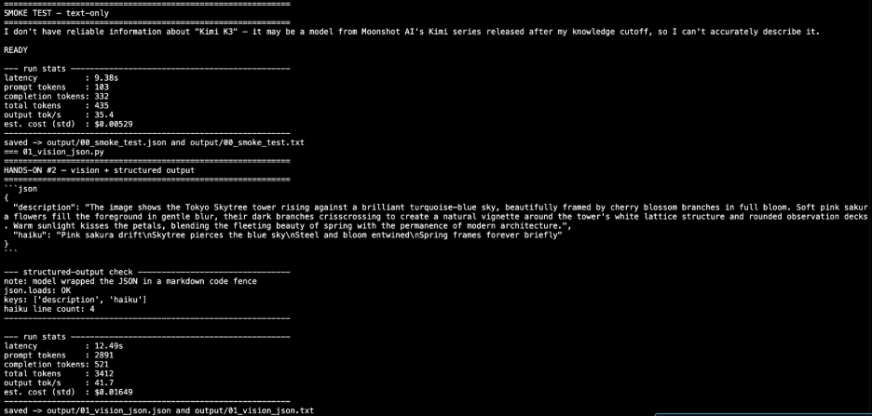
The reaction from the developer community has been largely positive, particularly regarding the model’s handling of complex JSON outputs and structured data. In task-based tests, K3 demonstrated a high degree of "instruction following," a trait that is essential for building reliable AI pipelines.
Future Outlook
Moonshot AI has indicated that K3 is just the beginning of its "K-series" evolution. As the company continues to refine its MoE architecture, future iterations may see even higher expert counts and more efficient routing algorithms.
The broader impact of K3 will likely be felt in the field of autonomous agents. Because the model can handle vast amounts of context and has been optimized for reasoning, it is an ideal candidate for "Agentic Workflows"—systems where the AI can browse the web, use software tools, and complete complex projects with minimal human intervention.
In conclusion, Kimi K3 represents a bold step forward for Moonshot AI and the open-source community. By combining a 2.8-trillion-parameter scale with a highly efficient MoE architecture and a 1-million-token context window, Moonshot AI has provided the market with a powerful new tool for the next generation of AI-driven innovation. Whether used through the Kimi app for quick tasks or integrated via the Fireworks AI API for enterprise-scale agents, K3 stands as a testament to the rapid maturation of the global AI landscape.