The landscape of paid social media advertising is undergoing a seismic shift, driven by Meta’s ambitious implementation of Andromeda, a sophisticated AI-powered retrieval and ranking system. This transformative technology, unveiled and progressively rolled out, marks the most significant overhaul of Meta’s advertising infrastructure in over a decade, fundamentally altering how brands connect with consumers online. The implications are far-reaching, demanding a strategic re-evaluation of campaign structures, creative development, and the very definition of effective targeting.
At its core, Andromeda represents a paradigm shift from traditional, manually segmented campaign management to a more automated, data-driven approach. Previously, paid social managers meticulously crafted campaigns by segmenting audiences into granular categories – interests, lookalikes, and retargeting lists – often limiting ad sets to a mere handful of creatives. This approach, while effective in earlier digital advertising eras, is now being rendered obsolete by Andromeda’s advanced capabilities. The system’s architecture is designed to process and analyze vast datasets in real-time, identifying optimal ad-to-user matches with unprecedented speed and scale.
The naming of the system, "Andromeda," is no mere coincidence. Meta executives have drawn a poetic parallel to the Andromeda galaxy, a cosmic entity containing over a trillion stars and continuously expanding. This analogy underscores the sheer immensity of data Andromeda navigates, searching through tens of millions of potential ad-user combinations instantaneously. This vastness necessitates a different approach from advertisers; rather than attempting to meticulously control performance through intricate segmentation, the focus must now shift to designing systems that provide clear, strong signals to Andromeda, enabling its AI to optimize delivery effectively.
The Dawn of Galaxy Signal Design: Consolidation and Strategic Restructuring
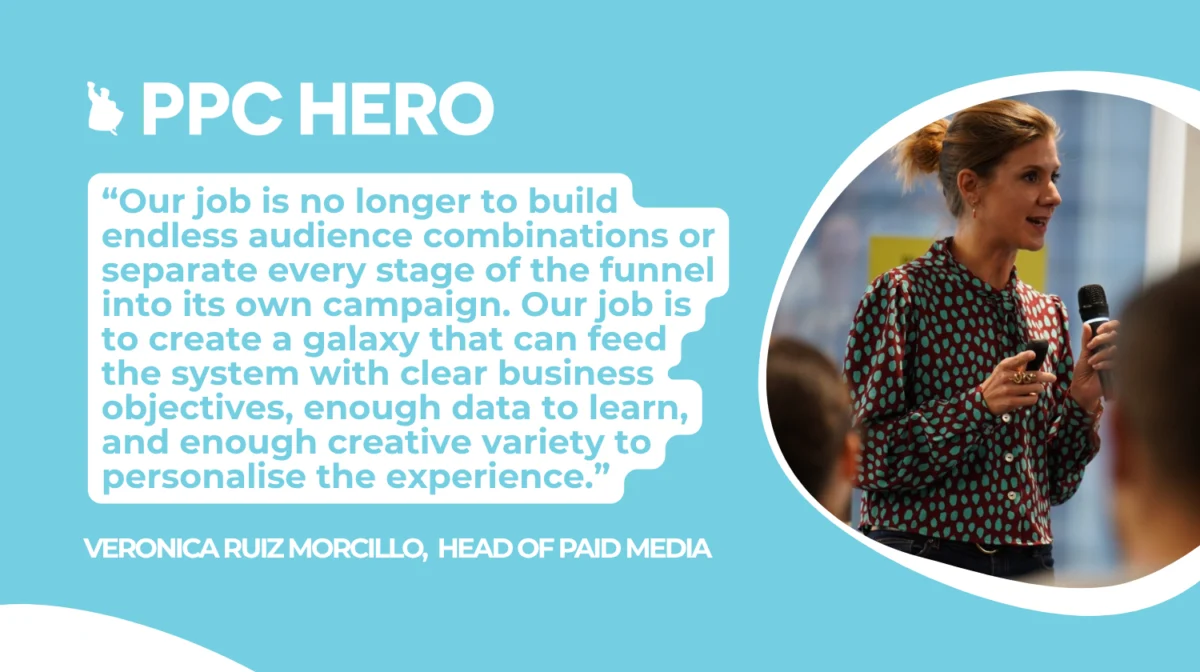
The era of "micro-planets" in campaign structuring, characterized by hyper-segmentation, is giving way to a "galaxy signal" design philosophy. Andromeda thrives on consolidated data, allowing its algorithms to discern patterns and correlations more effectively. This means that advertisers must move away from diluting their budgets and creative assets across numerous, narrowly defined ad sets. Instead, Meta’s platform increasingly rewards a more concentrated approach, emphasizing fewer, broader campaign structures that funnel unified signals towards overarching business objectives.
This strategic shift necessitates a fundamental reorientation of campaign goals. The traditional Top-of-Funnel (TOF), Middle-of-Funnel (MOF), and Bottom-of-Funnel (BOF) segmentation is becoming less relevant in Andromeda’s operational framework. Instead, campaign structures should be aligned directly with core business objectives. For instance, instead of separate campaigns for lead generation and direct sales, a unified campaign focused on revenue growth, supported by diverse creatives catering to different stages of the customer journey, is likely to yield superior results. This consolidation not only simplifies campaign management but also provides Andromeda with richer, more coherent data sets to learn from, accelerating campaign learning and facilitating smoother scaling.

Broad Targeting as an Expanding Universe: Embracing AI’s Predictive Power
The drive towards consolidation naturally leads to the embrace of broader targeting strategies. Andromeda’s sophisticated AI possesses a wealth of behavioral and predictive data on users, far exceeding what individual advertisers can realistically process. This makes granular, audience-specific targeting increasingly obsolete. The intelligence lies not in manually defining who should see an ad, but in providing the system with the best possible inputs for it to make those decisions.
In this new paradigm, the emphasis shifts from audience definition to creative execution. Andromeda utilizes creative signals to determine user engagement, effectively making the creative assets themselves the new targeting layer. The system aims to curate a "shortlist" of highly relevant ad variations that resonate with different user segments, rather than identifying a single, universal "winner." The hook and message within an ad become the primary drivers of audience qualification. This means that even users with identical declared interests might be shown different ad variations based on Andromeda’s nuanced understanding of their individual preferences and behaviors. The goal is personalized delivery, ensuring the right creative message reaches the right user at the right time.
The Creative Advantage: Diversification as the New Targeting Currency
The effectiveness of Andromeda is intrinsically linked to the diversity and quality of creative assets provided. Simply making minor adjustments – changing copy, swapping backgrounds, or slightly altering an image – is no longer sufficient. Meta’s AI increasingly interprets such minimal variations as the same ad. The era of "spot the difference" in ad creatives is over. "Different" now signifies genuinely distinct messaging, visual styles, and underlying value propositions.
To truly capitalize on Andromeda’s capabilities, advertisers must invest in a structured, diverse creative strategy. This involves developing a range of creative assets that tap into different motivations, proof points, personas, and key visual elements. For example, in the context of marketing a rug, different creative angles could focus on:
- Problem/Solution: Highlighting ease of cleaning for "mess-fatigued" households.
- Discovery: Showcasing the instant room transformation capabilities for renters and design enthusiasts.
- Design-led: Emphasizing aesthetic appeal and seamless integration into home interiors for style-conscious individuals.
- Style and Comfort: Focusing on tactile qualities and a plush feel for those prioritizing comfort.
- Safe/Family Living: Promoting baby-safe materials and play-friendliness for families with young children.
- Practicality: Stressing machine-washable and easy-maintenance features for time-poor households.
This multifaceted approach provides Andromeda with a richer set of signals, increasing the probability of finding optimal matches with diverse user segments. Meta’s internal analyses have suggested that exploring different motivators can unlock new audiences up to 89% of the time, underscoring the power of creative variation in driving campaign expansion and scalability.
A robust scaling system under Andromeda’s influence typically comprises several key components:

- Multiple Hooks/Motivators: Presenting various reasons for a user to engage with an ad.
- Diverse Personas: Tailoring messaging and visuals to appeal to distinct customer archetypes.
- Varied Key Shots: Employing a range of visual styles, from lifestyle imagery to product demonstrations.
- Clear Proof Points: Articulating specific benefits and features that address user needs.
- Testing Environments: Maintaining a dedicated space to rigorously test new creative concepts and strategies before full-scale deployment.
A Timeline of Transformation: From Manual Control to AI Orchestration
The journey towards Andromeda’s current prominence can be traced through several key developments in Meta’s advertising platform. Initially, paid social advertising was characterized by manual bidding, precise audience targeting, and limited creative options. As platforms evolved, features like dynamic creative optimization (DCO) and automated bidding strategies emerged, signaling a move towards greater automation.
The introduction of Advantage+ Shopping Campaigns represented a significant precursor to Andromeda, demonstrating Meta’s commitment to AI-driven campaign management for e-commerce. This paved the way for more comprehensive AI integration across the advertising ecosystem. Andromeda, officially detailed in late 2024 and actively integrated into Meta’s systems throughout 2025 and into 2026, signifies the culmination of this evolution. It’s not merely an incremental update; it’s a foundational restructuring of how Meta’s advertising engine operates.
Industry analysts have observed this trend, with many predicting a decline in the effectiveness of highly segmented, manually optimized campaigns. As far back as 2023, experts began highlighting the growing importance of creative quality and diversity over granular audience targeting. The widespread adoption of Andromeda by advertisers by 2026 is a direct response to these evolving platform capabilities and the increasing sophistication of Meta’s AI.
Broader Impact and Implications for Advertisers
The implications of Andromeda extend beyond campaign structure and creative development. For advertisers, this transition signifies a need to:
- Reallocate Resources: Shifting investment from manual campaign optimization to creative production and strategic ideation.
- Develop New Skillsets: Fostering teams capable of deep audience understanding and compelling narrative development, rather than solely focusing on platform mechanics.
- Embrace Data Collaboration: Working more closely with Meta to understand how data signals are being interpreted and utilized by Andromeda.
- Adapt Measurement Strategies: Rethinking key performance indicators (KPIs) to align with the new AI-driven optimization goals, focusing on outcomes rather than intermediate metrics.
While the initial learning curve may be steep, the long-term benefits of Andromeda are substantial. By leveraging the power of AI, advertisers can achieve greater efficiency, reach more relevant audiences, and drive more impactful business results. The platform’s ability to personalize ad delivery at scale promises a more engaging experience for consumers, ultimately leading to higher conversion rates and stronger brand loyalty.
A Simpler Structure, a Sophisticated Strategy
The irony of Andromeda’s impact is that campaign structures are becoming simpler, while the creative strategy behind them is becoming more complex and sophisticated. The days of meticulously organizing audiences into countless ad sets are fading. Instead, advertisers are spending less time on intricate structural arrangements and more time on deeply understanding human behavior, motivations, and desires. This focus on people, rather than purely on data points, is not only more effective in the age of AI but also, as many in the industry are discovering, a more intellectually stimulating and rewarding endeavor. The "galaxy" of Andromeda demands a broader, more insightful approach, transforming the art and science of paid social advertising into a more compelling and impactful discipline.