rifanmuazin
Meta Platforms Inc. has announced a pivotal strategic shift, opening its advanced Meta Display glasses to third-party developers. This move is designed to significantly broaden the device’s utility and accelerate the creation of a robust application ecosystem, marking a crucial step in the company’s long-term vision for ambient computing and the metaverse. The initiative empowers developers to craft innovative applications that leverage the device’s unique gesture-driven features, enabled by the revolutionary Neural Band wrist controller. This expansion of access is not merely a technical update but a profound statement about Meta’s commitment to fostering an open, interconnected future where digital experiences seamlessly integrate with the physical world through intelligent wearables.
Meta’s Ambitious Wearables Trajectory and the Rise of AI Glasses
The opening of the Meta Display glasses platform comes as the tech giant continues to pour substantial resources into its Reality Labs division, dedicated to building the foundational technologies for the metaverse. For years, Meta CEO Mark Zuckerberg has articulated a vision where augmented reality (AR) glasses will eventually replace smartphones as the primary computing interface. This journey has seen several iterations, from the experimental Project Aria research glasses, designed to gather data for future AR development, to the more consumer-focused Ray-Ban Stories smart glasses. While Ray-Ban Stories offered basic camera and audio capabilities, they lacked a visual display and the advanced AI integration that Meta envisions for truly immersive and useful wearables.
The Meta Display glasses, officially unveiled at the company’s annual Meta Connect conference in September of the previous year, represent a significant leap forward. Positioned as Meta’s most sophisticated artificial intelligence-powered glasses product to date, they integrate a heads-up display (HUD) directly into the user’s field of vision. This critical feature differentiates them from previous smart glasses, allowing for context-aware information overlays and interactive experiences without requiring users to pull out a separate device. The inclusion of an advanced AI engine allows for real-time processing of environmental data, natural language understanding, and predictive assistance, making the glasses far more than just a camera on your face.
The strategic importance of an open developer ecosystem cannot be overstated. History has shown that the success of any major computing platform—from personal computers to smartphones—is intrinsically linked to the vibrancy and innovation of its third-party developer community. By inviting external creators, Meta aims to overcome the "killer app" dilemma that has often plagued nascent hardware categories, hoping to spark unforeseen use cases and accelerate consumer adoption. This approach mirrors the highly successful strategies employed by Apple and Google with their respective mobile app stores, which transformed mere devices into indispensable tools.
Unpacking the Technology: Heads-Up Display and Neural Band
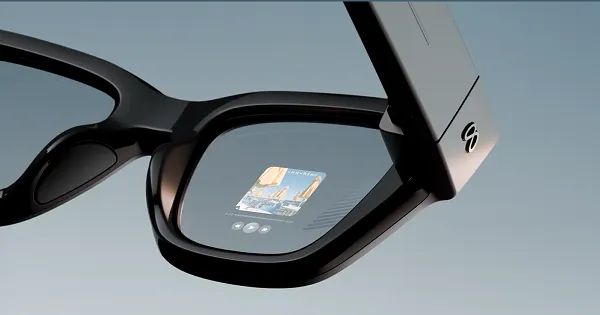
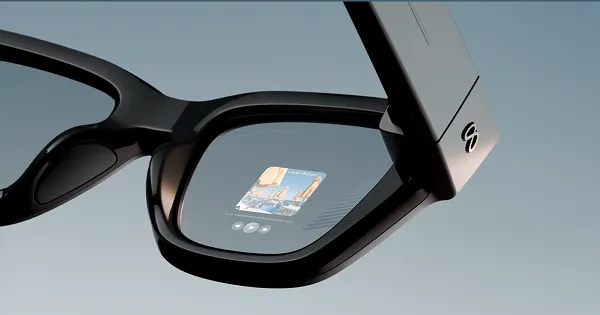
At the core of the Meta Display glasses’ enhanced functionality are two pivotal technologies: the integrated heads-up display and the groundbreaking Neural Band wrist controller. The HUD provides a discreet, transparent overlay of digital information onto the wearer’s real-world view. This can range from notifications and navigation directions to complex data visualizations, all presented non-intrusively. Unlike full virtual reality (VR) headsets that completely immerse the user in a digital environment, the HUD in the Display glasses augments reality, keeping the user present in their physical surroundings while offering digital assistance.
However, it is the Neural Band that truly distinguishes the Meta Display glasses and offers a novel interaction paradigm. This wrist-worn accessory utilizes electromyography (EMG) sensors to detect minute electrical signals from the user’s forearm muscles. These signals, generated even before a visible movement occurs, are then interpreted as "microgestures" or subtle finger movements. This allows for intuitive and discrete control of the glasses without the need for voice commands, physical touch on the device, or external controllers. For developers, this opens up an entirely new avenue for interaction design, moving beyond the traditional interfaces of touchscreens and spoken commands.
Meta emphasizes that this unique interaction model frees users from the constraints of existing methods. "For developers, this opens up a new unique interaction model that doesn’t rely on touchscreens, voice, or capacitive touch," a Meta statement highlighted. "You can design experiences that respond to simple gestures, enabling more discrete, immediate control in real-world contexts without speaking or reaching for the glasses." This discretion is crucial for mainstream adoption, as overt voice commands or fumbling with glasses in public settings can often be a barrier for users. The ability to silently and subtly interact with the device could unlock a level of seamless integration previously unattainable.
Developer Opportunities and Real-World Applications
The developer preview program allows external partners to build both mobile and web applications for Meta Display, leveraging familiar development tools. This "build for display glasses" initiative is designed to lower the barrier to entry, enabling creators to extend existing iOS or Android mobile applications or develop entirely new experiences tailored specifically for the wearable form factor. This flexibility is a strategic advantage, as it means developers don’t necessarily need to learn entirely new programming languages or frameworks from scratch, facilitating quicker adoption and innovation.
Meta has provided compelling examples of how these gesture-driven applications could manifest. Andrew Bosworth, Meta’s Chief Technology Officer, shared a demonstration of "Darkroom Buddy," an application designed for photographers. This app overlays critical darkroom processing information directly onto the user’s vision, offering real-time guidance and data points as they work. This exemplifies the potential for "in-lens guidance," where the glasses provide immediate, context-aware information to assist with tasks ranging from complex technical procedures to everyday activities.
Beyond "Darkroom Buddy," the potential applications are vast and diverse. Imagine a surgeon receiving real-time patient vital signs or surgical instructions overlaid during an operation, controlled by subtle finger gestures. Or a mechanic getting step-by-step repair guides projected onto an engine part, while their hands remain free to work. For consumers, navigation could become truly hands-free, with arrows and street names appearing directly on the road ahead. Language translation could display text in real-time as someone speaks, or provide definitions for unfamiliar words encountered in the environment. Accessibility features could be transformative, assisting individuals with visual impairments or motor disabilities. The ability to interact discretely could also be beneficial in professional settings, allowing for quick access to data during meetings without breaking eye contact or disrupting the flow.

Chronology of Meta’s Wearables Journey
Meta’s path to sophisticated AI glasses has been a deliberate, multi-year endeavor, marked by significant investments and strategic announcements:
- 2019-2020: Public unveiling of Project Aria, Meta’s research project for building the foundational hardware and software for future AR glasses. This phase focused heavily on data collection and understanding real-world interaction.
- September 2021: Launch of Ray-Ban Stories, Meta’s first foray into consumer smart glasses. While lacking a display, they introduced discreet photo/video capture and audio capabilities, testing consumer comfort with wearable technology.
- October 2022: Meta Connect 2022 hints at more advanced AR/VR hardware, with continued emphasis on the metaverse vision.
- September 2023: Meta Connect 2023 serves as the official unveiling of the Meta Display glasses, showcasing their heads-up display, advanced AI capabilities, and the Neural Band wrist controller. This event highlighted the device as a crucial stepping stone towards full AR glasses.
- Current Announcement (Late 2023/Early 2024): Opening the Meta Display glasses to third-party developers, marking a shift from internal development to ecosystem building. The "developer preview" status indicates a phased rollout and iterative feedback process.
- Projected 2025: Meta has publicly stated its ambition to launch its first true augmented reality (AR) glasses, following up on the foundational work done with Project Aria and the Meta Display glasses. This future launch is expected to offer even more immersive and interactive experiences, potentially converging with the capabilities being explored through the current developer program.
Market Context and Competitive Landscape
The timing of Meta’s developer program for Display glasses is particularly noteworthy given the burgeoning interest and investment in the broader AR/VR/XR market. Industry analysts project significant growth in this sector, with forecasts from sources like Statista suggesting the global augmented reality (AR) and virtual reality (VR) market could reach hundreds of billions of dollars in value by the end of the decade. While VR headsets like Meta’s Quest series have seen steady adoption, true AR glasses, offering seamless digital overlays in the real world, are still in their nascent stages.
Meta faces formidable competition. Apple’s entry into the spatial computing arena with the Vision Pro headset, while a different product category (mixed reality headset vs. lightweight glasses), underscores the strategic importance of this space. Other tech giants like Google have also explored smart glasses (e.g., Google Glass Enterprise Edition), and numerous startups are vying for a share of the future wearable market. What differentiates Meta’s current approach with the Display glasses is its emphasis on a lightweight, AI-first device with a unique input method, aiming for ubiquity rather than just niche enterprise use.
The success of the developer program will be a critical indicator of Meta’s future trajectory in wearables. A vibrant app ecosystem is paramount to driving consumer adoption, justifying the significant R&D investments, and establishing Meta as a leader in ambient computing. Challenges remain, including form factor, battery life, privacy concerns, and the need for truly compelling "killer applications" that demonstrate indispensable value beyond what smartphones offer.
Implications for Meta, Developers, and Consumers
For Meta: This initiative is a strategic imperative. It demonstrates Meta’s commitment to building open platforms, contrasting with some competitors’ more closed ecosystems. By democratizing access to its hardware, Meta aims to harness collective innovation, accelerate the development of critical use cases, and solidify its position as a pioneer in the next era of computing. Success here could cement Meta’s role beyond social media, establishing it as a hardware and platform provider for the spatial internet. Conversely, a lack of developer engagement could hinder the device’s potential, leaving it as a niche product.
For Developers: The opportunity is significant. Early access to a novel hardware platform with unique interaction models offers a chance to shape the future of computing. Developers can differentiate themselves by creating experiences that are impossible on traditional devices. However, it also presents technical challenges, including optimizing for a heads-up display, designing for gesture control, and navigating privacy considerations inherent in always-on, context-aware devices. The availability of familiar mobile and web development tools, however, significantly lowers the entry barrier.
For Consumers: If the developer program thrives, consumers can anticipate a future where their glasses provide unprecedented utility. Imagine a world where information is always available at a glance, tasks are simplified with intuitive gestures, and digital assistance is seamlessly integrated into daily life. This could lead to increased productivity, enhanced learning, and new forms of entertainment. However, questions of data privacy, digital distraction, and the social etiquette of wearing such devices will also become increasingly prominent. The "Darkroom Buddy" example is just a glimpse into a future where expert knowledge and digital assistance become extensions of our perception.
Conclusion: A Glimpse into the Future of Ambient Computing
Meta’s decision to open its Display glasses to third-party developers is more than a technical announcement; it is a strategic declaration. It underscores the company’s unwavering belief in the future of AI-powered wearables as the next major computing platform. By empowering a global community of developers, Meta is not just creating an app store; it is laying the groundwork for a future where digital and physical realities merge, where information is contextually relevant, and where interaction is intuitive and seamless. As Meta continues its ambitious trajectory towards the launch of full augmented reality glasses, the success of this developer program for the Meta Display glasses will be a critical barometer of the world’s readiness to embrace a truly ambient, intelligent computing experience. The journey from niche technology to ubiquitous utility hinges on the creativity and ingenuity that this open platform promises to unlock.