Meta has introduced a significant enhancement to its Facebook Lead Ads, enabling businesses to integrate third-party appointment booking platforms directly within the ad experience. This strategic update aims to dramatically reduce friction in the lead-to-appointment conversion funnel, ensuring that interested consumers can book services immediately after expressing intent. The feature, currently rolling out exclusively for Facebook ads with a global rollout anticipated by October, seeks to capitalize on peak consumer interest and drive a higher rate of direct bookings.
Revolutionizing the Lead-to-Booking Funnel
The core innovation lies in Meta’s ability to embed booking functionalities from popular platforms such as Calendly and HighLevel directly into lead ads. Previously, businesses faced a multi-step process where interested users would fill out a lead form, and then be redirected to a separate website or platform to complete their booking. This often resulted in a significant drop-off rate, as consumer intent could cool between the initial interaction and the final booking.
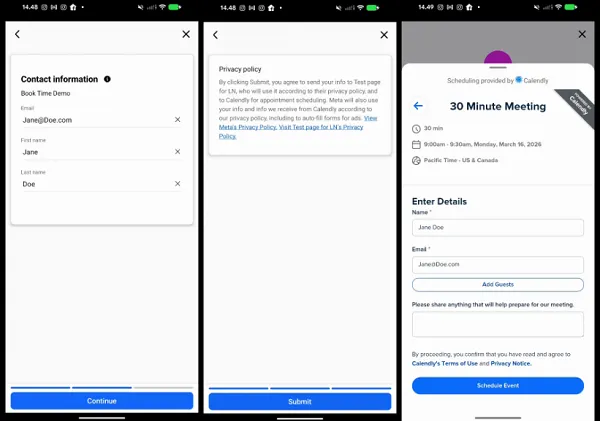
According to Meta’s official explanation, the gap between form submission and appointment booking has long been a hurdle for service-based advertisers. “A lead might fill out your form with genuine interest, but by the time they receive a follow-up email or navigate to your booking site hours later, that intent has cooled,” the company stated. “With embedded appointment booking, you eliminate that gap entirely. The booking experience appears immediately after form submission, right when the lead’s interest is at its peak.”
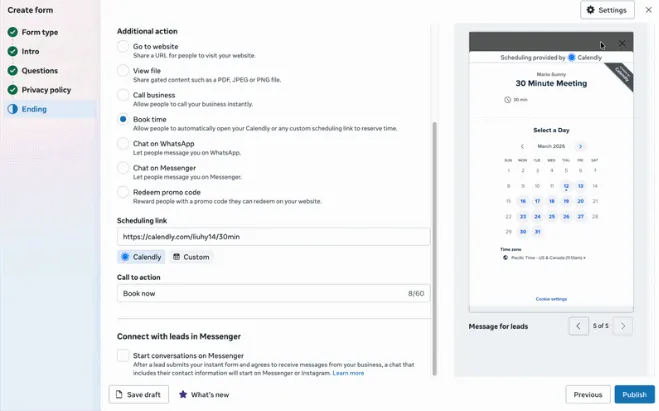
This integrated approach ensures that “warm leads” are seamlessly transitioned into the booking process. By presenting the booking interface directly after a user submits their information, Meta is leveraging the immediacy of consumer interest, a critical factor in driving conversions. The system is designed to be user-friendly for advertisers, requiring no coding expertise. Businesses can simply paste their scheduling link, select “book time” as their call-to-action, and publish the ad. Meta’s system will then automatically detect compatible calendar providers and integrate the respective tool.
Supporting Data and Industry Context
The move by Meta is not an isolated event but rather a response to evolving consumer expectations and the persistent challenge of conversion rate optimization in digital advertising. Research consistently shows that the faster a business can engage with a lead, the higher the likelihood of conversion. For instance, studies by the National Sales Executive Association have indicated that the odds of qualifying a lead decrease by over 100 times for each hour a call is delayed. While this statistic pertains to direct calls, the underlying principle of diminishing intent over time is directly applicable to appointment booking.
The rise of the gig economy and the increasing demand for on-demand services have further amplified the need for streamlined booking processes. Consumers are accustomed to instant gratification and expect to be able to book appointments with ease, much like they can order products or stream content. Platforms that facilitate this immediacy are likely to see greater adoption by businesses looking to capture this market.
Meta’s decision to integrate third-party booking platforms also reflects a broader trend of platform ecosystems becoming more comprehensive. Rather than forcing businesses to operate entirely within a single platform, Meta is embracing interoperability, allowing advertisers to leverage their existing tools and workflows. This approach fosters loyalty and makes its advertising products more attractive to a wider range of businesses, from small service providers to larger enterprises.

Chronology of Development and Rollout
While the announcement marks the public debut of this integrated booking feature, the development likely involved extensive testing and feedback cycles. The initial rollout focuses on Facebook ads, a platform that continues to command significant advertising spend for businesses seeking direct customer acquisition.
The current supported platforms for this integration include Calendly and HighLevel. Calendly, a widely adopted scheduling automation tool, is a natural fit due to its extensive user base and user-friendly interface. HighLevel, a comprehensive marketing and CRM platform for agencies and entrepreneurs, also offers robust scheduling capabilities.
Meta has also indicated an expansion of supported partners, with HubSpot integration slated for early August. HubSpot, another major player in the CRM and marketing automation space, will further broaden the appeal of this feature to businesses already invested in its ecosystem. The company’s commitment to adding more scheduling partners over time suggests a long-term strategy to make Facebook Lead Ads a central hub for service-based lead generation and booking.
The phased rollout is a common strategy for Meta, allowing for refinement of the feature based on real-world usage and technical performance before a global release. The expectation of full global availability by October suggests that the initial testing phases are progressing well and that the feature is poised to become a standard offering for advertisers.

Official Statements and Business Implications
The emphasis on reducing friction and capturing peak intent is a clear indicator of Meta’s strategic focus on enhancing the performance of its advertising products for businesses. For service-based advertisers, such as those in the beauty, wellness, legal, or professional services sectors, this update holds significant promise.
“It’s a good update, and it should see more people signing up directly from Facebook ads, subsequently driving more direct response and bookings,” commented Andrew Hutchinson of Social Media Today, a keen observer of social media trends. This sentiment is echoed by many in the industry who recognize the potential for increased conversion rates and improved return on ad spend (ROAS).
The implications extend beyond mere booking convenience. By capturing leads at their point of highest engagement, businesses can expect:
- Higher Conversion Rates: Reduced steps in the booking process directly translate to fewer opportunities for a lead to disengage.
- Improved Lead Quality: Leads who book immediately are more likely to be serious and qualified, as they have demonstrated a clear commitment to the service.
- Reduced Cost Per Acquisition (CPA): As conversion rates climb, the cost to acquire a new customer can decrease, optimizing marketing budgets.
- Enhanced Customer Experience: A smooth, intuitive booking process from initial ad interaction sets a positive tone for the customer relationship.
- Valuable Data Insights: The integration can provide Meta with more data on consumer booking behavior, potentially leading to further ad targeting and optimization improvements.
Broader Impact and Future Outlook
The integration of third-party booking tools into Facebook Lead Ads is more than just a feature enhancement; it’s a strategic move to position Meta as a central platform for direct response advertising, particularly for service-oriented businesses. As the digital advertising landscape becomes increasingly competitive, platforms that can offer tangible improvements in conversion efficiency are likely to gain a significant advantage.
The no-code setup process is particularly noteworthy. This democratizes access to advanced marketing functionalities, enabling small business owners and marketers with limited technical expertise to implement sophisticated booking solutions. This aligns with Meta’s broader objective of empowering businesses of all sizes to leverage its platforms for growth.
Looking ahead, the success of this initiative could pave the way for further integrations within Meta’s advertising suite. We might see similar embedded functionalities for other critical business processes, such as consultation scheduling, demo requests, or even direct purchases, further blurring the lines between social media engagement and e-commerce.
The global rollout by October will be a key indicator of the feature’s broad applicability and success. As more scheduling partners are added, the utility of this embedded booking system will continue to grow, solidifying its place as an indispensable tool for businesses advertising on Facebook and potentially, in the future, on Instagram and other Meta-owned properties. The ongoing evolution of these platforms reflects a continuous effort to meet the dynamic needs of both consumers and advertisers in the ever-changing digital marketplace.