

In an increasingly saturated global marketplace, the ability of a business to communicate its unique worth has become the primary determinant of commercial success. A value proposition is a concise, strategic statement that explains why a target customer should choose a specific product or service. It identifies the primary benefits delivered, the specific audience served, and the distinct advantages that elevate the offering above competing alternatives. As digital transformation accelerates and consumer attention spans diminish, the clarity of this proposition serves as the foundational element of modern brand architecture.
A robust value proposition is not merely a slogan or a marketing gimmick; it is a fundamental business promise. It serves as the bridge between a company’s internal operations and the external market’s needs. To construct an effective value proposition, organizations must engage in a rigorous process of defining target segments, mapping customer "jobs to be done," translating technical features into tangible benefits, and identifying unique differentiation angles. This process concludes with iterative drafting and empirical testing to ensure the message resonates with the intended audience.
The Historical Evolution of the Value Proposition
The concept of the value proposition has its roots in the late 20th century. First introduced by Michael Lanning and Edward Michaels in a 1988 staff paper for McKinsey & Company, the term was originally defined as "a clear, simple statement of the benefits, both tangible and intangible, that the company will provide, along with the approximate price it will charge each customer segment for those benefits."
![Value Proposition: What It Is and How to Write One [+ Examples]](https://ceblog.s3.amazonaws.com/wp-content/uploads/2026/07/15113335/The-Value-Proposition-Canvas.png)
Over the following decades, the concept evolved from a simple internal strategic tool into a cornerstone of customer-centric design. In the early 2010s, Alexander Osterwalder expanded the framework with the "Value Proposition Canvas." This tool integrated the "Jobs-to-be-Done" theory—popularized by Harvard Business School professor Clayton Christensen—which posits that customers do not buy products; they "hire" them to complete specific tasks or solve particular problems. Today, the value proposition is viewed as a dynamic asset that must be continuously refined to reflect shifting market conditions and evolving consumer expectations.
Distinguishing the Value Proposition from Related Concepts
A common pitfall in corporate communication is the conflation of the value proposition with other branding elements. Journalistic clarity requires a strict distinction between these terms:
Value Proposition vs. Unique Selling Proposition (USP)
While the terms are often used interchangeably, the value proposition is broader. It focuses on the holistic value the customer receives, including the emotional and functional benefits. In contrast, the USP focuses specifically on the "one thing" that makes a product different. A modern "Unique Value Proposition" (UVP) typically combines both: it states the value (what the customer gets) and the uniqueness (why they cannot get it elsewhere).
Value Proposition vs. Mission Statement
A mission statement is aspirational and internal; it defines the company’s "why" and its long-term purpose. A value proposition is practical and external; it defines the customer’s "why" for making a purchase. While a mission statement might aim to "organize the world’s information," the value proposition for a specific product within that company would explain how that organization helps a user find a specific answer in seconds.
![Value Proposition: What It Is and How to Write One [+ Examples]](https://ceblog.s3.amazonaws.com/wp-content/uploads/2026/07/15113247/Value-Proposition-Wise.png)
Value Proposition vs. Taglines and Slogans
Taglines and slogans are creative shorthand designed for brand recall. Nike’s "Just Do It" is a tagline that encapsulates a brand ethos of empowerment. However, its value proposition for a high-performance running shoe would focus on specific engineering, weight reduction, and energy return—the actual utility provided to the athlete.
The Mechanics of the Value Proposition Canvas
The modern standard for developing these statements involves the Value Proposition Canvas, which bifurcates the analysis into the Customer Profile and the Value Map.
The Customer Profile consists of:
- Customer Jobs: The functional, social, and emotional tasks customers are trying to perform.
- Pains: The obstacles, risks, and frustrations customers encounter while trying to get the job done.
- Gains: The positive outcomes and specific benefits customers desire.
The Value Map consists of:
![Value Proposition: What It Is and How to Write One [+ Examples]](https://ceblog.s3.amazonaws.com/wp-content/uploads/2026/07/15113317/Value-Proposition-Shoes.png)
- Products and Services: The specific offerings that help the customer complete their jobs.
- Pain Relievers: Descriptions of how the product eliminates specific customer frustrations.
- Gain Creators: Explanations of how the product produces the outcomes the customer expects or desires.
A successful "fit" occurs when the features of the Value Map align perfectly with the requirements of the Customer Profile.
Strategic Data: Why the Value Proposition Matters
Recent industry data underscores the critical nature of clear value communication. According to research from the Meclabs Institute, a clear value proposition can increase conversion rates by as much as 90% when implemented correctly across digital touchpoints. Furthermore, a study by the Corporate Executive Board (CEB) found that customers who perceive a high level of "brand benefit" are 52% more likely to remain loyal to a brand, even when competitors offer lower prices.
In the B2B sector, the impact is even more pronounced. LinkedIn’s "The B2B Institute" reports that 71% of B2B buyers find that most marketing lacks a clear value proposition, leading to longer sales cycles and increased price sensitivity. Conversely, companies that lead with a strong value-based message see a 15% higher win rate on average.
A Six-Step Methodology for Crafting a Great Value Proposition
The development of a compelling value proposition requires a disciplined, evidence-based approach.
![Value Proposition: What It Is and How to Write One [+ Examples]](https://ceblog.s3.amazonaws.com/wp-content/uploads/2026/07/15113441/Value-Proposition-QuickFile.png)
1. Granular Audience and Competitor Definition
Broadly defining an audience (e.g., "small business owners") often leads to diluted messaging. High-performing companies define their segments by specific roles and situations (e.g., "Freelance consultants who spend more than five hours a week on manual invoicing"). Once the audience is defined, a competitive audit must be performed to identify gaps in existing market offerings.
2. Identifying Jobs, Pains, and Gains
This step requires direct customer feedback. Qualitative interviews and review mining (analyzing G2, Capterra, or Amazon reviews) allow businesses to use the "voice of the customer." Using the exact language customers use to describe their frustrations ensures the final value proposition feels authentic and relatable.
3. The "So What?" Test
To move beyond a list of features, organizations must apply the "So What?" test. If a software feature is "automated data syncing," the first "So What?" reveals the benefit: "No manual data entry." The second "So What?" reveals the value: "Eliminating human error and saving four hours of administrative work per week."
4. Identification of Differentiation Levers
If the primary benefits are identical to competitors, businesses must look to secondary levers for differentiation. These can include:
![Value Proposition: What It Is and How to Write One [+ Examples]](https://ceblog.s3.amazonaws.com/wp-content/uploads/2026/07/15113512/Value-Proposition-Gusto.png)
- Business Model: (e.g., No long-term contracts).
- Ethical Stance: (e.g., Sustainably sourced materials).
- User Experience: (e.g., Integration with existing tools).
- Accessibility: (e.g., 24/7 human support).
5. Iterative Drafting Using Proven Formulas
Drafting should involve several variations based on established templates. Common structures include:
- The Geoff Moore Formula: For [target customer] who [statement of the need or opportunity], the [product name] is a [product category] that [statement of key benefit].
- The Venture Hacks Method: [Proven entity] for [new domain]. (e.g., "Uber for laundry").
6. Empirical Validation and Testing
A value proposition is a hypothesis until it is tested. Modern organizations use A/B testing on landing pages, heatmaps to track user attention, and five-second tests (where users view a page for five seconds and are then asked what the company does) to validate clarity and impact.
Case Studies in Effective Value Propositions
Wise (Formerly TransferWise)
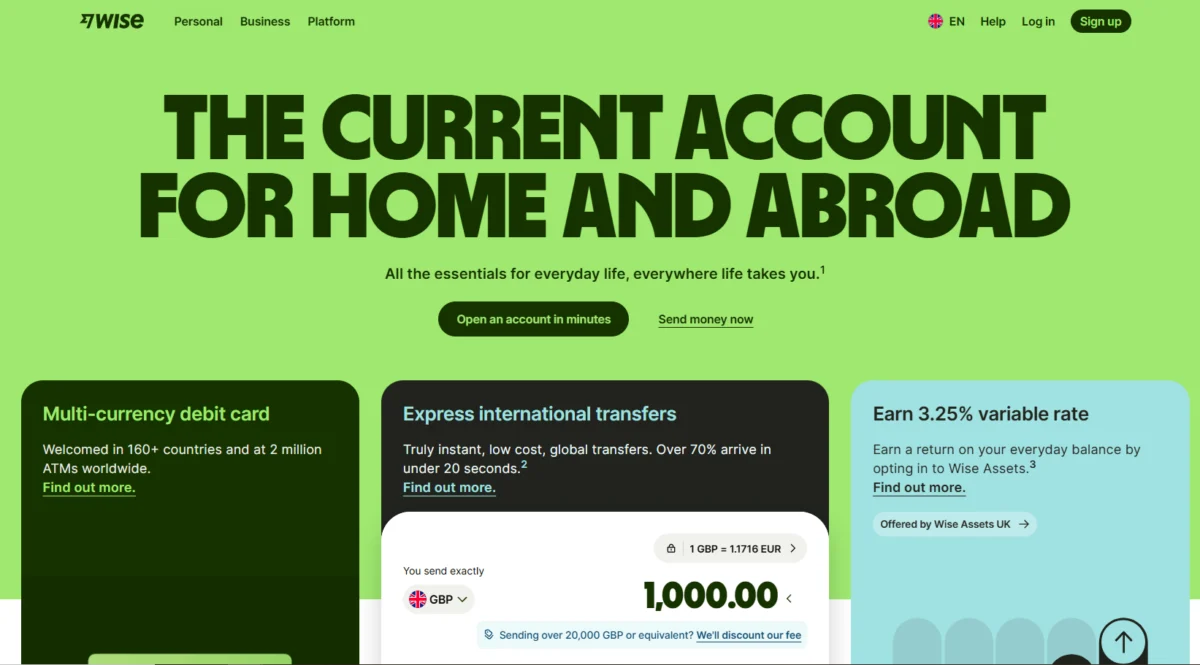
Wise entered a market dominated by opaque banking fees. Its value proposition—"Money for here, there and everywhere"—is supported by the specific promise of transfers that are "up to 8x cheaper than banks." This addresses a specific pain point (high cost) and a specific job (moving money across borders) with a clear differentiation (transparency and speed).
DuckDuckGo
In an era of increasing data privacy concerns, DuckDuckGo’s proposition is simple: "The search engine that doesn’t track you." While Google focuses on the breadth of results, DuckDuckGo differentiates on a single, powerful ethical lever: privacy. This has allowed it to capture a significant niche of the search market despite the dominance of much larger competitors.
![Value Proposition: What It Is and How to Write One [+ Examples]](https://ceblog.s3.amazonaws.com/wp-content/uploads/2026/07/15113533/Value-Proposition-Personal-Information.png)
Gusto
Gusto targets small to medium-sized businesses with the proposition: "Payroll, HR, and benefits. Simplified." By focusing on "simplicity," Gusto addresses the primary emotional pain of its target audience: the fear and complexity associated with tax compliance and employee management.
Implementation and Broader Implications
A value proposition should not be buried in a mission statement on an "About Us" page. It must be distributed across the entire customer journey. Data from user behavior studies indicates that visitor attention is highest "above the fold" on a website. Therefore, the core value—who it’s for and what they get—must be the first thing a visitor sees.
Beyond marketing, the value proposition has a profound impact on the Employee Value Proposition (EVP). When a company has a clear external value, it becomes easier to recruit and retain talent who are aligned with that specific purpose. An EVP explains why a candidate should work for a company, mirroring the logic of why a customer should buy from it.
In conclusion, the value proposition is the most critical document in a company’s strategic arsenal. It requires an objective understanding of the customer’s world and a ruthless commitment to differentiation. In a global economy where consumers are overwhelmed by choice, the companies that can most clearly answer the question "Why you?" are the ones positioned for long-term dominance. As market conditions evolve, the most successful firms will be those that view their value proposition not as a static statement, but as a living promise to their customers.







