

In the contemporary global marketplace, where consumer attention is a finite resource and competition spans across digital borders, the ability of a business to articulate its worth has become a primary determinant of commercial success. A value proposition serves as a concise, definitive statement explaining why a target customer should choose a specific product or service over available alternatives. It functions as a strategic bridge, connecting what a company delivers to the specific needs of a defined audience, while simultaneously highlighting the unique advantages that distinguish the offering from its competitors. As organizations transition toward increasingly customer-centric models, the value proposition has evolved from a mere marketing slogan into a foundational pillar of corporate strategy, influencing everything from product development to internal culture.
The Strategic Distinction: Defining the Value Proposition
To understand the utility of a value proposition, it is essential to distinguish it from related but distinct brand elements. While often used interchangeably in casual discourse, a value proposition, a unique selling proposition (USP), a mission statement, and a tagline serve different functions within a business’s communication hierarchy.
A value proposition focuses predominantly on the customer’s perspective, detailing the practical benefits and outcomes the customer receives. In contrast, the Unique Selling Proposition (USP) is more narrow, focusing on the specific feature or attribute that makes a product different. When these concepts are combined, they form a Unique Value Proposition (UVP), which communicates both the value provided and the unique mechanism of delivery. For instance, a freelance content strategist might offer a value proposition centered on "driving pipeline growth through high-converting content," while their USP might be "the absence of long-term agency retainers."
![Value Proposition: What It Is and How to Write One [+ Examples]](https://ceblog.s3.amazonaws.com/wp-content/uploads/2026/07/15113335/The-Value-Proposition-Canvas.png)
The mission statement differs further by being aspirational and company-centric. It defines the organization’s "why"—its purpose and long-term goals. Conversely, the value proposition is the customer’s "why"—the immediate reason for a purchase. Finally, taglines and slogans, such as Nike’s "Just Do It," serve as mnemonic devices. While they are informed by the value proposition, their primary goal is brand recall rather than detailed explanation.
The Anatomy of a Strong Value Proposition
The structural integrity of a value proposition can be analyzed through the "Value Proposition Canvas," a framework popularized by Dr. Alexander Osterwalder. This model divides the proposition into two primary segments: the Customer Profile and the Value Map.
The Customer Profile consists of three components: "Jobs," "Pains," and "Gains." "Jobs" represent the tasks a customer is trying to complete or the problems they are trying to solve. "Pains" are the negative outcomes, risks, or obstacles they face in the process. "Gains" are the positive outcomes or specific benefits they desire. On the opposing side, the Value Map details the "Products and Services" offered, the "Pain Relievers" that mitigate customer frustrations, and the "Gain Creators" that produce the desired benefits.
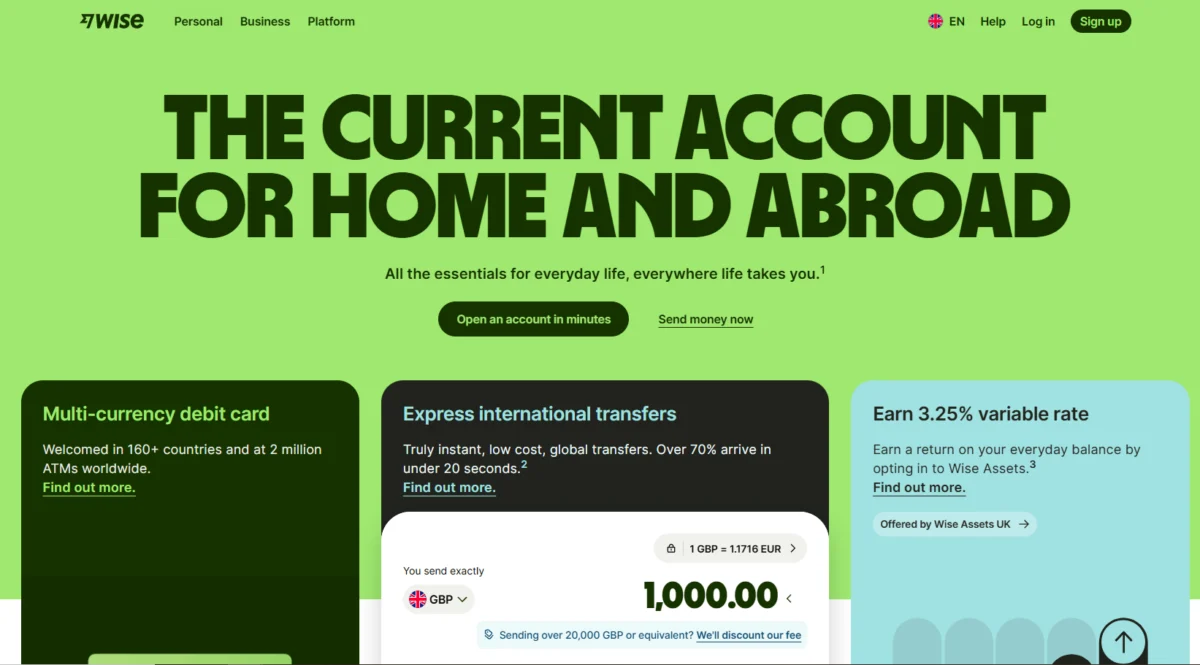
A successful value proposition effectively aligns these two sides, answering four fundamental questions:
![Value Proposition: What It Is and How to Write One [+ Examples]](https://ceblog.s3.amazonaws.com/wp-content/uploads/2026/07/15113247/Value-Proposition-Wise.png)
- Who is the specific target customer?
- What is the primary problem or "pain" being addressed?
- What is the tangible benefit or "gain" provided?
- Why is this solution superior to the status quo or competitors?
A Systematic Framework for Development
The creation of a robust value proposition is a data-driven process that requires deep market research and iterative testing. Experts suggest a six-step methodology to ensure the final statement resonates with the intended audience.
1. Identification of Target Segments and Competitors
The process begins with a granular definition of the target customer. Broad demographic data is insufficient; organizations must define roles, company sizes, and specific situational contexts. For example, targeting "small business owners" is less effective than targeting "freelance consultants using manual spreadsheets for tax compliance." Once the audience is defined, a competitive audit is conducted to identify gaps in existing solutions, whether those solutions are direct competitors or manual workarounds.
2. Analysis of Customer Jobs, Pains, and Gains
Businesses must engage in "voice of the customer" (VoC) research. This involves analyzing customer reviews, conducting interviews, and monitoring social media to identify the exact language customers use to describe their struggles. Data indicates that value propositions using the customer’s own vernacular have significantly higher conversion rates than those relying on corporate jargon.
3. The "So What?" Test for Benefit Mapping
This step involves translating product features into outcomes. For every feature, the organization must ask, "So what?" If an accounting software feature is "automated bank feeds," the first answer is "no manual data entry." The second "so what?" leads to "reduced errors and saved time." The final "so what?" reveals the ultimate value: "The ability to focus on billable work and the peace of mind that comes from tax compliance."
![Value Proposition: What It Is and How to Write One [+ Examples]](https://ceblog.s3.amazonaws.com/wp-content/uploads/2026/07/15113317/Value-Proposition-Shoes.png)
4. Establishing the Differentiation Angle
If multiple competitors offer similar benefits, the organization must identify secondary levers for differentiation. These may include price (cost-effectiveness), service (superior support), accessibility (ease of use), or brand prestige. In a saturated market, the "how" of delivery often becomes more important than the "what."
5. Drafting and Templating
Using established formulas helps in condensing complex ideas into 1–3 sentences. Common templates include the Steve Blank formula: "We help [X] do [Y] by doing [Z]," or the Geoff Moore framework, which focuses on the target market, the statement of need, the product name, and the key benefit.
6. Validation and Testing
A value proposition is a hypothesis until it is tested in the real world. Methods such as A/B testing on landing pages, PPC (Pay-Per-Click) ad campaigns, and heat-mapping tools allow companies to see which messaging actually drives user behavior. According to industry benchmarks, refining a value proposition can lead to a 10% to 30% increase in conversion rates for B2B SaaS companies.
Case Studies in Effective Value Propositions
Examining market leaders provides insight into how these principles are applied across different industries.
![Value Proposition: What It Is and How to Write One [+ Examples]](https://ceblog.s3.amazonaws.com/wp-content/uploads/2026/07/15113441/Value-Proposition-QuickFile.png)
Gusto: By using the headline "Payroll, HR, Benefits. Simplified," Gusto addresses the primary "pain" of administrative complexity for small businesses. The value is "simplicity," and the "who" is implied as business owners overwhelmed by back-office tasks.
DuckDuckGo: Their proposition, "Switch to DuckDuckGo. It’s private and free!" directly targets the "pain" of data tracking by major search engines. It offers a clear "gain" (privacy) and removes the barrier to entry (it’s free). This positioning has allowed them to capture a significant niche in a market dominated by Google.
Zapier: With the statement "Your Tools. Your rules. Any AI," Zapier emphasizes flexibility and customization. They address the "job" of workflow automation while highlighting their unique advantage: the ability to integrate with over 9,000 different applications.
Implementation and Digital Integration
The placement of the value proposition on a corporate website is critical for user experience (UX). Data from the Nielsen Norman Group suggests that users often leave web pages within 10 to 20 seconds; therefore, the core value must be communicated "above the fold" (the area visible without scrolling).
![Value Proposition: What It Is and How to Write One [+ Examples]](https://ceblog.s3.amazonaws.com/wp-content/uploads/2026/07/15113512/Value-Proposition-Gusto.png)
A common strategy is to place the primary benefit in the H1 headline, a clarifying sub-headline below it to define the "who" and "how," and visual elements (such as product screenshots or icons) to support the claim. While the verbatim value proposition statement might not appear as a single block of text, its elements should be distributed strategically across the homepage to reinforce the brand’s promise.
Broader Implications: Employee Value and Market Evolution
The concept of value extends beyond the customer to the workforce. The Employee Value Proposition (EVP) defines what a company offers its staff—compensation, culture, and career growth—in exchange for their skills and engagement. In the current "war for talent," a strong EVP is as vital for operational stability as a customer value proposition is for revenue growth.
Furthermore, value propositions are not static. Market conditions, technological advancements, and shifts in consumer sentiment require organizations to revisit their messaging regularly. For example, the rise of Artificial Intelligence has forced many software companies to redefine their value from "manual efficiency" to "AI-driven insights."
Conclusion
A value proposition is more than a marketing exercise; it is a fundamental articulation of a company’s right to exist in a competitive economy. By systematically identifying customer needs, mapping benefits to those needs, and rigorously testing the results, businesses can create a compelling narrative that drives acquisition and loyalty. In an era defined by choice, the companies that most clearly explain why they are the best choice are the ones positioned for long-term endurance. Organizations must remember that the most effective value propositions are not those that sound the best to the board of directors, but those that resonate most deeply with the person on the other side of the screen.







