rifanmuazin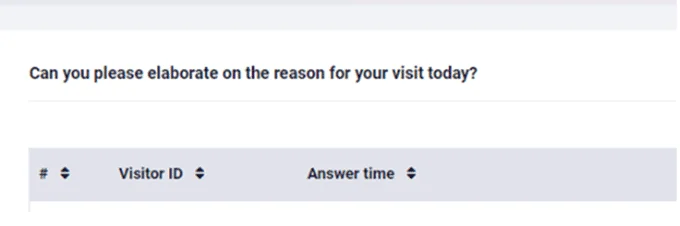
The digital marketing landscape of 2025 is defined by a fundamental shift in how brands interact with their audiences, driven primarily by the obsolescence of third-party cookies and a heightened emphasis on user privacy. Within this environment, the humble website poll—often maligned as a disruptive or annoying pop-up—has emerged as a sophisticated instrument for gathering zero-party data. Unlike traditional tracking methods that observe behavior from a distance, zero-party data consists of information that users intentionally and proactively share with a brand. When executed with precision and backed by behavioral analytics, website polls serve as a critical bridge between quantitative data and qualitative insight, revealing not just what users are doing, but the psychological drivers behind their actions.
The Evolution of User Feedback in the Post-Cookie Era
For over a decade, digital marketers relied on a surplus of passive data to track user movements across the web. However, as major browsers have phased out third-party cookies and regulatory frameworks like the GDPR and CCPA have matured, the industry has pivoted toward direct engagement. Website polls have regained relevance as one of the last remaining direct channels to capture the "voice of the customer" in real-time. Industry experts at Invesp, a leading conversion rate optimization (CRO) firm, suggest that while polls provide smaller data points compared to massive analytics sets, their power lies in their ability to sharpen qualitative research.
Khalid Saleh, CEO of Invesp, notes that polls are not a replacement for deep-dive qualitative research but rather a tool to validate findings across a broader audience. In the current market, where customer behavior is increasingly fragmented, a well-timed poll can uncover the specific friction points that prevent a visitor from completing a transaction. This "mirror effect" allows companies to reflect the truth behind their data, transforming vague metrics into actionable business intelligence.
The Research-Driven Methodology for Poll Development
The primary reason most website polls fail to generate useful data is a lack of preparatory research. Professional digital strategy requires that poll questions are not drafted in a vacuum. Instead, they must be the culmination of a rigorous CRO process that includes heuristic evaluations, analytics assessments, heatmap analysis, and session replay reviews. By the time a marketer is ready to launch a poll, they should already have a hypothesis regarding user behavior.
For example, if a heuristic evaluation suggests that a checkout process is confusing, or if session recordings show users hovering over a specific form field without typing, a poll can be deployed to confirm these suspicions. This methodology moves polling from a "best guess" tactic to a data-validation tool. Instead of asking a generic "How are we doing?" companies are now asking targeted questions such as, "What is the one thing nearly stopped you from completing your purchase today?" This shift in phrasing is the difference between a nuisance and a high-value data point.
Mapping Polls to the Five Stages of the Buyer’s Journey
To ensure that poll questions resonate with visitors, marketers must first identify where the user sits within the purchase funnel. Casting a wide net with a single question for all visitors often leads to "poll fatigue" and irrelevant data. Leading CRM platforms like HubSpot advocate for the use of funnel-type dashboards to segment website traffic by the stage of the buyer’s journey. This segmentation allows for the delivery of contextually relevant questions that align with the user’s current mindset.
1. The Awareness Stage
At this entry point, visitors have identified a problem or a need but may not yet know the brand. Polls at this stage should focus on "motivators." Questions such as "What brought you to our site today?" help brands understand the primary pain points driving their traffic.
2. The Interest and Consideration Stages
As visitors move deeper into the site, looking at category pages or "About Us" sections, they are evaluating options. Here, polls can focus on "missing content." If a user lingers on a page but doesn’t progress, a poll might ask, "Is there any information you were looking for that you couldn’t find?"
3. The Intent and Purchase Stages
When a user reaches a product page or a checkout funnel, the focus shifts to "barriers" and "hooks." At this critical juncture, the goal is to identify "FUDs"—Fears, Uncertainties, and Doubts. Data-driven questions like "Is there anything preventing you from signing up right now?" can provide the exact feedback needed to tweak a CTA or clarify a shipping policy.
Categorization of High-Impact Poll Questions
Data-driven polling is categorized by the specific type of insight the business seeks to gain. Journalistic analysis of successful CRO campaigns identifies six primary categories of questions that yield the highest conversion lifts.
Motivator Questions
Motivator questions are designed to uncover the "why" behind the visit. In one case study involving an e-commerce client, session replay data showed users scrolling aimlessly without clicking. By deploying a motivator poll, the team discovered that users were looking for a specific product category that was buried in the navigation. The feedback allowed the brand to restructure its site architecture based on actual user intent rather than internal assumptions.
Barrier Questions
Barriers are the friction points that cause high exit rates. If Google Analytics indicates a significant drop-off on a specific funnel page, a barrier poll can pinpoint the issue. Common questions include, "What was your biggest fear or concern about using us?" or "Was there anything on this page that didn’t work the way you expected?" Reducing these anxieties is directly correlated with increased conversion rates.
Hook Questions
Hooks are the persuasive elements that successfully convert a visitor. These polls are typically served to returning customers or those who have just completed a purchase. By asking, "What is the main reason you chose us over a competitor?" brands can identify their unique selling propositions (USPs) and double down on those themes in their marketing copy.
Missing Content Polls
These polls are essential for refining the user experience (UX). If usability testing shows that participants struggle to find information, a site-wide poll can determine if this is a systemic issue. On product pages, asking "What other information would you like to see on this page?" often leads to the discovery that users need more detailed specifications or clearer return policies.
Feedback and Satisfaction Polls
Satisfaction polls measure the emotional resonance of the brand. Beyond simple Net Promoter Scores (NPS), these questions can be used to validate new features. For instance, before discontinuing a service or changing a UI element, a poll can ask, "How would you feel if we no longer offered [Service Name]?" This prevents the "New Coke" syndrome—making changes that alienate a loyal user base.
The Role of Polls in Data Validation and Scaling
One of the most sophisticated uses of website polling is the validation of small-scale qualitative findings. In professional CRO, a firm might conduct ten in-depth customer interviews. While these interviews provide rich, detailed insights, they lack statistical significance. To bridge this gap, the findings from the interviews are turned into poll questions and served to thousands of site visitors.
If eight out of ten interviewees mention that "emotional connection" was their reason for subscribing, a poll can verify if that sentiment holds true for the 95% of the audience that wasn’t interviewed. This process allows companies to safely implement large-scale changes to their marketing materials and site design, knowing that their decisions are backed by a representative sample of their user base.
Strategic Placement and Timing: Avoiding User Irritation
The effectiveness of a poll is heavily dependent on its delivery. A poll that appears the moment a user lands on a homepage is often dismissed as spam. However, a poll that triggers after a user has spent 60 seconds on a page, or when they show "exit intent" (moving the cursor toward the browser’s close button), is viewed as a helpful intervention.
Strategic placement involves matching the question to the page’s purpose. Category pages should host questions about product variety, while checkout pages should host questions about trust and security. By aligning the timing and location with the user’s behavior, brands can achieve response rates that are significantly higher than the industry average for standard surveys.
Conclusion: The Broader Impact on Digital Strategy
As the digital ecosystem continues to prioritize user privacy and first-party relationships, the strategic use of website polls will distinguish market leaders from their competitors. By moving away from "gut-feeling" questions and toward a research-led, data-driven approach, businesses can transform their websites into listening posts.
The insights gained from these interactions do more than just improve conversion rates; they inform product development, customer service protocols, and overall brand positioning. In 2025, the most successful companies will be those that treat their customers not as data points to be tracked, but as partners in a continuous dialogue. When used with intention, website polls become a mirror, reflecting the underlying truth of the user experience and providing the roadmap for sustainable growth in an ever-evolving digital marketplace.


 Asro
Asro
 Dwi Wanna