rifanmuazin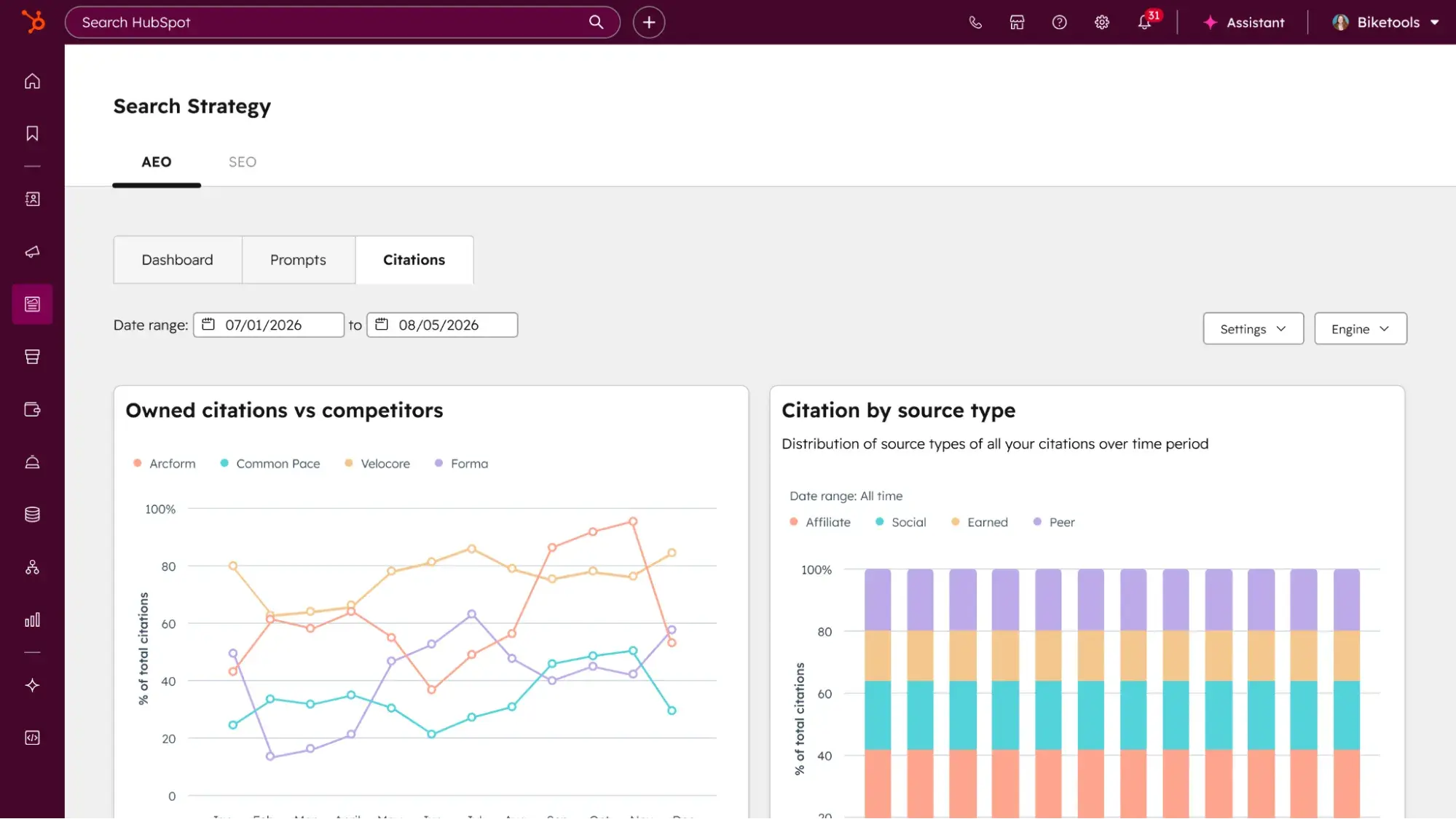
The burgeoning influence of answer engines is profoundly reshaping how consumers discover brands, with the resulting impact on marketing performance already proving measurable. According to the authoritative 2026 HubSpot State of Marketing report, a significant 58% of marketers report that visitors referred by AI tools exhibit higher conversion rates compared to traditional organic traffic. As platforms such as ChatGPT, Perplexity, and Gemini increasingly dictate buying decisions and information consumption, establishing robust visibility within AI-generated answers is rapidly becoming a paramount competitive advantage for businesses across all sectors.
This paradigm shift has necessitated the emergence and formalization of answer engine optimization (AEO). AEO encompasses the strategic practice of enhancing how frequently and accurately a brand’s information appears within AI-generated responses, thereby enabling AI systems to effectively extract, cite, and recommend it during critical buyer research phases. While many marketing teams are currently experimenting with various content formats like lists, tables, and FAQs in a bid to capture AI attention, a discernible gap exists in the comprehensive understanding of which strategies genuinely yield tangible business results. This is where specialized tools, such as HubSpot AEO, enter the fray, providing marketers with a clear, consolidated view of their brand’s performance across major answer engines, coupled with strategic guidance and the necessary tools to implement improvements effectively.
Recent AEO case studies spanning diverse industries—including B2B SaaS, digital agencies, and legal services—have begun to reveal consistent patterns regarding the drivers of AI citations, brand mentions, and ultimately, revenue. These insights collectively demonstrate the substantial return on investment (ROI) attributable to AEO efforts in 2026, illustrating how companies have successfully increased AI-referred trials, boosted citation rates, and even generated millions in revenue through AI-driven discovery. This analysis delves into these pivotal case studies, dissecting the strategies employed and the impactful outcomes achieved, thereby establishing a practical playbook for marketers navigating this evolving digital frontier.
The Foundational Shift: From Clicks to Citations
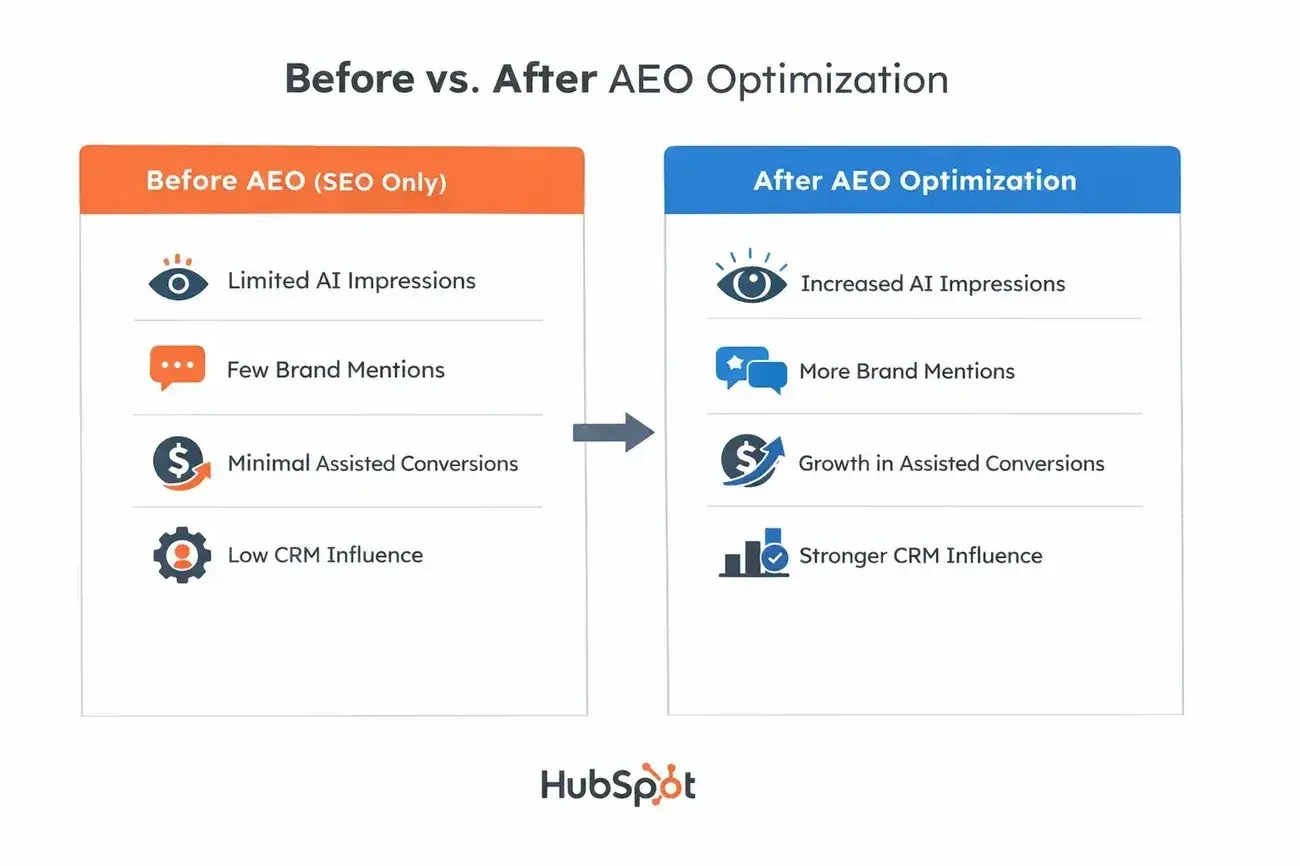
A consistent and critical pattern observed across all recent AEO case studies is that visibility shifts precede traffic changes. Brands are experiencing earlier gains in AI citations, brand mentions, and assisted conversions long before any significant direct traffic increases are recorded. This highlights a fundamental difference from traditional search engine optimization (SEO), where traffic metrics were the primary immediate indicator of success. In the AEO landscape, the initial "win" is often an algorithmic endorsement—an AI system deeming your content authoritative enough to be cited or summarized.
Furthermore, the very metrics of success have undergone a profound redefinition. Prior to the advent of AEO, marketing teams predominantly measured success through rankings and direct clicks. The new era of AEO, however, demands a shift towards evaluating AI Overview visibility, citation frequency, and the direct influence on customer relationship management (CRM) outcomes. Marketers are now increasingly attributing value to deals assisted by AI, revenue influenced by generative answers, and enhanced brand recall, rather than solely focusing on direct website visits. This re-calibration of measurement reflects the indirect yet powerful impact of AI discovery on the sales funnel.
The sales impact, while often indirect, is unequivocally clear in many AEO implementations. Agencies, for instance, are reporting a higher baseline of brand familiarity in early sales conversations, a reduction in fundamental "what do you do?" inquiries, and notably shorter evaluation cycles following an increase in AI citations. The HubSpot State of Marketing 2026 report corroborates this, indicating that more than half of marketers confirm AI-referred visitors convert at a higher rate than those originating from traditional organic channels. Tools like HubSpot’s AEO Grader are emerging as essential resources, evaluating websites based on their performance across large language models (LLMs) and providing actionable suggestions for improvement.
Illustrative Case Studies: Proving AEO’s ROI
Answer engine optimization is unequivocally delivering measurable ROI by enhancing brand visibility within AI-generated answers, which in turn leads to higher-quality traffic and reinforced brand recall. The following case studies provide concrete examples of how companies across various industries have successfully implemented AEO strategies to optimize how AI systems interpret and cite their content, translating strategic adjustments into significant business outcomes.

Discovered: Exponential Growth in AI-Referred Trials for a B2B SaaS Client
Discovered, an organic search agency, achieved remarkable results for a B2B SaaS client, orchestrating a six-fold increase in AI-referred trials within a mere seven weeks. This client, despite having a mature SEO program, was struggling with diminishing returns and lacked a deliberate AEO strategy, leading to minimal business impact. Potential buyers were simply unable to discover the company due to its invisibility within AI answers, compounded by an existing content strategy that heavily focused on top-of-funnel informational content with low conversion potential. The imperative was clear: an immediate fix tied directly to business outcomes.
The intervention began with a meticulous technical SEO and AI visibility audit. The Discovered team unearthed critical issues including broken schema (a significant impediment for AI citations), duplicate content, and suboptimal internal linking, with no explicit optimization for LLMs. Once these foundational technical issues were rectified, Discovered pivoted to an aggressive content strategy. Instead of the typical 8-10 monthly posts, they published 66 AEO-optimized articles in the first month, specifically targeting buyer-intent queries that LLMs were already addressing. The content framework employed prioritized direct answers and structured information, ensuring optimal AI parseability.
While this initial influx of 66 decision-level intent articles generated a surge in AI citations within 72 hours, the team recognized the need to bolster trust signals for LLMs. This led them to extend their strategy beyond owned content, leveraging platforms like Reddit. Utilizing aged accounts, they strategically seeded helpful comments in highly relevant subreddits that ranked prominently for target discussions, effectively building external authority and relevance. The downstream impact was swift and profound: within seven weeks, the client’s AI-referred trials surged from 575 to over 3,500 per month, accompanied by a 400% increase in brand mentions and a 20% reduction in customer acquisition cost for AI-referred leads. This case underscores the power of a comprehensive AEO approach combining technical fixes, high-intent content, and external trust-building.
Apollo.io: Mastering Narrative Control for Brand Citation
Brianna Chapman, leading Reddit and community strategy at Apollo.io, demonstrated an innovative approach to AEO by significantly influencing how LLMs cite Apollo, without a complete website content overhaul. Chapman successfully increased Apollo’s brand citation rate by 63% for AI awareness prompts by strategically using Reddit as a primary source of information for AI search engines.
Initially, Chapman faced frustration when auditing Apollo’s visibility in AI tools like ChatGPT, Perplexity, and Gemini regarding sales tools. LLMs consistently misrepresented Apollo as "just a B2B data provider," despite its comprehensive offering as a full sales engagement platform. Competitors were frequently cited for capabilities that Apollo either matched or surpassed. The core issue stemmed from LLMs pulling outdated or incomplete information from old, yet crawlable, Reddit threads, which was then treated as factual.
Chapman redefined the problem not as an SEO challenge, but as one of "narrative control." Her goal was to actively shape conversations in platforms LLMs inherently trust, primarily Reddit, in an authentic manner. Her execution involved first identifying crucial prompts—how users genuinely queried LLMs—and auditing Apollo’s existing AI search engine visibility. By leveraging first-party data from customer feedback (Enterpret), social listening, and prompts from Apollo’s AI Assistant, she gathered around 200 prompts per topic. These were then tracked in AirOps to monitor Apollo’s citation status.
The decisive action involved building r/UseApolloIO into a credible, up-to-date resource, growing it to over 1,100 members and achieving more than 33,400 content views in five months. A pivotal moment was a detailed comparison post in r/UseApolloIO, outlining when teams should opt for Apollo versus a competitor. Within days, AirOps showed this new thread being picked up, and within a week, it had displaced older, inaccurate information, resulting in over 3,000 new citations across key LLM prompts. The results were compelling: a 63% brand citation rate for AI awareness prompts and 36% for category prompts, alongside a positive shift in Reddit sentiment, driving increased beta sign-ups and demo requests. This case study powerfully illustrates the importance of external community engagement and narrative shaping in AEO.
Broworks: Direct Sales-Qualified Leads from LLMs

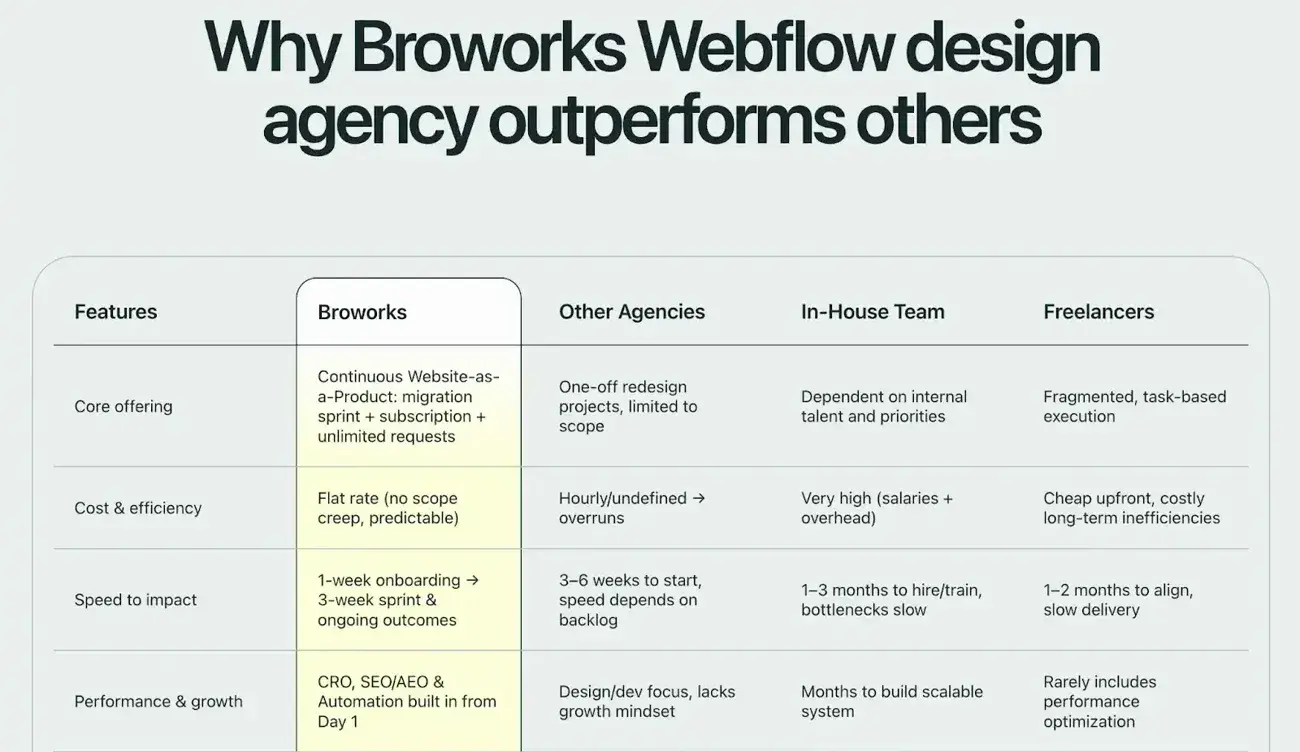
Broworks, an enterprise Webflow development agency, explored the audacious idea of building a direct pipeline from AI tools, rather than relying solely on traditional search engines. This ambition spurred a comprehensive AEO optimization of their entire website. Before this initiative, Broworks experienced sporadic brand citations in LLMs, but these mentions failed to translate into measurable business outcomes. Crucially, there was no structured methodology to influence AI-generated answers or attribute AI-driven sessions to pipeline generation.
The agency’s initial step was to address a significant schema markup deficiency. They implemented custom schema markup across critical landing pages, case studies, and blog posts, including FAQ Schema, Article Schema, Local Business, and Organization Schema—all vital attributes for effective LLM indexing. Additionally, they integrated comparison tables directly onto their landing pages, providing structured, easily digestible information for AI systems.
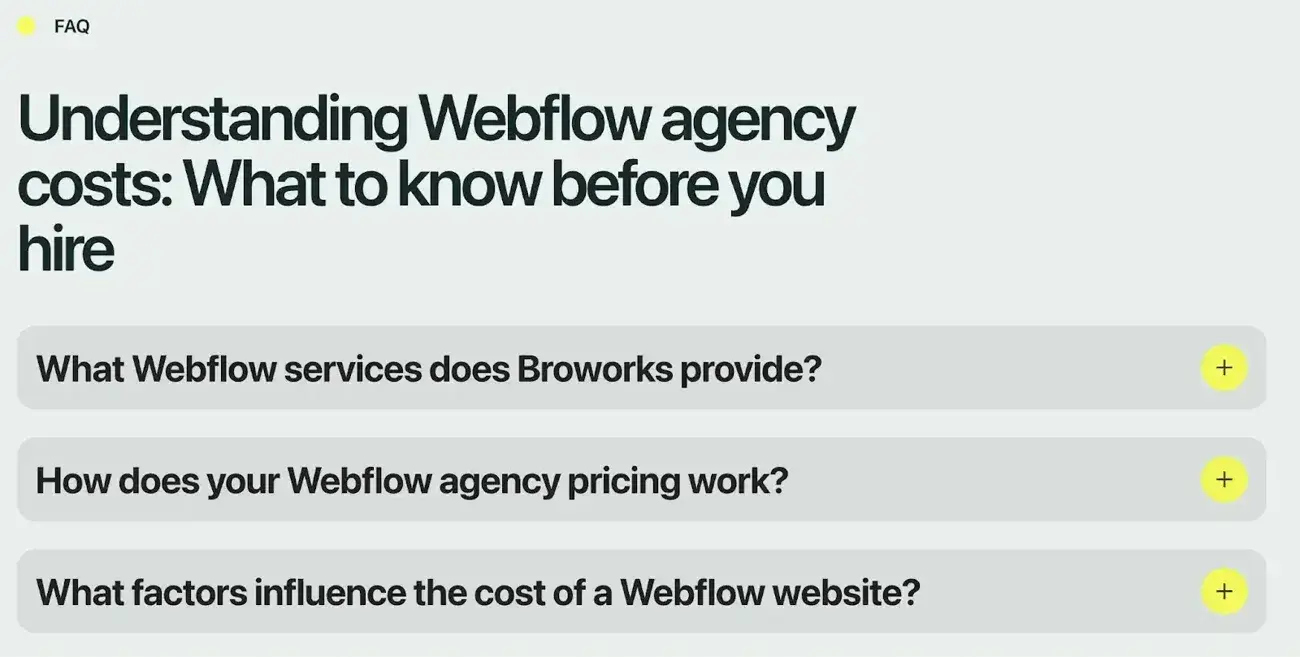
Their second strategic move involved aligning their website content with prompt-driven search, shifting focus from traditional keywords to optimizing for questions users posed to ChatGPT, such as "Who is the best Webflow SEO agency for B2B SaaS?" They augmented most pages with FAQ sections and concise key takeaways at the top of articles, even extending this practice to their pricing page. Within three months, tangible AEO outcomes materialized in both analytics and sales data. Direct AI-referred sessions surged by 38%, the AI citation rate for core services increased by 52%, and, most significantly, Broworks generated 12 new sales-qualified leads (SQLs) directly attributed to AI discovery. Sales teams reported enhanced baseline awareness among prospects and fewer initial introductory conversations, indicating prospects arrived pre-qualified and informed, thereby shortening qualification cycles.
Intercore Technologies: Millions in Revenue from AI Discovery
Intercore Technologies, a digital agency specializing in law firms, spearheaded a remarkable recovery for an established Chicago personal injury firm grappling with an "invisibility crisis." Despite a stellar SEO program, ranking #1 for "Chicago personal injury lawyer" and boasting over 15,000 monthly organic visitors, the firm experienced a concerning drop in lead volume. Analysis revealed clients were being siphoned off by competitors who maintained greater visibility in AI search engines, indicative of a drastic shift in search behavior within the legal niche.
Intercore’s client was virtually absent from AI search engine results, particularly for the crucial query "personal injury lawyer Chicago," while competitors were mentioned 73% of the time despite the client’s strong domain expertise. Intercore Technologies approached AEO with precision, focusing on making the firm’s extensive expertise legible and quotable for AI search engines evaluating legal intent.
Their execution centered on four core pillars:
- Semantic Optimization: Implementing advanced entity-based schema markup to clarify the firm’s expertise, practice areas, and geographical focus for AI systems.
- Contextual Authority: Developing new, highly structured content specifically designed to answer complex legal questions directly and concisely, ensuring high "answerability."
- Local Prominence: Optimizing Google Business Profile and other local listings with AI-friendly attributes, linking them explicitly to relevant on-site content.
- Reputational Signals: Proactively engaging in online legal forums and Q&A sites to provide authoritative answers, thereby building external trust signals for LLMs.
Following this comprehensive undertaking, AI visibility translated into both expanded reach and substantial revenue. The firm’s AI visibility soared to 68% across ChatGPT, Perplexity, and Claude. This dramatic increase directly led to a 110% surge in AI-referred consultations, a 45% increase in conversion rates for AI-influenced leads, and an impressive $2.34 million in total revenue attributed to AI discovery over a six-month period. This case study powerfully illustrates that even established brands with strong traditional SEO can face existential threats if they neglect AEO, and that strategic intervention can unlock significant financial gains.
Key Strategic Takeaways for AEO Success
These answer engine optimization case studies collectively form a robust playbook for growth specialists aiming to enhance their AEO efforts and replicate similar successes.
-
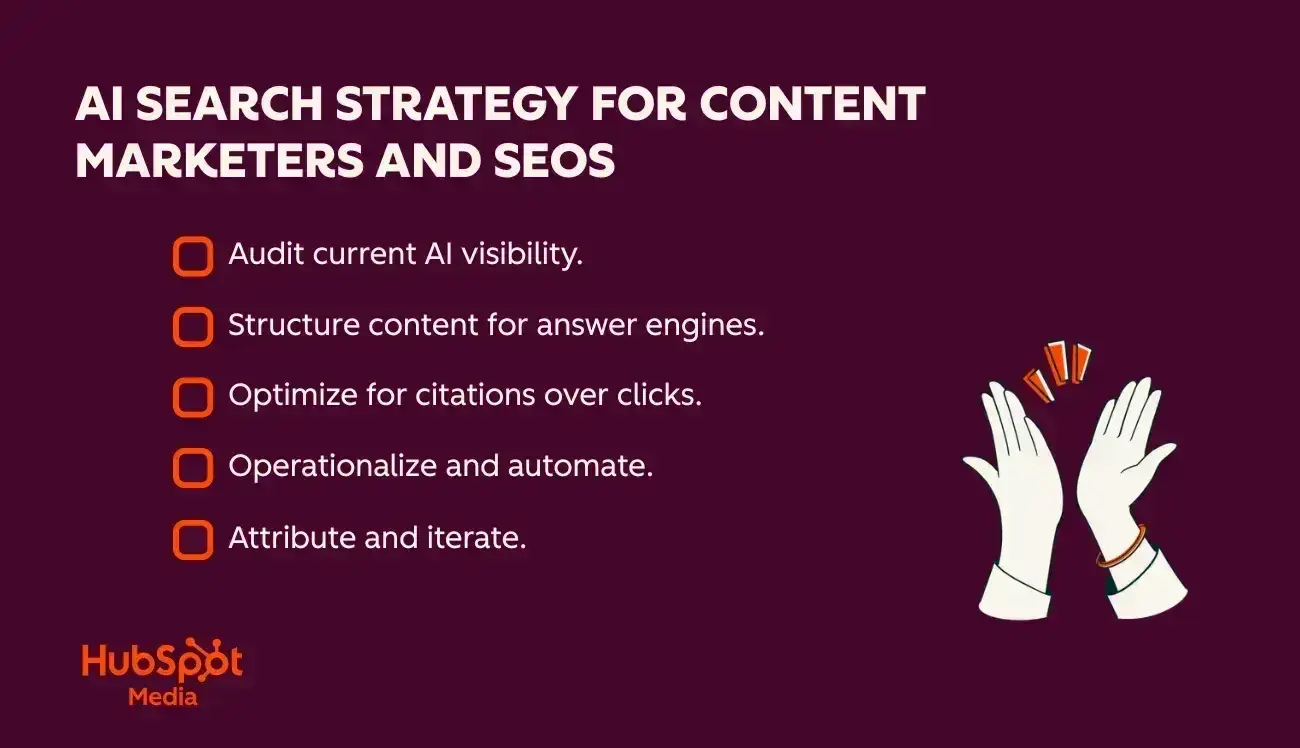
AI Visibility is a Leading Indicator: Across all documented cases, AI citations, brand mentions, and overall awareness consistently showed gains weeks or months before any significant direct traffic changes. This positions AI visibility as a crucial leading indicator for the effectiveness of AEO strategies. Marketers should leverage tools like HubSpot AEO to continuously monitor their brand’s appearance across major answer engines, tracking visibility scores, competitor share of voice, and prompt-level performance over time. For an initial diagnostic, a free tool like HubSpot’s AEO Grader can provide immediate insights.
-
Embrace Answer-First Content: Content structured with an "answer-first" approach demonstrably outperforms traditional keyword-first content. Pages that commence with direct answers, concise summaries, or FAQs are cited more reliably by LLMs than articles featuring conventional blog-style introductions. This pattern is evident across all industry examples, indicating a fundamental shift towards prioritizing immediate clarity over narrative build-up. To implement this, every page should begin with a clear, self-contained answer to the top-intent question, followed by context, examples, or supporting details. Using headings that mirror natural user queries (e.g., "How can marketers structure pages for answer engine optimization?") and providing an immediate, succinct answer underneath significantly increases the likelihood of AI systems extracting and citing content as a trustworthy source. HubSpot AEO’s Prompt Tracking and Suggestions feature is invaluable for identifying the precise buyer questions to prioritize.
-
Schema Markup is Non-Negotiable: Schema markup is the indispensable backbone of machine-readable content, empowering AI systems to comprehend web pages and determine how to cite them accurately. Case studies consistently highlight that the implementation of structured data—including FAQ, HowTo, Product, Offer, Breadcrumb, and Dataset schema—directly correlates with improved AI extraction and citation rates. Without proper schema, even high-quality content risks being overlooked by LLMs due to parsing difficulties. Marketers must audit all high-value pages for relevant schema types, prioritizing FAQ and HowTo for decision-stage content, Product and Offer for transactional pages, and Breadcrumb or Organization for site hierarchy and entity clarity. Testing schema with tools like Google’s Rich Results Test is crucial for ensuring correct implementation. HubSpot Content Hub offers capabilities to publish schema-ready content at scale.
-
Narrative Control Extends Beyond Your Website: On-site AEO optimization alone is insufficient. LLMs draw information from a multitude of trusted external sources, meaning a brand’s AI visibility is significantly influenced by third-party content. The Apollo.io case study vividly demonstrates how managing a brand’s narrative on platforms like Reddit or Quora can fundamentally alter how AI systems describe and recommend it. Outdated or inaccurate information in these external sources can lead LLMs to propagate misaligned messages, even if a brand’s owned website is perfectly optimized. To exert narrative control, marketers should identify key prompts their audience queries in AI tools and actively shape conversations in trusted communities. This involves creating dedicated subreddits, engaging in niche forums, or posting authoritative comparisons to guide AI systems toward accurate brand citation. HubSpot’s AI Content Writer can assist in creating high-quality, consistent content for these external channels.
-
Strategic Internal Linking is Crucial: Internal linking serves as a vital signal of context and relevance for AI systems, mirroring its importance for human users. Case studies indicate that AI crawlers benefit significantly from intentionally connected content across a site, particularly when answer-first pages are linked to high-intent landing pages or product offers. Without a clear internal linking structure, LLMs may surface informative content that fails to guide users towards conversion opportunities. Marketers should map high-value pages and identify key answer-first articles that can serve as entry points, linking them strategically to product pages, service pages, or other conversion targets using descriptive anchor text. This ensures AI-referred traffic efficiently navigates the conversion funnel.
-
Page Speed Directly Impacts AEO Performance: AI systems demand fast and reliable access to content. Pages with extended load times may not be fully fetched or parsed by AI crawlers, thereby limiting citations and AI visibility. Case studies reveal that even sites with exemplary content and schema suffer when load times exceed two seconds, increasing fetch latency and the risk of incomplete parsing. Actionable steps include auditing page speed with tools like Google PageSpeed Insights or HubSpot’s Website Grader, optimizing images and scripts, enabling caching, and minimizing render-blocking resources. Prioritizing mobile performance is also critical, given AI systems often use mobile-first indexing. Improved load times enhance user experience and ensure AI systems can reliably extract and cite content, leading to higher AI visibility and measurable ROI.
-
Question-Based Subheadings are AEO Gold: Employing question-based H2s and H3s is highly effective because they directly align with how users phrase queries to answer engines. For instance, using an H2 like "How can marketers structure pages for answer engine optimization?" and then expanding with informative H3s, with the answer immediately following the heading, minimizes misinterpretation for AI. The HubSpot Content Hub streamlines this process by providing built-in AEO and SEO recommendations for headings and structure, alongside drag-and-drop modules for FAQ sections and lists, simplifying content creation for optimal AI parseability.
The Future is Answer Engine Optimized
Answer engine optimization is not merely a tactical adjustment but a strategic imperative that delivers real business impact when organizations move beyond treating AI visibility as a secondary byproduct of traditional SEO. The evidence suggests that a forming pipeline directly attributable to AI recommendations can become visible within the very first weeks of optimizing a website for AEO.
In this rapidly evolving landscape, the right tools are indispensable for accelerating AEO implementation. Platforms like HubSpot Content Hub empower teams to publish schema-ready, answer-first content at scale, while HubSpot AEO eliminates guesswork by providing precise insights into a brand’s standing across major answer engines and identifying competitor strengths. As AI continues to redefine search and discovery, gearing up with a robust AEO strategy is no longer optional; it is a critical growth lever for sustained competitive advantage and measurable success.