rifanmuazin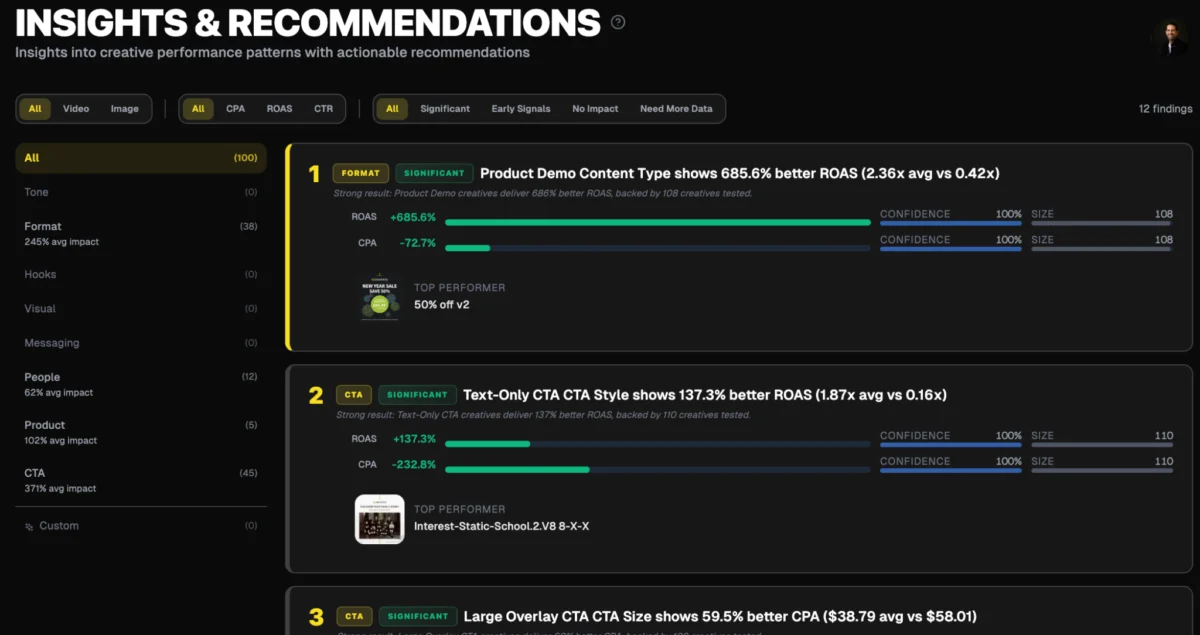
The pivotal role of ad creative in driving paid media performance has long been acknowledged, yet its precise measurement has remained an elusive challenge for marketers. This persistent gap is now being addressed by a groundbreaking new platform, Creative Intelligence, developed to demystify the complex relationship between creative elements and campaign outcomes. Pioneered by a team of engineers and creative strategists, this innovative solution promises to transform how advertisers understand and optimize their visual and textual content.
The impetus behind Creative Intelligence stems from a fundamental problem amplified by modern digital advertising: the sheer volume and complexity of creative assets being deployed. Driven by advancements in AI and platform recommendations, advertisers are now producing an unprecedented number of creative variants. This includes diverse formats, captivating hooks, varied messaging angles, and distinct visual styles across numerous campaigns. While this proliferation is intended to enhance targeting and engagement, it has inadvertently created a significant analytical hurdle. Unlike the straightforward A/B testing of yesteryear, managing hundreds or even thousands of active creatives simultaneously makes it exponentially more difficult to discern which specific elements are truly contributing to success.
Meta, a leading digital advertising platform, already employs sophisticated algorithms that analyze thousands of signals to dynamically serve ads to the right individual at the opportune moment. Creative Intelligence is designed to work in tandem with these systems, effectively reverse-engineering the ad delivery process. By isolating and analyzing the specific creative variables that correlate with performance across an advertiser’s entire portfolio, the platform aims to provide a granular understanding of creative impact, mirroring the depth of insight already possessed by the platforms themselves.
The Architecture of Creative Intelligence: Deconstructing Success
At its core, Creative Intelligence functions by ingesting creative assets from platforms like Meta, with plans to integrate with additional major platforms by the end of the second quarter. Utilizing advanced AI, it meticulously identifies and categorizes every discernible element within each creative. This detailed analysis is then rigorously aligned with actual performance metrics. The overarching objective extends beyond simply identifying what performed well; it aims to pinpoint precisely which creative components drove that performance and to provide actionable recommendations for future campaigns.
The analytical framework of Creative Intelligence operates across four key dimensions: style and format, people and product, content and messaging, and call-to-action (CTA) and offers. For video content, this analysis is particularly granular. Each individual hook is dissected by timestamp, capturing detailed visual information on screen, accompanying text, audio elements, perceived emotional triggers, and the precise moment the product becomes visible. All this data is then synthesized into recognizable dashboard formats, enriched with AI-generated tags and presented as specific, statistically validated recommendations. This unified environment ensures that creative decisions and their resultant performance outcomes are intrinsically linked and visible in one place.
Unveiling Hidden Insights: What AI Illuminates
Hook Intelligence: The Critical First Seconds
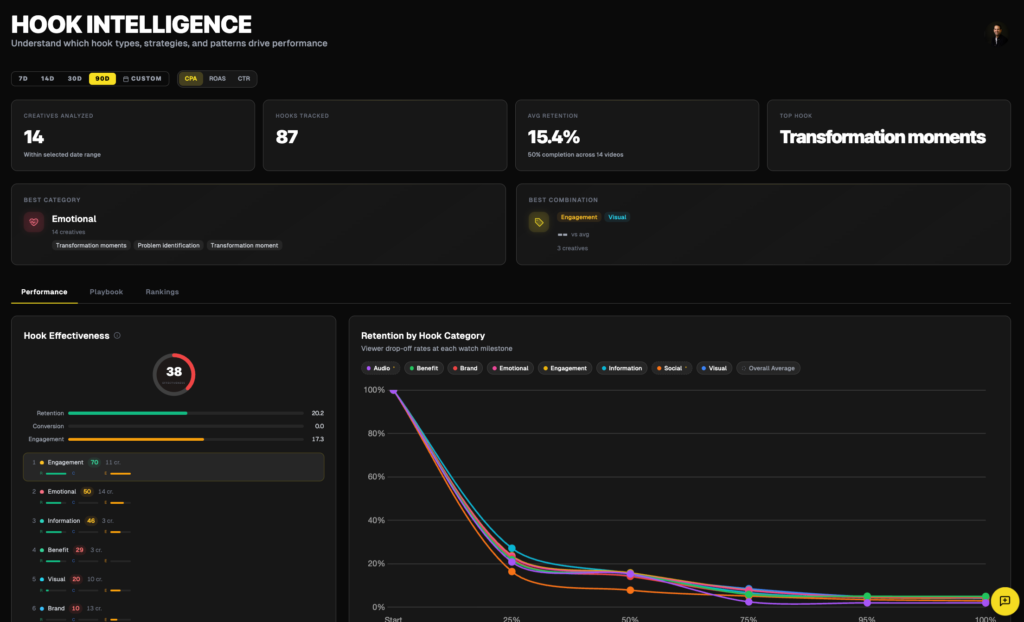
The initial moments of a video advertisement are frequently the deciding factor in its success or failure. Creative Intelligence addresses this by breaking down every video by timestamp, offering a precise account of what transpires at each second. This includes the type of hook employed, the visual content displayed, the emotional resonance intended, the visibility of the product, and the exact second these elements are presented.
Across an advertiser’s entire creative portfolio, the platform identifies which hook categories are most effective at driving audience retention, which are most successful at converting viewers into customers, and which best foster engagement. It further reveals the most potent combinations of these elements. Instead of a general understanding that emotional hooks are impactful, advertisers can gain specific knowledge, such as identifying that transformation-focused hooks are their top performers, that specific visual and engagement combinations outperform others, and precisely which creatives exemplify these winning strategies. This data-driven approach moves beyond anecdotal evidence to provide concrete, performance-backed insights into the most effective opening strategies.
AI-Driven Insights and Recommendations: From Analysis to Action
This is where Creative Intelligence transitions from passive analysis to active strategic direction. The platform conducts comprehensive statistical analyses across an advertiser’s entire creative portfolio, identifying reliable patterns that possess sufficient supporting data. It then translates these patterns into clear directives for future creative briefs.
The insights generated are ranked by their projected impact, substantiated by confidence scores and sample sizes. This ensures that advertisers are making decisions based on robust data, not merely correlations derived from a handful of creatives. For example, the system might reveal that "product demo content delivers 685% better ROAS, backed by 108 creatives tested, at 100% confidence." Similarly, it could indicate that "a text-only CTA style drives 137% better ROAS across 110 creatives." The AI not only highlights what is working but quantifies its impact, expresses its confidence level, and identifies the top-performing creative within that specific category. This level of detail empowers marketers to make informed, strategic choices with a high degree of certainty.
Portfolio-Level Pattern Recognition: Identifying Macro Trends
Upon onboarding, Creative Intelligence automatically tags every creative asset across a spectrum of attributes, including tone, visual style, emotional appeal, pacing, and messaging approach. Advertisers also have the flexibility to implement their own custom tags, further tailoring the analysis to brand-specific needs. These tags are then systematically aligned with performance metrics across the entire creative portfolio, enabling advertisers to answer critical questions such as: Does a minimalist visual tone outperform high-energy creative in awareness campaigns? What is the optimal moment to introduce a benefit claim? Which content types consistently drive the strongest return on investment? This holistic view allows for the identification of overarching trends and strategic opportunities that might otherwise remain hidden.
AI-Generated Creative Briefs: Evidence-Based Strategy
The capability to generate creative briefs directly from portfolio data marks a significant advancement. Creative Intelligence analyzes what is demonstrably working, surfaces hypotheses worthy of further testing, and produces briefs that are firmly grounded in an advertiser’s own historical performance data. This approach eschews reliance on received wisdom or generalized platform best practices, offering instead a data-native strategy. Furthermore, the system incorporates industry benchmarks to provide crucial context, ensuring that briefs are not only informed by internal success but also positioned within the competitive landscape of the advertiser’s category.
Custom Analysis for Brand-Specific Inquiries
Recognizing that not all valuable insights fit neatly into standard taxonomies, the custom analysis feature empowers users to define their own variables. This allows for the identification of specific product lines featured in various creatives, the scoring of assets against bespoke brand criteria, and the extraction of information unique to a particular category or portfolio structure. Where manual tagging of thousands of assets could previously consume weeks, the AI accomplishes this task in mere minutes, dramatically accelerating the insight generation process.
The Practical Transformation of Creative Strategy
Traditionally, creative briefs have been constructed from a blend of platform best practices, industry conventions, and the perceived successes of past campaigns. While these elements provide a reasonable starting point, they often mean that creative strategy operates partially on established knowledge rather than being fully driven by an advertiser’s unique data.
The implementation of Creative Intelligence across a portfolio fundamentally alters this dynamic. The creative brief becomes an output of rigorous analysis rather than an input to it. Advertisers gain clear insights into which hook types resonate most effectively with their target audience, which content formats deliver the strongest ROAS, and whether their high-energy creative truly converts or merely generates superficial clicks. This empowers creative teams with direction that is not only specific and evidence-backed but also directly connected to the metrics that matter most, all derived from what the data unequivocally demonstrates, rather than from recollections of past performance.
The Bottom Line: Analytical Rigor for Creative Excellence
Creative endeavors have always generated data, but historically, these signals have been invisible at scale, lost in the chasm between creative development tools and performance analytics dashboards. Creative Intelligence bridges this critical gap. It does not aim to replace creative intuition or expertise; rather, it equips individuals with that instinct with a clear, data-driven understanding of which creative components are genuinely driving performance and what strategic steps should be taken next.
Given that ad creative is the most significant determinant of paid media performance, it warrants the same level of analytical rigor applied to all other facets of marketing. Creative Intelligence now provides this essential analytical framework, enabling advertisers to optimize their creative strategies with the same precision and data-backed confidence they apply to media buying, audience segmentation, and campaign forecasting.
For organizations seeking to understand the power of Creative Intelligence and explore its potential to unlock new levels of performance within their own advertising portfolios, direct engagement with the developers is encouraged. This proactive step can illuminate the tangible benefits and strategic advantages offered by this transformative approach to creative measurement and optimization.