

The landscape of B2B Software as a Service (SaaS) marketing has undergone a fundamental shift as buyers demand more transparency and less friction during the procurement process. For years, the "Request a Demo" call-to-action (CTA) was treated as a standard entry point for potential leads. However, recent industry data and shifts in buyer behavior suggest that treating this high-commitment step as a low-friction interaction is a primary driver behind declining conversion rates and mounting tensions between sales and marketing departments. As lead quality becomes the paramount metric for growth-stage companies, the architecture of the demo landing page has evolved from a simple form-fill exercise into a sophisticated psychological tool designed to build trust and confirm product-market fit before a single word is exchanged with a sales representative.
The Reality of the Modern B2B Buyer Journey
Current benchmarks indicate that the B2B purchasing process is longer and more fragmented than ever before. According to Dreamdata’s 2025 LinkedIn Ads Benchmark Report, the average B2B customer journey now spans 211 days and involves approximately 88 distinct touchpoints. This extensive timeline reflects a cautious market where high-investment software decisions are scrutinized by multiple stakeholders. Despite this, many marketing teams continue to push demo requests prematurely, often before a prospect has established foundational trust or conducted sufficient independent research.
The psychological barrier to "booking a demo" is significantly higher than that of downloading a whitepaper or registering for a webinar. A demo request represents a commitment of time and an entry into a potentially high-pressure sales environment. Industry experts, including Danielle Torrie of Unbounce, note that many SaaS companies fail to recognize that only 3% to 5% of their total addressable market is in an active buying cycle at any given time. When marketing budgets are funneled into demo-focused advertisements targeting cold traffic, the result is often a high cost-per-acquisition (CPA) and a frustrated sales team dealing with low-intent leads.
Benchmarking Performance in 2026
Data from the Unbounce 2024 Conversion Benchmark Report reveals that SaaS landing pages convert at a median rate of 3.8%. More specialized research from B2B landing page strategist Tas Bober suggests that for high-intent demo pages, the average conversion rate hovers around 3.1%. While these figures provide a baseline, experts warn that these benchmarks are highly dependent on traffic quality.
A well-optimized page receiving cold traffic may struggle to break the 2% barrier, whereas the same page serving "warm" traffic—users who have already engaged with comparison content or pricing pages—can see conversion rates climb significantly higher. This discrepancy highlights a growing consensus in the industry: you cannot optimize your way out of a targeting problem. The focus in 2026 has shifted from mere "conversion rate optimization" (CRO) to "intent-based optimization."
The Core Four Framework: A Chronological Approach to Conversion
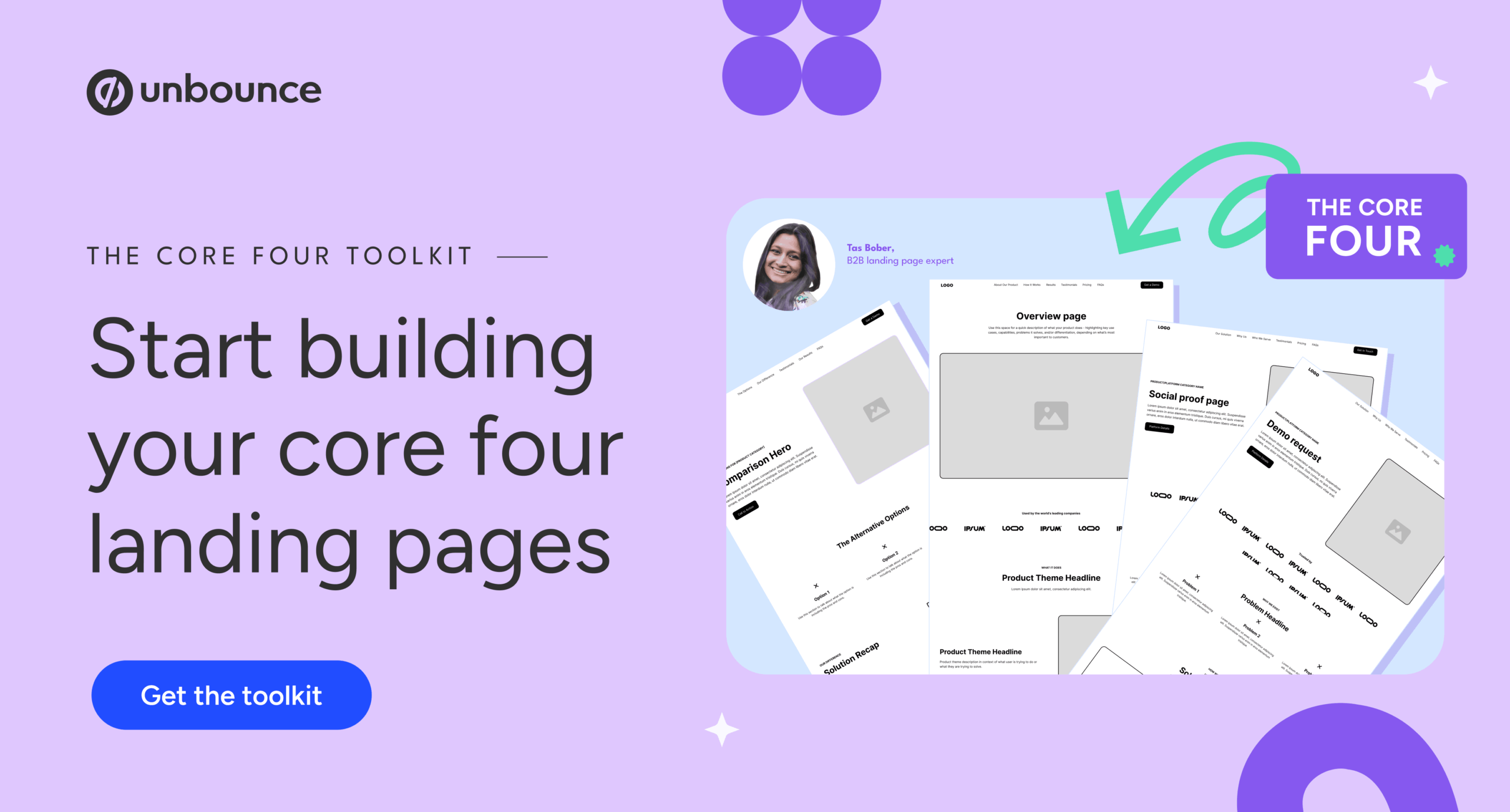
To address the complexities of the 211-day buyer journey, leading SaaS firms have adopted the "Core Four" landing page framework. This strategy, championed by B2B experts, dictates that a demo landing page should rarely be the first point of contact. Instead, it serves as the final destination in a structured sequence of information delivery:
- Awareness/Education Pages: Focused on the problem and the potential solution without a hard sell.
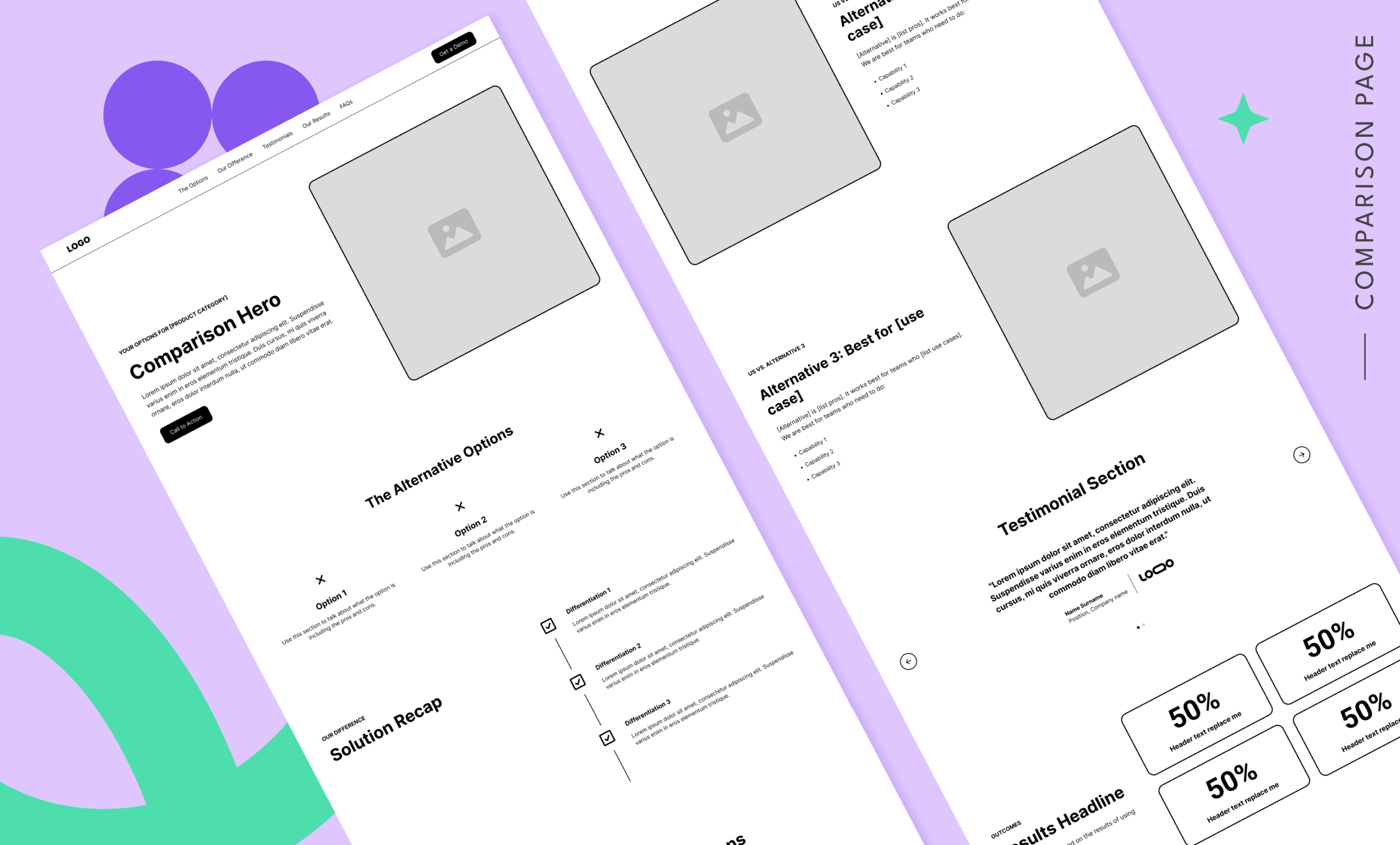
- Comparison Pages: Helping the buyer understand how a product stacks up against competitors.
- Pricing Pages: Providing transparency and allowing the buyer to self-qualify based on budget.
- Demo Pages: The final conversion point for high-intent prospects who have completed the previous three stages.
By the time a prospect reaches the demo page, the goal is no longer to introduce the product but to remove the final points of friction. This chronological approach ensures that by the time a lead reaches the sales team, they are educated, qualified, and ready for a substantive conversation.
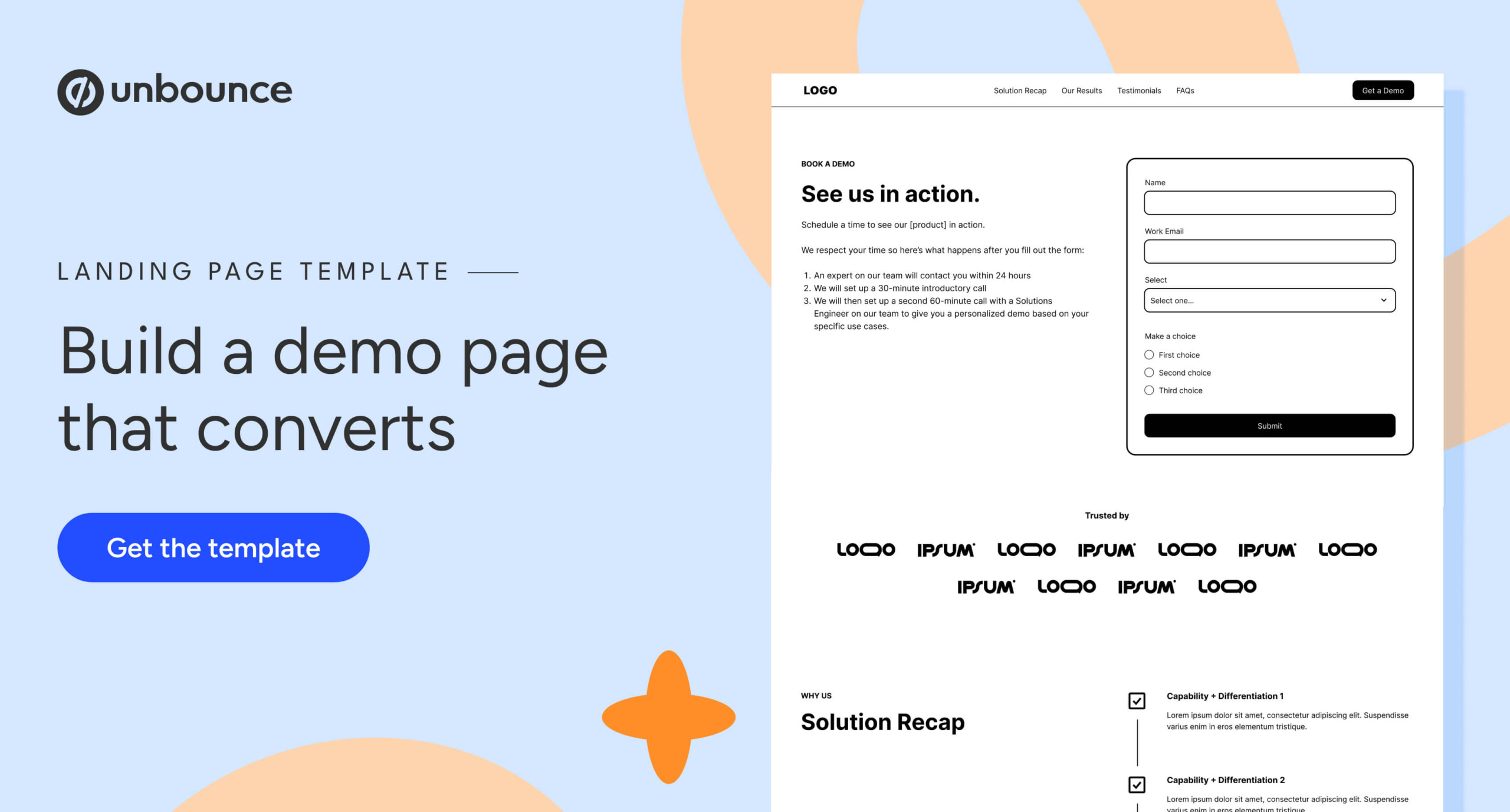
Structural Evolution: Moving Beyond the "No-Exit" Strategy
For decades, the prevailing wisdom for landing pages was to remove all navigation elements, effectively "trapping" the user until they either converted or left. However, a significant 2025 update to Google’s ad quality prediction model has shifted this paradigm. Google now rewards landing pages that align with search intent and provide access to relevant next steps through navigation, while penalizing pages that offer a poor, restrictive user experience.
In response, modern SaaS demo pages now utilize "Anchor Navigation." This allows users to jump to specific sections—such as testimonials, FAQs, or pricing—without leaving the page. Furthermore, a minimal footer that links to other stages of the "Core Four" ecosystem is now considered a best practice. This allows a user who realizes they aren’t quite ready for a demo to "downgrade" their intent to a comparison or pricing page rather than bouncing back to the search results, which would signal a lack of relevance to search engines.

The Anatomy of a High-Converting Demo Page
To maximize the impact of high-intent traffic, the design of the demo page must be meticulous. Experts have identified several critical blocks that should be included in a 2026-compliant SaaS demo page:
The Hero Section and Post-Submission Clarity
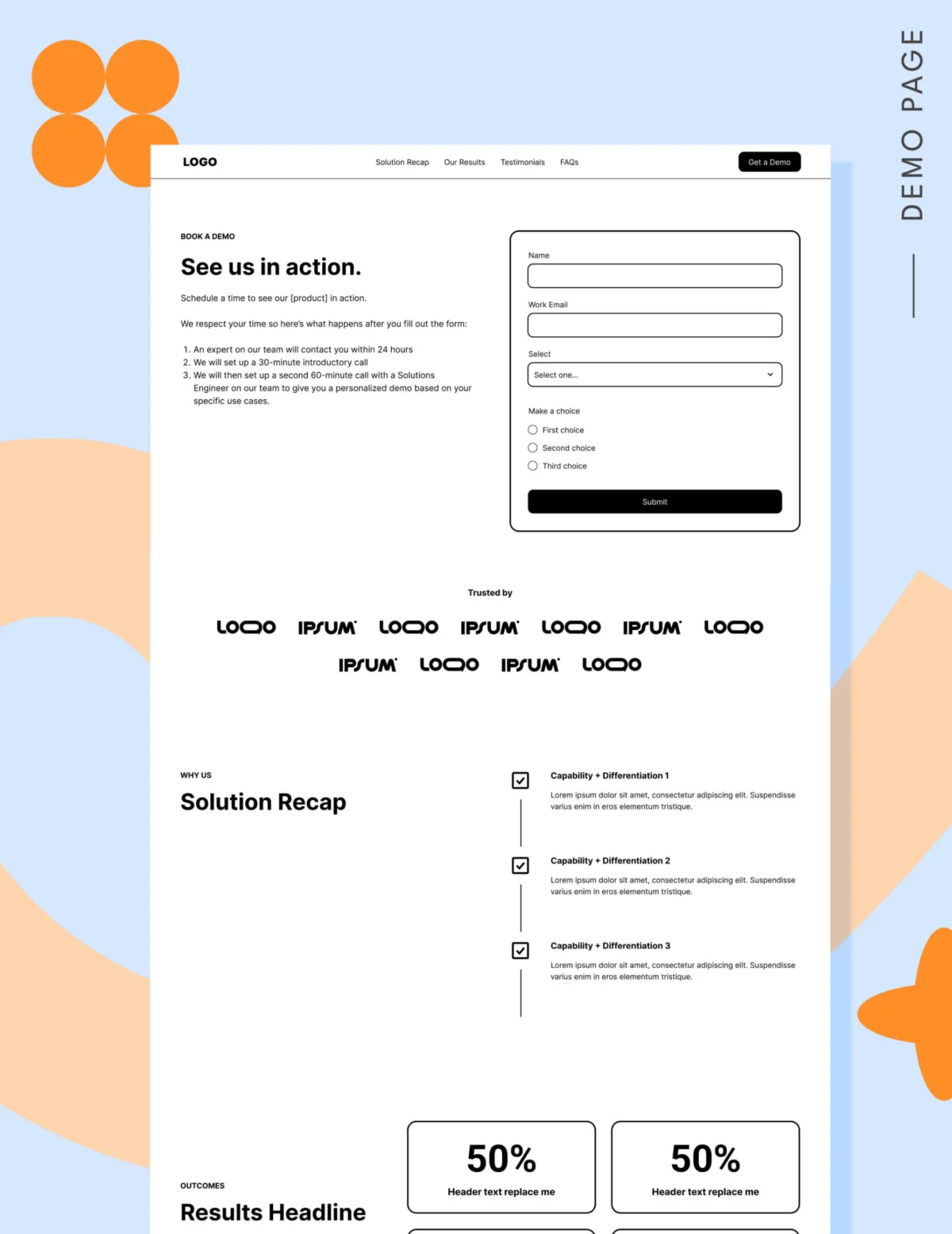
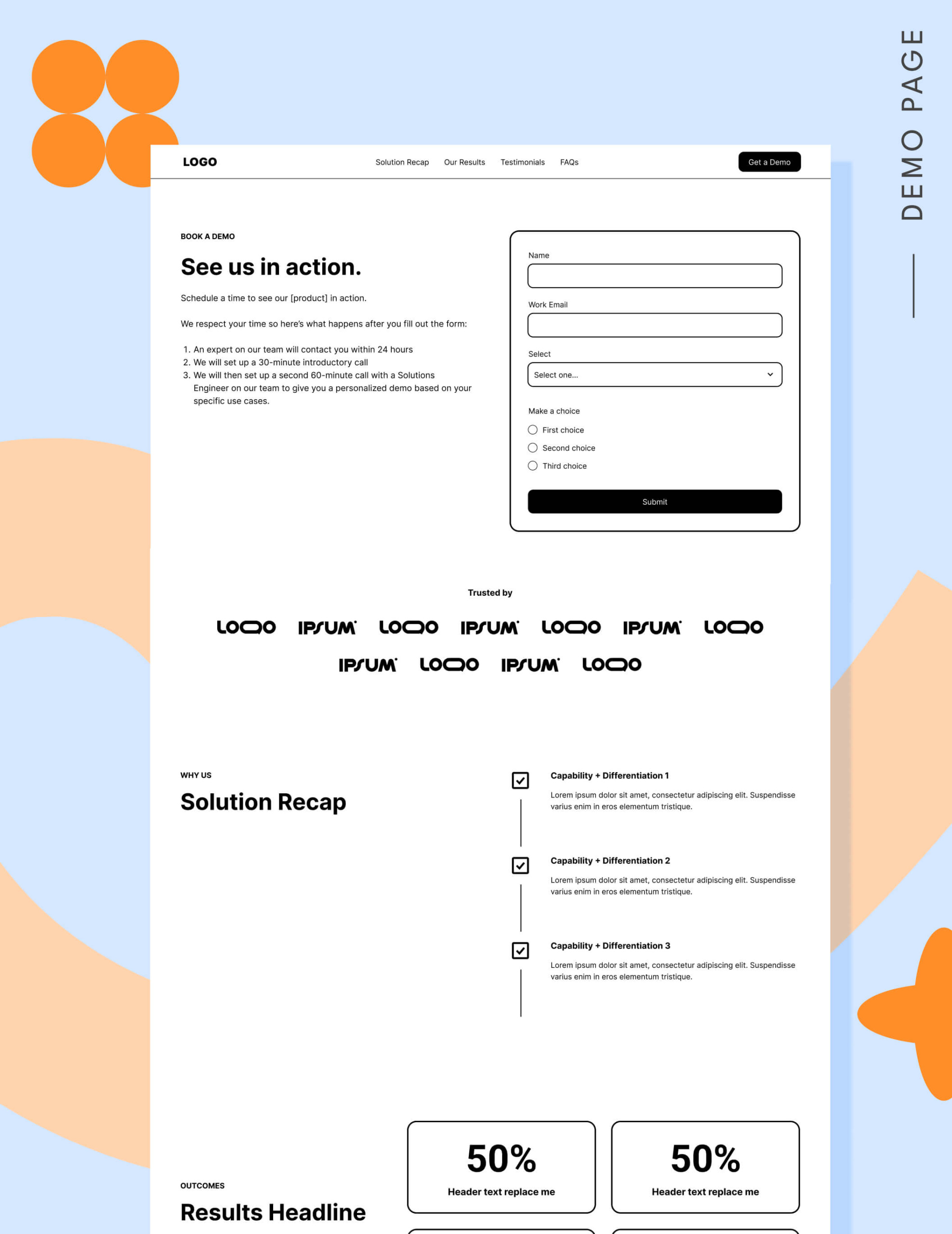
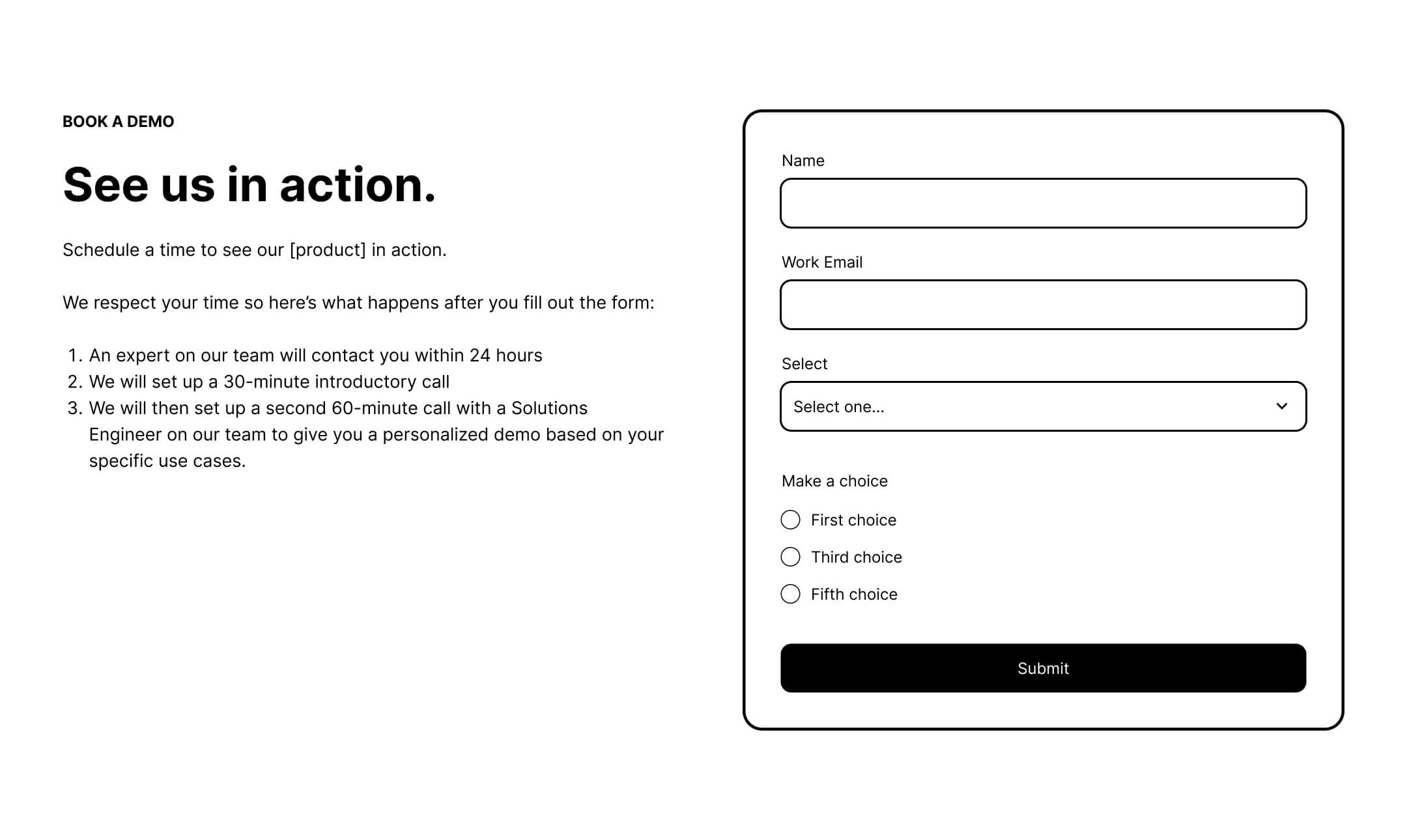
Unlike other landing pages, the demo page is one of the few places where placing a form "above the fold" is encouraged. However, the copy must go beyond "Request a Demo." It needs to answer the prospect’s unspoken questions: Who will I talk to? How long will it take? Will I see the product immediately? High-performing pages often include a "What to Expect" bulleted list next to the form, detailing the specific steps of the discovery and demo process.
Strategic Proof Stacking
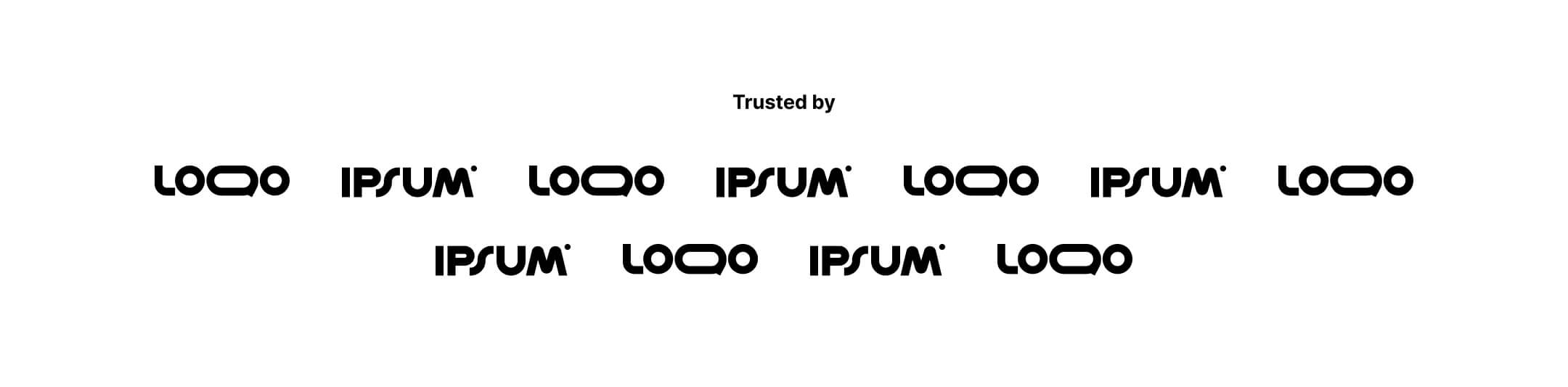
Social proof remains a cornerstone of conversion, but the method of delivery has changed. If a brand serves recognizable enterprise clients, a "logo garden" is effective. However, for companies targeting niche markets where logos may not be famous, "light testimonials"—short, two-line quotes focusing on specific outcomes—are more persuasive. Data suggests that volume also matters; while three testimonials are a minimum, showing six to twelve reviews can significantly decrease perceived risk, mimicking the psychological effect of high review counts on consumer platforms like Amazon.
Measurable Results and Solution Recaps
B2B buyers are increasingly held accountable for the Return on Investment (ROI) of their software choices. A dedicated "Results" section featuring quantifiable data—such as "30% reduction in churn" or "500 hours saved per year"—provides the prospect with the ammunition they need to justify the purchase to their internal stakeholders.
The Pricing Transparency Debate
One of the most contentious issues in SaaS marketing is whether to include pricing on a demo page. Historically, sales-led organizations hidden pricing to prevent "sticker shock" and to maintain leverage in negotiations. In 2026, the trend has swung toward transparency.
Including a pricing range or a "starting at" figure serves as a powerful qualification tool. It prevents sales teams from wasting time on leads that will never be able to afford the solution and builds immediate trust with the buyer. Even for complex enterprise solutions, providing a condensed pricing grid or a "most popular plan" overview can decrease the friction that often stalls the buyer journey at the final hurdle.
Technical Optimization: The Impact of Form Friction
Data from Digital Applied’s 2026 conversion benchmarks shows a dramatic drop-off in conversion rates as form fields increase. The research indicates:
- 5 Fields: 17% average conversion rate.
- 7 Fields: 11% average conversion rate.
- 10+ Fields: Under 7% average conversion rate.
Marketing teams are now faced with a delicate balance: fewer fields increase volume, while more fields increase lead quality. The emerging solution is the use of "positive friction"—adding one or two highly specific qualifying questions (such as company size or primary use case) that help sales prioritize leads without overwhelming the prospect.
Operational Choices: Forms vs. Scheduling Tools
The choice between a static form and an embedded scheduling tool like Calendly has become a strategic decision. Scheduling tools are increasingly preferred for "warm" traffic, such as returning visitors or those coming from specific Account-Based Marketing (ABM) campaigns. This "instant gratification" model allows high-value prospects to bypass the "we’ll call you" phase, which is often viewed with dread.
Conversely, static forms remain the standard for broader campaigns where a manual qualification step by a Sales Development Representative (SDR) is required to maintain calendar integrity for senior account executives.
Implications for Sales and Marketing Alignment
The refinement of the SaaS demo landing page is more than a design trend; it is a symptom of a broader move toward sales and marketing alignment. When marketing takes responsibility for the "What to Expect" section and provides transparent pricing, they are effectively setting the stage for a more successful sales interaction.
In conclusion, the success of a SaaS demo landing page in 2026 is determined long before a visitor arrives on the site. It is the result of disciplined targeting, a commitment to transparency, and an architectural design that respects the buyer’s time and intelligence. As B2B cycles continue to grow in complexity, the companies that thrive will be those that view the demo request not as the start of the conversation, but as the natural conclusion of a well-facilitated research journey.







