In the increasingly competitive landscape of technology and data analytics recruitment, the technical interview has evolved far beyond the assessment of raw coding proficiency. Today, hiring managers at leading firms—from Silicon Valley giants to emerging fintech startups—prioritize a candidate’s ability to bridge the gap between complex algorithmic solutions and tangible business value. This shift has placed the data science case study interview at the center of the hiring process, serving as a high-stakes simulation of how a professional handles ambiguity, data limitations, and stakeholder expectations.
The primary challenge for many applicants lies not in their mathematical ability, but in their failure to structure their thoughts under pressure. To address this, industry veterans and hiring experts have coalesced around a standardized approach known as the SCOPE framework. This system—comprising Situation, Clarify data, Outline approach, Prototype, and Explain—provides a repeatable methodology designed to transform a chaotic problem-set into a coherent strategic recommendation.
The Evolution of the Data Science Interview Scorecard
Historically, data science roles were evaluated on a candidate’s ability to optimize a model’s accuracy or F1-score. However, as the field has matured, organizations have realized that a highly accurate model is useless if it does not solve the underlying business pain point. Current industry data suggests that a significant percentage of data science projects in the corporate world fail to reach production, often due to a misalignment between technical execution and business requirements.
Consequently, modern interviewers evaluate candidates across four critical dimensions:
- Business Intuition: The ability to translate a vague request into a measurable data problem.
- Technical Rigor: Demonstrating a deep understanding of statistical assumptions and algorithmic trade-offs.
- Communication: The capacity to explain complex results to non-technical stakeholders.
- Data Strategy: Identifying potential data leakage, quality issues, and the ethical implications of the chosen approach.
Industry experts emphasize that "getting the right model" is frequently the least important part of the evaluation. A candidate who chooses a simple logistic regression but provides a compelling justification based on interpretability often outscores a candidate who utilizes a complex neural network without explaining its business relevance.
The SCOPE Framework: A Chronology of Problem-Solving
To navigate the 45-to-60-minute window of a typical case study interview, candidates are encouraged to move through the SCOPE stages systematically.
Situation: Establishing the Business Foundation
The first two to five minutes of the interview are dedicated to defining the "Why." Before discussing variables or libraries, the candidate must identify the primary stakeholder and the cost of the problem. For instance, if a company is facing high customer churn, the candidate should ask about the Customer Acquisition Cost (CAC) and the Lifetime Value (LTV). This sets the stage for a solution that is economically viable.
Clarify Data: Assessing the Landscape
In this stage, the candidate probes the "What." They must determine what data is available, its granularity (daily, monthly, per user), and its reliability. Experienced candidates often ask about missing values or data latency—issues that mirror the "messy" reality of corporate data environments.

Outline Approach: Designing the Pipeline
Before writing a single line of code, the candidate outlines the end-to-end workflow. This includes feature engineering, the choice of the validation set, and the primary evaluation metric. By speaking their logic aloud, the candidate allows the interviewer to provide "course corrections" if they are heading toward a logical dead end.
Prototype and Validate: The Technical Execution
This is the "How." The candidate builds a baseline model to establish a performance floor. In an interview setting, this often involves writing clean, modular Python code to demonstrate technical fluency. The focus here is on demonstrating that the candidate understands which features drive the model’s predictions.
Explain and Recommend: The Final Verdict
The interview concludes with a translation of results into a business decision. A table of numbers is insufficient; the candidate must offer a "Ship or No-Ship" recommendation, complete with a discussion of risks, potential biases, and next steps for deployment.
Case Study Analysis: Real-World Applications
To illustrate the framework’s efficacy, we examine four distinct scenarios that represent the current pillars of data science: Classification, Time-Series Forecasting, Generative AI (GenAI), and Experimentation.
1. Customer Churn in Subscription Services
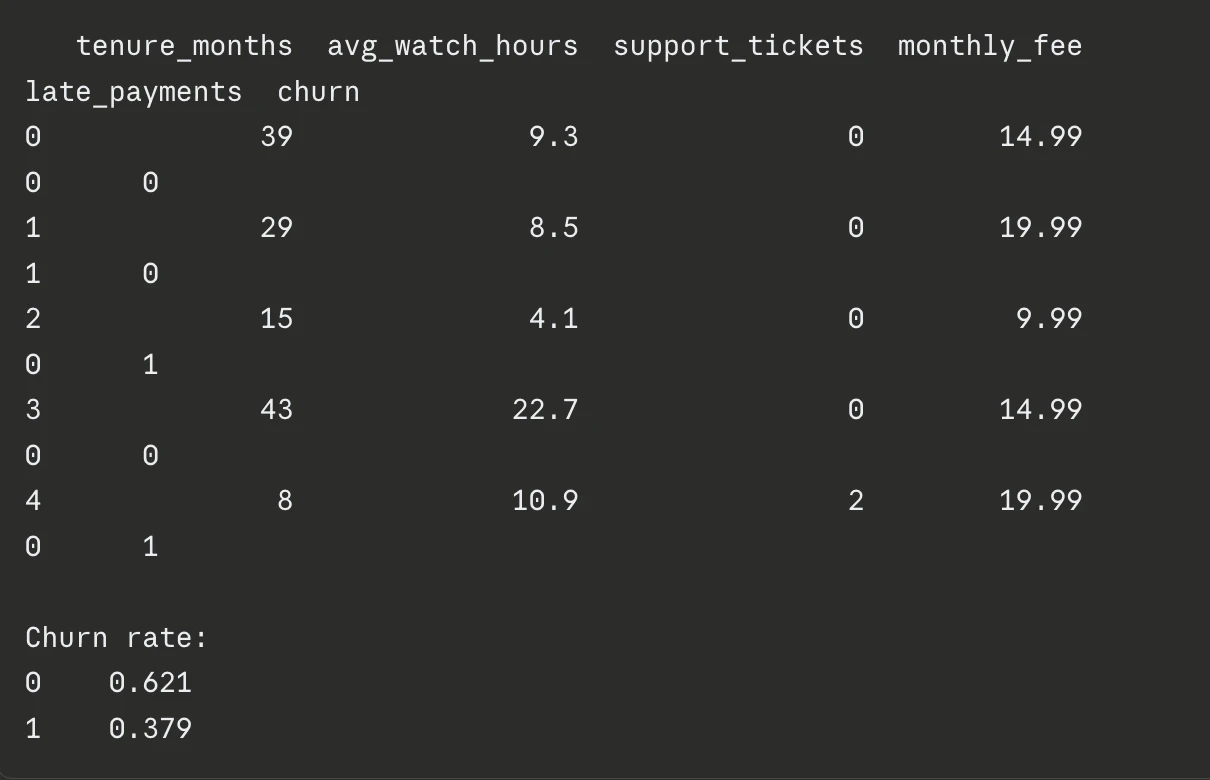
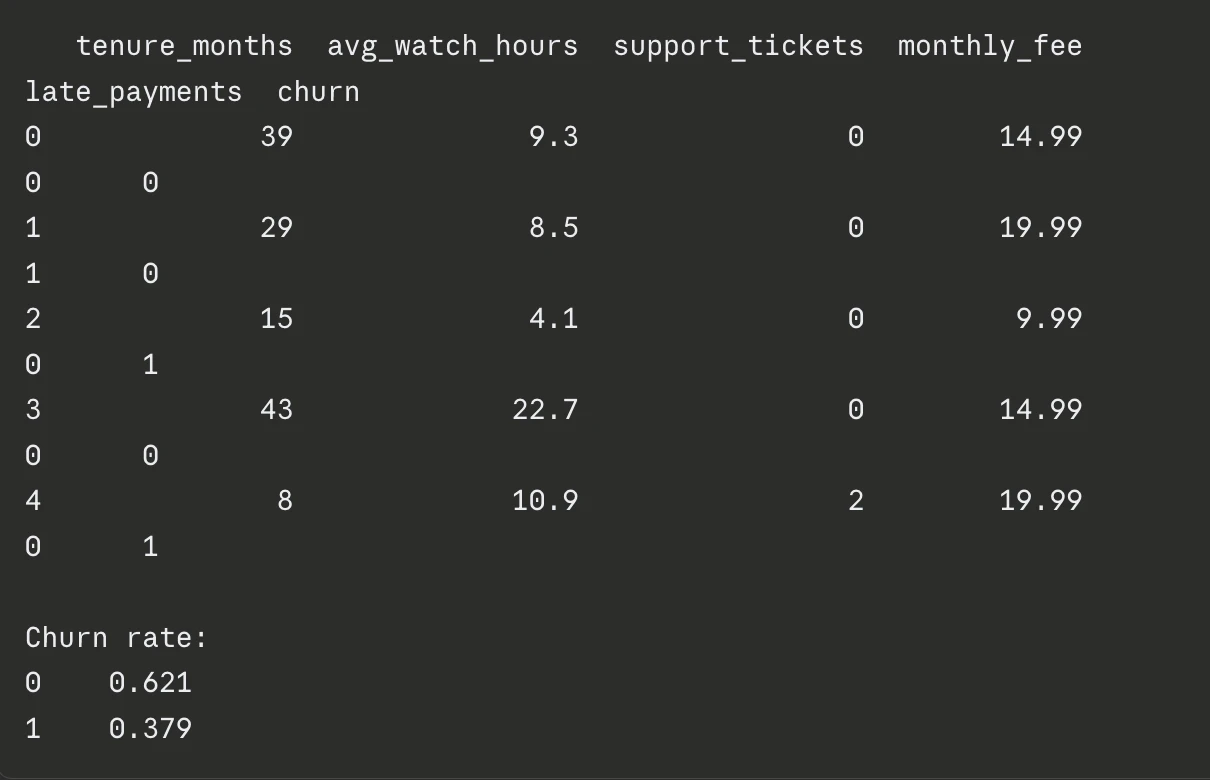
In a hypothetical case involving a streaming giant, the business objective is to reduce a 5% monthly churn rate. With each retained customer valued at $200 in annual revenue, the stakes are high. Using the SCOPE framework, a candidate would identify that the retention team can only contact 500 customers per week. This constraint shifts the modeling goal from "high recall" (finding everyone who might churn) to "high precision" (ensuring the 500 contacted are the most likely to leave).
Data features might include "watch time," "number of support tickets," and "payment delays." A Gradient Boosted Model (GBM) is often the preferred choice here due to its ability to handle non-linear relationships. The final recommendation would involve using SHAP (SHapley Additive exPlanations) values to explain to the marketing team why a specific user is flagged, allowing for personalized retention offers.

2. Demand Forecasting for Inventory Optimization
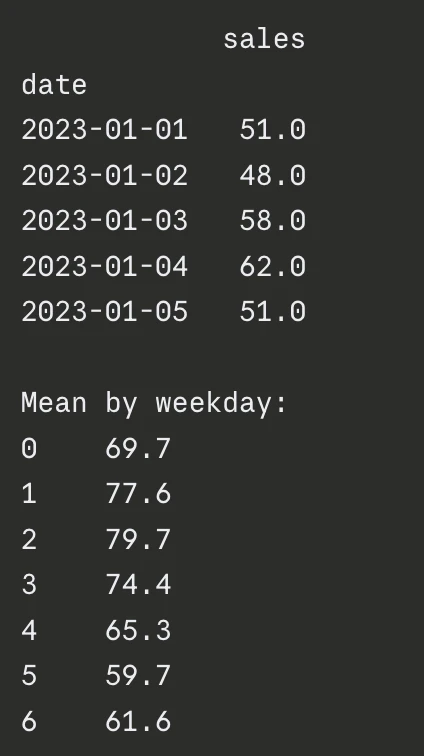
In the retail sector, forecasting cases test a candidate’s respect for temporal order. For a retailer handling perishable goods, the cost of an error is approximately $4 per unit (representing either waste or lost margin). The technical challenge here is avoiding "data leakage"—using future information to predict the past.
A structured approach involves decomposing the data into trend, seasonality (weekly cycles), and noise. The candidate would implement a rolling-window backtesting strategy to ensure the model generalizes over time. The business recommendation would focus on the "dollar cost of error," translating a Mean Absolute Error (MAE) into a daily waste projection, which resonates more with supply chain managers than statistical jargon.
3. RAG-Powered Knowledge Assistants (GenAI)
As of 2024, Generative AI has become a standard component of the data science interview loop. A common prompt involves building a Retrieval-Augmented Generation (RAG) system for internal company wikis. Unlike traditional NLP, the priority here is "faithfulness"—ensuring the AI does not hallucinate policy details.

The candidate must decide between fine-tuning a model and implementing RAG. In most business contexts, RAG is the superior choice because internal policies change frequently, and RAG allows the system to cite current sources. Evaluation metrics shift from accuracy to "relevance" and "groundedness." The candidate’s ability to explain the "open-book exam" nature of RAG to a non-technical panel is often the deciding factor in their evaluation.
4. A/B Testing for Product Launches
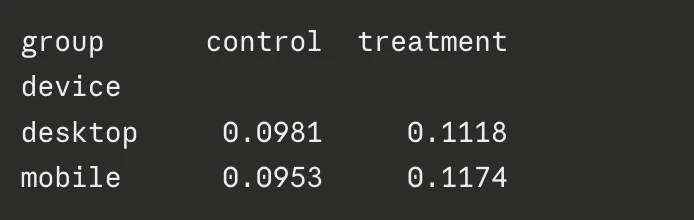
Experimentation cases assess statistical rigor. For an e-commerce platform testing a new checkout flow, the goal is to lift conversion from 10% to 11%. A candidate must perform a power analysis to determine the required sample size—often around 14,700 users per group for a 1% lift.
The analysis must account for "Simpson’s Paradox," where a trend appears in different groups of data but disappears or reverses when the groups are combined. A sophisticated candidate will also discuss the "Novelty Effect," where users engage with a new feature simply because it is new, suggesting a longer test duration to observe long-term behavioral shifts.

Industry Implications and Broader Impact
The shift toward structured case studies reflects a broader professionalization of the data science field. As the "hype cycle" around AI stabilizes, companies are demanding more accountability and ROI from their data teams. The SCOPE framework mirrors the project management methodologies used in production environments, such as CRISP-DM (Cross-Industry Standard Process for Data Mining).
Furthermore, the emphasis on communication and business context highlights the changing profile of the "ideal" data scientist. Organizations are no longer looking for isolated researchers; they are seeking "business partners" who can influence product roadmaps and financial strategy.
Conclusion: Avoiding Common Pitfalls
Despite the availability of frameworks, many candidates continue to fail due to a few predictable errors. The most common "red flag" identified by hiring managers is "leaping to the model." Candidates who begin discussing Random Forests before defining the business success metric are often viewed as a liability in a real-world setting. Other frequent mistakes include ignoring data quality issues, failing to set a baseline, and providing overly technical explanations that ignore the financial impact of the solution.
Ultimately, the data science case study is a test of judgment. By utilizing the SCOPE framework, candidates can demonstrate that they possess the structured thinking required to navigate the complexities of modern business. In a field where algorithms are becoming increasingly commoditized, the ability to think through a problem from a human and economic perspective remains the ultimate competitive advantage.