

Email marketing remains a cornerstone of digital communication strategies, consistently delivering a high return on investment (ROI) that industry benchmarks often place at approximately $36 to $42 for every dollar spent. To maximize this potential, marketing professionals rely on email A/B testing, a controlled experimentation method designed to eliminate guesswork and replace it with data-driven decision-making. By sending two distinct versions of an email to separate subgroups of a target audience, organizations can identify the most effective messaging, design, and offers before committing to a full-scale campaign deployment. This methodical approach ensures that the final communication reaching the bulk of a contact list is optimized for performance, whether the goal is to increase brand awareness, drive traffic, or generate direct sales.
The Mechanics and Definition of Email A/B Testing
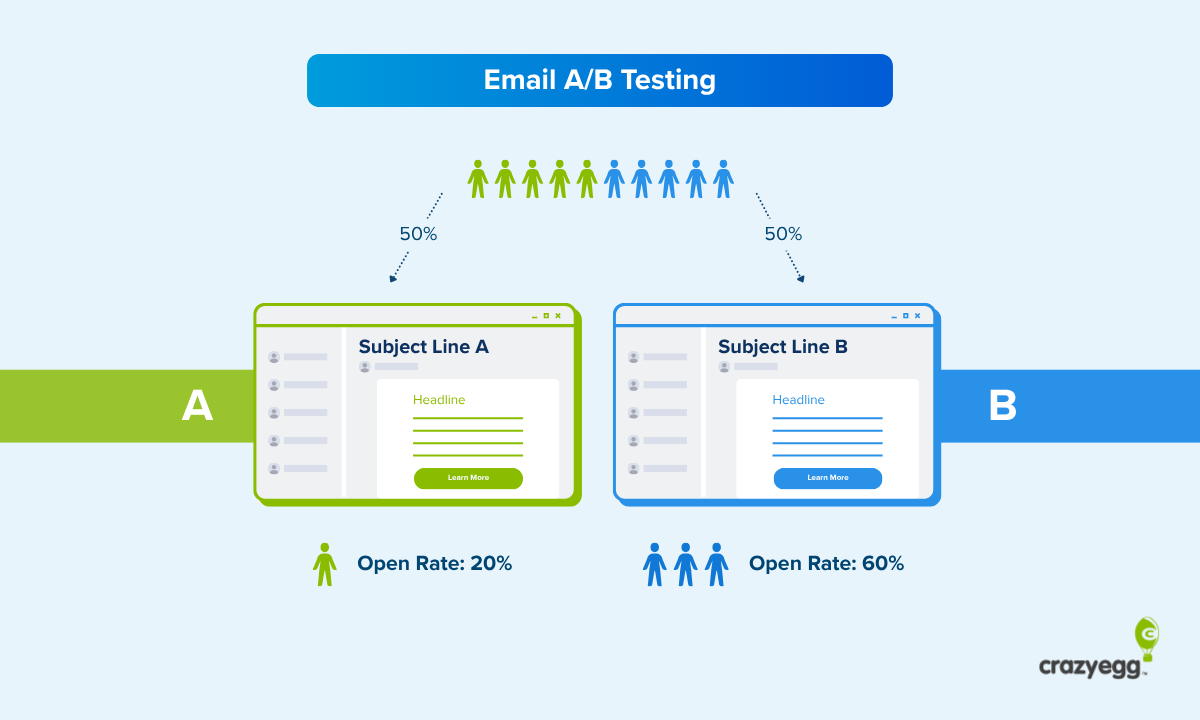
Email A/B testing, frequently referred to as split testing or bucket testing, functions as a comparative study within a live environment. In this framework, the "A" version serves as the control—the original design or the standard approach. The "B" version acts as the variant or treatment, featuring a single, specific modification. This modification could range from a subtle change in the subject line to a radical shift in the primary call to action (CTA) or the overall offer structure.
The power of this method lies in its binary nature and ease of quantification. Unlike social media algorithms, which can be opaque, email metrics provide a direct reflection of recipient behavior. A subscriber either opens the message or they do not; they click the link or they ignore it. This clarity allows marketers to isolate variables and understand exactly which element of their communication resonates with their demographic.
Strategic Benefits of Controlled Experimentation
The implementation of a rigorous A/B testing protocol offers several structural advantages to a marketing department. Primarily, it mitigates the risk associated with assumptions. Creative teams often harbor internal biases regarding what "looks good" or "sounds right," but A/B testing subjects these opinions to the objective reality of consumer behavior.
Furthermore, consistent testing fosters a culture of incremental improvement. While a single test might only yield a 2% increase in click-through rates, the cumulative effect of dozens of such tests over a fiscal year can lead to a transformative impact on a company’s bottom line. It also provides valuable insights into audience segmentation, revealing that different subsets of a list may respond differently to various tones, colors, or incentives.
The Hierarchy of Testing: High-Impact Levers vs. Cosmetic Tweaks
In the pursuit of optimization, not all variables are created equal. Experienced digital strategists prioritize "high-impact levers"—elements that are most likely to influence the primary metrics of a campaign.
Priority Elements for Testing:
- Subject Lines: This is the gatekeeper of the email. Testing a curiosity-based subject line against a direct, benefit-driven one can result in drastic swings in open rates.
- Primary Offers: The core value proposition—such as "20% off" versus "Free Shipping"—often dictates the success of a conversion-focused campaign.
- Call to Action (CTA): The wording, placement, and visual prominence of the CTA button are critical. Testing "Buy Now" against "Get Started" can reveal significant psychological triggers within the audience.
- Personalization Tokens: Moving beyond just the recipient’s name to include personalized product recommendations or location-based data can significantly increase relevance and engagement.
Low-Impact Elements:
Conversely, minor cosmetic changes should only be prioritized by organizations with massive email volumes (hundreds of thousands of subscribers) where tiny percentage gains represent significant revenue. These include:
- Button color (unless it significantly affects accessibility or contrast).
- Font styles or minor variations in point size.
- The placement of social media icons at the bottom of the email.
A Chronological Framework for Running an Effective A/B Test
To ensure the integrity of the data collected, a structured process must be followed. Deviation from a standardized timeline can lead to "polluted" data, where external factors influence the results more than the variables being tested.
- Define the Primary Objective: Before drafting content, marketers must decide if they are testing for awareness (opens), engagement (clicks), or revenue (conversions).
- Formulate a Clear Hypothesis: A scientific approach requires a statement such as, "By changing the CTA from ‘Learn More’ to ‘Claim My Discount,’ we expect a 10% increase in click-through rates."
- Select a Single Variable: Testing multiple changes simultaneously—such as a new subject line and a new layout—makes it impossible to determine which change caused the result.
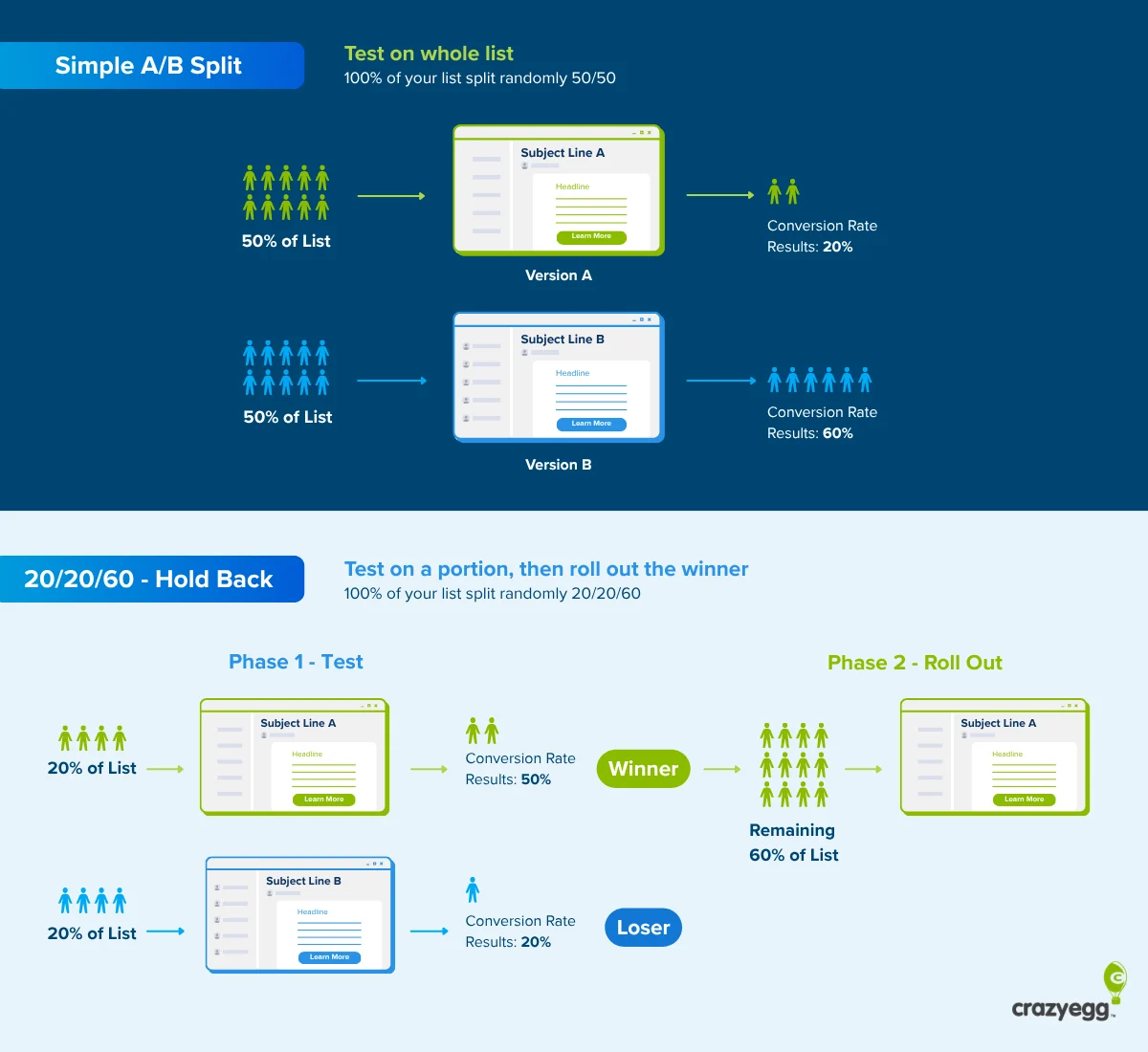
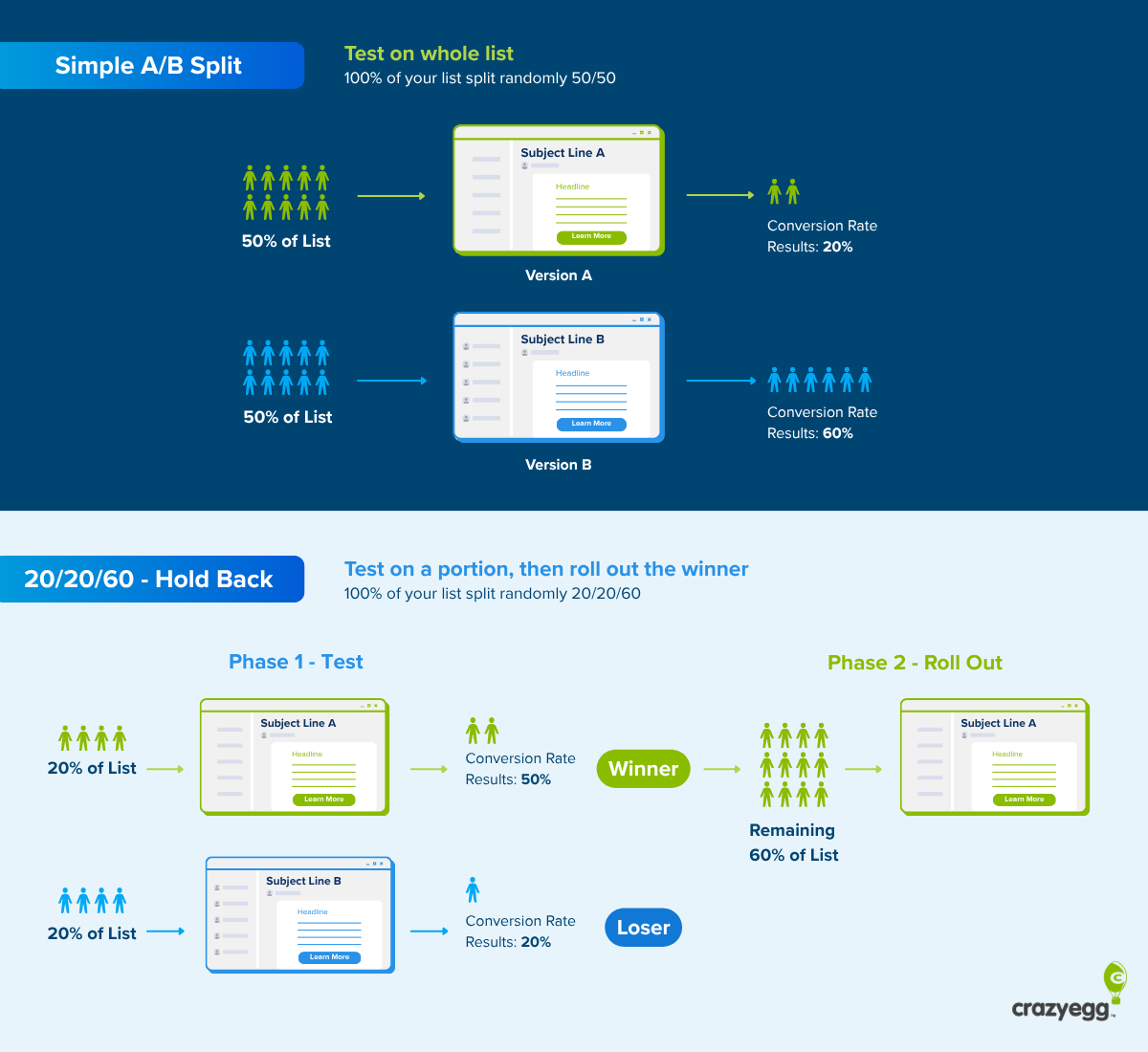
- Segment the Test Groups: Randomly divide a portion of the total list into Group A and Group B. For large lists, a "20/20/60" split is common: 20% receives version A, 20% receives version B, and after a set duration, the winning version is sent to the remaining 60%.
- Establish the Sample Size: Utilize statistical calculators to ensure the test groups are large enough to produce results that are not due to random chance.
- Execute the Send Simultaneously: To control for external variables like time of day or day of the week, both versions should be sent at the exact same moment.
- Allow for a Maturation Period: Depending on the metric, tests should run for at least 4 to 24 hours. Conversion-based tests may require several days to capture the full customer journey.
- Analyze Statistical Significance: Use a p-value threshold (typically < 0.05) to confirm that the results are valid.
- Document and Implement: Record the findings in a centralized repository to inform future creative briefs and deploy the winning version to the rest of the audience.
Essential Metrics and Their Implications
Understanding what to measure is as important as the test itself. While "vanity metrics" like open rates are popular, they do not always tell the full story of a campaign’s health.
- Open Rate: Primarily measures the effectiveness of the subject line and sender name. However, with the advent of privacy features like Apple’s Mail Privacy Protection (MPP), this metric has become less reliable as a standalone KPI.
- Click-Through Rate (CTR): The percentage of recipients who clicked at least one link. This is a robust measure of how compelling the internal content and CTA are.
- Conversion Rate: The ultimate goal for most businesses. This tracks the number of people who completed a desired action (e.g., a purchase or a form fill) after clicking through.
- Unsubscribe and Spam Rates: These are "negative" metrics. A subject line that is too aggressive might increase opens but also spike unsubscribes, indicating that the tactic is "burning" the list and damaging long-term deliverability.
Ensuring Data Integrity: The Role of A/A Testing and Significance
A common pitfall in digital marketing is acting on "noise" rather than "signal." To combat this, advanced practitioners occasionally run A/A tests. In an A/A test, two identical versions of an email are sent to two different groups. If the software reports a "winner" with a significant margin, it indicates a flaw in the testing methodology or the randomization algorithm of the platform.
Statistical significance is the bedrock of trust in A/B testing. Industry standards demand a 95% confidence level. If a test only reaches 75% significance, the results should be viewed as directional rather than definitive. For smaller businesses, this often means they must wait longer to collect data or focus only on testing dramatic changes that are likely to produce clear, undeniable shifts in behavior.
The Integration of Artificial Intelligence in Modern Testing
The landscape of email optimization is currently being reshaped by Artificial Intelligence (AI). Major Email Service Providers (ESPs) like HubSpot, Mailchimp, and Klaviyo have integrated generative and predictive AI to streamline the testing process.
Generative AI allows marketers to produce dozens of subject line variations or body copy iterations in seconds, which can then be fed into multivariate tests. More importantly, predictive AI analyzes historical data to suggest the "optimal send time" for individual users, effectively running a personalized A/B test for every single person on a mailing list. This shift from "A vs. B" to "1-to-1 personalization" represents the next frontier in digital communication.
Analysis of Implications and Future Trends
As privacy regulations tighten (such as GDPR and CCPA) and technology companies implement more aggressive tracking protections, the "old" way of A/B testing is evolving. Marketers can no longer rely solely on tracking pixels to measure success.
The implication is a shift toward "zero-party data"—information that customers intentionally share—and a focus on down-funnel metrics like actual revenue and customer lifetime value (CLV). Organizations that master the art of A/B testing today are not just improving their next email send; they are building a robust data set that allows them to understand the psychological drivers of their customer base in an increasingly private digital world.
In conclusion, email A/B testing is far more than a simple tactical tool; it is a strategic necessity. By adhering to scientific principles, focusing on high-impact variables, and leveraging modern AI tools, businesses can ensure their communication remains relevant, engaging, and, most importantly, profitable. For those with smaller lists, the focus should remain on quality and promotion until their volume allows for the statistical rigor that makes A/B testing truly effective.







