Magento, now formally known as Adobe Commerce, serves as the architectural backbone for some of the world’s largest e-commerce enterprises, yet the very features that make it a powerhouse—high-speed caching, complex multi-storefront hierarchies, and robust session handling—frequently become the primary obstacles to successful conversion rate optimization (CRO). Unlike standard software-as-a-service (SaaS) platforms where A/B testing can often be implemented with a simple script tag, the enterprise-grade Magento environment requires a specialized approach to ensure data integrity and a seamless user experience. When experimentation is misconfigured on this platform, the results are rarely just "inaccurate"; they often manifest as corrupted data sets, inconsistent user experiences where visitors see multiple variants simultaneously, or "flicker" effects that degrade brand trust and site performance.
The Evolution of Magento to Adobe Commerce
To understand the current state of experimentation on the platform, one must look at the trajectory of the technology. Following Adobe’s $1.68 billion acquisition of Magento in 2018, the platform underwent a significant transformation. While the core codebase remains shared, Adobe Commerce was positioned as the enterprise-tier solution, integrating deeply with the Adobe Experience Cloud. This evolution brought about more sophisticated cloud hosting options and a focus on high-scale performance. However, these enterprise enhancements—specifically the reliance on Varnish for caching—created a unique "blind spot" for traditional client-side A/B testing tools.
In a standard environment, a testing tool identifies a visitor and serves a specific variant. In the Magento Enterprise environment, the system is designed to serve pre-rendered HTML from a cache layer to ensure lightning-fast load times. This creates a fundamental conflict: the server wants to deliver the same cached page to everyone for speed, while the experimenter wants to deliver different versions to different people for learning.
Technical Hurdles The Varnish and Full-Page Cache Layer
The most significant differentiator in Magento testing is the Full-Page Cache (FPC) and the Varnish layer. Varnish acts as a reverse proxy cache that sits in front of the web server, intercepting requests and serving HTML without ever touching the PHP or application layer. Because Varnish operates independently of the visitor’s session cookies in its default state, it has no inherent visibility into "visitor bucketing"—the process of assigning a user to a specific test variant.
If the cache is not explicitly configured to respect the cookies set by an A/B testing tool, the server may deliver a "Version A" cached page to a visitor who was supposed to see "Version B." This leads to a catastrophic failure in data reliability where the results reflect cache behavior rather than user preference. Furthermore, when Magento’s FPC is cleared—which happens frequently during product updates or deployments—visitor assignments can be lost if not stored in persistent, first-party cookies that the cache is programmed to recognize.
Chronology of a Successful Magento Experimentation Workflow
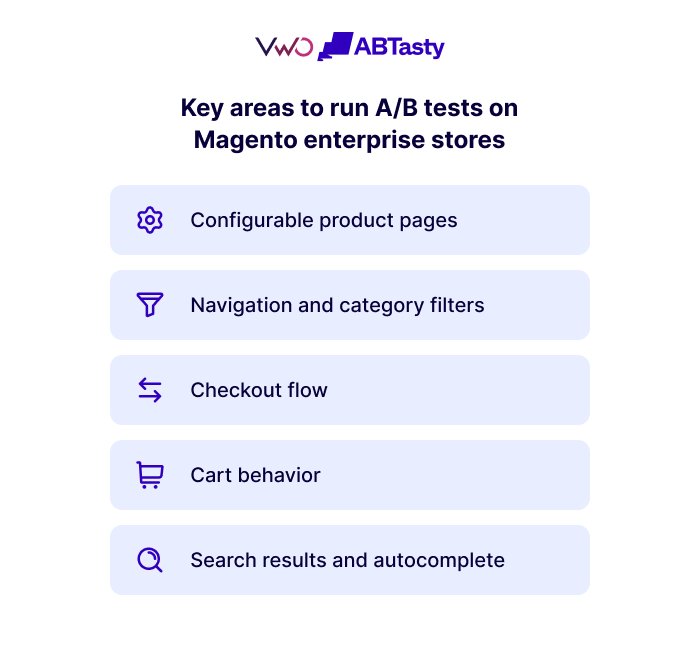
Building a reliable program requires a shift from "launch and monitor" to a rigorous technical deployment cycle. The following chronology represents the industry standard for enterprise-level implementation:
- Infrastructure Audit: Before any code is written, engineers must identify how Varnish and the FPC are handling cookies. The testing tool’s bucketing cookie must be added to the Varnish "vary" header to ensure the cache delivers the correct variant to the correct bucket.
- Asynchronous Script Integration with Pre-hiding: To maintain site speed, scripts are loaded asynchronously. However, to prevent "flicker"—where the original page shows for a split second before the variant appears—a pre-hiding snippet must be placed at the very top of the
<head>tag. - Store-View Scoping: In a multi-storefront architecture, tests must be scoped to specific store views (e.g., UK vs. US storefronts) to prevent "test bleed," where an experiment intended for one region unintentionally appears in another.
- QA in Production-Mirror Environments: Testing must occur on a staging environment that has FPC and Varnish enabled. Many teams make the mistake of QA-ing on "developer mode" where caching is disabled, only to find the test fails the moment it hits the cached production environment.
- Data Synchronization: Integration with third-party analytics, such as Google Analytics 4, is finalized to ensure that the "source of truth" for revenue matches the testing tool’s internal metrics.
High-Impact Testing Areas for Magento Stores
Given Magento’s template-driven architecture, changes to high-traffic templates offer the highest return on investment. According to recent industry data, the global e-commerce cart abandonment rate sits at approximately 70.22%. For enterprise brands, even a 1% reduction in this figure can translate into millions of dollars in recovered annual revenue.

Configurable Product Pages
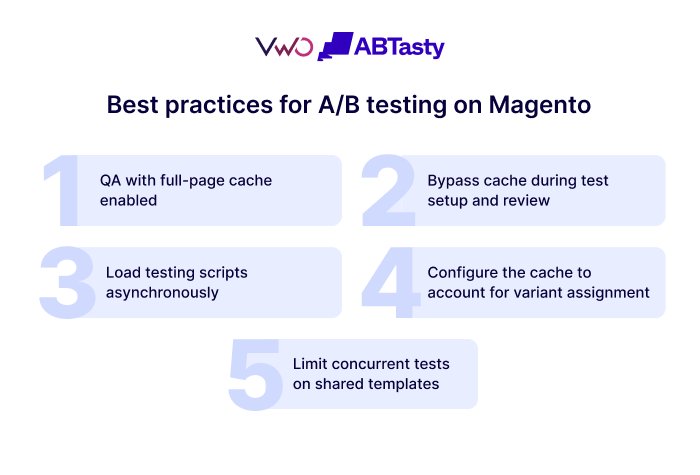
Magento’s native ability to handle configurable products (items with various sizes, colors, or materials) provides a rich environment for testing. Brands often experiment with the layout of "swatches" versus dropdown menus, the visibility of "In Stock" alerts for specific configurations, and the placement of "Add to Cart" buttons relative to product imagery.
Navigation and Layered Filtering
The "Layered Navigation" in Magento is a complex system that allows users to filter large catalogs. Experimenting with whether filters are expanded by default, the order of filter attributes (e.g., Price vs. Brand), and the mobile responsiveness of the filter tray can significantly impact the "Product Findability" metric.
The Multi-Step Checkout Flow
Magento offers a highly customizable checkout process. Enterprise teams frequently test the sequencing of steps—such as moving the "Shipping Method" selection before or after the "Account Creation" prompt. Testing the visual hierarchy of the "Order Summary" can also reduce anxiety at the final point of purchase.
Search and Autocomplete
For stores with massive catalogs, the search bar is the primary conversion driver. Testing the default sort order of search results (e.g., "Best Seller" vs. "Relevance") and the inclusion of "Promoted Products" within the autocomplete dropdown are essential for maximizing the value of high-intent traffic.
Strategic Insights from Industry Leaders
The human element of experimentation is as critical as the technical setup. Garret Cunningham, Director of Global Optimization at Columbus Global, emphasized during a recent VWO Podcast that testing velocity is often a resource issue rather than an idea issue. "Organizations that dedicate design and development capacity to experimentation consistently achieve greater testing velocity and stronger optimization outcomes than those relying on shared teams," Cunningham noted.
Similarly, Ilan Hurwitz, a veteran in the e-commerce space, points out that alignment is the ultimate hurdle for the enterprise. "For enterprise businesses, the biggest challenge isn’t usually a lack of data—it’s securing alignment across teams. Building stakeholder trust and gaining the right support are essential for creating a successful experimentation program."

Comparative Analysis of Enterprise Testing Tools
For Magento environments, the choice of tool is dictated by how well the software "talks" to the caching layer.
- VWO (Visual Website Optimizer): Known for its "SmartCode" and deep integration with Magento 2, VWO allows for granular scoping per store view. It is particularly valued for its ability to combine quantitative A/B testing with qualitative insights like heatmaps and session recordings within the same ecosystem.
- Kameleoon: This platform is often selected by high-traffic stores that require "server-side" experimentation. By handling variant assignment earlier in the request cycle, it can bypass many of the client-side flicker issues associated with heavily cached templates.
- Optimizely: A mainstay in the enterprise world, Optimizely offers a unified platform for content management and experimentation. It is ideal for organizations where multiple departments—marketing, product, and engineering—need to run simultaneous tests across different layers of the stack.
Broader Impact and Future Implications
As e-commerce moves toward a "headless" or "composable" future, the lessons learned from Magento Enterprise A/B testing remain highly relevant. The shift toward B2B e-commerce is also opening new frontiers for experimentation. Magento’s native B2B features, such as "Request for Quote" workflows and "Shared Catalogs," are now becoming primary targets for optimization. In a B2B context, a confusing quote process doesn’t just lose a single transaction; it can stall a multi-year contract.

The emergence of AI-driven optimization, such as VWO’s "Wandz" system, is also beginning to automate the generation of test hypotheses. By analyzing user segments and page elements, these agentic systems can suggest variations that a human team might overlook, further increasing testing velocity.
Ultimately, a successful A/B testing program on Magento Enterprise is not a "set-it-and-forget-it" implementation. It is a continuous cycle of technical refinement, organizational alignment, and data-backed decision-making. By respecting the complexities of the caching layer and focusing on high-leverage areas like checkout and navigation, enterprise brands can turn their Magento storefront into a high-performance laboratory for growth.