A novel and unconventional approach is being employed to tackle one of the burgeoning environmental challenges associated with the rapid expansion of artificial intelligence: the immense water demands of data center cooling. Beverage brands Liquid Death and Garage Beer have launched a joint marketing initiative, centered around a provocative music video, that aims to highlight the significant water consumption of AI infrastructure and propose a humorous, albeit crude, solution. This campaign taps into widespread public apprehension regarding the placement of these energy-intensive facilities and seeks to spark a broader conversation about sustainable AI development.
The proliferation of artificial intelligence has brought to the forefront a multitude of societal concerns, ranging from the amplification of misinformation and the potential displacement of workers to the radical reshaping of industries. However, a less discussed but increasingly critical issue is the physical footprint and resource demands of the AI ecosystem itself. At the heart of this concern lies the data center, the physical infrastructure that powers AI computations. These facilities are notorious for their substantial energy consumption and, critically, their thirst for water. Estimates suggest that some large data centers can consume up to 5 million gallons of water daily for cooling purposes, a figure that has raised alarms among environmentalists and local communities alike.
This escalating concern has manifested in a significant public pushback against the construction of new data centers. A recent Gallup poll revealed that over 70% of Americans oppose the construction of AI data centers in their local areas, with nearly half expressing strong opposition. This sentiment, often summarized by the phrase "Not in my backyard" (NIMBY), underscores a growing disconnect between the rapid advancement of AI technology and the public’s willingness to accommodate its infrastructural needs. It is within this landscape of public anxiety and environmental pressure that Liquid Death and Garage Beer have introduced their unique campaign.
A Provocative Public Service Announcement
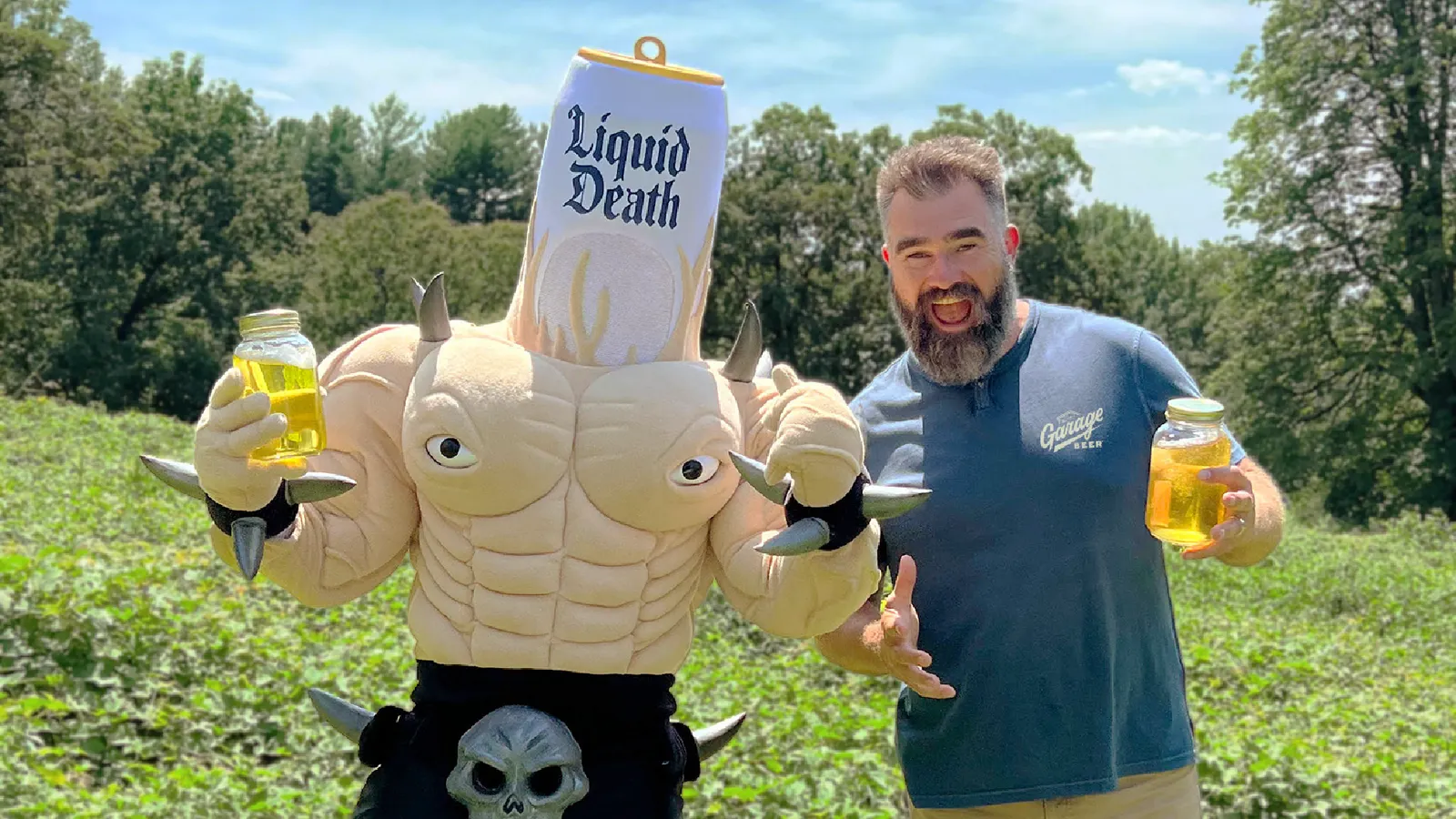
The collaboration, launched on a Tuesday, features a 90-second music video that immediately grabs attention with its unconventional imagery and blunt humor. The video opens with NFL legend and Garage Beer co-owner Jason Kelce engaging in a rather personal act: relieving himself into a jar. He then proceeds to explain the critical issue of AI data center water consumption. The scene transitions to an outdoor setting where Kelce is joined by Liquid Death’s iconic "Murder Man" mascot and a host of other characters. These individuals are depicted carrying various containers filled with urine, forming a chorus that sings, "We want your pee, please give us your pee, let’s pee on computers, together, to save humanity."
This visually arresting and audibly explicit message is designed to shock and engage viewers, drawing them into the underlying environmental concern. The campaign also promotes a product called the "Coolant Collector," encouraging consumers to collect and send their urine to an AI data center of their choosing. The advertisement is slated to run across the brands’ social media channels and on connected television platforms, supported by paid advertising.
Origins and Strategic Alignment
The partnership between Liquid Death, known for its canned water and edgy marketing, and Garage Beer, a craft beer brand, initially stemmed from a more conventional retail collaboration, aiming to co-package their products. However, the scope of the project rapidly evolved beyond retail ambitions, driven by a shared creative vision and a desire to address a pressing societal issue through their distinct brand voices.
Andy Pearson, Liquid Death’s Vice President of Creative, elaborated on the strategic alignment. "We have a lot of affinity for what those guys are doing: they’re doing comedy, and they’re also an indie trying to break into the mainstream," Pearson stated. He further explained the synergy between the brands, noting, "We’re positioning our energy drink as a light beer of energy – it’s fewer calories, it’s lighter, it’s more drinkable – so that was the strategy." This positioning suggests a shared ethos of challenging established norms and appealing to a consumer base that appreciates authenticity and a departure from conventional marketing.
The creative development process for Liquid Death typically involves a writer’s room that includes external comedians and writers. In this instance, comedian Sabrina Jalees is credited with originating the core concept of addressing data center issues. This initial idea was then adapted and refined for the collaborative campaign. Pearson highlighted the broad appeal of the data center issue, observing, "When you look at the data, it is literally the one thing that unites all Americans right now, across the spectrum." This observation points to a rare consensus on an issue, making it fertile ground for a campaign aiming for widespread resonance.
Historical Precedents and Brand Personas
Liquid Death has a track record of leveraging celebrity endorsements and creative campaigns to amplify its message. The brand previously collaborated with Kylie Kelce, wife of Jason Kelce and a media personality, on a campaign. Jason Kelce himself has a public persona that extends beyond his athletic career, including several Christmas albums and a role as a gregarious podcaster and spokesperson. This established persona made him a natural fit for an initiative that deliberately sought to avoid a preachy or overly serious tone.
The songwriting for the campaign’s anthem drew inspiration from moments in history where music was used for collective action and social impact, such as the 1980s benefit concert Live Aid or the "Hands Across America" initiative. This approach aimed to evoke a sense of shared responsibility and empowerment, albeit through a distinctly modern and irreverent lens. The musical composition for the video was provided by the audio company Butter.
Garage Beer CEO Andy Sauer expressed his enthusiasm for the collaboration, stating, "Garage Beer and Liquid Death share a similar sense of humor and approach to marketing. The partnership felt natural from the start, and the video gave us a chance to bring both brands’ personalities together in a way that was fun, unexpected, and very us." This sentiment underscores the belief that the campaign’s unconventional nature is not only effective but also deeply aligned with the core identities of both brands.
The Environmental Implication: Water Scarcity and AI Growth
The campaign’s humor, while stark, shines a spotlight on a genuinely critical environmental issue. Data centers are the backbone of the digital economy, housing the servers and infrastructure necessary for everything from cloud computing and online gaming to, increasingly, the training and deployment of sophisticated AI models. The computational power required for AI, especially generative AI, is staggering, and this demand is directly translating into an exponential growth in data center construction.
The water consumption of these facilities is primarily for cooling. As server racks generate immense heat, water-based cooling systems, such as evaporative cooling towers, are employed to dissipate this heat and prevent hardware failure. This process can be incredibly water-intensive, particularly in regions already facing water stress.
Supporting Data and Context:
- Global Data Center Water Demand: A 2021 report by the Department of Energy estimated that data centers in the U.S. alone consumed approximately 1.5 billion gallons of water per day. This figure is projected to rise significantly with the continued expansion of AI.
- Water Stress: Many regions suitable for data center development, due to factors like reliable electricity grids and fiber optic connectivity, are also areas experiencing significant water scarcity. This creates a direct conflict, pitting essential technological infrastructure against the basic needs of communities and ecosystems.
- AI’s Growing Footprint: The training of large language models (LLMs), such as those powering advanced AI chatbots, requires vast amounts of computational power. Studies have shown that training a single LLM can consume thousands of kilowatt-hours of electricity and generate a carbon footprint equivalent to hundreds of round-trip flights. The cooling demands associated with this processing add another layer of environmental impact.
- Alternative Cooling Methods: While the campaign humorously proposes urine, the industry is exploring various methods to reduce water consumption, including more efficient cooling technologies, using recycled water, and even exploring arid locations where water scarcity is less of a concern but other infrastructure challenges may arise.
Broader Impact and Industry Reactions
The "Coolant Collector" campaign, by using humor and shock value, effectively bypasses the often-dry technical discussions surrounding data center sustainability. It has the potential to reach a demographic that might not otherwise engage with these issues, making the abstract concept of water consumption more tangible and relatable.
Inferred Reactions and Analysis:
- Public Engagement: The campaign is likely to generate significant public discussion, both positive and negative, regarding data center water usage. This heightened awareness could translate into increased pressure on tech companies and policymakers to adopt more sustainable practices.
- Industry Response: While direct responses from major data center operators or AI companies to this specific campaign are unlikely to be immediate or public, the underlying issue of water consumption is a well-documented concern within the industry. Companies are increasingly investing in research and development for water-efficient cooling solutions and are facing growing scrutiny from regulators and environmental groups. This campaign, however unconventional, adds another voice to that chorus.
- Marketing Innovation: The campaign represents a bold step in marketing strategy, utilizing humor and controversy to address a serious issue. It challenges the traditional, often understated, approach to corporate social responsibility and demonstrates a willingness to engage audiences on their own terms, however unconventional.
- The "Not in My Backyard" Phenomenon: The campaign directly addresses the NIMBY sentiment. By framing the issue as a shared problem requiring a collective, albeit absurd, solution, it attempts to reframe the narrative from local opposition to a global challenge.
The collaboration between Liquid Death and Garage Beer is more than just a marketing stunt; it is a calculated effort to insert a critical environmental issue into mainstream conversation through the power of viral content and a shared, albeit irreverent, brand ethos. As the demand for AI continues its meteoric rise, the question of how to power it sustainably will only become more pressing. This campaign, with its potent blend of humor and urgency, ensures that the thirsty nature of AI’s infrastructure will not go unnoticed.