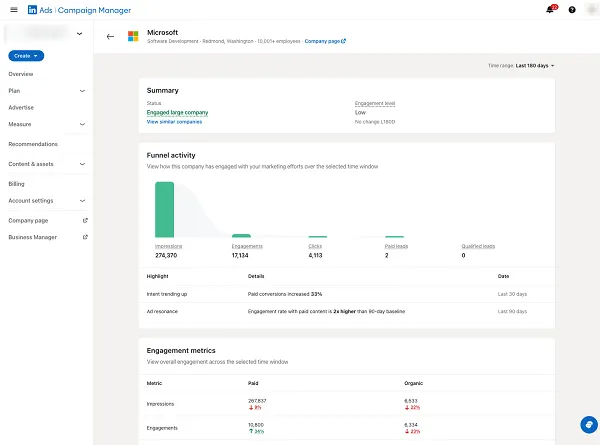
LinkedIn has introduced a significant enhancement to its Campaign Manager, providing B2B marketers with a powerful new overview of how to leverage the Companies hub to meticulously track engagement from target customers and sharpen their focus on key decision-makers. This development marks a strategic evolution in LinkedIn’s commitment to equipping businesses with more sophisticated tools for account-based marketing (ABM), promising to transform how brands identify, engage, and convert high-intent companies into loyal customers. The Companies hub is designed to offer a granular view of in-app engagement, including insights into which specific businesses’ representatives have interacted with organic posts and paid advertising campaigns. This wealth of data empowers brands to refine their targeting strategies, ensuring that marketing efforts are concentrated on organizations most likely to convert, thereby optimizing return on investment (ROI) and accelerating sales cycles.
The Evolution of B2B Marketing on LinkedIn: A Strategic Imperative
LinkedIn’s journey from a professional networking site to an indispensable B2B marketing and advertising powerhouse has been characterized by continuous innovation aimed at meeting the evolving needs of businesses. In an increasingly competitive digital landscape, B2B marketers face persistent challenges in identifying and engaging the right decision-makers within target accounts. Traditional broad-stroke advertising often yields suboptimal results in the B2B sphere, where sales cycles are typically longer, purchase decisions involve multiple stakeholders, and the value of each conversion is significantly higher. This context has propelled the rise of Account-Based Marketing (ABM), a strategy that treats individual high-value accounts as markets in themselves, requiring highly personalized and coordinated sales and marketing efforts.
LinkedIn has progressively built out its advertising capabilities to support such targeted approaches. Early ad products focused on demographic targeting (job title, industry, company size), which then evolved to include more sophisticated features like Matched Audiences, allowing marketers to upload their own lists of companies or contacts for precise targeting. The introduction of Website Demographics offered insights into the professional attributes of website visitors, further bridging the gap between website activity and LinkedIn profiles. The Companies hub represents a logical and critical next step in this progression, moving beyond mere targeting to offer actionable insights into actual engagement at the company level. It acknowledges that knowing who to target is only half the battle; understanding how they are interacting with content is crucial for effective nurturing and conversion.
Deep Dive into the Companies Hub Functionality: Unlocking Engagement Data
The Companies hub within LinkedIn’s Campaign Manager is a centralized dashboard designed to provide comprehensive data points on in-app engagement from specific businesses. This includes a range of metrics that reveal how representatives from target companies are interacting with a brand’s presence on the platform. Key insights available include:
- Organic Post Engagement: Which companies’ employees are viewing, liking, commenting on, or sharing a brand’s organic content? This helps gauge content resonance and brand awareness within target accounts.
- Paid Advertising Interaction: Detailed analytics on how specific companies are responding to paid campaigns, including impressions, clicks, video views, and lead form submissions. This allows marketers to assess the effectiveness of their ad spend on a per-company basis.
- Website Visits (via Insight Tag): When integrated with the LinkedIn Insight Tag on a company’s website, the Companies hub can attribute website visits back to specific companies, providing a holistic view of digital touchpoints.
- Company Profile Views: Understanding which companies are actively viewing a brand’s LinkedIn Company Page can indicate latent interest.
By consolidating these data points, the Companies hub empowers brands to move beyond generic campaign performance metrics to understand engagement at a micro-level. This shift allows for more agile and data-driven decision-making, enabling marketers to identify "high-intent companies" – those exhibiting significant engagement across multiple touchpoints – and prioritize them for deeper nurturing. For instance, if a brand observes that employees from a particular company are consistently engaging with their thought leadership content and clicking on product-related ads, this company can be flagged as a prime candidate for direct sales outreach or highly personalized follow-up campaigns.
LinkedIn’s Four-Step Framework for Company Engagement to Customer Conversion
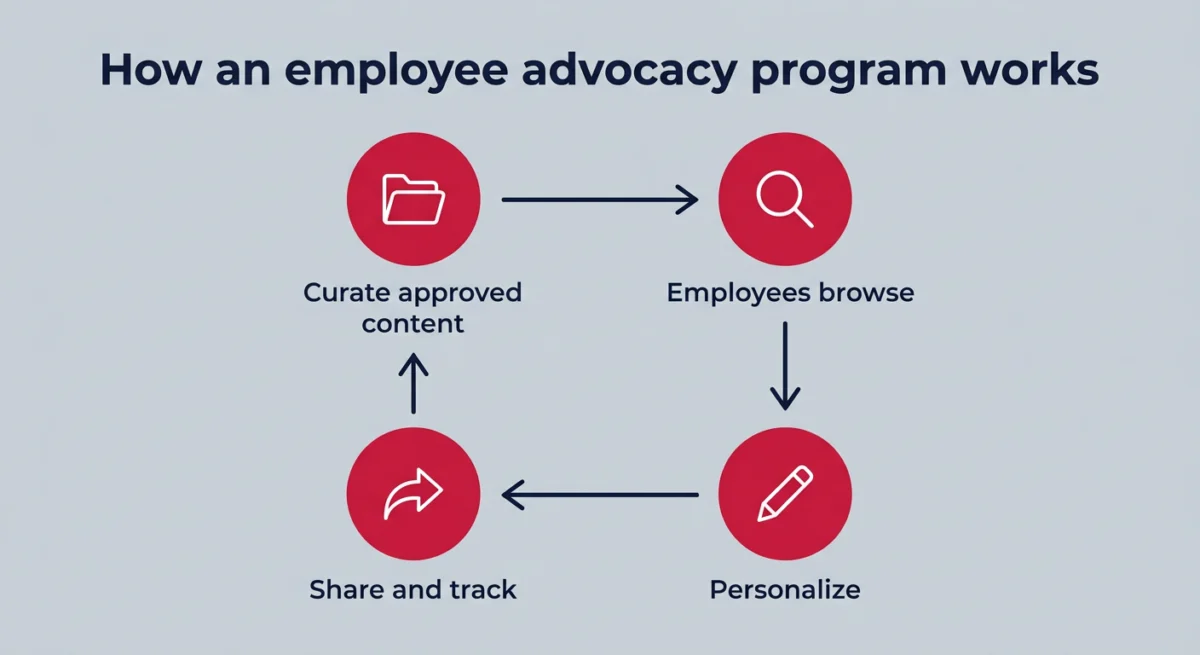
To guide marketers in effectively utilizing these new capabilities, LinkedIn has outlined a four-step framework designed to transform company engagement into tangible customer conversions. While specific visual aids were provided, the underlying methodology aligns with best practices in modern ABM:
-
Identify and Define Your Target Accounts: The initial step involves clearly defining the Ideal Customer Profile (ICP) and compiling a list of target accounts. This can be achieved by leveraging existing CRM data to identify current best customers, analyzing industry trends, or using LinkedIn’s own targeting features to build lookalike audiences based on company attributes (industry, size, revenue, growth rate). Marketers are encouraged to upload these lists directly into Campaign Manager as Matched Audiences to ensure precise tracking. The emphasis is on quality over quantity, focusing on accounts that represent the highest potential lifetime value.
-
Monitor Company-Level Engagement within the Companies Hub: Once target accounts are identified and campaigns are live, the next critical step is to actively monitor their engagement within the Companies hub. This involves regularly reviewing the aggregated data points: which companies are showing the most interest, which types of content are resonating, and where there might be gaps in engagement. This continuous monitoring provides a real-time pulse on account activity, allowing marketers to spot emerging opportunities or identify accounts that require a different approach. For example, if a key account is viewing job postings but not product pages, it might indicate internal hiring initiatives that could lead to new business opportunities down the line.
-
Nurture Engaged Accounts with Tailored Campaigns: Upon identifying engaged companies, the framework dictates a shift towards highly personalized nurturing. This means moving away from generic campaigns and crafting bespoke messages, content, and offers that speak directly to the specific needs, challenges, and engagement patterns of these high-intent accounts. This could involve:
- Retargeting: Delivering specific ads to employees of engaged companies with content relevant to their observed interactions.
- Content Syndication: Offering gated content (e.g., whitepapers, case studies) that directly addresses the pain points indicated by their engagement.
- Event Invitations: Inviting key stakeholders from engaged companies to webinars, workshops, or industry events.
- Sales Enablement: Sharing engagement insights directly with sales teams, providing them with warm leads and critical context for their outreach efforts. The goal is to move these companies further down the sales funnel by providing value and demonstrating a deep understanding of their business.
-
Measure, Analyze, and Optimize for Conversion: The final step involves rigorously measuring the impact of these targeted nurturing efforts and continuously optimizing strategies. Marketers should track key performance indicators (KPIs) such as conversion rates from engaged accounts, pipeline acceleration, and ultimately, closed-won deals. The Companies hub provides the data to attribute conversions back to specific companies and campaigns, allowing for precise ROI calculation. This iterative process of measurement and optimization ensures that marketing resources are allocated effectively and that strategies are refined over time to maximize conversion potential. The feedback loop between marketing and sales is crucial here, as sales outcomes provide invaluable data for future targeting and content creation.
Supporting Data and Industry Trends: The Power of Precision
The emphasis on precision targeting and company-level engagement within LinkedIn’s new framework is strongly supported by prevailing B2B marketing trends and data. Account-Based Marketing (ABM) has consistently demonstrated its effectiveness:
- Increased ROI: A study by Terminus found that 87% of marketers who measure ROI say ABM outperforms other marketing investments.
- Higher Conversion Rates: HubSpot reported that companies using ABM see, on average, a 171% higher annual contract value (ACV).
- Improved Sales-Marketing Alignment: 75% of companies using ABM reported better alignment between sales and marketing teams, according to the ABM Leadership Alliance.
LinkedIn, with its professional dataset of over 900 million members and 65 million companies, holds a unique position in the B2B advertising landscape. Its ability to provide verified professional identities and company affiliations is unparalleled, making it an indispensable platform for B2B marketers. The global digital ad spending in B2B continues to grow, with a significant portion allocated to platforms that offer granular targeting and performance insights. The Companies hub directly addresses the need for greater transparency and control over B2B ad spend, allowing marketers to ensure their budget is reaching the most valuable prospects. Furthermore, in an era of increasing data privacy regulations (like GDPR and CCPA), LinkedIn’s first-party data approach, where insights are aggregated at the company level rather than focusing on individual identifiable data, offers a privacy-compliant way to deliver highly relevant advertising.
Chronology of LinkedIn’s B2B Product Development: A Path to Precision
LinkedIn’s evolution in B2B marketing tools has been a steady progression, reflecting the platform’s understanding of its unique value proposition:
- Early 2010s: Introduction of basic self-service advertising, allowing targeting by job title, industry, and company size.
- Mid-2010s: Launch of Sponsored Content (native ads in the feed) and Lead Gen Forms, simplifying lead capture directly on the platform. This marked a significant step towards full-funnel marketing.
- Late 2010s: Introduction of Matched Audiences, enabling marketers to upload company lists (Account Targeting) or email lists (Contact Targeting) for highly specific ad delivery. Website Retargeting was also launched, allowing ads to be served to LinkedIn members who had visited a company’s website. Website Demographics provided aggregated insights into website visitor professional attributes.
- Early 2020s: Continued refinement of targeting capabilities, deeper analytics integrations, and the emphasis on integrating with CRM systems for a more seamless sales and marketing workflow. The concept of "Company Pages" became more central for brand building and content distribution.
- Present: The unveiling of the enhanced Companies hub, which elevates company-level insights from a peripheral feature to a core analytical tool, directly supporting advanced ABM strategies by providing actionable engagement data on target accounts. This latest iteration solidifies LinkedIn’s commitment to providing marketers with the tools necessary to move beyond broad awareness campaigns to highly targeted, intent-driven engagement.
Official Statements and LinkedIn’s Strategic Vision
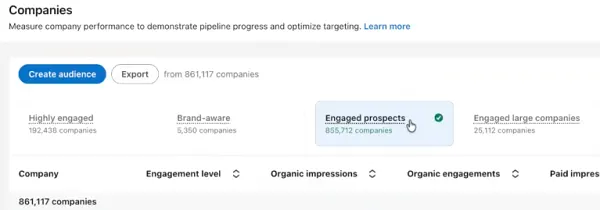
LinkedIn’s official guidance underscores the practical application of the Companies hub: "The best advice for a new company-based strategy is to pick a group of accounts that look like your best customers, connect your CRM or company list, and watch which of those companies start engaging," LinkedIn stated. "Then point your next campaign at them to nurture them through the funnel." This direct advice highlights the platform’s strategic vision: to empower businesses to move from reactive marketing to proactive, data-informed engagement.
This approach aligns perfectly with LinkedIn’s broader mission to connect the world’s professionals and make them more productive and successful. By providing robust data and targeting tools, LinkedIn positions itself as the indispensable platform for B2B sales and marketing. The Companies hub is not just an analytics tool; it is a fundamental piece of infrastructure that enables better alignment between marketing and sales teams, fostering a unified strategy centered on the customer journey. It signals LinkedIn’s intent to continually innovate in the B2B space, offering solutions that directly address the complex challenges of enterprise sales and marketing.
Broader Impact and Implications for Marketers and Sales Teams
The enhanced Companies hub carries significant implications across the entire B2B revenue generation spectrum:
-
For Marketers:
- Improved ROI: By focusing ad spend on high-intent companies, marketers can significantly reduce wasted impressions and clicks, leading to more efficient budget allocation and higher conversion rates.
- Enhanced Personalization: Deeper insights into company-level engagement enable the creation of highly personalized content and campaigns, increasing relevance and impact.
- Better Sales-Marketing Alignment: The Companies hub provides a common data set for both marketing and sales, fostering better communication and collaboration. Marketers can hand over "warm" accounts with detailed engagement histories to sales, significantly improving lead quality.
- Strategic Planning: The data offers a clearer picture of market interest, informing future product development, content strategy, and market expansion efforts.
-
For Sales Teams:
- Higher Quality Leads: Sales teams receive leads that have already demonstrated interest, shortening sales cycles and improving conversion probabilities.
- Contextualized Outreach: Sales representatives gain valuable context about an account’s digital interactions before making initial contact, allowing for more informed and personalized outreach.
- Prioritization: The ability to see which companies are most engaged allows sales teams to prioritize their efforts on the accounts with the highest propensity to buy.
-
For Businesses:
- Accelerated Growth: More efficient marketing and sales processes can lead to faster customer acquisition and revenue growth.
- Competitive Advantage: Businesses that master these tools can gain a significant edge by precisely targeting and converting high-value accounts more effectively than competitors.
- Optimized Resource Allocation: Understanding where marketing and sales efforts yield the best results allows for strategic reallocation of resources, maximizing overall business efficiency.
However, leveraging the Companies hub effectively also presents challenges. It requires a sophisticated understanding of ABM principles, a commitment to data analysis, and seamless integration with existing CRM and sales enablement platforms. Businesses will need skilled marketing professionals capable of interpreting the data, crafting targeted campaigns, and fostering close collaboration with sales teams. Continuous optimization will be key, as market dynamics and customer behaviors evolve.
Future Outlook: The Road Ahead for B2B Engagement
The introduction of the Companies hub is a strong indicator of LinkedIn’s ongoing commitment to building the most robust B2B marketing and sales platform. Future enhancements could include even deeper integrations with CRM systems for automated workflows, AI-driven recommendations for target accounts and content strategies, and more advanced predictive analytics to identify potential high-value accounts even before they show explicit engagement. The trend towards data-driven, personalized B2B engagement is irreversible, and LinkedIn is positioning itself at the forefront of this evolution. By providing tools that bridge the gap between anonymous digital interactions and actionable company-level insights, LinkedIn is not just improving ad performance; it is fundamentally reshaping how B2B businesses connect, engage, and convert their most valuable customers in the digital age.