

The digital marketing landscape has reached a critical inflection point in 2024, as shifting consumer behaviors and evolving privacy regulations force a reassessment of what constitutes a successful online campaign. According to the latest data released in the 2024 Conversion Benchmark Report by Unbounce, the median conversion rate for landing pages across all major industries now stands at 6.6%. This figure, derived from a massive dataset encompassing over 57 million conversions, 41,000 landing pages, and 464 million pageviews, serves as the definitive baseline for digital marketers navigating an increasingly competitive attention economy.

The report highlights a significant disparity between average performance and top-tier execution. While the median sits at 6.6%, the threshold for "good" performance—defined as the 75th percentile—starts at 11.4% and can escalate to 40.8% depending on the specific sector. This wide variance underscores the reality that conversion rates are not a one-size-fits-all metric, but rather a reflection of industry-specific user intent, campaign complexity, and device-based friction.
Methodological Overview: The Shift from Averages to Medians
In analyzing digital performance, the report emphasizes the importance of using median values rather than arithmetic averages. In the context of conversion rate optimization (CRO), averages are frequently skewed by "unicorn" pages—outliers that achieve near-impossible conversion rates of 80% or 90%—or by abandoned pages that linger at 0%. By focusing on the median, researchers provide a more accurate representation of the "middle-of-the-pack" experience, offering a realistic benchmark for the typical business.

Industry experts, including Josh Gallant, founder of Backstage SEO and a primary contributor to the report’s analysis, suggest that understanding this distinction is vital for setting realistic marketing KPIs. The data indicates that achieving a "top-tier" status requires outperforming 75% of competitors in a specific field, a feat that necessitates a systematic approach to A/B testing and message resonance.
Industry-Specific Performance Metrics
The 2024 data reveals a complex tapestry of performance across different sectors, influenced by the nature of the product, the length of the sales cycle, and the urgency of the consumer’s need.
Ecommerce and Retail
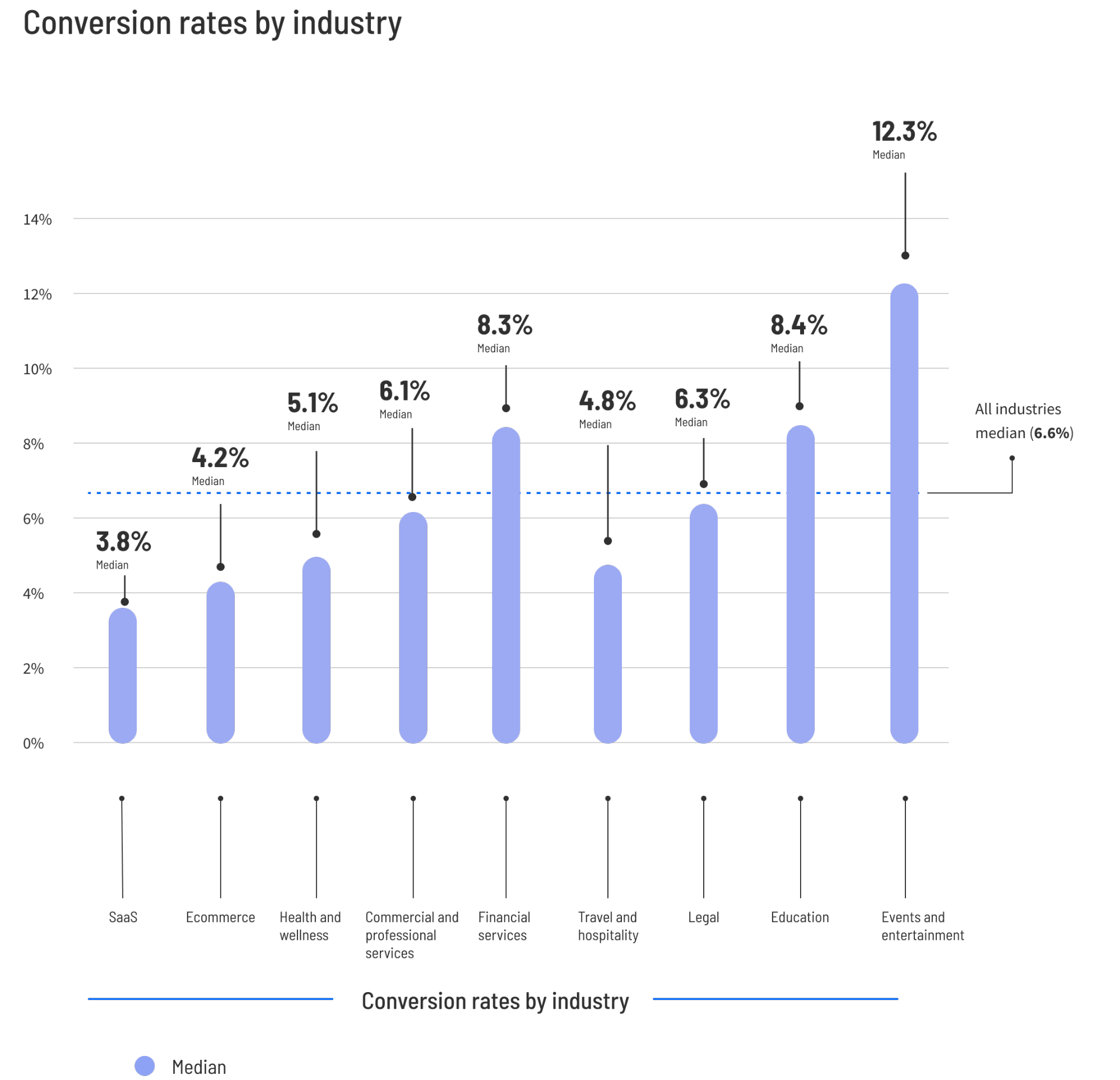
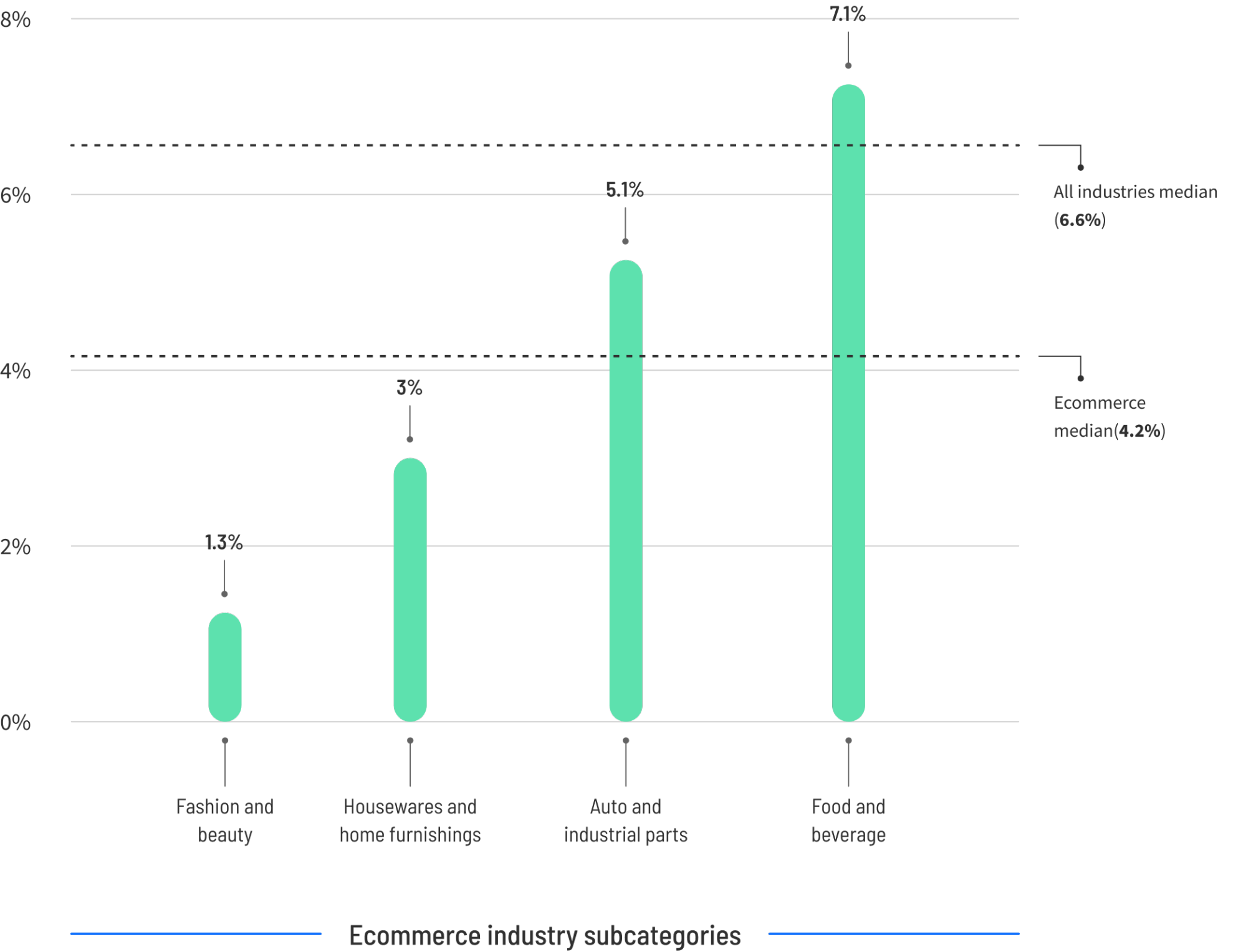
The median conversion rate for ecommerce landing pages is currently 4.2%. However, top performers in this space are achieving rates of 11.4% or higher. Within the sector, subcategories show significant variance: food and beverage pages lead with a 7.1% median, while fashion and beauty pages lag at 1.3%. This discrepancy is largely attributed to the "high-consideration" nature of fashion, where consumers often browse multiple sites and compare styles before committing to a purchase.
Software as a Service (SaaS)
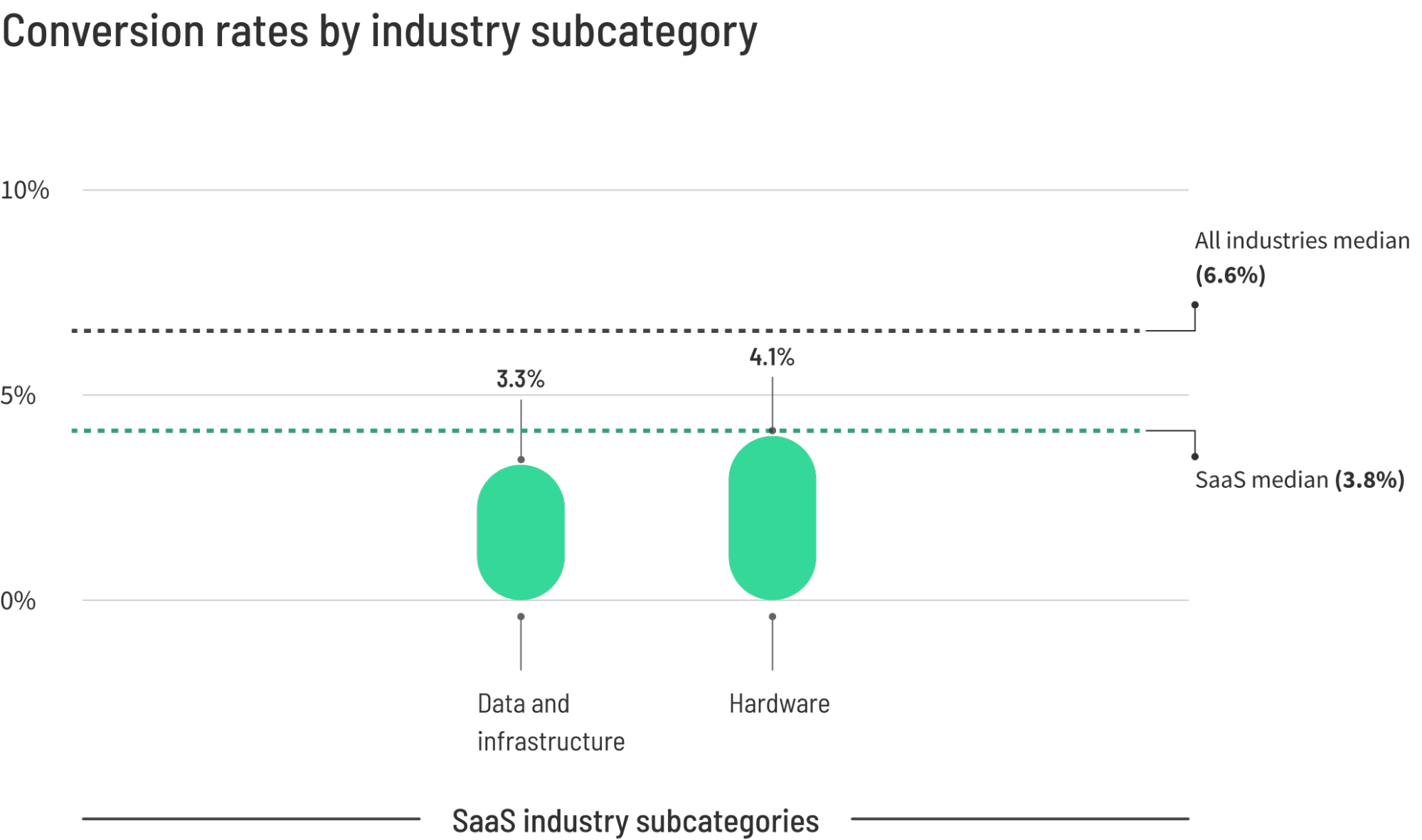
SaaS companies face a unique challenge, with a median conversion rate of 3.8%. This lower figure is reflective of longer sales cycles and the complexity of the software solutions being offered. To reach the top 25% of the industry, SaaS firms must achieve a conversion rate of 11.6%. Analysis suggests that the most successful SaaS pages are those that minimize friction by offering "no-credit-card" trials and clearly articulating solutions to specific user pain points.
Professional and Financial Services
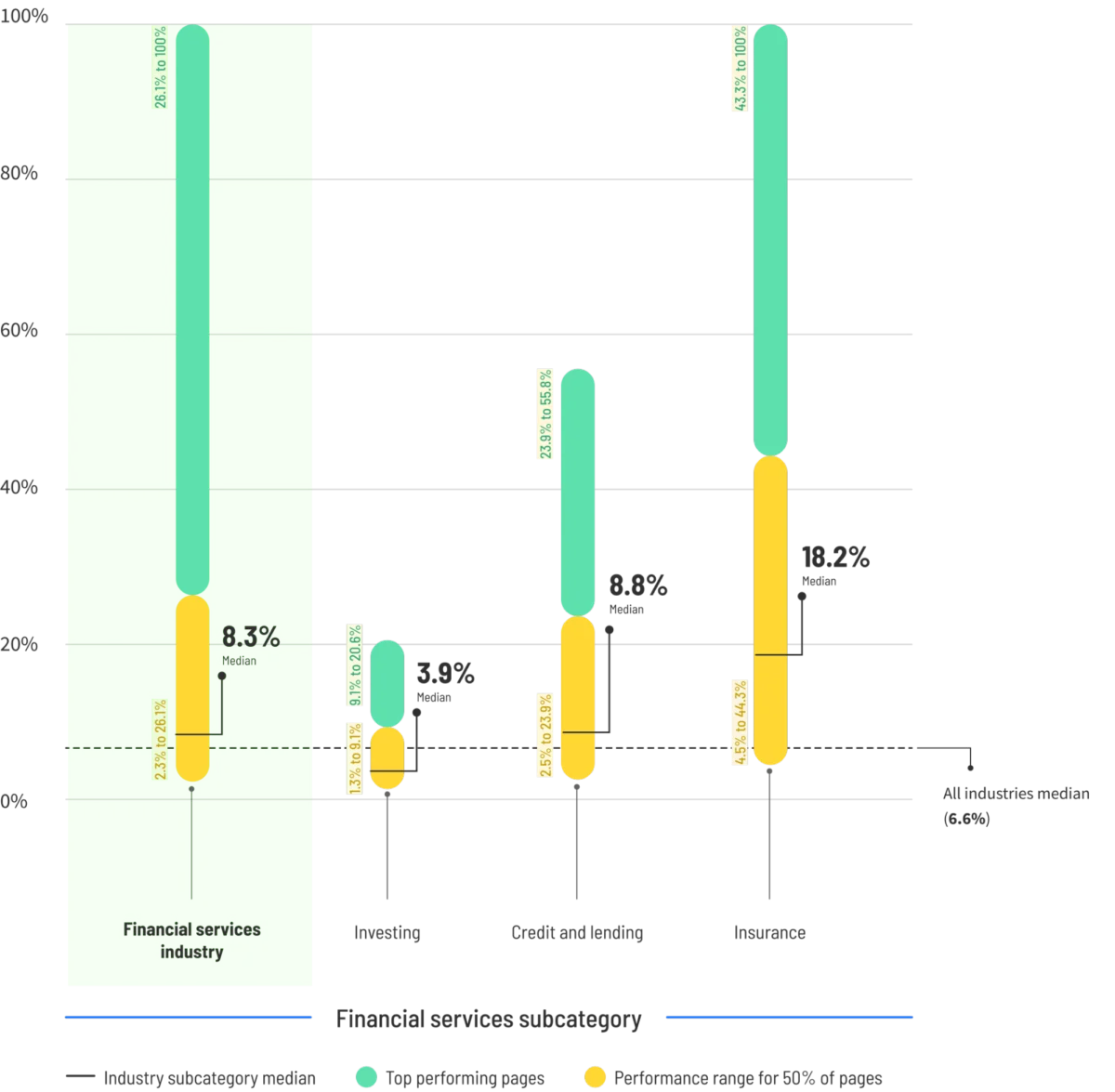
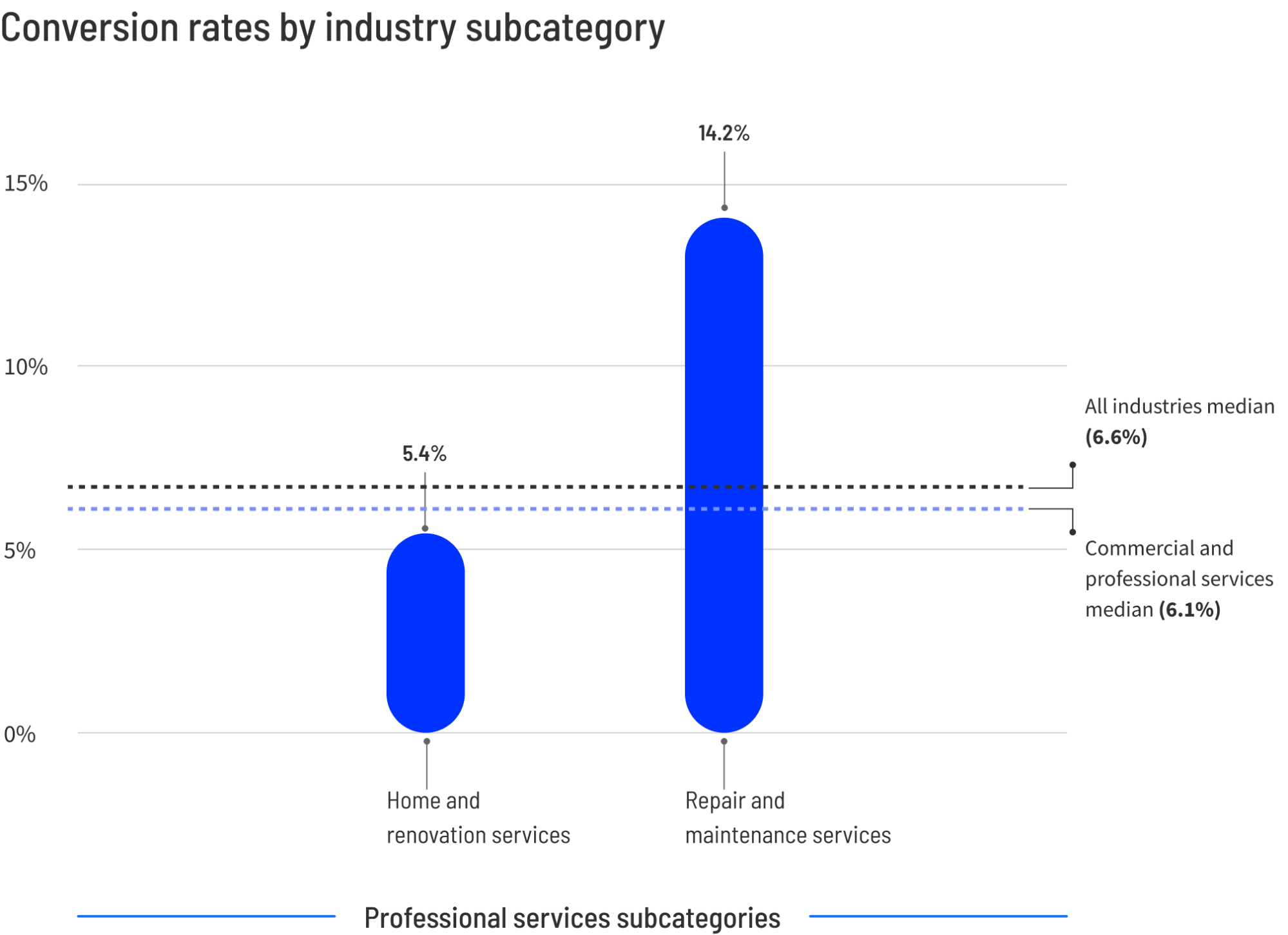
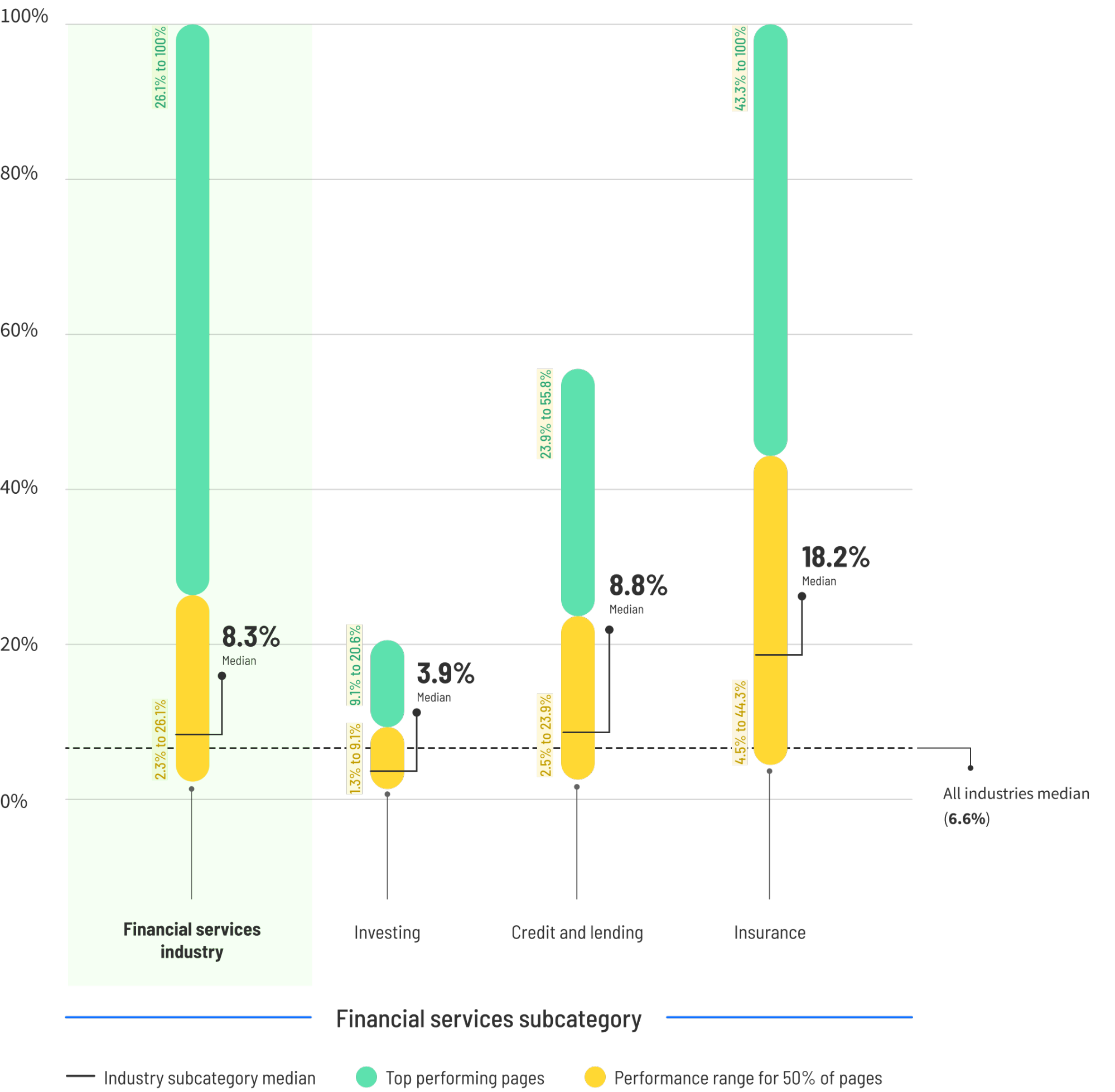
Professional services, a broad category including legal and consulting firms, see a median conversion rate of 6.1%, with top performers hitting 14.1%. Financial services, however, outperform the general market with a median of 8.3%. Within finance, insurance landing pages are exceptionally high-performing, boasting an 18.2% median rate. This is driven by high user intent; consumers searching for insurance are typically in an active state of need rather than passive browsing.
Legal and Urgent Services
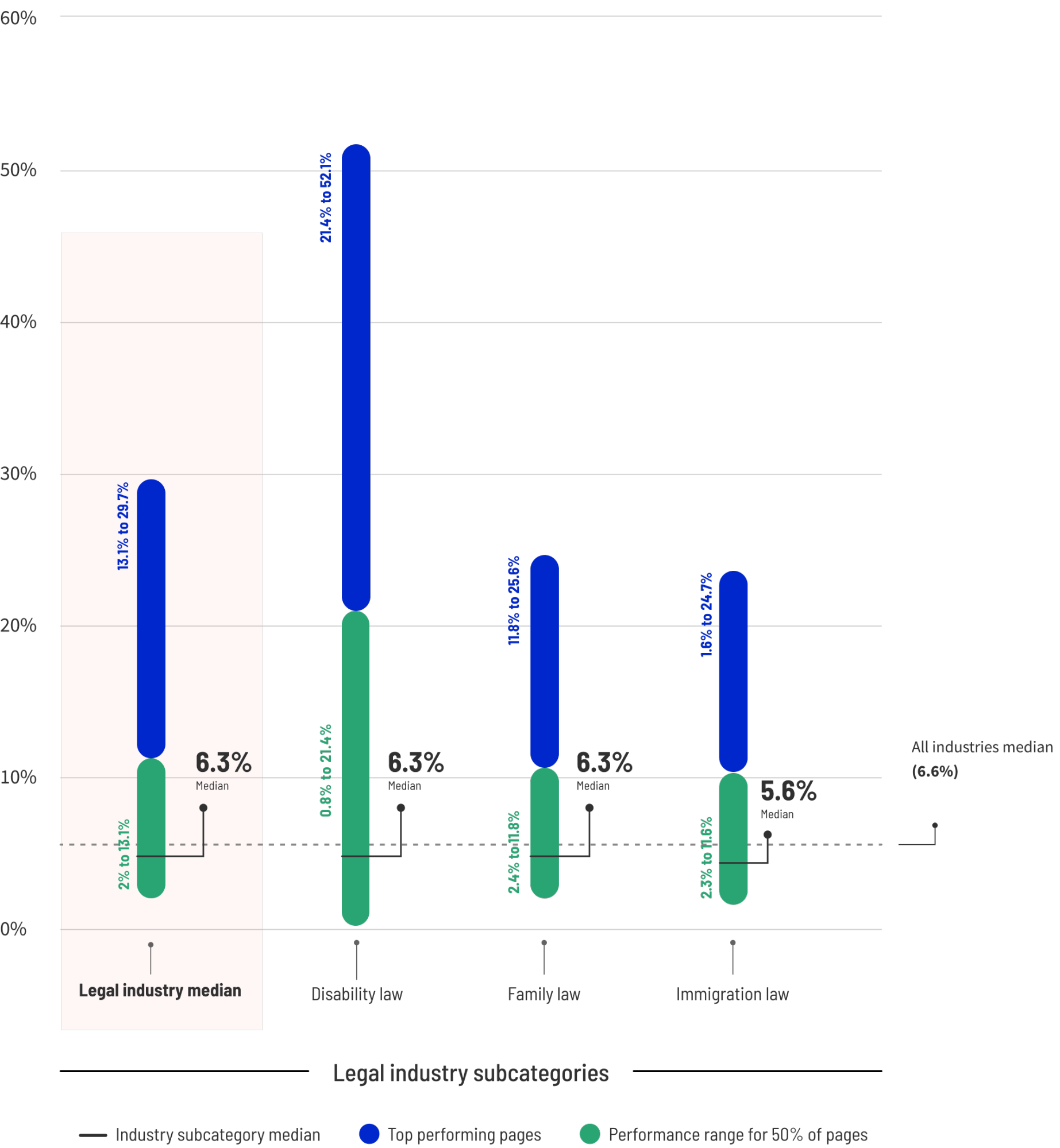
The legal industry provides a compelling case study in urgency-driven conversion. The median rate stands at 6.3%, but the industry sees a significant boost in mobile performance. Legal landing pages convert at 21% on mobile devices compared to 15.9% on desktops. This is attributed to the "emergency" nature of legal needs—individuals often search for representation via smartphones immediately following an accident or legal incident.
The Role of Traffic Channels and Device Types
A critical component of the 2024 findings is the impact of traffic sources on conversion probability. The data confirms that not all traffic is equal in terms of quality or intent.
The Dominance of Email
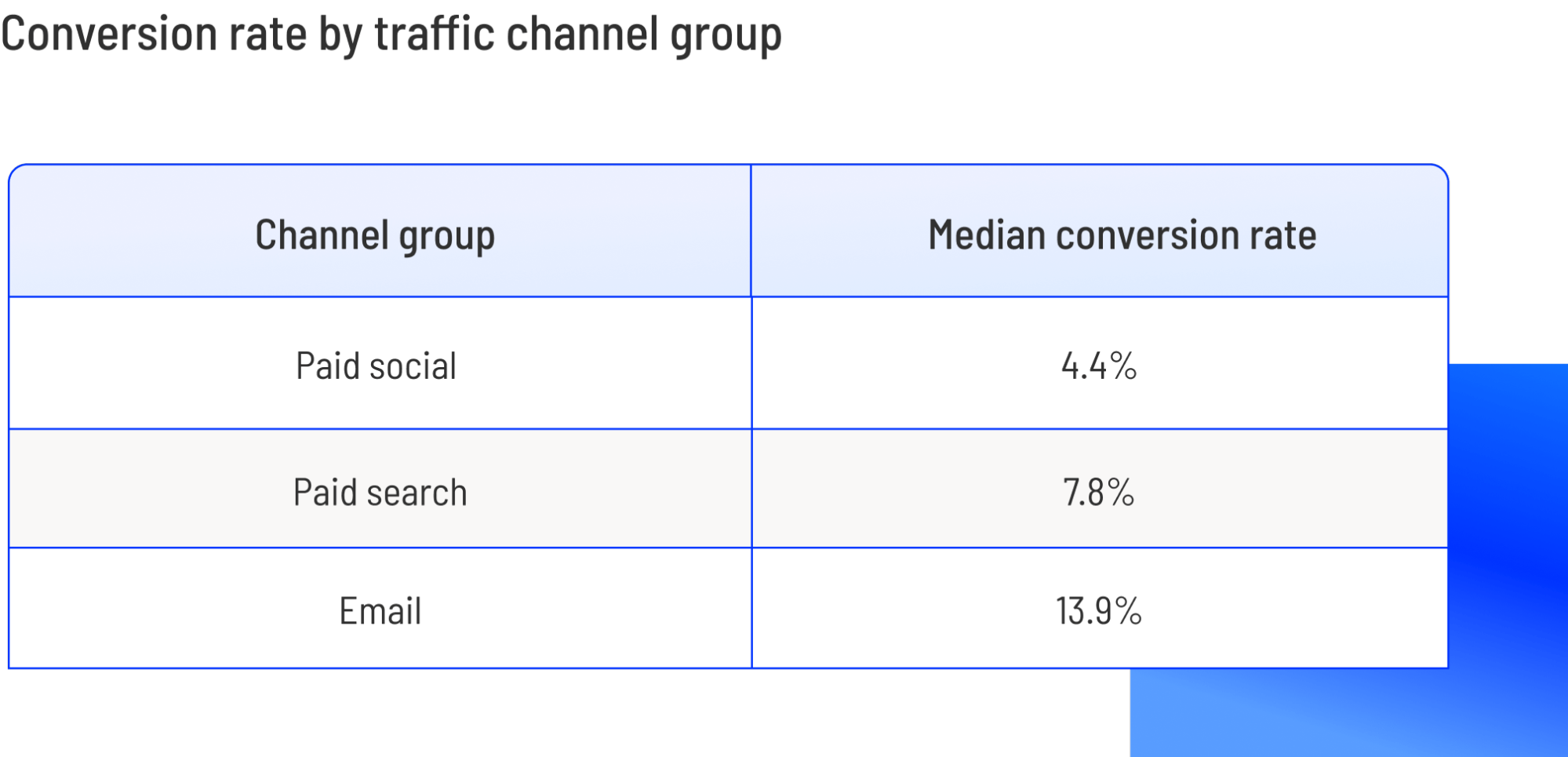
Across nearly every industry, email remains the highest-converting channel. In professional services, for instance, email traffic converts at nearly 14%, while paid social traffic languishes at 4.4%. This highlights the enduring value of first-party data and the importance of nurturing existing leads rather than relying solely on top-of-funnel acquisition.
The Mobile-Desktop Paradox
Perhaps the most striking trend in the 2024 report is the disconnect between traffic volume and conversion efficiency on mobile devices. Mobile accounts for a staggering 83% of all landing page visits, yet it consistently converts at lower rates than desktop in most industries. The exception remains the legal and financial sectors, where the immediacy of the mobile device aligns with the urgency of the service. For most other sectors, the "mobile gap" represents a significant opportunity for optimization, as many businesses still fail to provide a seamless, fast-loading mobile experience.
Strategic Chronology: The Evolution of Conversion Tactics
The transition from 2020 to 2024 has seen a marked shift in how marketers approach landing page design. The early 2020s were characterized by "flashy" designs and high-budget video backgrounds. However, the current data suggests a return to simplicity.
- Simplification of Copy: Research now shows that pages written at a 5th-to-7th-grade reading level convert at 11.1%, which is 56% better than pages using more complex "professional" language. This indicates a consumer preference for clarity and speed over jargon.
- Social Proof Integration: The timeline of successful pages shows an increasing reliance on "micro-testimonials" placed directly near call-to-action (CTA) buttons rather than buried in the footer.
- The Rise of AI-Driven Routing: Technologies like Unbounce’s "Smart Traffic" have moved from experimental to essential. These tools automatically route visitors to the page variant that best matches their historical behavior and intent, significantly boosting median rates for early adopters.
Official Reactions and Expert Analysis
Marketing analysts suggest that the 2024 benchmarks should be viewed as a "call to action" for businesses that have become complacent with their digital funnels. Josh Gallant notes that the gap between the average (6.6%) and the excellent (11.4%+) represents a massive amount of "trapped" revenue.
"The marketers seeing the biggest returns are not necessarily the ones with the largest budgets," Gallant stated in his analysis. "They are the ones who are most systematic about testing. They understand that a 1% increase in conversion rate can equate to tens of thousands of dollars in monthly revenue without increasing ad spend."
Furthermore, industry observers point out that as the cost-per-click (CPC) on platforms like Google and Meta continues to rise, the importance of landing page efficiency becomes a matter of survival. When acquisition costs are high, the landing page must work harder to ensure a positive Return on Ad Spend (ROAS).
Broader Implications for the 2025 Outlook
Looking toward 2025, the implications of this data suggest three primary areas of focus for digital strategists:
First, the "Mobile-First" philosophy must evolve into a "Mobile-Perfect" execution. With 83% of traffic arriving via mobile, any friction in the mobile checkout or lead-capture process is a catastrophic failure point. This includes optimizing for page load speeds, which remains a primary deterrent to conversion.
Second, the data on reading levels suggests a broader societal shift toward "snackable" and easily digestible information. Brands that continue to use dense, technical language on their primary conversion pages are likely to see their benchmarks slip further below the median.
Finally, the report reinforces the necessity of industry-specific benchmarking. A SaaS company comparing itself to a sweepstakes page (which can convert at 47.5%) is engaging in a futile exercise. Success in the coming year will be defined by how well a company understands its specific niche’s "good" threshold and uses iterative A/B testing to bridge the gap.
In conclusion, while the median landing page conversion rate of 6.6% provides a helpful lighthouse for the industry, the true winners of 2024 are those who look beyond the average. By focusing on simplified messaging, mobile excellence, and channel-specific strategies, businesses can move from the middle of the pack to the top 25% of their industry, maximizing the impact of every click and every marketing dollar spent.







