

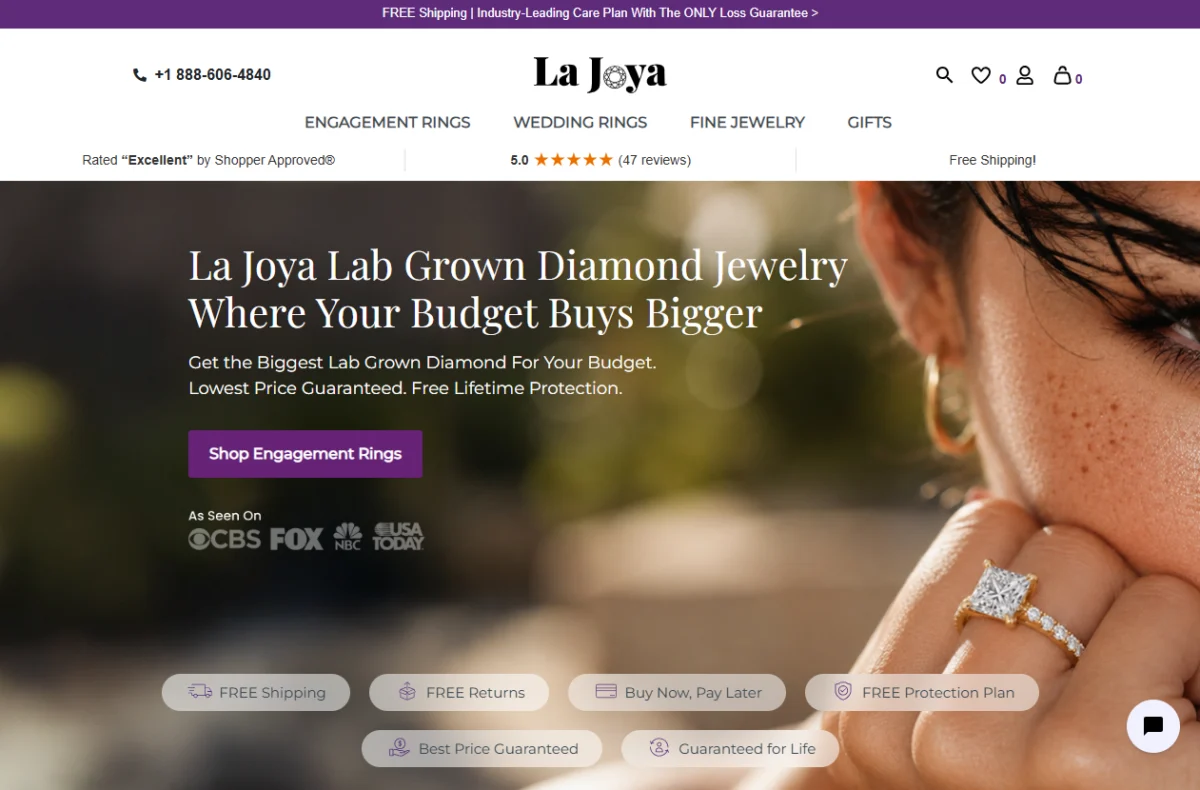
As a purveyor of high-value goods, La Joya Jewelry finds itself in a strategically advantageous position to absorb and manage the fluctuating costs associated with order fulfillment, a sentiment echoed by founder Nishit Mehta. The online-exclusive retailer, established in 2020, specializes in lab-grown diamonds and operates across a multi-channel strategy, leveraging its direct-to-consumer (DTC) website alongside prominent marketplaces such as Amazon and Walmart. This diversified approach allows La Joya to cater to a broad spectrum of consumer needs and purchasing habits, though it also presents distinct challenges and opportunities in how orders are processed and delivered.
The inherent value proposition of La Joya’s product line, particularly its diamond jewelry, provides a crucial buffer against the increasing operational expenses that many e-commerce businesses are currently confronting. In an era marked by volatile fuel prices, increased shipping surcharges from carriers, and the ever-present demand for expedited delivery, a higher average order value (AOV) can significantly mitigate the impact of these rising fulfillment costs. Mehta’s observation underscores a fundamental principle in retail: the economics of delivering a $1,500 item are substantially different from those of delivering a $15 item, even when the physical logistics might be similar.
Divergent Average Order Values Across Channels
A key insight into La Joya’s operational strategy emerges from the significant variance in its average order value (AOV) across its different sales channels. This disparity offers a window into consumer behavior and purchasing intent when engaging with La Joya’s brand on various platforms.
On the Walmart marketplace, Mehta reports that La Joya’s AOV typically ranges between $150 and $160. This figure suggests that customers engaging with La Joya on Walmart are likely seeking more accessible price points, perhaps for gifts or smaller, more impulse-driven purchases. The platform’s broad customer base, often characterized by a search for value and competitive pricing, aligns with this observation.
The Amazon marketplace presents a more substantial average order value, with La Joya’s AOV hovering around $375. While still considerably lower than its DTC channel, this indicates a greater willingness among Amazon shoppers to invest in higher-priced items from La Joya. This could be attributed to Amazon’s vast selection, established trust in its fulfillment services, and a demographic that may be more inclined towards significant online purchases.
However, it is La Joya’s own direct-to-consumer website where the company achieves its highest AOV, averaging approximately $1,500 per order. Mehta postulates that this pronounced difference stems from a fundamental shift in consumer mindset. "On our DTC site," he explained, "consumers treat their purchases more seriously. They’re often searching for an expensive piece in general or an engagement ring specifically." This indicates that customers who navigate directly to La Joya’s website are typically engaged in a more deliberate and high-consideration purchasing journey, often with specific, significant acquisitions in mind, such as engagement rings, which are inherently high-value transactions.
This strategic divergence in AOV across channels is not merely an interesting data point; it directly influences how La Joya approaches its fulfillment strategy. The ability to command a higher price point on its DTC channel allows for greater flexibility in absorbing potential shipping surcharges or investing in premium packaging and delivery options that enhance the customer experience for these significant purchases. Conversely, managing fulfillment for lower-AOV transactions on marketplaces requires a more cost-conscious approach, often leaning heavily on the efficiency and pricing structures offered by the marketplaces themselves.
Navigating the Multi-Channel Fulfillment Ecosystem
La Joya Jewelry employs a sophisticated multi-channel fulfillment strategy, adeptly leveraging both its internal capabilities and the integrated services of its marketplace partners. This approach is designed to ensure a consistent brand experience for customers, regardless of where their purchase originates.
For orders placed through its DTC website, La Joya utilizes a hybrid fulfillment model. This involves shipping some orders directly from its own office, allowing for complete control over the packaging and unboxing experience, which is crucial for maintaining brand integrity and delivering a premium feel. Simultaneously, La Joya harnesses Amazon’s multi-channel fulfillment (MCF) service. This allows the company to utilize Amazon’s vast fulfillment network for orders originating from its DTC site, without the Amazon branding.
"Amazon’s backend allows you to do multi-channel fulfillment," Mehta stated, highlighting the seamless integration. "So we just go ahead and tell them that this product needs to be shipped to XYZ. They make sure it goes in a non-Amazon package so the customer doesn’t know. Our packaging is consistent throughout whether you buy from Amazon or from the website. So as far as the customer is concerned, it could be shipped from our own offices." This capability is instrumental in maintaining brand parity and delivering a unified customer journey, a critical factor for luxury or high-value goods where presentation is paramount.
Similarly, for sales conducted through the Amazon and Walmart marketplaces, La Joya relies on those platforms’ respective fulfillment services. This often translates to utilizing Fulfillment by Amazon (FBA) and Walmart Fulfillment Services (WFS). These services not only handle storage and shipping but also manage customer service inquiries related to delivery, streamlining operations and reducing La Joya’s direct logistical burden on these channels.
Mehta also noted that La Joya maintains substantial inventory with Walmart, which also offers multi-channel fulfillment capabilities. However, his perspective on the Walmart channel reveals a nuanced understanding of its market dynamics. "Walmart – I don’t know whether it’s customer-centric or the jewelry business is not yet matured," he mused, referring to the lower AOV. "So while we do stock a lot of goods there, we don’t find in the holiday season people wanting that kind of jewelry. So we tend to use that a little less." This suggests that while La Joya is present on Walmart, its strategic focus and inventory allocation might be more heavily weighted towards channels that yield higher returns per transaction.
When marketplace fulfillment services are not utilized, or for specific logistical needs, La Joya primarily partners with established carriers such as FedEx and the U.S. Postal Service (USPS). Occasional use of DHL for international or expedited shipments is also part of their logistical toolkit. This reliance on third-party carriers means La Joya is directly exposed to their pricing structures and any associated surcharges, such as those related to fuel costs or seasonal demand.
The Shadow of Rising Fuel Costs and Carrier Surcharges
The global economic climate, particularly the volatility in energy markets, has had a palpable impact on the logistics industry. The price of crude oil, a key indicator for fuel costs, has seen significant fluctuations. As of September 10th, the price of a barrel of crude oil stood at approximately $102, a notable increase from around $66 at the end of February when geopolitical tensions involving Iran escalated. This surge, which saw prices peak at $112 per barrel in April, has inevitably translated into higher operating costs for shipping carriers.
In response, major logistics providers have implemented surcharges to offset these increased expenses. Amazon, for instance, introduced fuel and logistics surcharges in April. This followed a similar move by USPS, which announced a temporary package shipping surcharge in March. FedEx, through its Chief Customer Officer Brie Carere, has indicated that its fuel surcharge index is adjusted weekly, a mechanism designed to mitigate the "material impact" of such market shifts on its operations.
Despite these industry-wide adjustments, La Joya Jewelry has, thus far, absorbed the brunt of these rising fuel costs. Mehta explained this strategic decision: "Frankly, we’ve taken the hit because it was kind of priced in anyway. We are selling $1,200, $1,500 products. $30 going to $35 or $38 doesn’t really break anything. So we just take the hit and go ahead. As far as the marketplaces are concerned, they have very good rates in terms of shipping."
This approach is a testament to the financial resilience afforded by La Joya’s high-value product strategy. For a retailer selling items in the thousand-dollar range, a modest increase in shipping costs – perhaps a few extra dollars per shipment – represents a relatively small percentage of the overall transaction value. This allows Mehta to maintain competitive shipping prices for his customers and avoid passing on the full impact of carrier surcharges, thereby preserving the customer experience and potentially encouraging higher order volumes. The favorable shipping rates offered by Amazon and Walmart further alleviate concerns on those channels.
Mitigating Risk: Insurance and Delivery Verification
Beyond managing costs, La Joya Jewelry places a significant emphasis on safeguarding its valuable shipments. Recognizing the inherent risks associated with transporting high-value items, the company implements robust measures to minimize potential losses.
"Additionally, La Joya insures all its products and requires an adult’s signature upon delivery to avoid losing deliveries," Mehta stated. This dual approach serves two critical purposes: insurance provides financial recourse in the unfortunate event of loss or damage, while the signature requirement adds a layer of security and accountability to the delivery process. This ensures that high-value items reach the intended recipient and are not left unattended or misdelivered.
Mehta candidly acknowledged that despite these precautions, occasional issues do arise. "Having said that, it does get lost very often, but at least it’s insured, so there’s no loss on either side," he admitted. This transparency highlights the reality of shipping logistics, even with stringent measures in place. However, the presence of comprehensive insurance ensures that any such incidents do not result in financial detriment for either La Joya or its customers, fostering trust and reinforcing the company’s commitment to customer satisfaction.
Strategic Outlook and Future Considerations
La Joya Jewelry’s current strategy of leveraging high-value products to absorb fulfillment cost fluctuations, combined with a smart multi-channel approach, positions it well for continued growth. However, the retail landscape is perpetually evolving. The increasing prominence of same-day and next-day delivery expectations, coupled with potential further increases in carrier costs, may necessitate ongoing strategic evaluations.
The company’s clear communication of shipping cutoff dates on its website, supported by email marketing and social media outreach, is a proactive measure to manage customer expectations, particularly during peak shopping seasons like the holidays. This transparency is crucial for building customer loyalty and avoiding post-purchase disappointment.
As USPS prepares for its anticipated price increases for the 2026 holiday season, commencing in early October, retailers like La Joya will need to continually monitor their shipping expenditures. The ability to absorb costs is a significant advantage, but a sustained upward trend could eventually necessitate adjustments to pricing or shipping fees, even for high-value goods.
Ultimately, La Joya Jewelry’s success in navigating the complex world of e-commerce fulfillment is a compelling case study in how product category and strategic channel management can create resilience. By focusing on high-value items and intelligently utilizing the strengths of various sales and fulfillment platforms, the company has carved out a stable niche, demonstrating that even in a volatile market, thoughtful business strategy can pave the way for sustained success.








