The advertising industry is navigating a period of intense scrutiny, with marketers facing unprecedented pressure to demonstrate the efficacy and return on investment of their media expenditures. This heightened demand for accountability is a direct response to escalating concerns around wasted ad spend, the fragmentation of consumer signals across an increasingly complex digital landscape, and the opacity of closed media ecosystems. According to the Association of National Advertisers (ANA), an estimated $26.8 billion in global programmatic media spend is lost annually due to inefficiencies such as redundant supply paths, measurement discrepancies, and the prevalence of low-quality inventory. This financial drain and lack of transparency are compelling advertisers to seek out channels that offer both significant reach and verifiable outcomes, moving away from the "black box" approaches of the past.
This industry-wide imperative is fundamentally reshaping expectations for Digital Out-of-Home (DOOH) advertising. Historically, DOOH planning often relied on identifying high-traffic locations and making broad demographic assumptions about the audiences passing through them. However, advertisers are now demanding a more sophisticated understanding. They require detailed insights into the specific audiences that frequent particular environments, compelling rationale for why those locations align with campaign objectives, and a clear line of sight connecting media exposure to measurable business results. This evolving demand has been a significant catalyst for innovation within the DOOH sector.
In response to this critical market need, JOLT has introduced Spark Intelligence, a groundbreaking audience intelligence platform designed to bridge the gap between traditional location-based planning and the sophisticated audience insights advertisers now require. This new platform represents a significant departure from conventional out-of-home strategies, aiming to inject a new level of precision and accountability into physical media.
Shifting from Location-Centric to Audience-Informed Planning
The paradigm shift heralded by JOLT’s Spark Intelligence lies in its fundamental reorientation of the planning process. Traditionally, out-of-home media planning commenced with the selection of a physical location, often prioritizing areas with high footfall or vehicular traffic, with the implicit assumption that the desired target audience would naturally be present. JOLT’s Spark Intelligence fundamentally alters this starting point. Instead of treating a location as a proxy for the audience, the platform leverages a rich tapestry of data – encompassing behavioral patterns, purchase history, and anonymized movement data – to precisely identify where a brand’s target audience is most densely concentrated. Based on this granular audience intelligence, Spark Intelligence then recommends the most effective digital ad screens to reach these specific consumer segments.
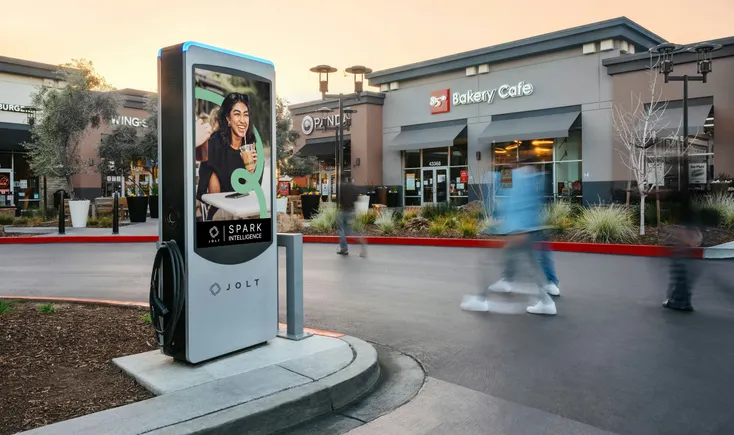
This audience-centric approach forms the bedrock of planning across JOLT’s extensive network, which encompasses over 4,750 digital ad screens strategically positioned across 65 designated market areas (DMAs) in the United States. These screens are deliberately situated in the environments where daily life unfolds, including bustling sidewalks, vibrant retail corridors, major roadside arteries, and high-traffic commuter routes. Spark Intelligence meticulously analyzes these placements to determine which screens offer the optimal opportunity to connect with a defined audience.
The implications of this shift are profound. The highest-traffic location is not invariably the highest-value one for a given campaign. Factors such as the precise composition of the audience, the prevailing context of the environment, and the proximity to moments of consumer intent often exert a far greater influence on campaign performance than raw impression volume alone. For instance, a regional healthcare system aiming to reach individuals likely to seek medical care could utilize Spark Intelligence to identify audience concentrations. In a specific analysis conducted in Atlanta, certain strategically chosen screens demonstrated an average audience concentration of an impressive 66.29%. This enabled the health system to allocate its media investment to locations that offered genuine audience relevance, rather than simply relying on generic traffic metrics. This represents a significant evolution from the days when out-of-home advertising was often equated with securing advertising space on the busiest street corner and hoping the right demographic happened to pass by. The core message is clear: "busy" does not equate to "relevant." The most valuable advertising sites are not those with the highest volume of passersby, but those that are demonstrably populated by the target audience.
Enhancing Measurability and Impact for Physical Media
Spark Intelligence is engineered to instill greater confidence in advertisers regarding their media investments. By providing detailed audience concentration data, market-level recommendations informed by real-world behavior, and precise reach and frequency insights, the platform demystifies the effectiveness of DOOH placements. This enhanced transparency allows marketers to understand not only where their advertisements are being displayed but also why those specific locations are strategically advantageous for their campaigns.
Crucially, Spark Intelligence facilitates the connection of DOOH planning decisions to tangible business outcomes. Depending on a client’s specific business objectives, the platform can support analyses tied to critical metrics such as store visitation, sales lift, web traffic, and brand perception changes. This capability ensures that the insights derived from audience intelligence directly inform campaigns that are designed to achieve measurable results. This level of outcome-driven accountability is precisely what buyers have come to expect from every other digital channel, and JOLT is now extending this rigor to the realm of physical media.
The efficacy of JOLT’s approach is underscored by documented successes from advertisers utilizing its network globally. These campaigns have reported substantial double- and triple-digit percentage lifts across key performance indicators, including store visitation, consumer consideration, brand recall, and purchase intent. A significant portion of these attributed actions has been traced back to net-new audiences, indicating the platform’s ability to expand a brand’s reach beyond its existing customer base. Specific results have been remarkable, including foot traffic increases of up to 89%, product preference enhancements of up to 43%, and brand consideration boosts of up to 26%.
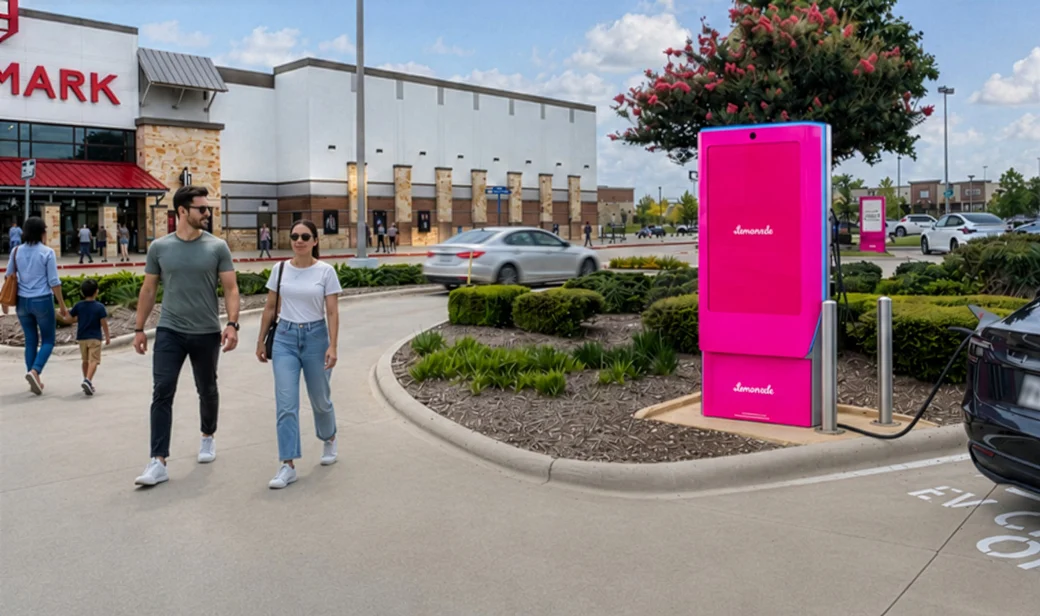
Beyond direct performance metrics, JOLT has also demonstrated the potential for DOOH to function as an integrated and impactful brand experience. A recent campaign in Austin, Texas, for Lemonade, an innovative tech-first insurance company, exemplifies this. JOLT integrated its DOOH charging stations throughout the city, branding them in Lemonade’s distinctive hot pink. The activation not only offered complimentary charging to electric vehicle (EV) drivers, thereby creating a tangible value exchange, but also complemented the physical presence with targeted in-app messaging, creating a cohesive and memorable brand interaction. This approach highlights how DOOH can move beyond passive media consumption to active engagement.
The evolution of DOOH advertising is no longer solely defined by the physical placement of screens. Instead, the focus has shifted decisively towards a deep understanding of the audiences traversing these spaces and the intelligent application of that knowledge to maximize the impact of every advertising impression. Spark Intelligence empowers advertisers to transcend the limitations of simple traffic counts and broad demographic assumptions. It enables them to plan campaigns based on actual audience data, optimize media deployment in real-time, and rigorously measure the business outcomes that truly matter.
This methodology represents the core principle of smarter DOOH: the transformation of mere reach into meaningful relevance, and the conversion of that relevance into quantifiable, impactful results. This data-driven approach is poised to redefine the value proposition of out-of-home advertising in the digital age, offering a compelling alternative to less transparent and less accountable media channels.
The Broader Implications for the Advertising Ecosystem
The introduction of platforms like Spark Intelligence signals a broader trend within the advertising industry: the increasing convergence of physical and digital media. As consumer behavior becomes more fragmented and personalized, advertisers are seeking integrated solutions that can deliver consistent messaging and measurable impact across all touchpoints. DOOH, with its inherent ability to capture attention in the physical world, is uniquely positioned to play a pivotal role in these integrated strategies.
The ability of Spark Intelligence to provide granular audience insights and connect DOOH campaigns to measurable business outcomes has significant implications for the future of media planning and buying. It suggests a move towards a more outcome-oriented advertising ecosystem, where the success of a campaign is judged not just by impressions delivered, but by the tangible business results achieved. This will likely lead to increased investment in DOOH as advertisers gain greater confidence in its ability to deliver on their objectives.
Furthermore, the emphasis on audience intelligence rather than just location highlights a maturation of the DOOH market. It indicates a shift from a supply-driven model to a demand-driven one, where advertiser needs and audience insights dictate media deployment. This evolution is crucial for the continued growth and relevance of DOOH in an increasingly data-centric advertising world.
The broader impact extends to the measurement and attribution capabilities within the industry. By integrating with existing measurement frameworks and providing new avenues for tracking consumer behavior in the physical world, platforms like Spark Intelligence contribute to a more holistic understanding of the advertising journey. This can help to break down traditional silos between different media channels and foster a more integrated and effective approach to campaign planning and execution.
For brands looking to leverage this sophisticated approach, JOLT offers a clear pathway. By outlining specific business objectives or target audiences, advertisers can engage with JOLT to leverage Spark Intelligence. The platform is designed to construct data-led media solutions meticulously tailored to help clients achieve their predefined goals, promising a future where out-of-home advertising is not just seen, but is strategically deployed for maximum impact and measurable return. The era of "dumb" billboards is rapidly receding, replaced by intelligent, data-informed OOH solutions that drive real business value.