

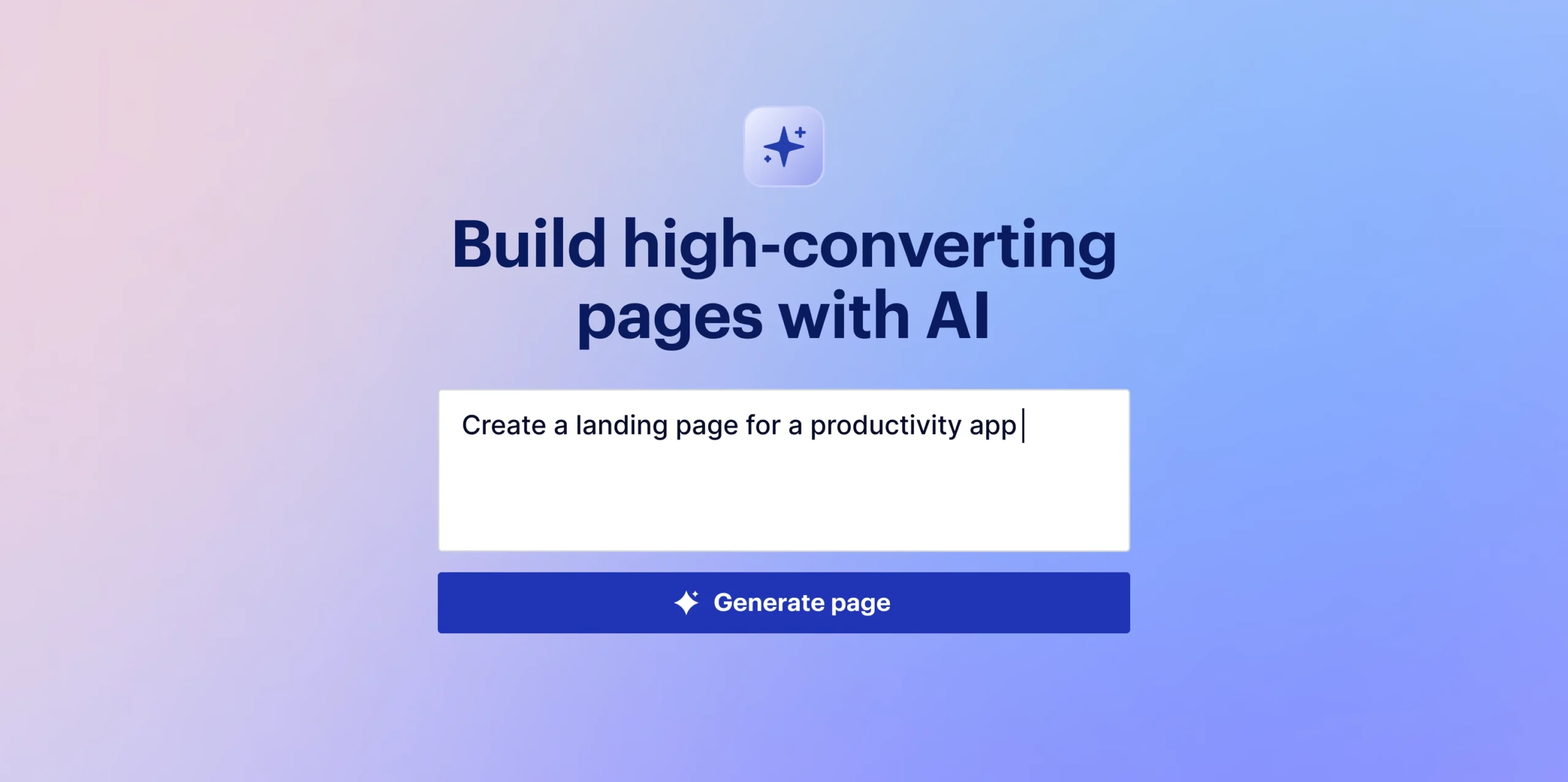
The global marketing technology landscape has reached a pivotal inflection point as Instapage, a long-standing leader in landing page optimization, officially transitions into a comprehensive, end-to-end AI-powered marketing platform. This strategic evolution, punctuated by the release of advanced AI page generation, AI email generation, and AI Collections, aims to address the growing complexity and fragmentation of the modern digital marketing stack. By integrating these disparate functions into a single, cohesive ecosystem, the company seeks to eliminate the "integration debt" that has historically plagued marketing departments, allowing lean teams to execute high-performance campaigns with unprecedented speed and precision.
The announcement comes at a time when the "SaaS sprawl"—the phenomenon of companies using dozens of disconnected tools—has reached a critical mass. Industry data suggests that the average enterprise now utilizes over 90 different marketing technology tools, leading to significant inefficiencies in data silos and manual handoffs. Instapage’s new direction is designed to consolidate these workflows, moving beyond simple page building to provide a unified suite covering landing pages, websites, personalization, experimentation, email, and advanced analytics.
The Evolution of Instapage: A Fourteen-Year Chronology
To understand the significance of this shift, it is necessary to examine the trajectory of Instapage since its inception. Founded in 2012, the company initially focused on a singular pain point: the difficulty of creating high-converting landing pages without extensive coding knowledge.
By 2015, Instapage had established itself as the top-rated landing page builder, distinguished by its pixel-perfect drag-and-drop interface. As the digital advertising market matured, the company recognized that a standalone builder was no longer sufficient. Between 2018 and 2021, Instapage expanded its capabilities into a complete Conversion Rate Optimization (CRO) suite. This era saw the introduction of dynamic text replacement for personalization, heatmaps for behavioral analysis, and robust A/B testing frameworks.
The pivot toward artificial intelligence began in earnest around 2023, as the company started embedding AI across various stages of the creation and optimization process. Initial features focused on AI-driven copywriting and experimentation. However, the latest 2026 rollout represents a fundamental architecture change. The platform has moved from "AI-assisted" to "AI-first," where the technology does not merely suggest improvements but builds the foundational assets of a marketing campaign from scratch based on high-level strategic descriptions.
AI Page Generation: Overcoming the Creative Block
One of the primary hurdles in digital marketing is the "blank page syndrome." The transition from a strategic concept to a live, conversion-optimized asset often involves multiple stakeholders, including copywriters, designers, and developers. This process can take weeks, frequently resulting in missed market opportunities.
Instapage’s AI page generation feature is designed to collapse this timeline from weeks to seconds. Users provide a descriptive prompt outlining the campaign goal, target audience, and key value propositions. The AI then generates a complete, conversion-ready page, including tailored messaging and an optimized layout based on over a decade of performance data.
A critical differentiator in Instapage’s approach is the retention of creative control. While many standalone AI generators produce static outputs that are difficult to modify, Instapage integrates its AI generation directly with its pixel-perfect drag-and-drop builder. This hybrid model addresses a significant inefficiency in the market: the "regeneration loop." In many current AI tools, if a user wishes to move a section or change a design element, they must often re-prompt the AI and regenerate the entire page, consuming additional tokens and time. Instapage allows for manual refinement of AI-generated content, ensuring that brand standards are met without the need for repetitive prompting.
Streamlining Post-Click Engagement via AI Email Integration
The platform’s expansion into email marketing represents a strategic move to capture the entire post-click experience. Traditionally, marketing teams have been forced to export leads from their landing page platform into a separate Email Service Provider (ESP), often requiring third-party connectors like Zapier or manual CSV uploads.
The new AI-powered email generator aims to close this gap. By housing pages, leads, and emails in a single environment, Instapage enables instant follow-up. The AI tool allows users to select specific goals—such as lead nurturing, webinar registration, or product demos—and define the desired tone and length. The system then generates tailored messaging that aligns with the content of the landing page from which the lead originated.
Industry analysts note that the speed of lead response is a primary factor in conversion rates. According to research from the Harvard Business Review, companies that attempt to contact potential customers within an hour of receiving a query are nearly seven times as likely to have a meaningful conversation with a key decision-maker as those who wait even an hour longer. By automating the creation and triggering of these emails within the same platform, Instapage significantly reduces the "speed-to-lead" interval.

Supporting Data: The Economic Imperative for AI Consolidation
The shift toward integrated AI platforms is driven by clear economic pressures. As of 2026, corporate marketing budgets have faced increased scrutiny, with a growing emphasis on "doing more with less."
Key data points highlighting this trend include:
- Operational Efficiency: Marketing teams using integrated AI workflows report a 40% reduction in the time required to launch new campaigns.
- Resource Allocation: By automating the foundational aspects of page design and copywriting, senior creative staff can focus on high-level strategy and complex brand positioning rather than repetitive execution tasks.
- Cost Reduction: Consolidating the marketing stack can reduce software licensing costs by an estimated 25% to 30%, while also eliminating the hidden costs of training staff on multiple disparate interfaces.
Furthermore, the "token economy" of AI has become a budget line item. By providing a platform where AI generation is followed by manual refinement rather than constant re-generation, Instapage offers a more predictable cost structure for enterprises concerned with the fluctuating costs of generative AI API usage.
Industry Reactions and Strategic Implications
The move has drawn attention from industry experts who see it as a necessary consolidation of the MarTech industry. "The era of the ‘point solution’ is drawing to a close," says a leading digital marketing analyst. "Marketers no longer have the luxury of time to stitch together different tools for every stage of the funnel. They need a system that understands the context of the entire journey—from the first click to the final conversion email."
Internally, Instapage leadership has emphasized that this update is not merely about adding features, but about redefining the workflow. The objective is to provide a "single source of truth" for campaign performance. When the AI that generates the page also manages the email follow-up and analyzes the resulting data, it creates a closed-loop system that can learn and optimize much faster than a human operator managing separate tools.
This evolution also has significant implications for the role of the modern marketer. As technical barriers to entry—such as coding and graphic design—are lowered by AI, the value of the marketer shifts toward prompt engineering, strategic oversight, and data interpretation.
Broader Impact on the Digital Marketing Ecosystem
Instapage’s transition is reflective of a broader trend where AI is moving from the periphery to the core of enterprise software. The implications for the competitive landscape are profound. Smaller agencies, which previously lacked the resources to build high-end custom websites or complex automation sequences, can now compete with larger firms by leveraging these AI-driven efficiencies.
However, this shift also raises questions about the homogenization of digital content. If every company uses AI to generate "conversion-optimized" pages, there is a risk that the digital landscape will become visually and linguistically repetitive. Instapage’s insistence on a "pixel-perfect" manual builder alongside its AI is a direct response to this concern, encouraging users to use AI as a foundation rather than a final product.
Future Outlook and Beta Implementation
As of late 2024 and heading into the 2026 fiscal cycle, Instapage is rolling out these features in a phased beta approach. This allows the company to gather user feedback and refine the AI models based on diverse industry use cases. Select AI features, including AI Collections—a system for managing and scaling high-performing campaign assets—are currently being deployed to existing customers.
The company has invited businesses to experience the new platform through a 14-day free trial, signaling confidence in the platform’s ability to demonstrate immediate value. For organizations operating with leaner teams and tighter budgets, the promise of an end-to-end, AI-powered marketing platform represents a potential solution to the escalating demands of the digital economy.
In conclusion, Instapage’s transformation marks a significant milestone in the history of marketing technology. By bridging the gap between creation and execution through integrated artificial intelligence, the platform is setting a new standard for how digital campaigns are conceived, built, and optimized in an increasingly automated world. The success of this transition will likely serve as a blueprint for the future of the SaaS industry, where the value lies not in the tool itself, but in the seamlessness of the entire workflow.







