

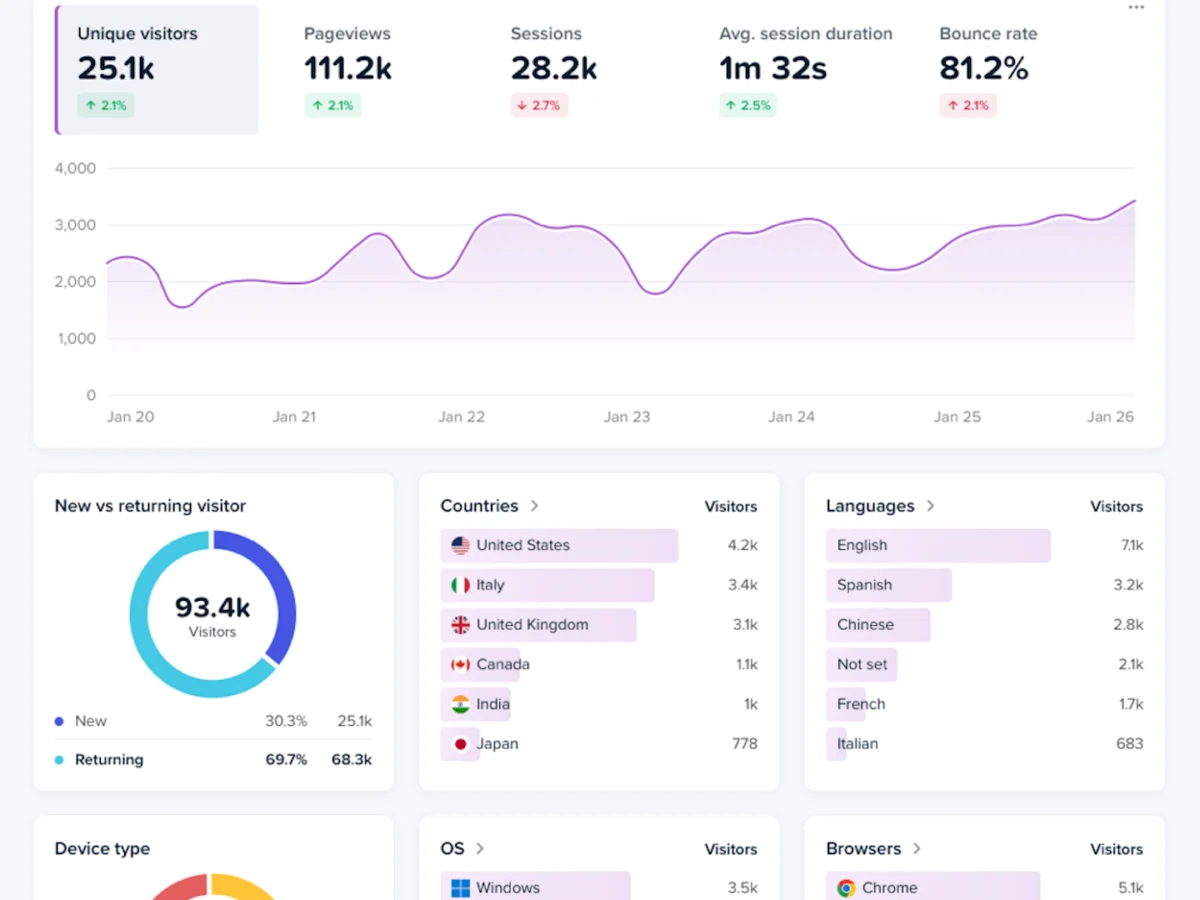
The introduction of the Data Warehouse Connector allows organizations to bypass the traditional limitations of sampled data and proprietary dashboards. Instead of viewing heatmaps or session recordings in isolation, analytics teams can now ingest every click, scroll, and conversion event as a structured data point within their own storage buckets. This capability is delivered through fresh daily syncs utilizing high-performance, open-source file formats, specifically Apache Parquet and Apache Iceberg. By including historical backfills, the connector ensures that companies have a comprehensive longitudinal view of the customer journey from the moment of implementation.
The Shift Toward Data Centralization and First-Party Ownership
The launch of the Data Warehouse Connector comes at a pivotal moment for the global data analytics industry. For over a decade, businesses have relied on third-party platforms to both collect and interpret their website traffic. However, the rise of privacy regulations such as the General Data Protection Regulation (GDPR) and the California Consumer Privacy Act (CCPA), combined with the phasing out of third-party cookies, has forced a strategic pivot toward first-party data strategies.
In this new landscape, the ability to govern one’s own data is not just a technical preference but a regulatory necessity. By delivering raw behavioral records to a storage bucket owned and governed by the client, Crazy Egg empowers organizations to maintain a "single source of truth" within their internal data warehouses, such as Snowflake, Amazon Redshift, Google BigQuery, or Databricks. This centralization eliminates the "data silo" effect, where marketing insights remain trapped in a tool separate from the data used by product or finance teams.
Industry analysts note that the modern data stack is increasingly built around the concept of the "Composable CDP" (Customer Data Platform). Rather than buying a monolithic platform that stores data in its own cloud, companies are building their own stacks by selecting best-in-class tools for collection, storage, and activation. Crazy Egg’s new connector fits perfectly into this modular philosophy, acting as a high-fidelity collection layer that feeds the central warehouse.
Technical Specifications: Parquet, Iceberg, and the Power of Raw Events
One of the most significant technical aspects of the Data Warehouse Connector is its reliance on open-source, columnar storage formats. The use of Apache Parquet and Apache Iceberg is a deliberate choice intended to optimize both storage costs and query performance.
Apache Parquet is a columnar storage file format available to any project in the Hadoop ecosystem. Unlike traditional CSV or JSON files, Parquet is highly compressed and allows for "predicate pushdown," meaning that analytical queries only read the specific columns needed. For a company processing millions of website events per day, this can lead to a 90% reduction in storage costs and a massive increase in speed when running complex SQL queries.
Apache Iceberg, on the other hand, provides a table format for huge analytic datasets. It brings the reliability and simplicity of SQL tables to big data, while making it possible for engines like Spark, Trino, Flink, and Presto to safely work with the same tables at the same time. By providing data in these formats, Crazy Egg ensures that its behavioral data is ready for immediate use by data scientists and engineers without the need for extensive ETL (Extract, Transform, Load) processing.
The scope of data included in these syncs is comprehensive. It encompasses:
- Session Data: Detailed logs of every user visit, including device type, geographic location, and entry/exit points.
- Click Events: Granular records of every interaction a user has with a page element, allowing for deep-dive analysis of UI/UX effectiveness.
- Conversion Events: Specific triggers that signify a successful user action, such as a sign-up, a download, or a purchase.
- Behavioral Records: Data derived from Crazy Egg’s signature features, such as scroll depth and engagement metrics.
From Heatmaps to Predictive Modeling: A Chronology of Innovation
The release of the Data Warehouse Connector represents the latest chapter in Crazy Egg’s two-decade history of innovation. Founded in 2005 by Hiten Shah and Neil Patel, Crazy Egg was a pioneer in the "visual analytics" space. At a time when most analytics tools were limited to dry tables of numbers, Crazy Egg introduced the heatmap, a visual representation of where users were clicking and how far they were scrolling.
Over the years, the platform evolved. It added Session Recordings, allowing marketers to watch playbacks of user journeys to identify friction points. It then introduced A/B Testing tools, enabling users to act on the insights they gathered. However, as the digital economy matured, the "visual-only" approach became a bottleneck for larger enterprises with sophisticated data needs.
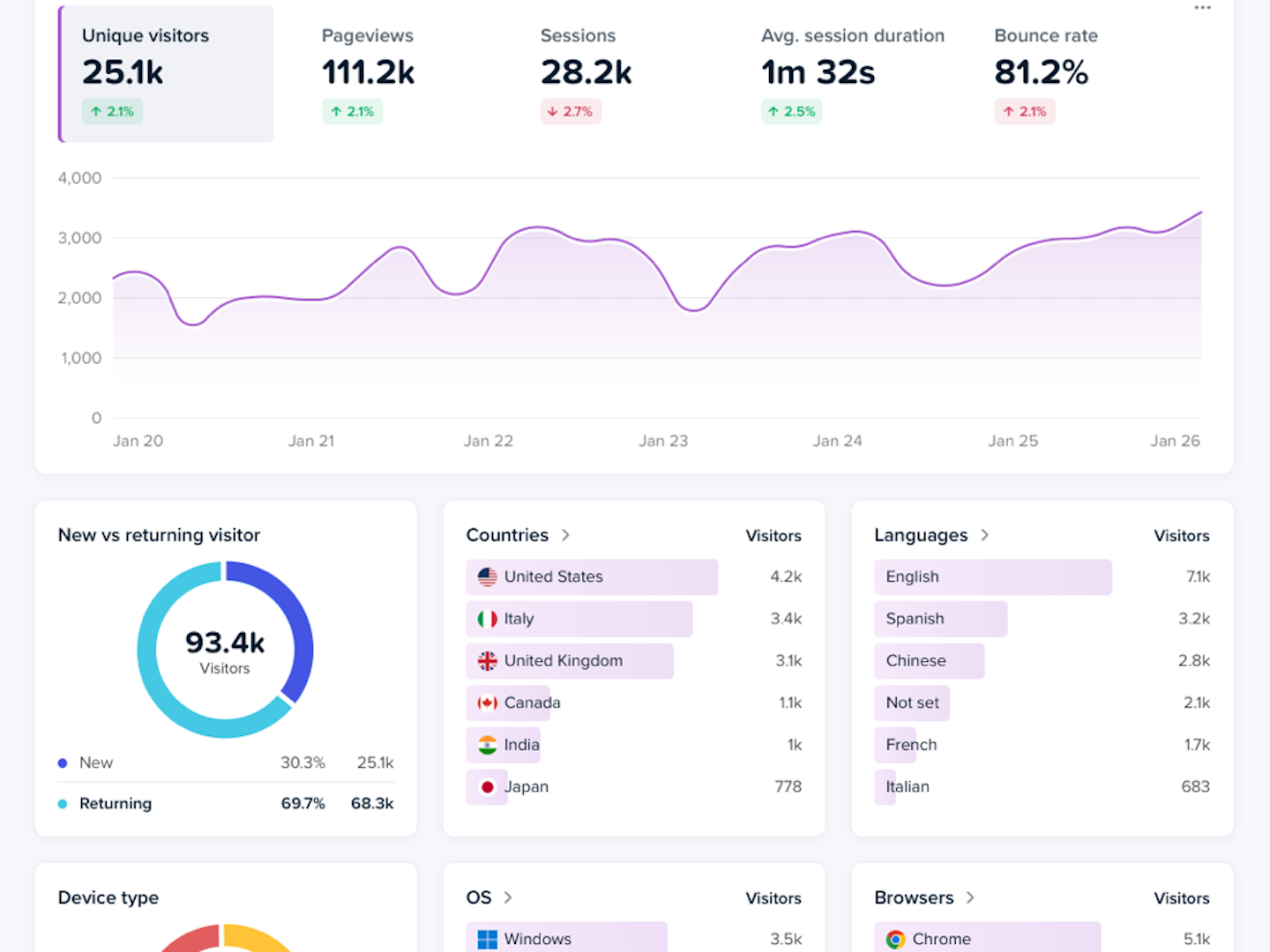
In the early 2020s, the demand for "raw data" began to surge. Data engineers wanted the underlying numbers behind the heatmaps. The chronology of this latest development began with the internal realization that the most valuable asset Crazy Egg provided was not just the visualization, but the high-intent behavioral data it captured. Following a period of beta testing with select enterprise partners, the Data Warehouse Connector was officially launched in late 2026 to bridge the gap between visual insight and quantitative data science.
Statements and Reactions: The Industry Perspective
Stephen Ngo, Director of Growth Marketing at Crazy Egg, highlighted the strategic value of the new tool for modern marketing teams. "Analytics teams and data engineers can now work with user behavioral records from all Crazy Egg features alongside everything else they’ve centralized in their warehouse," Ngo stated. He emphasized that the goal is to provide a "delivered to a storage bucket you own and govern" experience, reflecting a commitment to data sovereignty.
Market reactions have been largely positive. Data architects have praised the move as a way to "de-black-box" website behavior. "The biggest challenge in attribution modeling has always been the gap between what happens on the site and what happens in the backend database," says Marcus Thorne, a senior data consultant. "By syncing raw Crazy Egg events into the warehouse, you can finally join a specific session ID to a specific transaction ID in your SQL environment. That is the holy grail of marketing analytics."
Internal reactions from Crazy Egg’s engineering team suggest that this is just the beginning of a broader push into the "Data-as-a-Service" model. By providing the raw ingredients of analysis, Crazy Egg is positioning itself as an essential utility for the AI-driven future.
Broader Implications: AI Context and Revenue Attribution
The implications of this launch extend far beyond simple reporting. One of the most forward-looking applications of the Data Warehouse Connector is its role in powering Artificial Intelligence. As companies build in-house AI agents and Large Language Model (LLM) workflows, they require massive amounts of high-quality, first-party training data.
Raw behavioral data serves as perfect "context data" for AI. By feeding user interaction patterns into machine learning models, companies can predict future revenue, identify users at risk of churning, and personalize website experiences in real-time. For example, an AI model could analyze raw clickstream data to determine that users who click a specific sequence of buttons are 50% more likely to convert, allowing the marketing team to trigger a personalized offer to similar users.
Furthermore, the connector revolutionizes revenue attribution. Most off-the-shelf analytics tools use "last-click" or "first-click" attribution, which often oversimplifies the customer journey. With raw data in a warehouse, analysts can build custom multi-touch attribution (MTA) models. They can see how a user first interacted with a heatmap-tracked landing page, watched a video, and eventually returned three days later via a direct search to make a purchase. This level of granularity allows for much more accurate calculations of Return on Ad Spend (ROAS) and Customer Acquisition Cost (CAC).
Conclusion: The Future of Integrated Analytics
The launch of Crazy Egg’s Data Warehouse Connector signifies the end of the era of isolated analytics tools. By providing a direct pipeline for raw data in open formats, Crazy Egg is acknowledging that the most valuable insights occur at the intersection of different data sets.
For the data engineer, this means less time spent on custom API integrations and more time spent on analysis. For the marketer, it means a more accurate understanding of how website behavior drives the bottom line. For the organization as a whole, it means a more robust, compliant, and future-proof data strategy.
As businesses continue to navigate an increasingly complex digital landscape, the ability to sync, store, and analyze raw events will be a defining characteristic of successful companies. Crazy Egg’s latest move ensures it remains a central player in that evolution, providing the data-driven foundation upon which the next generation of digital growth will be built. Organizations interested in the connector are encouraged to contact their account managers to discuss custom configurations tailored to their specific data models.







