Insurance, at its core, is a relationship-driven business. However, the sheer volume of customer interactions, policy lifecycles, and renewal cycles often overwhelms traditional, manual management methods. This is where Customer Relationship Management (CRM) systems become critical, empowering insurance agencies to meticulously manage client relationships across the entire policy lifecycle, from initial follow-up and nurturing to proactive customer service and seamless renewals. The industry’s pace demands swift action: leads contacted within one hour are reportedly 60 times more likely to qualify than those reached after a full day. A sophisticated CRM system provides the technological backbone to automate outreach, efficiently acquire new business, and safeguard existing policyholders, solidifying its position as a cornerstone for growth and stability in the insurance sector. This comprehensive guide will explore the operational mechanisms of a CRM tailored for insurance companies, delineate its distinctions from other insurance software, and highlight the leading platforms poised to dominate the market in 2026.
The Evolving Landscape of Insurance Technology
For decades, the insurance industry was characterized by its reliance on legacy systems, often fragmented and siloed, with some agencies even maintaining physical filing cabinets for critical customer data. This traditional approach presented significant hurdles, forcing agents to navigate disparate systems for sales, policy documentation, and customer service. Such inefficiencies not only hampered productivity but also created a disjointed customer experience.
The digital transformation sweeping across all sectors has profoundly impacted insurance. Modern customers, accustomed to seamless digital interactions in other areas of their lives, expect the same from their insurance providers. This shift, coupled with an increasingly competitive market and the emergence of insurtech companies, has compelled agencies to embrace advanced technological solutions. CRMs are at the forefront of this evolution, serving as a central nervous system that organizes leads, automates routine tasks, and provides a unified view of every customer interaction, ultimately enabling agents to close more deals and reduce the burden of manual data entry.
Demystifying Insurance Software: CRM, AMS, and Agent Portals
The insurance technology ecosystem comprises several specialized software types, each serving distinct yet often complementary functions. Understanding their differences is crucial for agencies seeking to optimize their operations.
| System | Primary Users | Main Purpose | Key Functions |
|---|---|---|---|
| CRM | Sales teams, marketing | Manage relationships and pipeline | Lead tracking, email automation, sales forecasting, customer communication |
| AMS | Service staff, operations | Policy administration | Policy records, commissions, accounting, regulatory downloads, claims processing |
| Agent Portal | Producers, agents | Quote and bind policies | Rate comparison, application submission, policy issuance, carrier access |
- Customer Relationship Management (CRM): As detailed, a CRM system is designed to track customer contacts, quotes, and the entire policy lifecycle. Its primary focus is on nurturing leads, managing sales pipelines, and fostering strong client relationships. It centralizes communication and data related to sales and marketing efforts.
- Agency Management System (AMS): An AMS is a comprehensive platform for the operational management of an insurance agency. It handles the administrative backbone, including policy records, endorsements, claims processing, commission management, accounting, and compliance reporting. While it holds customer data, its emphasis is on the administration of policies rather than the relationship aspect.
- Agent Portal: These are typically web-based interfaces provided by insurance carriers, allowing agents to directly access carrier-specific tools. Agents use portals to compare rates, submit applications, bind policies, and access carrier-specific documents. They are crucial for interacting with individual carriers but do not offer a unified view across multiple carriers or the comprehensive relationship management of a CRM.
While distinct, the most effective insurance agencies often leverage an integrated approach, where a CRM communicates seamlessly with an AMS and agent portals. This integration ensures that data flows efficiently across sales, service, and administrative functions, creating a holistic operational environment.

The Imperative for CRM Adoption in Insurance
Insurance agencies operate with unique dynamics that differentiate them from generic B2C or B2B businesses. The benefits of an insurance-specific CRM are multifaceted and directly impact an agency’s profitability and sustainability.
1. Elevating Retention Rates
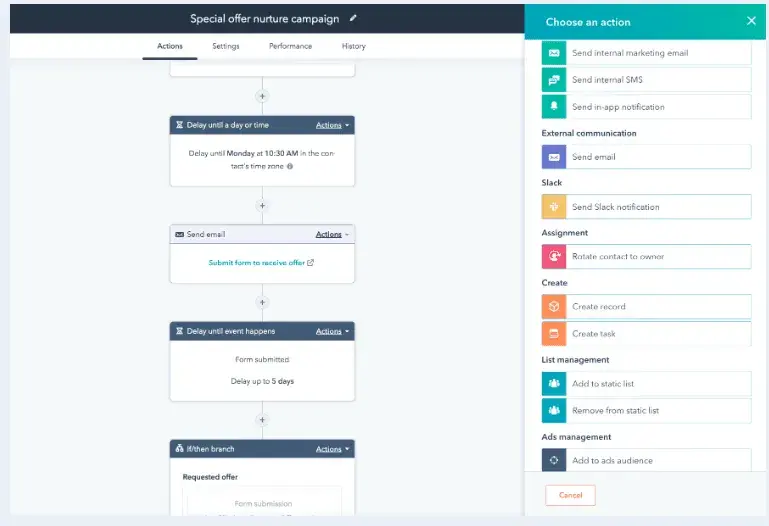
Client retention is paramount in the insurance industry, as acquiring new customers is significantly more expensive than retaining existing ones. Industry average retention rates hover around 84%, with top-performing agencies exceeding 90%. When renewals are overlooked, agencies face substantial revenue loss. A robust insurance CRM proactively addresses this by incorporating automated renewal workflows. These systems can be configured to alert agents 60-90 days before policies expire, providing ample time for personalized outreach and securing renewals.
For instance, YuLife, a global insurtech firm, leveraged HubSpot’s CRM to flag impending renewals and initiate tailored communication sequences. This strategic use of automation contributed to an impressive 98% customer retention rate for the company, significantly outperforming the industry average and demonstrating the tangible impact of CRM-driven retention strategies.
2. Boosting Cross-selling Opportunities
A sophisticated insurance CRM is a powerful tool for identifying and capitalizing on cross-selling opportunities. By analyzing a customer’s existing policy context and demographic data, the CRM can automatically flag potential needs. For example, if a client holds only an auto policy, the system can intelligently suggest a home or umbrella insurance quote. This process moves beyond manual account reviews, leveraging existing data to present relevant offers, thereby increasing the customer’s lifetime value and deepening the client relationship. This data-driven approach ensures that agents are not merely selling but providing comprehensive coverage tailored to individual client needs.
3. Empowering Agents with Mobile Access
The nature of insurance sales often requires agents to be mobile, attending client meetings, trade shows, and networking events. In such scenarios, the traditional methods of collecting business cards or manually entering contact details post-event are inefficient and prone to error. Mobile CRM access transforms this workflow, enabling agents to update notes, tasks, and follow-ups in real-time, directly from their smartphones or tablets. Whether messaging customers via text or retrieving policy documents on the go, mobile CRM ensures that agents remain connected and productive, regardless of their physical location. This flexibility not only enhances agent efficiency but also improves response times and overall customer service.
4. Unifying the Client View Across the Agency
One of the most significant advantages of an insurance CRM is its ability to create a unified contact and policy view accessible to all relevant team members. When a service representative answers a call, they can immediately access the complete history of interactions, policies, and preferences, just as the producer who sold the policy would. This shared context eliminates the frustrating need for policyholders to repeat information and allows different team members to quickly grasp the full picture of a client’s relationship with the agency.
CJ Hutsenpillar of Hutsenpillar Insurance eloquently articulated this benefit: "We used to have frustrated employees and frustrated customers because they were having to chase information, which was extremely inefficient. HubSpot users are spoiled with an activity timeline where you can see everything – for example, Facebook Messenger inbox messages. We can see our data now, and figuring that out was a huge problem solved." This centralized data access fosters internal collaboration, streamlines workflows, and significantly elevates the customer experience.

Essential CRM Capabilities for Modern Insurance Companies
Not all CRM systems are created equal, especially when it comes to the nuanced demands of the insurance industry. The ideal insurance CRM transcends generic contact management, offering specialized features that align with the workflows and data structures critical to agencies.
Insurance-Native Data Fields
A powerful insurance CRM is designed with a fundamental understanding of insurance concepts. It comes pre-configured with a unified view of contacts and policies, including fields for policy numbers, coverage limits, deductibles, beneficiaries, carriers, and various coverage types. Generic CRMs, in contrast, often require extensive and costly customization to track this insurance-specific data, leading to longer implementation times and potential data inconsistencies.
AMS, PAS, and Carrier Integrations
Seamless integration is a non-negotiable feature for any modern insurance CRM. It must connect effortlessly with Agency Management Systems (AMS), Policy Administration Systems (PAS), carrier rating tools, e-signature platforms, and document management systems. This interconnectedness allows agents to operate within a single environment, eliminating the need to toggle between multiple applications and reducing manual data entry errors. When evaluating CRM vendors, it is crucial to inquire about their integration ecosystem and verify compatibility with existing and preferred carrier systems.
Centralized Contact Management
At the heart of any effective CRM is a master database of customer contact information and a comprehensive history of all interactions. The best platforms offer a centralized inbox that enables agents to manage multi-channel communications—email, SMS, phone, and social media—and automatically log these interactions in the client’s contact history. This 360-degree view ensures that every team member has access to up-to-date information, fostering consistent and personalized customer engagement.
Lead Capturing, Enrichment, and Routing
In an era where leads originate from diverse digital and traditional channels, an insurance CRM must adeptly capture, enrich, and route every inquiry. Beyond simply creating a new contact, a sophisticated CRM can trigger an instant, personalized response, automatically route the lead to the most suitable agent based on predefined criteria (e.g., geography, policy type, lead score), and enrich the lead’s profile with additional personal or company details, even if not initially provided. This automation ensures no lead is missed and that each receives prompt and relevant attention.
Automated Follow-up Sequences
Insurance sales are characterized by a prolonged sales cycle, often requiring multiple touchpoints—at least seven, spread over days, weeks, or even months. Many agents abandon prospects after only one or two follow-ups due to time constraints or a lack of organizational tools. CRM automation solves this by enabling the creation of scheduled communication sequences and task reminders. For example, a system can automatically send a quote follow-up email three days after delivery, schedule a check-in call reminder two weeks later, and dispatch a final email after 30 days, ensuring consistent engagement without manual effort.
Renewal Workflow Management
Policy renewals form the bedrock of an agency’s recurring revenue. With the average insurance retention rate around 84%, and top agencies aiming for over 90%, robust renewal management is critical. CRM systems are designed to track expiration dates and automatically trigger comprehensive renewal campaigns. A typical workflow might initiate 90 days out with a proactive retention call, followed by a re-engagement check at 60 days, and the final paperwork dispatch at 30 days, minimizing churn and maximizing recurring revenue.
Reporting and Pipeline Visibility
For agency owners and managers, data-driven insights are indispensable for strategic decision-making. An insurance CRM provides detailed reporting dashboards that offer a holistic view of agency performance. These reports can illuminate which marketing sources yield the highest-quality leads, identify top-performing agents, track conversion rates across different policy types, and assess the overall health of the sales pipeline. This visibility enables managers to provide targeted support to struggling agents, reward top performers, and make informed decisions about resource allocation and growth strategies. Features like AI-powered predictive scoring can further assist agents in prioritizing outreach and accurately forecasting revenue.
AI-powered Outreach
Artificial intelligence is rapidly transforming CRM capabilities, making agents more efficient and effective. AI in an insurance CRM can automatically track conversations, summarize key discussion points, and even draft personalized outreach messages to customers. Furthermore, AI agents can be configured to send automated sequences for upcoming renewals or proactively identify and act upon detected cross-sell opportunities, significantly reducing manual workload and enhancing personalization at scale.
Leading CRM Solutions for the Insurance Sector (2026 Perspective)
The dynamic nature of the insurance industry, coupled with evolving customer expectations, necessitates CRM platforms that are not only efficient but also tailored to the sector’s specific demands. The following five CRM systems are recognized as leaders for insurance companies, based on G2 ratings, user reviews, pricing structures, and their unique insurance-specific features, offering a glimpse into the top choices for 2026.
1. HubSpot CRM
- G2 Rating: 4.4/5 with 35,739 reviews
- Key Features: Unified customer records and inbox, robust lead management (capture, routing, enrichment), comprehensive pipeline management, customizable reporting dashboards, extensive AI-powered automation across marketing, sales, and service.
- Starting Price: Free tier available; paid tiers start at $20/month.
- Best For: Growing agencies seeking an all-in-one platform that integrates marketing, sales, and service, with significant scalability.
HubSpot CRM offers an AI-powered customer data layer that unifies marketing, sales, and service teams around a single customer record. Its modular design allows agencies to start with a robust free CRM and progressively add specialized hubs like Marketing Hub, Sales Hub, or Service Hub as their needs evolve. HubSpot’s extensive Marketplace also provides integrations with popular insurance-specific tools. Users consistently praise its intuitive interface, workflow automation, email tracking, and quick onboarding. For example, BISA Seguros, a Bolivian insurer, significantly improved response times and customer service by digitizing operations with HubSpot, leveraging its Email Marketing and Workflows for automated communication and gaining better pipeline visibility.
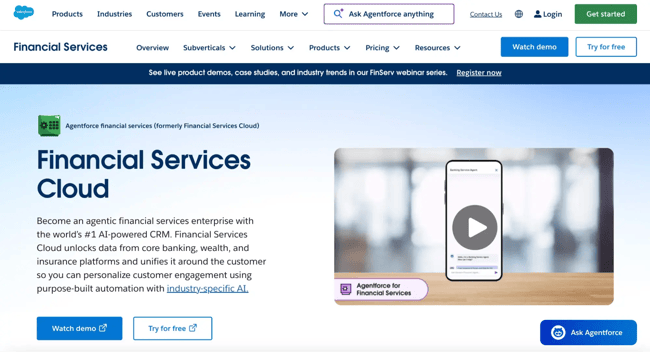
2. Agentforce Financial Services (formerly Salesforce Financial Services Cloud)
- G2 Rating: 4.3/5 with 226 reviews
- Key Features: Insurance-specific data models (households, policies, relationships), advanced AI-powered automation (Einstein AI), 360-degree client view encompassing policies, claims, and interactions, prebuilt APIs for seamless integration with carrier systems.
- Starting Price: Starting at $325/user/month (Sales or Service); $350/user/month (combined Sales and Service); $750/user/month (Agentforce editions).
- Best For: Large enterprises and complex agencies with dedicated IT resources or substantial implementation budgets, requiring deep customization and robust financial services capabilities.
Agentforce Financial Services by Salesforce is designed for the intricacies of the financial sector, including insurance. It offers highly customizable features, unified data models, and intelligent lead routing specifically tailored for complex insurance operations. Its prebuilt financial data model eliminates the need to construct intricate household and policy hierarchies from scratch, and it adeptly manages complex commission structures and regulatory requirements. Implementation can be extensive, often requiring certified consultants, making it suitable for organizations with significant resources.
3. Applied Epic
- G2 Rating: 4.4/5 with 1,571 reviews
- Key Features: Combined AMS and CRM functionalities, advanced workflow automation, strong carrier connectivity, comprehensive mobile access, integrated accounting and commission management, document management.
- Starting Price: Custom quote.
- Best For: Mid-sized to large independent Property & Casualty (P&C) and benefits agencies, particularly those managing complex commercial lines across multiple locations, seeking an integrated AMS + CRM solution.
Applied Epic is a robust agency management system that seamlessly integrates CRM capabilities. It is particularly well-suited for agencies with complex commercial lines books. Users commend its features, efficiency, data management, and organizational capabilities, though some note a learning curve and an average implementation time of five months. Applied Epic offers a comprehensive platform for agencies looking to manage both their administrative and client relationship aspects within a single system.
4. EZLynx
- G2 Rating: 4.4/5 with 716 reviews
- Key Features: Integrated comparative rater, policy management with daily carrier downloads, automation tools for renewals and remarketing, robust document management, multi-channel communication center (email, SMS), AI-assisted note-taking, extensive integrations with insurance technology.
- Starting Price: Custom quote.
- Best For: Independent P&C agencies that require a combined CRM, comparative rater, and agency management system, prioritizing ease of use and rapid implementation.
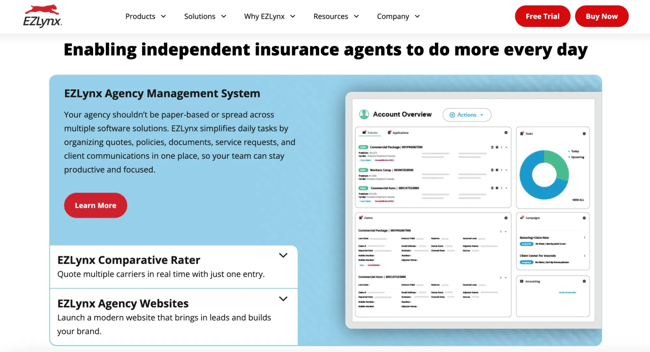
EZLynx offers a unique blend of CRM, comparative rater, and agency management system in a single cloud-based platform. Its design caters specifically to independent agencies focused on personal lines, providing an intuitive interface and quick implementation. Users appreciate its task history and opportunity tracking, its "hidden rating system" for training, and its AI features that streamline note-taking and overall efficiency in managing accounts and policies.
5. Vertafore AMS360
- G2 Rating: 4.3/5 with 949 reviews
- Key Features: Built-in AMS functionalities, QQCatalyst for quoting, PL Rating for real-time personal lines quotes, advanced compliance tools and carrier connectivity, comprehensive document management, AI-powered workflows for email and commission reconciliation.
- Starting Price: Custom quote; multiple products may require separate purchases.
- Best For: Established agencies already within the broader Vertafore product ecosystem, needing a comprehensive AMS with integrated CRM features.
Vertafore AMS360 is an agency management system with integrated CRM features, ideal for established agencies. A standout feature is its AI-powered email agent, which reads incoming emails, summarizes content, and triggers relevant workflows within the management system. Its reconciliation agent automates the matching of carrier statements to transactions, simplifying commission, revenue, and payable processing. AMS360 is a robust solution for agencies looking for deep integration within the Vertafore suite of products.
Strategic Selection: How to Choose a CRM for Insurance Companies
Selecting the appropriate CRM is a pivotal decision that can significantly impact an agency’s operational efficiency, growth trajectory, and overall profitability. A misstep can lead to substantial financial and operational costs. Employing a structured framework is essential for comparing CRM options effectively.
1. Identify Your Business Needs and Strategic Objectives
The initial step involves a thorough internal assessment to pinpoint the specific challenges a CRM is intended to solve. Is the primary issue a "leaky" sales pipeline, disorganization in administrative tasks, or a decline in customer retention? Define clear, measurable goals, such as increasing renewal rates by a certain percentage, improving quote-to-cash cycles, or enhancing lead conversion. Simultaneously, establish a realistic CRM budget, factoring in potential software consolidation savings and the projected revenue generation. This foundational analysis ensures that the CRM investment aligns with overarching business objectives.
2. Gather Feedback from All Potential Users
A CRM’s success hinges on its adoption by those who will use it daily. Engage all potential users—from sales agents and brokers to front-end and back-end office teams—to refine your requirements list. Sales agents might prioritize intuitive quote tracking and automated follow-up reminders, while managers may need comprehensive pipeline visibility and performance dashboards. Collecting diverse feedback ensures the chosen solution addresses the practical needs of various roles within the agency, fostering buy-in and maximizing utility.
3. Compile a Detailed List of Essential CRM Features
Based on the identified needs and user feedback, create a comprehensive checklist of "must-have" features for your insurance CRM. This list should go beyond basic contact management and include specific functionalities critical to insurance operations:
- Insurance-specific data fields: Policy numbers, coverage types, beneficiaries, carriers.
- Integration capabilities: Connectivity with AMS, PAS, carrier rating systems, e-signature tools.
- Automated lead management: Capture, enrichment, routing, and personalized follow-up sequences.
- Renewal workflow automation: Proactive alerts and campaigns.
- Cross-selling and upselling intelligence: Data-driven opportunity identification.
- Unified communication hub: Email, SMS, phone, social media tracking.
- Robust reporting and analytics: Pipeline health, agent performance, marketing ROI.
- Mobile accessibility: Full functionality on various devices.
- AI-powered assistance: Conversation summaries, draft generation, predictive analytics.
4. Thoroughly Compare Different CRM Companies
With a clear understanding of your needs and desired features, delve into researching specific CRM solutions. Beyond the core capabilities, evaluate each vendor on:
- Total Cost of Ownership (TCO): Look beyond the advertised sticker price. Account for onboarding fees, per-module pricing, integration costs, and any required add-ons, especially for insurance-specific platforms.
- Vendor Reputation and Support: Investigate their track record, customer service quality, and long-term commitment to the insurance sector.
- Implementation and ROI Timelines: Ask vendors for realistic timelines for deployment and when tangible returns on investment can be expected.
- Customer References: Request to speak with peer agencies that have similar profiles and have successfully implemented the CRM.
5. Request Demos Using Actual Agency Data
Narrow your selection to two or three top contenders and request personalized demonstrations. Crucially, ask vendors to showcase workflows using real scenarios and, if possible, anonymized agency data. Observe how the system handles the quote-to-bind process, executes renewal campaigns, identifies cross-sell opportunities, and manages typical customer service interactions. This hands-on experience will provide invaluable insight into the system’s practical usability and alignment with your agency’s unique operations.
6. Plan and Execute CRM Software Setup and Onboarding
Once a CRM is selected, meticulously plan its implementation. This phase includes creating user accounts, providing comprehensive onboarding training, and guiding users through their initial workflows. It is highly beneficial to appoint a "CRM champion" within the agency—an internal expert who can answer questions, provide ongoing support, and champion consistent usage. Remember, a CRM’s effectiveness is directly proportional to the quality of its user input; therefore, a concerted effort to ensure consistent data entry and utilization across all teams is paramount for maximizing its value.
Where HubSpot CRM Fits for Insurance Teams
Many insurance agencies find optimal efficiency by running HubSpot CRM in conjunction with a specialized AMS. In this setup, the AMS handles the intricate policy administration, claims processing, and regulatory compliance, while HubSpot drives new business growth and enhances customer engagement through its front-office sales, marketing, and service layers. HubSpot is purpose-built to facilitate agency growth, from the very first lead interaction to long-term client retention.
Insurance teams leverage HubSpot to:
- Streamline lead management: Capture, qualify, and route leads efficiently, ensuring timely follow-up.
- Automate marketing campaigns: Deploy personalized email sequences, content, and social media outreach to nurture prospects and engage existing clients.
- Enhance sales productivity: Manage pipelines, track deals, and automate administrative tasks, allowing agents to focus on selling.
- Improve customer service: Centralize client communication, manage service tickets, and provide a unified view for support teams, leading to faster resolution and higher satisfaction.
- Drive renewals and cross-selling: Automate reminders and campaigns to secure renewals and identify opportunities to offer additional policies.
Agencies can begin with the free HubSpot CRM to test its core functionalities, such as importing contacts, connecting email, and tracking deals, providing valuable hands-on experience before committing to paid features.
Frequently Asked Questions About Insurance CRMs
Do agencies still need an AMS when using a CRM?
For most insurance agencies, both a CRM and an AMS are essential. A CRM excels at managing the sales process, nurturing leads, and fostering customer relationships from initial inquiry to policy issuance. An AMS, conversely, is critical for the administrative backend, handling policy administration, commission tracking, claims management, and maintaining official records post-sale. Small agencies might initially opt for a CRM-only approach if they outsource policy servicing or rely heavily on carrier portals for administration. However, as agencies grow in policy volume and face increasing compliance requirements, integrating an AMS typically becomes a necessity.
Can a CRM integrate with existing policy admin systems and carrier rating tools?
Modern insurance CRM platforms are designed with robust integration capabilities. They often offer pre-built connectors or open APIs that allow seamless integration with major AMS systems, PAS platforms, and various carrier tools. HubSpot, for example, boasts a vast marketplace with hundreds of applications. When researching CRMs, it is crucial to confirm their compatibility with your current AMS, preferred carriers, and other essential tools like e-signature software and document management systems to ensure a cohesive technology stack.
How long does CRM implementation take for insurance teams?
CRM implementation timelines can vary significantly based on the platform’s complexity and the agency’s size. A basic setup involving simple contact import might take as little as two to four weeks. However, more comprehensive implementations that include custom fields, intricate workflows, and deep integrations can extend from three to six months. Agencies utilizing platforms like HubSpot often experience quicker initial deployments (two to four weeks for basic setups) and then gradually add and configure advanced features over time, allowing for a phased approach to adoption.
What is the best approach for data migration into a CRM?
A structured approach to data migration is vital to avoid complications. Begin by thoroughly cleaning existing data to remove duplicates, inaccuracies, and outdated contact records. Agencies should meticulously map their current data fields (e.g., policy numbers, renewal dates, lead sources) to the corresponding fields in the new CRM. It is highly recommended to perform a test migration with a small, representative dataset first. This allows for the identification and rectification of any mapping errors or data inconsistencies before a full-scale migration, significantly reducing surprises and ensuring data integrity.
Is CRM useful for solo agents and small agencies?
Absolutely. Solo agents and small agencies can derive significant benefits from CRM systems. The automation capabilities inherent in CRMs are particularly advantageous for smaller operations, handling routine tasks such as follow-up emails and renewal reminders that might otherwise be neglected during busy periods. By automating these administrative burdens, solo agents can dedicate more time to client interactions and sales. The return on investment for small agencies and solo agents comes from increased deal closures, higher retention rates, and substantial time savings on manual tasks. Many CRMs, including HubSpot, offer free tiers that provide essential functionalities, allowing small operations to experience the benefits before investing in advanced features.
How CRMs Power Relationship-based Businesses
The insurance industry, fundamentally a relationship-based business, thrives on the quality and accessibility of its customer records. As CJ Hutsenpillar wisely warns, agencies that cling to legacy systems risk falling significantly behind faster, more technologically adept competitors. Moreover, disorganized or fragmented data can materially diminish an agency’s valuation, should the business ever be considered for sale.
A robust CRM system for insurance companies is no longer a luxury but a strategic imperative. It effectively manages the entire customer journey, from the initial inquiry to ongoing service and subsequent policy renewals. The longer an agency delays investing in a modern CRM, the more challenging and costly it becomes to bridge the technological gap and remain competitive in a rapidly evolving market. Embracing CRM is about future-proofing the agency, ensuring sustained growth, unparalleled customer satisfaction, and long-term market relevance.