

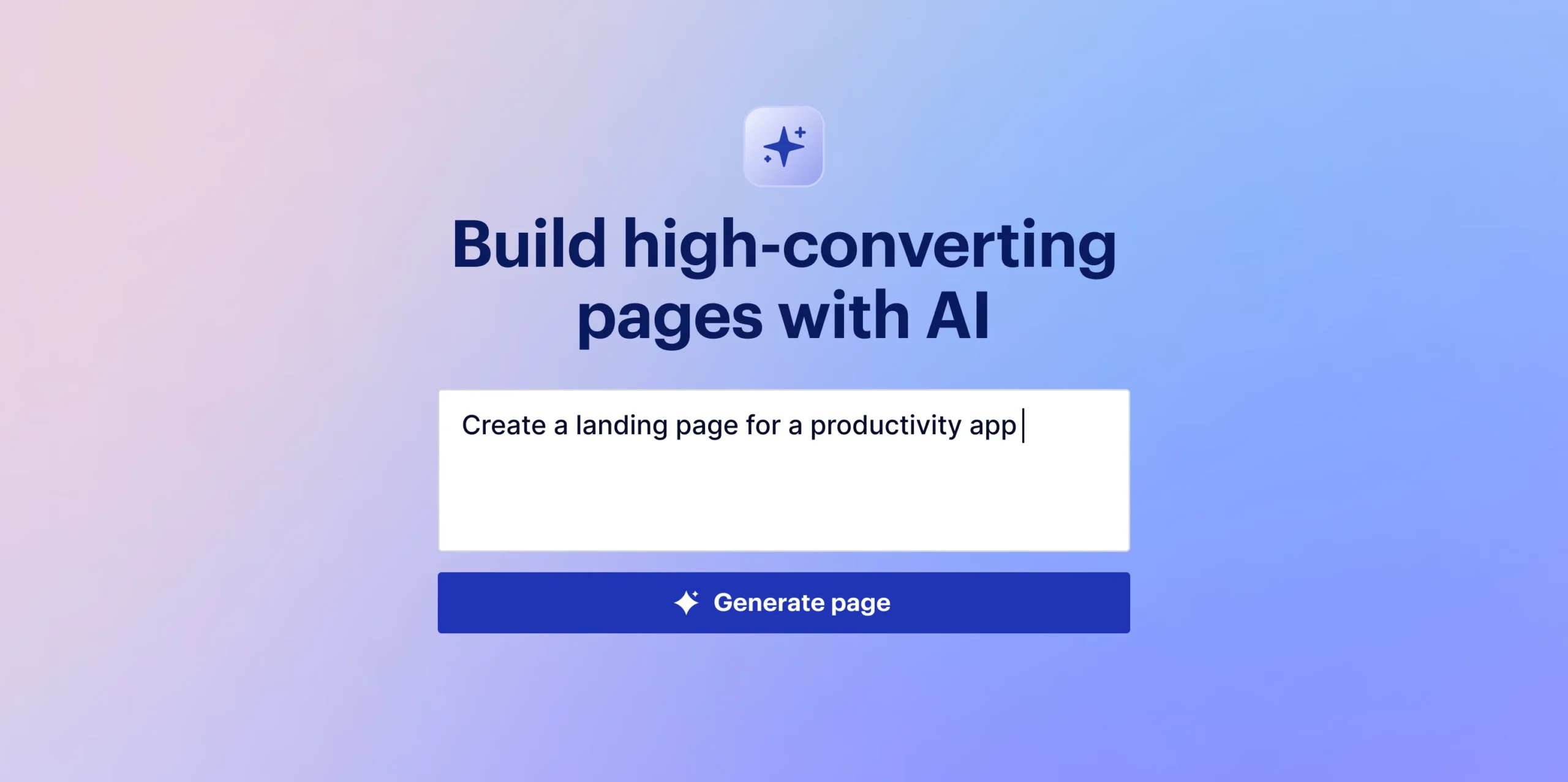
The landscape of digital marketing technology has reached a significant turning point as Instapage, a pioneer in landing page innovation since 2012, announces the comprehensive integration of generative artificial intelligence across its entire ecosystem. This transition marks the evolution of the company from a specialized landing page builder into a holistic, AI-driven marketing platform designed to streamline the transition from initial creative concept to lead conversion and nurturing. By embedding AI into every stage of the marketing funnel—including page generation, copywriting, experimentation, and email automation—Instapage aims to eliminate the friction typically associated with multi-tool "tech stacks" and the creative paralysis of the "blank page" syndrome.
The Strategic Shift Toward Generative Marketing
The announcement comes at a time when the Marketing Technology (MarTech) industry is undergoing a fundamental shift. For over a decade, marketing teams have been forced to "stitch together" disparate tools for web design, email automation, analytics, and personalization. This fragmentation often leads to data silos and operational inefficiencies. Instapage’s new direction addresses these pain points by offering a unified environment where AI does not merely act as an add-on but serves as the underlying engine for the entire workflow.
The core of this update is the introduction of AI Page Generation. Unlike traditional templates that require manual population, this feature allows users to describe their campaign goals and target audience in natural language. The AI then constructs a complete, conversion-ready page in seconds, featuring tailored messaging and optimized layouts. This development is specifically designed to bypass the traditional bottlenecks of design and copywriting that often delay campaign launches.
A Chronology of Innovation: From Builder to Intelligence Suite
To understand the significance of this release, one must look at the evolution of Instapage over the past fourteen years. Since its inception in 2012, the company has consistently focused on lowering the barrier to high-converting web design.
- 2012–2015: The Foundation. Instapage launched as a user-friendly alternative to complex Content Management Systems (CMS), focusing on a "what you see is what you get" (WYSIWYG) experience for landing pages.
- 2016–2019: The CRO Era. The platform expanded its capabilities into Conversion Rate Optimization (CRO). It introduced advanced A/B testing, heatmaps, and global blocks, allowing marketers to manage hundreds of pages simultaneously.
- 2020–2023: Personalization and Early AI. Recognizing the need for relevance, Instapage introduced 1:1 ad-to-page personalization tools. During this period, the company began embedding early-stage AI features, such as AI-assisted copywriting, to help users refine their headlines and calls to action.
- 2024–2026: The End-to-End AI Revolution. The current phase represents the culmination of these efforts. By integrating AI Page Generation, AI Email Generation, and AI Collections, Instapage has moved beyond being a "tool" to becoming a "platform" that manages the entire lifecycle of a marketing lead.
Solving the "Iteration Gap" in AI Design
A critical component of the new Instapage release is the emphasis on "pixel-perfect" control. Industry analysts have noted that while standalone AI image and page generators have proliferated, they often suffer from a lack of flexibility. In many contemporary AI tools, making a minor change to a layout requires the user to "re-prompt" the engine, often resulting in an entirely different design and the consumption of additional processing tokens.
Instapage addresses this "iteration gap" by combining generative AI with its legacy drag-and-drop builder. Once the AI generates the initial layout and copy, the user retains full manual control. This hybrid approach ensures that marketers are not locked into the AI’s creative decisions. They can move sections, adjust colors, and refine typography with surgical precision without having to restart the generation process. This functionality significantly reduces the time-to-market for complex campaigns, turning what used to be a week-long design process into a task that takes minutes.
Streamlining Lead Nurturing with AI-Powered Email
Beyond page creation, the platform has integrated AI-driven email automation to solve the "leaky bucket" problem in lead generation. Statistics suggest that the speed and relevance of a follow-up are the two most significant factors in converting a lead into a customer. However, many marketing teams struggle to maintain consistent follow-ups when managing multiple campaigns across different platforms.
The new AI email generator allows users to create tailored messaging for various interactions instantly. By selecting a goal, audience, tone, and length, marketers can generate automated responses that are contextually linked to the landing page where the lead was captured. This integration ensures that the "hand-off" between a web visit and an email interaction is seamless, keeping all data and creative assets within a single ecosystem.

Supporting Data: The Economic Imperative for AI Integration
The shift toward AI-driven platforms is supported by broader economic trends in the technology sector. In 2026, marketing departments are facing unique pressures characterized by leaner teams and tighter budgets. According to industry data, the average enterprise now uses over 90 different marketing tools, leading to significant "tool sprawl" and wasted expenditure.
- Productivity Gains: Research indicates that AI-assisted content creation can reduce production time by up to 60%, allowing small teams to produce the output of much larger agencies.
- Conversion Impact: Optimized, personalized landing pages are known to increase conversion rates by over 200% compared to generic pages. Instapage’s AI experimentation tools aim to automate the testing necessary to reach these benchmarks.
- Cost Reduction: By consolidating page building, email, and analytics into one AI-powered platform, businesses can reduce their software overhead and the labor costs associated with manual data migration between tools.
Official Perspectives and Market Implications
While the company has maintained a focus on the technical aspects of the rollout, the implications for the broader MarTech market are clear. Industry experts suggest that the move by Instapage puts pressure on competitors who still rely on siloed functionalities.
"The era of the ‘point solution’ is drawing to a close," says one marketing technology analyst. "Marketers no longer want to spend their day being ‘integrators’ of technology; they want to be ‘orchestrators’ of strategy. Platforms that can handle the entire creative and analytical workflow through a single AI interface will naturally become the preferred choice for lean, high-growth teams."
Instapage has confirmed that while many of these features are now live, select AI capabilities remain in a beta phase, with a gradual rollout planned across its global user base. This cautious approach is intended to ensure that the AI models remain accurate and that the infrastructure can handle the high volume of generative requests.
Analysis of Broader Impacts
The move by Instapage reflects a larger trend where AI is becoming the "operating system" for business growth. For the first time, the technical barrier to entry for high-end digital marketing has been lowered to the point where a single individual can manage a complex, multi-channel campaign that previously required a designer, a copywriter, and a developer.
However, this democratization of high-end marketing tools also raises the bar for competition. As it becomes easier for every business to create "perfect" pages and emails, the focus will likely shift from the quality of the design to the quality of the underlying strategy and the authenticity of the brand message. Instapage’s platform is designed to handle the "how" of marketing, freeing up human professionals to focus on the "why."
Conclusion: The Future of Conversion-Ready Marketing
Instapage’s transition into an end-to-end, AI-powered platform represents a significant milestone in the history of web technology. By addressing the blank page problem, the iteration gap, and the inefficiencies of tool sprawl, the platform is positioning itself as an essential utility for the modern marketer.
As the digital landscape continues to evolve, the ability to rapidly test, scale, and optimize marketing assets will become the primary differentiator between brands that thrive and those that stagnate. With its new suite of AI tools, Instapage is providing the infrastructure necessary for businesses to meet the rising expectations of the 2026 marketplace. For companies looking to experience this new era of automated marketing, Instapage is currently offering a 14-day trial, signaling its confidence in the platform’s ability to deliver immediate value in a competitive economic environment.







