

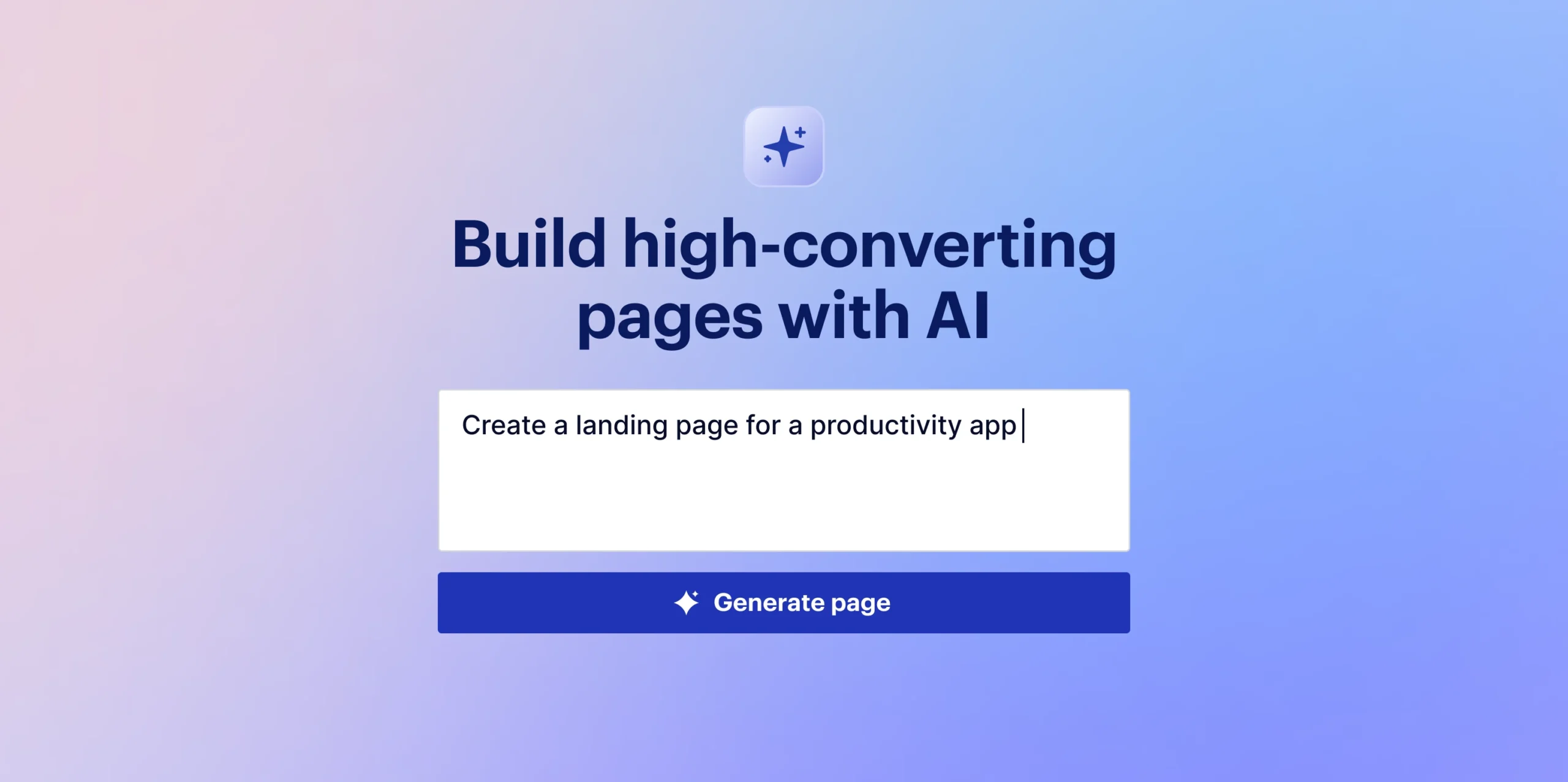
Instapage, a long-standing leader in landing page technology and conversion rate optimization (CRO), has announced a significant evolution of its service architecture, transitioning from a specialized builder into an end-to-end, AI-powered marketing platform. This strategic shift is designed to address the increasing complexities of the digital marketing landscape, where businesses are under mounting pressure to deliver high-performance results with leaner teams and tighter budgets. By integrating generative artificial intelligence across the entire campaign lifecycle—from initial page design to automated lead nurturing—the company aims to eliminate the friction typically associated with "tool sprawl" and the manual orchestration of disparate marketing technologies.
The announcement marks a pivotal moment for the San Francisco-based company, which has been a staple of the MarTech industry since 2012. The new suite of features, which includes AI-driven page generation, automated email sequences, and advanced content collections, represents a response to the "blank page" problem that often stymies marketing velocity. By leveraging large language models and proprietary design algorithms, the platform now allows users to transform a simple text description into a fully functional, conversion-optimized landing page in a matter of seconds.
A Decade of Evolution: From Builder to Ecosystem
To understand the significance of this latest release, it is necessary to examine the chronological progression of Instapage within the broader context of the software-as-a-service (SaaS) industry. When Instapage launched in 2012, the primary challenge for digital marketers was the technical barrier to entry for creating high-quality landing pages. At that time, building a custom page often required significant developer resources or the use of rigid templates that offered little in the way of optimization or brand alignment.
Over the next decade, Instapage expanded its capabilities to include a comprehensive suite of CRO tools. This included the introduction of heatmaps, A/B testing modules, and dynamic text replacement for personalization. By the early 2020s, the platform had moved beyond simple page construction, offering sophisticated experimentation and analytics tools that helped thousands of businesses scale their digital presence.
The integration of AI began several years ago with the embedding of machine learning into copy generation and experimentation workflows. However, the 2024-2026 roadmap signals a more fundamental transformation. The company has moved from "bolting on" AI features to rebuilding its core workflow around an AI-first philosophy. This evolution reflects a broader trend in the tech sector where standalone tools are being consolidated into integrated ecosystems that manage the entire customer journey.
Solving the Creative Block: AI Page Generation and Refinement
One of the most significant hurdles in digital marketing is the transition from a conceptual idea to a live asset. Instapage’s new AI page generation tool seeks to solve this by acting as a bridge between strategy and execution. Users provide a description of their campaign goals, target audience, and desired messaging, and the AI generates a complete layout, including conversion-ready copy and optimized design elements.
Unlike many standalone AI generators that produce static or difficult-to-edit outputs, Instapage has integrated its AI generator with its "pixel-perfect" drag-and-drop builder. This distinction is critical for professional marketing teams. In many current AI workflows, making a change to a generated design requires the user to re-prompt the engine, often resulting in an entirely different layout that discards previous progress. This "regeneration loop" is both time-consuming and costly in terms of API tokens.
Instapage’s approach allows for manual refinement after the initial AI generation. This hybrid model ensures that while the AI handles the heavy lifting of layout and copywriting, the human marketer retains full creative control over the final product. This capability is expected to significantly reduce the "time-to-market" for new campaigns, allowing teams to test more hypotheses and respond to market shifts with unprecedented speed.
Closing the Lead Gap: AI-Powered Email Integration
A common point of failure in digital marketing is the "leaky bucket" phenomenon, where leads are generated through a landing page but lost due to delayed or irrelevant follow-up. Traditionally, solving this required "stitching together" a landing page builder with a separate email service provider (ESP) and a third-party AI writing tool. This fragmented approach often leads to data silos, manual export errors, and a lack of cohesion in the user experience.
The new Instapage AI email generator aims to close this gap by keeping the entire workflow within a single environment. The platform now allows users to set up automated email triggers based on lead interactions. The AI writes tailored messaging for these emails, ensuring that the tone and content remain consistent with the landing page that captured the lead.

By selecting specific goals, audiences, and tones, marketers can generate sophisticated nurture sequences without leaving the platform. This integration is particularly valuable for lean teams that do not have the bandwidth to manage complex integrations across multiple platforms. According to industry data, businesses that respond to leads within five minutes are 100 times more likely to connect and qualify the lead than those who wait 30 minutes. Instapage’s automated, AI-driven follow-up is designed to capitalize on this "speed-to-lead" advantage.
Supporting Data and Market Trends
The shift toward AI-integrated platforms is supported by significant shifts in the global marketing landscape. According to a 2023 report by Gartner, 63% of marketing leaders planned to invest in generative AI in the coming year, citing efficiency and personalization as their primary drivers. Furthermore, the cost of "tool sprawl"—the use of redundant or disconnected software tools—is estimated to cost enterprises millions in lost productivity and subscription waste.
Data from conversion rate studies suggest that personalized landing pages can increase conversion rates by up to 202% compared to generic pages. However, the manual effort required to create hundreds of personalized variants has historically been a barrier for all but the largest enterprises. Instapage’s AI Collections and personalization features are designed to democratize this capability, allowing smaller teams to execute high-scale personalization strategies that were previously the domain of global corporations.
In the current economic climate of 2024 and 2025, marketing budgets have come under increased scrutiny. The "do more with less" mandate has forced a move away from headcount-heavy operations toward technology-driven efficiency. Instapage’s internal metrics suggest that their AI-powered tools can reduce the time spent on page creation and email setup by up to 80%, effectively allowing a single marketer to perform the work that previously required a small agency.
Official Responses and Industry Implications
While Instapage has not released formal external quotes in this specific update, the company’s internal documentation emphasizes a commitment to a "no-gap" workflow. A spokesperson for the product development team noted that the goal of the recent releases is to ensure that "nothing falls through the cracks" between a lead’s first click and their ultimate conversion.
Industry analysts suggest that Instapage’s move puts pressure on other players in the CRO space, such as Unbounce and HubSpot. By offering a more tightly integrated AI experience that spans both web and email, Instapage is positioning itself as a more holistic solution than a simple page builder.
"The era of the ‘point solution’ is ending," says one digital marketing consultant. "Marketers are tired of being system integrators. They want platforms that just work. Instapage’s transition to an end-to-end AI platform is a recognition that the value is no longer in the ‘builder’ itself, but in the seamless flow of data and creativity from the first touchpoint to the final sale."
Broader Impact and Future Outlook
The broader implications of Instapage’s AI integration extend beyond simple efficiency. As AI becomes more deeply embedded in marketing workflows, the role of the marketer is shifting from "creator" to "editor and strategist." The ability to generate high-quality assets at scale means that the competitive advantage will no longer lie in who has the largest design budget, but in who can most effectively prompt, refine, and strategize using AI tools.
However, the transition is not without its challenges. Instapage has noted that select AI features are currently in beta and are being rolled out gradually to ensure stability and performance. This cautious approach reflects the technical hurdles of maintaining "pixel-perfect" design standards while giving AI the freedom to generate layouts.
As we look toward 2026, the success of such platforms will likely depend on their ability to maintain a balance between automation and human intuition. For Instapage, the focus remains on empowering the "lean team"—those businesses that need to scale rapidly without the luxury of massive headcounts. By providing an end-to-end, AI-powered ecosystem, Instapage is not just updating its software; it is attempting to redefine the standard operating procedure for modern digital marketing.
The platform currently offers a 14-day free trial for users to experience the AI-powered workflow firsthand. As the beta period progresses, the company expects to gather more data on how these tools impact conversion rates in real-world scenarios, further refining the algorithms that now sit at the heart of the Instapage experience. For an industry that has long struggled with the complexity of its own tools, the promise of a "no-gap" AI marketing platform is a significant step toward a more efficient and effective future.







