

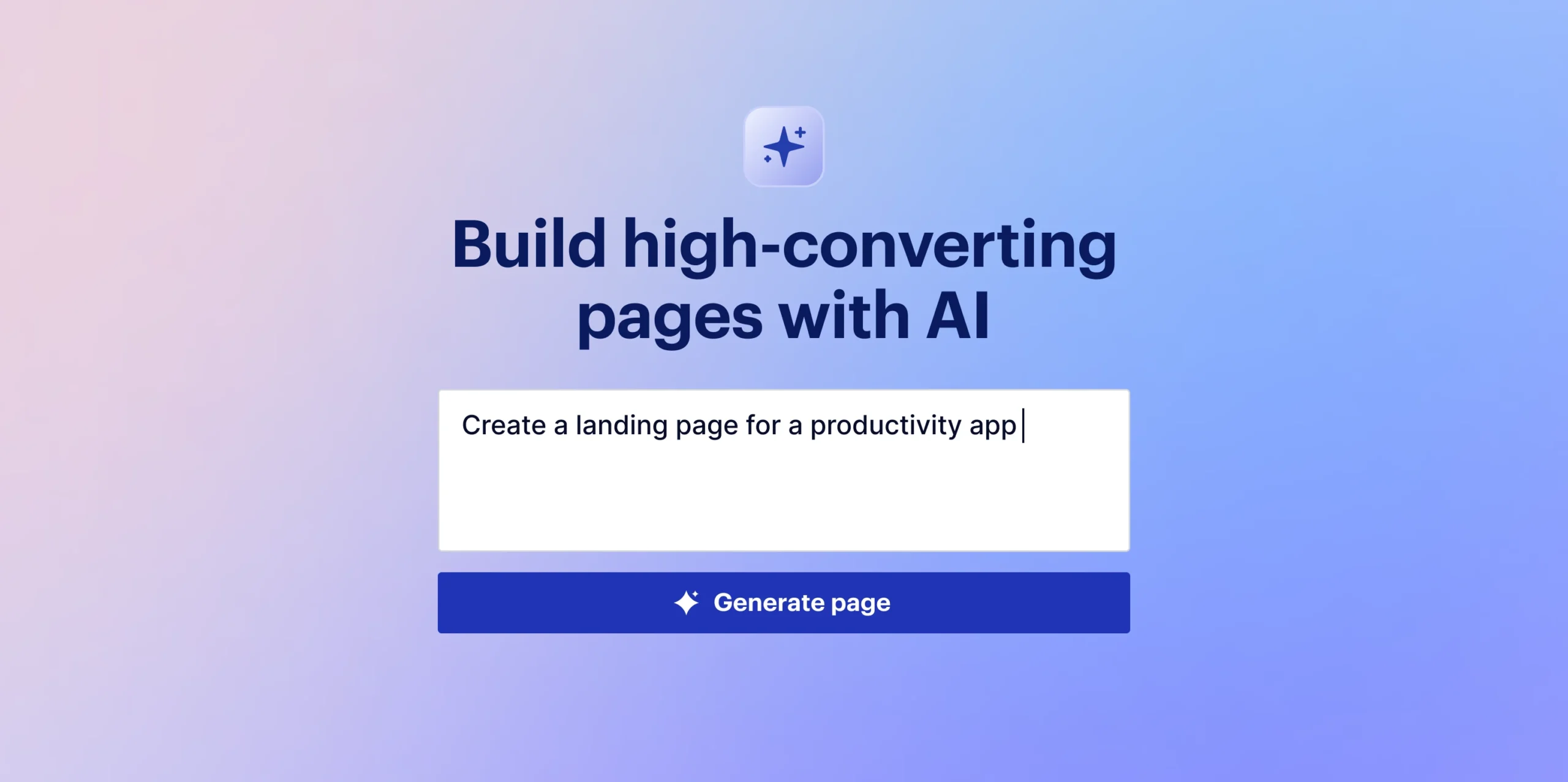
Instapage, a pioneer in landing page technology since 2012, has announced the transition of its core services into a fully integrated, end-to-end AI-powered marketing platform. This strategic evolution marks a significant shift from traditional landing page builders toward a holistic ecosystem that utilizes artificial intelligence to manage the entire conversion lifecycle. By integrating AI-driven page generation, automated email sequences, and advanced experimentation tools into a single interface, the company aims to address the persistent challenges of tool fragmentation and resource constraints faced by modern marketing departments.
The move comes at a time when the marketing technology (MarTech) landscape is undergoing rapid consolidation. As organizations seek to reduce "SaaS sprawl"—the phenomenon where businesses manage dozens of disconnected software subscriptions—Instapage’s new suite offers a unified solution for creation, personalization, and lead nurturing. The company’s latest wave of releases includes AI Page Generation, AI Email Generation, and AI Collections, positioning the platform as a central hub for conversion rate optimization (CRO).
A Decade of Evolution: From Builder to AI Ecosystem
The trajectory of Instapage reflects the broader history of digital marketing. Founded in 2012, the company initially gained prominence by offering a "pixel-perfect" drag-and-drop builder that allowed marketers to bypass traditional web development bottlenecks. Over the subsequent decade, the platform expanded its capabilities to include A/B testing, heatmaps, and dynamic text replacement.
By the early 2020s, the company had established itself as a leader in the CRO space, helping thousands of businesses scale their digital presence. However, the emergence of generative AI presented a new frontier. While many competitors began "bolting on" AI features—such as simple headline generators—Instapage has spent the last several years embedding machine learning and natural language processing into every stage of the marketing workflow.
The 2026 release cycle represents the culmination of this effort. In an era where marketing teams are expected to do more with less, the integration of AI is no longer a luxury but a functional necessity. Industry data suggests that the average marketing team now utilizes over 12 different tools to manage a single campaign, leading to significant data silos and operational inefficiencies. Instapage’s all-in-one approach is designed to eliminate these "gaps" in the workflow.
Technical Breakthroughs in AI Page Generation
One of the primary hurdles in AI-assisted design has been the "regeneration trap." Most standalone AI page generators allow users to create a layout via a text prompt, but any subsequent modifications often require the user to regenerate the entire page from scratch. This process is not only time-consuming but also consumes significant computational "tokens," driving up costs for the user.
Instapage has addressed this by marrying its generative AI with its legacy pixel-perfect builder. When a user describes a desired page, the AI generates a complete, conversion-ready layout, including tailored messaging and optimized visual hierarchies. Crucially, the resulting page remains fully editable within the drag-and-drop interface. Users can move sections, adjust margins, and swap images without needing to re-prompt the AI or restart the design process.
This hybrid approach provides a level of creative control that was previously unavailable in automated design tools. It allows marketers to benefit from the speed of AI while maintaining the brand integrity and specific aesthetic requirements mandated by their design departments.
Closing the Loop with AI-Powered Lead Nurturing
The transition from lead generation to lead nurturing has historically been a point of friction for many businesses. Typically, a lead captured on a landing page must be exported to a third-party Email Service Provider (ESP) or Customer Relationship Management (CRM) system before a follow-up can occur. This manual handoff often results in delayed response times, which can drastically reduce conversion rates.
To solve this, Instapage has introduced an AI-powered email generator directly within the platform. This tool allows teams to set up instant, automated follow-ups that are contextually relevant to the page where the lead was captured. By selecting specific goals, target audiences, and brand tones, users can generate highly personalized email sequences in seconds.
The integration ensures that the messaging remains consistent across all touchpoints. Because the pages, leads, and emails reside in a single environment, the AI can draw upon the data from the landing page to inform the content of the email, creating a seamless experience for the end-user and a more efficient workflow for the marketer.

Supporting Data and Market Analysis
The shift toward AI-integrated platforms is supported by significant market trends. According to recent industry reports, companies that utilize AI in their marketing workflows report a 20% increase in productivity and a 15% reduction in operational costs. Furthermore, research into lead management indicates that responding to a lead within the first five minutes increases the likelihood of conversion by nearly 400% compared to a 30-minute delay.
The economic climate of 2026 has further accelerated this trend. With tightening venture capital and higher interest rates, businesses are prioritizing "lean" operations. Marketing departments are under pressure to maintain high output without increasing headcount. Instapage’s AI suite is specifically marketed as a solution to this problem, offering the capabilities of a full-scale creative and technical team within a single software subscription.
Market analysts suggest that the "all-in-one" model is becoming the preferred choice for mid-market and enterprise clients who are weary of the complexities associated with "stitching together" disparate tools. The ability to manage experimentation, personalization, and analytics in the same place where pages are built provides a data-rich environment that standalone tools cannot match.
Official Responses and Industry Implications
While official statements from Instapage leadership emphasize the platform’s role in "empowering the modern marketer," industry reactions have focused on the potential for AI to democratize high-level design and data science. CMOs and digital strategists have noted that these tools lower the barrier to entry for complex CRO strategies that were previously reserved for companies with large development budgets.
"The integration of AI into the core builder signifies a move away from the ‘black box’ of automated design," noted one industry analyst. "By allowing for manual refinement of AI-generated content, Instapage is acknowledging that human oversight remains a critical component of brand identity."
However, the rapid adoption of AI also raises questions about the future of entry-level marketing roles. As AI takes over the tasks of copywriting, basic layout design, and email scheduling, the role of the marketer is shifting toward strategy and prompt engineering. Instapage’s beta rollout strategy—gradually releasing features to ensure stability—suggests a cautious approach to this transition, allowing users to adapt to the new tools at their own pace.
Strategic Impact and Future Outlook
The broader implications of Instapage’s transition are significant for the MarTech sector. By offering a platform that covers the entire journey from initial click to lead nurturing, Instapage is positioning itself as a direct competitor not just to other page builders, but to specialized email marketing and personalization platforms.
The introduction of "AI Collections" further suggests a move toward automated scaling. This feature is expected to allow marketers to generate hundreds of variations of a single campaign, each tailored to a different audience segment or geographic location, with minimal manual intervention. This level of hyper-personalization was previously impossible to achieve at scale without significant manual labor.
As the platform moves out of its beta phase, the focus will likely shift to how well these AI tools integrate with third-party data sources and CRM systems. While the "all-in-one" approach is powerful, the ability to play well with existing enterprise ecosystems will be crucial for long-term adoption.
Conclusion and Access
Instapage has confirmed that its AI features are currently in a beta phase and are being rolled out to users gradually. The company continues to offer a 14-day free trial for new users to experience the end-to-end platform. For those who do not yet see the AI features in their dashboard, the company has established a dedicated support channel to provide early access.
As digital marketing continues to evolve, the integration of AI into the very fabric of campaign management represents a major milestone. For Instapage, the goal is clear: to provide a unified environment where ideas can be transformed into high-performing marketing assets in a matter of seconds, rather than weeks. In the competitive landscape of 2026, the speed of execution and the ability to optimize at scale may well be the defining factors of marketing success.







