

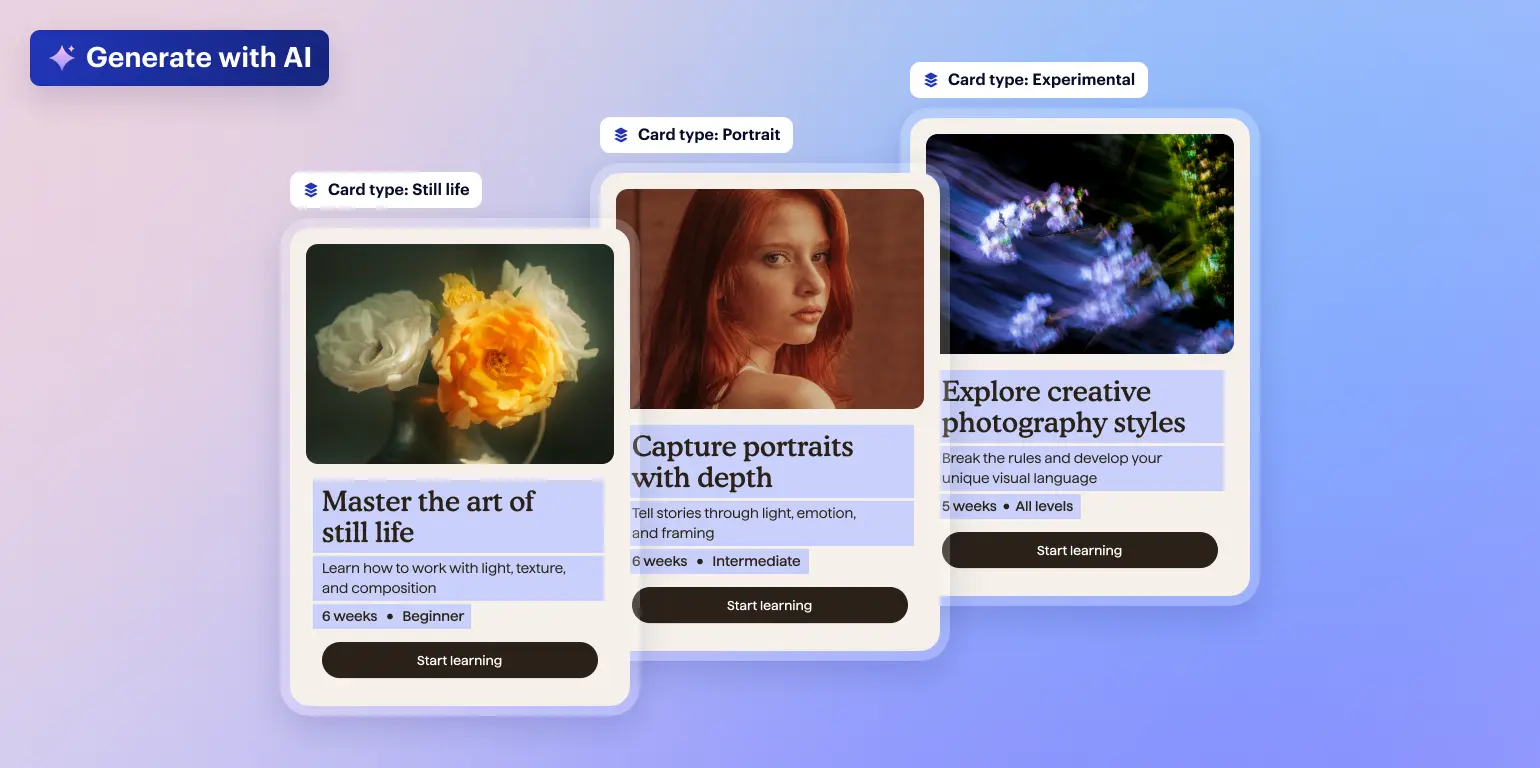
The digital marketing landscape has long been defined by a persistent contradiction: while industry data suggests that personalization is the primary driver of conversion and customer loyalty, the technical and operational hurdles required to implement it at scale have remained prohibitively high for most organizations. Instapage, a leading platform in the landing page optimization space, has addressed this "personalization paradox" with the launch of AI Collections, a sophisticated toolset designed to automate the creation and management of personalized web experiences. By integrating generative artificial intelligence directly into the page-building workflow, the platform aims to reduce the time required to deploy large-scale campaigns by up to 300%, effectively moving personalization from a luxury reserved for enterprise-level budgets to a standard operational capability for marketing teams of all sizes.
For over a decade, the standard methodology for personalizing landing pages involved a laborious process of manual duplication. Marketers would create a "master" page and then manually clone it for every specific audience segment, geographic location, or keyword group. This approach necessitated the individual editing of headlines, body copy, and imagery for every single iteration, followed by the tedious management of these pages across fragmented spreadsheets. As campaign complexity grew, these manual workflows inevitably became bottlenecks, leading many teams to abandon personalization efforts in favor of generic, "one-size-fits-all" pages that suffer from lower relevance and higher cost-per-acquisition (CPA).
The Mechanics of AI Collections and Automated Workflows
AI Collections introduces a structural shift in how digital content is organized and deployed. Rather than treating each landing page as an isolated file, the system utilizes a centralized content table architecture. In this model, a single page serves as a master template, while a built-in content table manages the variables for dozens or hundreds of variations. Each row in the table represents a unique page within the "Collection," and each column represents a specific dynamic element—such as a headline, a call-to-action (CTA), or a hero image description.
The technological core of this feature is the "AI Placeholder" system. Traditionally, setting up dynamic content required marketers to manually identify and tag every element on a page that needed to change based on the visitor’s profile. AI Collections automates this discovery phase. The AI analyzes the design layout of the template and identifies optimal locations for dynamic text and visual elements. Once these placeholders are established, the user can review and refine them, ensuring that the brand’s visual hierarchy remains intact while allowing for high levels of content variance.
Following the establishment of placeholders, the platform utilizes generative AI to populate the content table. By providing the AI with specific context—such as the target audience’s pain points, the primary value proposition, or the specific search keywords being targeted—marketers can generate publish-ready copy for an entire collection of pages in a matter of minutes. This eliminates the "blank page syndrome" that often slows down creative teams and allows for a level of granularity in messaging that was previously impossible to achieve manually.
A Chronology of Landing Page Evolution
To understand the significance of AI Collections, it is necessary to view it within the broader history of web development and marketing technology. The evolution of landing page creation has moved through four distinct eras:
- The Static Era (1995–2005): Landing pages were hard-coded by web developers. Any change to a headline or an image required a ticket to the IT department, making rapid experimentation impossible.
- The Drag-and-Drop Era (2006–2015): The rise of SaaS platforms like Instapage allowed marketers to build pages without code. While this democratized design, it still relied on manual effort for every page created.
- The Dynamic Text Replacement (DTR) Era (2016–2022): Basic automation allowed for simple keyword insertion into headlines. However, DTR was often limited to text and could not handle complex layout changes or deep content personalization.
- The AI Orchestration Era (2023–Present): With the integration of large language models (LLMs) and automated design grids, platforms can now orchestrate entire "collections" of pages that are contextually aware and visually adaptive.
The launch of AI Collections marks a pivotal moment in this fourth era, where the role of the marketer shifts from "creator" to "editor-in-chief," overseeing AI-generated outputs rather than performing the manual labor of page duplication.
Supporting Data and Industry Implications
The move toward AI-driven personalization is supported by significant industry data. According to a 2023 report by McKinsey & Company, companies that excel at personalization generate 40% more revenue from those activities than average players. Furthermore, Gartner research indicates that by 2025, organizations that have invested in all types of personalization will outsell those that have not by 20%.
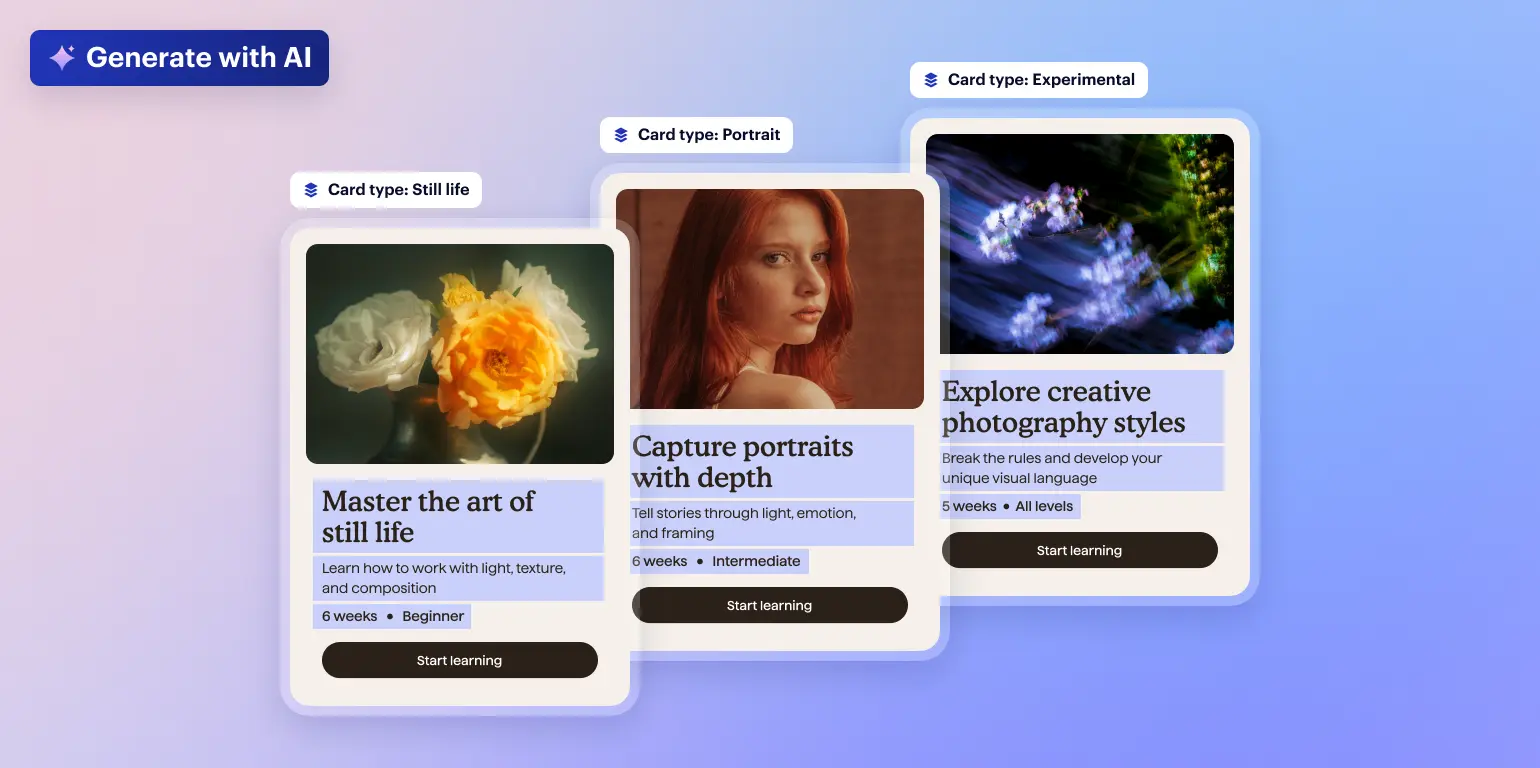
Despite these clear benefits, the "execution gap" has remained the primary hurdle. A survey of digital marketing managers conducted earlier this year revealed that 65% of teams cited "lack of resources" and "time constraints" as the top reasons for not implementing personalized landing pages for every ad group. By claiming a 3x increase in speed, Instapage is directly targeting this efficiency gap. For a marketing agency managing 50 different client segments, a task that previously took 15 hours of manual work can now theoretically be completed in five, allowing for more time to be spent on strategy and high-level creative direction.
The integration of AI Collections with "fluid grid blocks" further enhances this efficiency. One of the historical risks of dynamic content is "layout breakage"—where a longer AI-generated headline might overlap with an image or push a CTA button off-screen. Fluid grid blocks use responsive design logic to automatically adjust the surrounding elements based on the length and scale of the dynamic content. This ensures that regardless of whether the AI generates a five-word headline or a fifteen-word headline, the page remains aesthetically professional and functional across all device types.
Strategic Applications for High-Growth Sectors
The implications of AI Collections extend across various sectors of the digital economy. In the E-commerce space, brands can now create specific landing pages for every product category and customer persona. For instance, a fitness apparel brand can generate separate pages for "marathon runners," "yoga enthusiasts," and "weightlifters," each featuring tailored copy and imagery that reflects the specific interests of those groups, all derived from a single master template.
In the B2B SaaS sector, where account-based marketing (ABM) is a dominant strategy, AI Collections allows sales and marketing teams to create bespoke landing pages for individual high-value prospects. By inputting the company name and industry into the AI prompt, the system can generate a page that speaks directly to that company’s unique challenges, significantly increasing the likelihood of a conversion.
Search Engine Marketing (SEM) also stands to benefit. Google’s "Quality Score" algorithm heavily weights the relevance between an ad’s keywords and its destination landing page. By using AI to create highly specific pages for every keyword in an ad account, marketers can improve their Quality Scores, which in turn lowers their cost-per-click (CPC) and improves ad rankings.
Professional Analysis and Future Outlook
Industry analysts suggest that the launch of AI Collections is a defensive move against the increasing commoditization of basic landing page builders. As AI becomes a native feature in browsers and content management systems, dedicated landing page platforms must offer advanced orchestration capabilities to remain essential to the marketing stack.
The primary challenge for Instapage and its users will be maintaining brand voice and accuracy. While generative AI is capable of producing high volumes of content, it requires "human-in-the-loop" oversight to ensure that the messaging does not deviate from brand guidelines or hallucinate facts about products. Instapage has addressed this by positioning the content table as a review hub, where marketers can scan and approve AI outputs before they go live.
As marketing continues to move toward a "privacy-first" future with the phasing out of third-party cookies, the importance of "first-click relevance" increases. When marketers cannot rely on tracking data to follow users across the web, the landing page must work harder to convert the visitor immediately. AI Collections provides the infrastructure to make that first impression as relevant as possible.
The era of manual page management is rapidly coming to a close. With tools like AI Collections, the focus of the digital marketer is shifting toward the quality of the "prompt" and the depth of the "audience insight." As organizations adopt these technologies, the competitive landscape will likely be divided between those who can leverage AI to provide hyper-relevant experiences and those who remain tethered to the inefficiencies of the generic web. Instapage’s 14-day trial offer reflects a confidence that once teams experience the speed of AI-driven orchestration, the traditional methods of manual page creation will become obsolete.







