rifanmuazin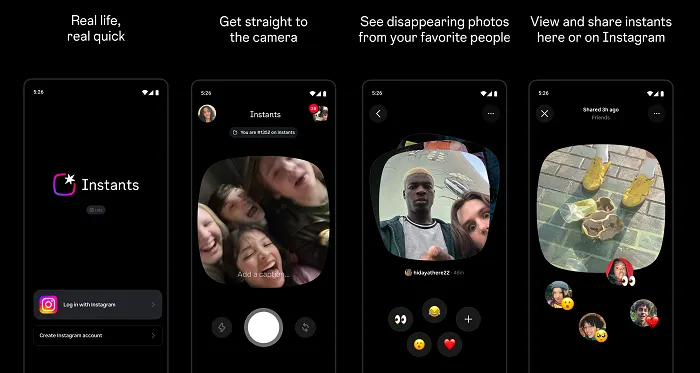
Meta Platforms, through its subsidiary Instagram, has initiated another significant move in the highly competitive social media landscape with the launch of "Instants," a new standalone application designed to facilitate raw, unedited, and temporary photo sharing. This camera-first app, bearing a striking resemblance to Snapchat’s core functionality, represents the latest iteration of Meta’s persistent strategy to engage younger audiences and, implicitly, to challenge the market share of its long-standing rival, Snap Inc. Currently rolling out in select regions, Instants aims to capture the spontaneity of real-life moments with its tagline, "real life, real quick," emphasizing a "no edits, share instantly" philosophy.
A Familiar Formula: From "Shots" to "Instants"
Instants is not an entirely novel concept within Meta’s experimental portfolio. It essentially emerges as a rebranded and re-packaged version of "Shots," an image-sharing option that Instagram experimented with last year. Shots, integrated directly within the Instagram app, allowed users to quickly send unedited, unfiltered pictures to friends, with the crucial caveat that these images could only be viewed once before disappearing permanently. This ephemeral nature, coupled with the emphasis on authenticity, conceptually positioned Shots as a hybrid between Snapchat’s disappearing messages and BeReal’s push for unfiltered, in-the-moment content. The positive response data from the Shots trial evidently provided Meta with sufficient encouragement to develop this concept further, leading to its evolution into the standalone Instants application.
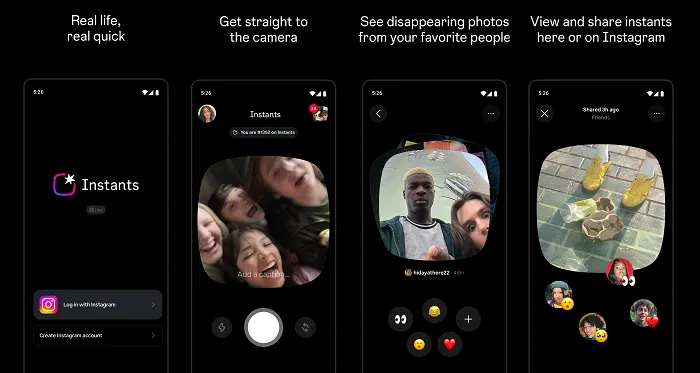
The core mechanics of Instants mirror its predecessor and its primary competitor: the app opens directly to the camera interface, prompting users to capture and share moments without the pressure of extensive editing or curation. This design choice is a direct response to a growing user preference, particularly among Gen Z and younger demographics, for more authentic, less polished interactions online. In an era where many users feel overwhelmed by the highly curated and often performative nature of traditional social media feeds, platforms offering a simpler, more immediate sharing experience have gained traction. Instants’ Google Play Store description explicitly reinforces this, stating "No edits, share instantly," positioning the app as a refreshing antidote to the perceived artificiality of some mainstream platforms.
Development of the separate Instants app has been underway for several months, with initial references to its existence first surfacing in the back-end code of Instagram in February. At that time, Meta confirmed its experimentation with the concept but maintained that no concrete launch plans had been solidified. The current rollout signifies that those plans have now materialized, and Instants is poised to enter the market, initially in limited regions, to test its viability against established players.
The Genesis of a Rivalry: A Decade of Competition
To truly understand the significance of Instants, one must delve into the decade-long, often acrimonious, rivalry between Meta and Snap Inc. The genesis of this intense competition dates back to 2013 when Meta CEO Mark Zuckerberg famously offered $3 billion to acquire the then-fledgling Snapchat. Snap Inc. CEO Evan Spiegel, a staunch advocate for independent innovation, rejected the offer. Reports from the Wall Street Journal and other media outlets at the time suggested that Zuckerberg took this rejection personally, initiating what many observers describe as a prolonged "vendetta" against the nascent platform.
This personal dimension transformed into a corporate strategy: if Meta couldn’t acquire Snapchat, it would attempt to replicate its most successful features and, ideally, diminish its market presence. This approach has led to a series of attempts by Meta to clone Snapchat’s ephemeral messaging and story-sharing functionalities across its various platforms.
Meta’s History of "Snapchat Killers"
Meta’s history is replete with efforts to mimic Snapchat, with varying degrees of success:
-
Poke (2013): Launched just months after the failed acquisition attempt, Facebook Poke was a standalone app designed as a direct clone of Snapchat. It allowed users to send disappearing photos and videos to friends. Despite the significant resources of Facebook behind it, Poke failed to gain traction and was shut down just 17 months later, largely due to its lack of originality and failure to capture the unique user experience that defined Snapchat.
-
Slingshot (2014): Another standalone app from Meta’s "Creative Labs" initiative, Slingshot aimed to differentiate itself by requiring users to send a photo or video to a friend before they could view the content sent to them. This "send-to-unlock" mechanism was an attempt to foster more reciprocal sharing, but it proved to be a barrier for casual users. Slingshot lasted only six months before being shuttered, highlighting the difficulty of forcing new social behaviors.
-
Quick Updates on Facebook (2016): As Snapchat continued its ascent, Meta tried integrating ephemeral sharing directly into its flagship Facebook app with "Quick Updates." This feature, tested in several markets, sought to encourage spontaneous, unedited sharing within the existing Facebook ecosystem. However, Facebook’s user base, accustomed to more permanent and curated content, did not readily adopt it, and the feature ultimately did not achieve widespread success.
-
Instagram Stories (2016): The singular, resounding success in Meta’s cloning endeavors arrived with Instagram Stories. Launched in August 2016, Stories allowed users to share photos and short videos that disappeared after 24 hours, complete with filters, text, and drawing tools – features directly inspired by Snapchat. Unlike its predecessors, Instagram Stories leveraged Instagram’s massive existing user base, lower friction of adoption, and integration into a platform already focused on visual sharing. Its success was immediate and profound, quickly surpassing Snapchat’s daily active user count for its Stories feature. This move is widely credited with significantly impacting Snapchat’s growth trajectory and solidifying Instagram’s position as a dominant force in visual social media. Instagram Stories became a cornerstone of the platform, demonstrating that successful replication depended heavily on strategic integration and timing.
Outside of Instagram Stories, none of Meta’s direct Snapchat clones managed to establish a significant foothold. This historical pattern suggests a challenging road ahead for Instants, yet Meta’s persistence indicates a belief that circumstances may now be different.
Snapchat’s Current Vulnerability: Why Now?
Meta’s decision to launch Instants at this particular juncture is likely influenced by recent developments concerning Snap Inc.’s operational and financial performance. Snapchat, while still a major player, has faced significant growth challenges in recent years. Reports indicate stalled user growth in some key regions and, in certain instances, even a decline. The company has grappled with stiff competition, particularly from TikTok, which has siphoned away a considerable portion of the younger demographic’s attention.
Furthermore, Snap Inc. has encountered financial headwinds, including a significant downturn in advertising revenue, exacerbated by broader economic pressures and changes in data privacy policies (such as Apple’s App Tracking Transparency). This has led to corporate restructuring, including the departure of key executives like its Chief Financial Officer, and a strategic pivot towards future technologies such as augmented reality (AR) glasses. While ambitious, this pivot requires substantial investment and resource allocation, potentially diverting focus and marketing spend away from the core Snapchat app’s promotion and growth in certain markets.
Meta likely perceives this period of vulnerability as an opportune moment to apply renewed pressure. With Snap potentially unable to allocate full resources to robust promotion and user acquisition in all markets, Meta sees a window to potentially steal market share. The "smelling blood in the water" analogy aptly describes Meta’s calculated move, aiming to capitalize on any perceived weakness to expand its ecosystem and consolidate its influence over digital communication.
The Quest for Authenticity: Understanding the Appeal of Ephemeral Content
The rise of Instants also reflects a broader shift in social media culture: the quest for authenticity. For years, platforms like Instagram were characterized by highly curated feeds, aspirational lifestyles, and often meticulously edited content. This led to a phenomenon where users, particularly younger ones, felt immense pressure to present a perfect, idealized version of themselves online. The backlash against this "perfection culture" paved the way for apps like BeReal, which gained significant popularity by prompting users to share unedited, simultaneous front and back camera photos at random times of the day, emphasizing genuine, unfiltered moments.
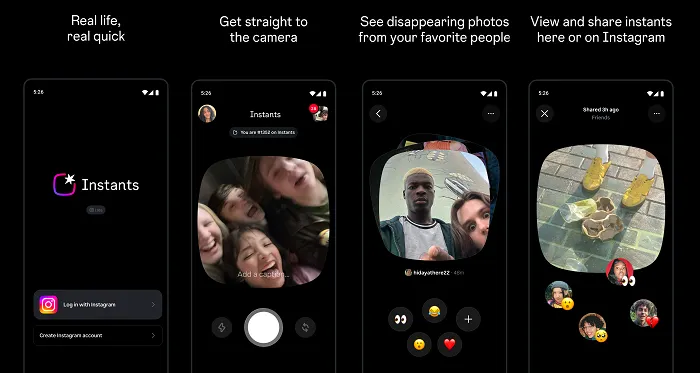
Instants, with its "no edits, share instantly" mantra, taps directly into this desire for more spontaneous, low-pressure sharing. For younger users, who are often digitally native and highly attuned to the nuances of online authenticity, an app that explicitly discourages editing and prioritizes raw moments can be appealing. It offers a counter-narrative to the polished feeds of Instagram and TikTok, providing a space where imperfections are accepted and even celebrated. The psychological appeal lies in reducing the cognitive load associated with content creation – no need to agonize over filters, captions, or angles, just share what’s happening.
This focus on privacy-friendly, unedited content also resonates with a demographic increasingly concerned about data security and the performative aspects of public sharing. Ephemeral content naturally reduces the digital footprint, offering a sense of transient interaction that feels less permanent and less subject to scrutiny than traditional posts.
Strategic Implications and Market Impact
The launch of Instants carries several strategic implications for Meta and the broader social media landscape. For Meta, the overarching goal remains user retention, expansion into new demographics, and the continuous collection of valuable user data to refine its advertising models. Even if Instants does not become a blockbuster app, it serves multiple purposes:
- Competitive Pressure: It maintains Meta’s relentless pressure on Snap Inc., forcing them to divert resources to defend their core offering rather than exclusively focusing on innovation.
- Market Research: It acts as a live experiment, gathering data on what resonates with users in the authentic and ephemeral sharing space. This data can then inform features across Instagram and other Meta platforms.
- Ecosystem Expansion: It seeks to keep users within the Meta ecosystem. If users are looking for a more authentic, Snapchat-like experience, Meta wants to provide it rather than seeing them migrate to a competitor.
- Demographic Capture: By targeting younger audiences with a dedicated app, Meta hopes to cultivate brand loyalty early on, securing future generations of users.
However, Instants also faces significant challenges. The history of failed clones looms large, suggesting that simply replicating features is often insufficient without a compelling unique selling proposition or a fundamentally different user experience. User fatigue is another factor; the market is saturated with social media apps, and users may be hesitant to adopt yet another one, especially if its functionality feels too similar to existing options.
Furthermore, the very connection to Instagram, while offering a built-in user base, could also be a double-edged sword. Many teens actively seek out new platforms precisely to escape the presence of older relatives and the curated environment associated with their parents’ generation on apps like Instagram. An app that is intrinsically tied back to Instagram might not offer the clean break that some younger users desire.
Despite these hurdles, Instants could find a niche in regions where Snapchat has not gained a significant foothold or where its growth is indeed declining. In such markets, with less entrenched competition, Meta’s formidable marketing power and existing network effects could potentially allow Instants to become a leading instant-sharing app. The success will likely depend on Meta’s ability to market it as a fresh, distinct experience rather than just another Instagram offshoot.
Conclusion: A Persistent Pursuit
The launch of Instants underscores Meta’s unwavering determination to dominate the social media landscape and its persistent pursuit of its rivals. While history suggests that direct clones often struggle to replicate the organic success of original platforms, Meta’s strategy is a long-term game. Even small gains in market share or a successful diversion of competitor resources can be deemed a victory in the fiercely competitive tech space.
As social media continues to evolve, with an increasing fragmentation of platforms catering to specific modes of sharing and demographic preferences, Instants represents Meta’s bet on the enduring appeal of raw, ephemeral content. Whether it will finally be the "Snapchat killer" Meta has sought for a decade, or merely another experiment in its vast portfolio, remains to be seen. Its performance will offer valuable insights into the future direction of social interaction online and the ongoing battle for the attention of the next generation of digital natives.