
 rifanmuazin
The rapid evolution of the Model Context Protocol (MCP) has introduced a paradigm shift in how artificial intelligence models interact with external data sources and software tools. Developed to standardize the connection between Large Language Models (LLMs) and local or remote resources, MCP has quickly become a cornerstone for developers seeking to build autonomous AI agents. However, as organizations transition from individual experimentation to team-wide implementation, the inherent security risks and lack of structure in direct MCP interactions have become significant hurdles. The solution lies in the orchestration of these protocols through robust automation platforms like n8n, supplemented by the Model Context Protocol Open (MCPO) proxy, to create secure, repeatable, and efficient workflows.

The Rise of MCP and the Security Imperative
The Model Context Protocol was initially introduced by Anthropic to address the fragmentation in how AI models access tools. Before MCP, every integration required custom “glue code” to translate an LLM’s intent into an API call or database query. While MCP solved this by providing a universal standard, it introduced a new vulnerability: the “over-privileged agent” problem. When a developer grants an LLM direct access to an MCP server—such as a file system or a cloud database—they are essentially providing the model with the “keys to the kingdom.” An unintended hallucination or a poorly phrased prompt could result in catastrophic data loss or unauthorized system changes.
Industry analysts have noted that while 70% of enterprises are experimenting with AI agents, fewer than 20% have deployed them into production due to these governance concerns. The integration of MCP into n8n workflows addresses this gap by placing a “human-in-the-loop” or a “structure-in-the-loop” framework around the AI. By converting volatile MCP interactions into well-defined API endpoints via MCPO, organizations can enforce strict permissions, audit every action, and ensure that AI models only operate within narrow, predefined parameters.

Technical Chronology: From Individual Tooling to Team Workflows
The journey toward a secure n8n-MCP architecture typically begins with individual developer tools. Tools like Claude Code or Cowork allow developers to use MCP servers locally to perform tasks such as editing code or querying APIs. While efficient for a single user, this model is not scalable for a team. Each member would need to maintain their own MCP configurations, environment variables, and security keys, leading to “configuration drift” and a massive increase in the attack surface.
The transition to a centralized workflow follows a specific technical chronology:
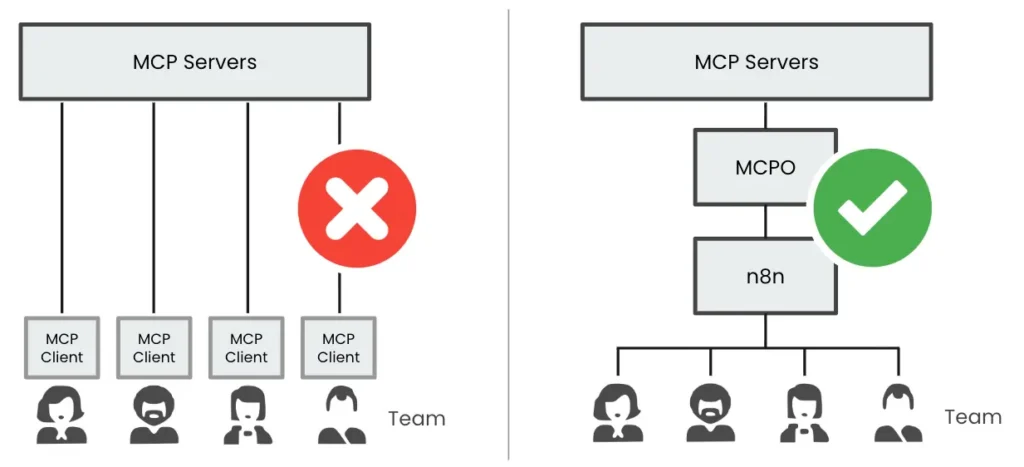
- Infrastructure Consolidation: Instead of local installations, MCP servers are hosted in a centralized environment using containerization.
- Protocol Proxying: MCPO is deployed to act as a bridge, transforming the JSON-RPC communication of MCP into standard RESTful API endpoints.
- Workflow Orchestration: n8n is utilized to build the logic, connecting user inputs (forms or webhooks) to the newly created API endpoints.
- Deployment and Monitoring: The finalized workflow is shared with the team, providing a consistent interface that abstracts the underlying complexity of the AI and the protocol.
Phase I: Centralizing Infrastructure with Docker and MCPO
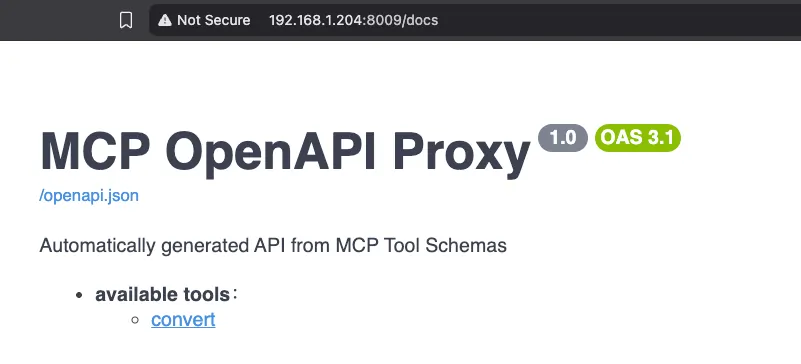
The first step in building a secure workflow is the deployment of MCPO via Docker Compose. This approach ensures that the environment is reproducible and isolated. By defining the MCPO service in a docker-compose.yml file, administrators can manage ports, volumes, and security keys in one location.
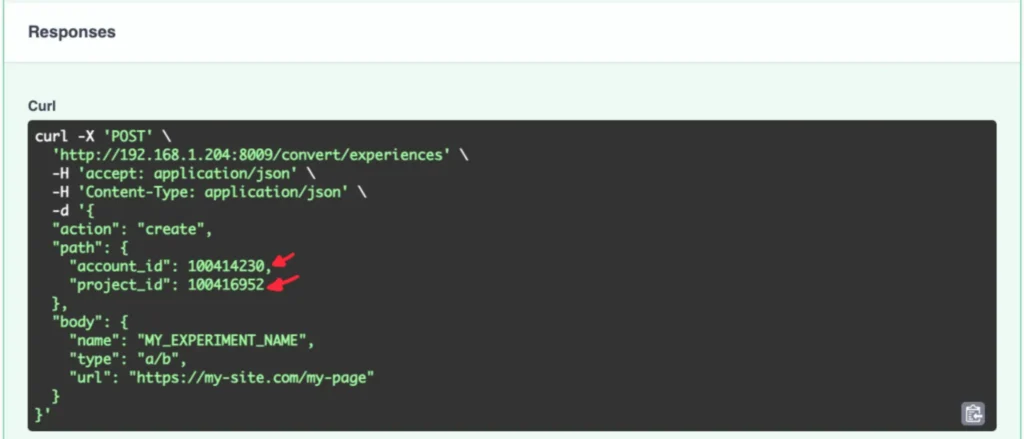
The configuration of the MCP servers—such as the Convert.com MCP server used for A/B testing—is handled through a centralized config.json file. This file defines the command-line arguments and environment variables (such as API keys and secrets) required for the MCP server to function. By securing this configuration at the server level, individual team members no longer need to handle sensitive credentials, significantly reducing the risk of credential leakage.
Supporting data suggests that centralized API management can reduce integration errors by up to 45%. In the context of AI, this stability is even more critical, as it provides the LLM with a consistent “world view” of the tools it is permitted to use.
Phase II: Constructing the n8n Orchestration Layer
With the infrastructure in place, the focus shifts to the n8n workflow. The objective is to create a structured process that takes a user request and executes a series of complex tasks, such as generating code and interacting with third-party platforms. In a typical scenario involving A/B testing, the workflow follows a five-step logic:
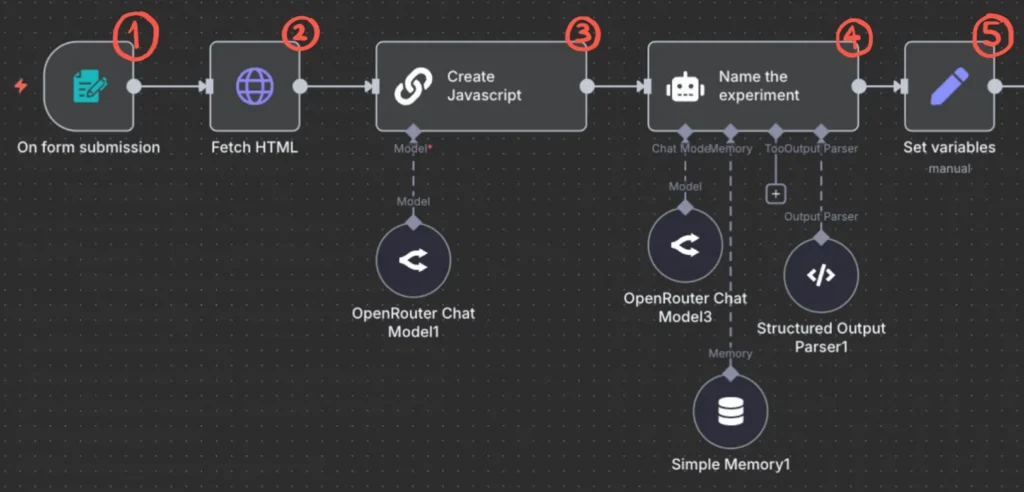
1. Data Intake and Validation: The workflow begins with a trigger, such as a form submission or a webhook. This ensures that the process only starts when specific, required data points are provided. For an A/B test, this might include the target URL and the desired visual changes.
2. Context Retrieval: The workflow fetches the HTML of the target page. This provides the necessary context for the AI, ensuring that any code it generates is grounded in the actual structure of the website, rather than a generalized guess.
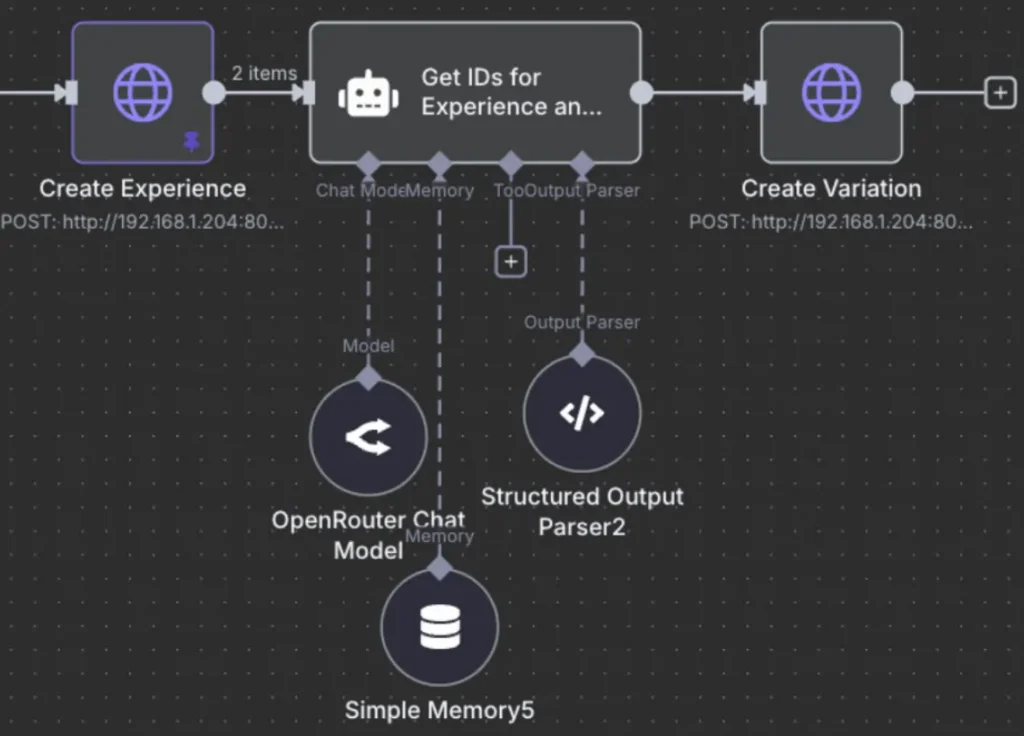
3. Specialized AI Processing: Rather than using a single, massive LLM for the entire task, the workflow employs “Small Models” optimized for specific tasks. A specialized agent receives the HTML and the change request to generate the required JavaScript. This modular approach is more cost-efficient and often results in higher-quality code with fewer hallucinations.
4. Standardization and Variable Management: A “Set Variables” node bundles all necessary data—such as account IDs, project IDs, and the generated code—into a single object. This step is crucial for maintaining a clean data flow throughout the subsequent API calls.
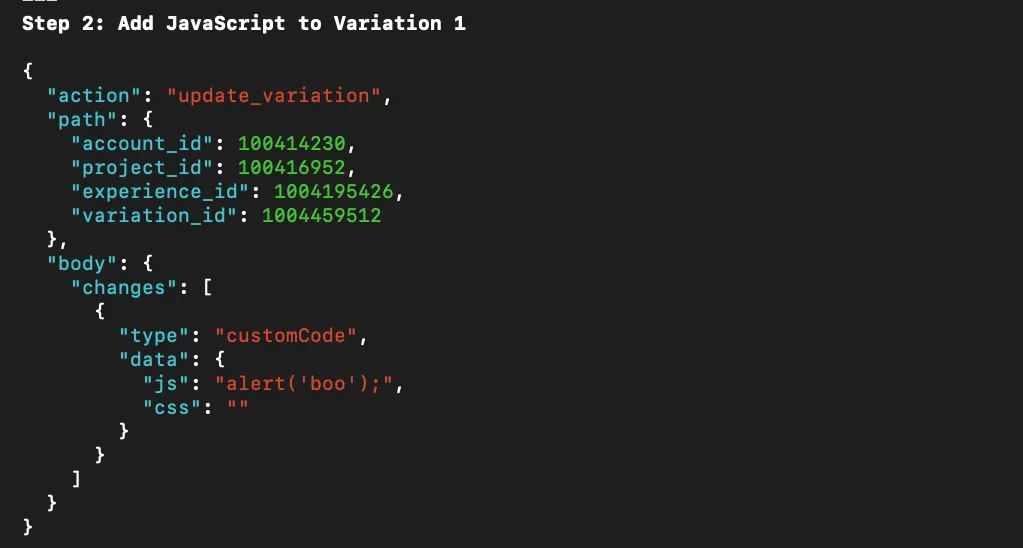
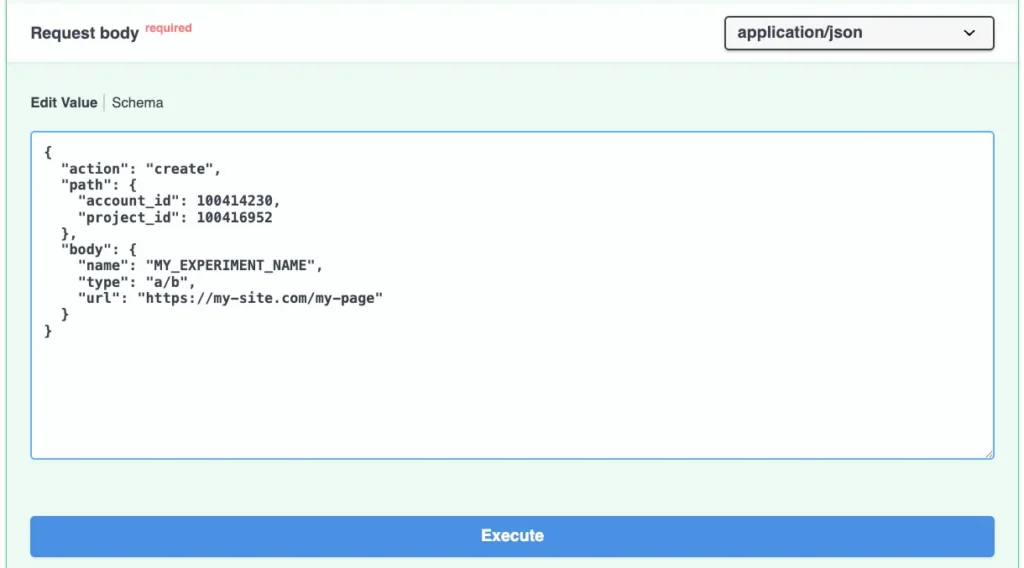
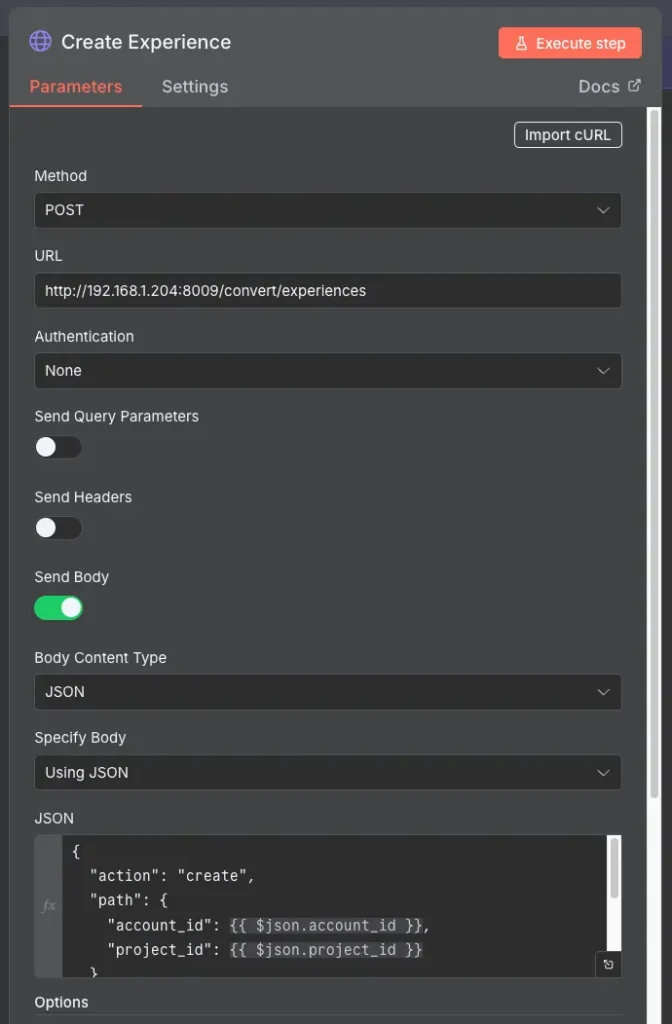
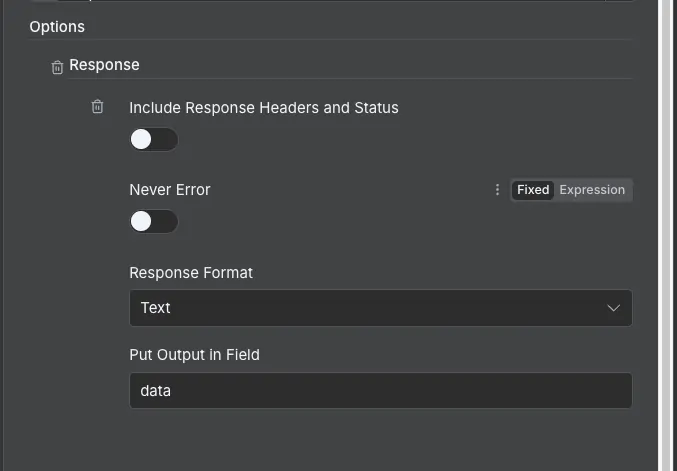
5. Execution via HTTP Request: The final steps involve communicating with the MCPO endpoints. The workflow makes sequential calls to create an “experience” (the experiment) and then a “variation” (the specific changes). Because these are now standard HTTP requests, n8n can easily parse the responses, extract IDs, and handle any errors that occur during the process.
Phase III: The Role of Small Models in Efficient Workflows
A critical component of this strategy is the use of small, task-specific models. While models like Claude 3.5 Sonnet or GPT-4o are highly capable, they are often “overkill” for tasks like naming an experiment or extracting a single ID from a JSON response.
Recent benchmarks indicate that small models (under 10 billion parameters) can perform specific logic tasks with 95% of the accuracy of their larger counterparts while costing 90% less and operating at significantly higher speeds. In an n8n workflow, these small models act as “micro-agents,” performing discrete functions that contribute to the larger goal. This not only reduces the operational cost of the workflow but also increases its reliability, as the models are less likely to diverge from the specific task at hand.
Implications for Enterprise AI Adoption
The methodology of turning MCP into a secure n8n workflow has profound implications for how businesses approach AI. By moving away from “chat-based” interactions and toward “workflow-based” interactions, organizations can achieve a level of predictability that was previously impossible with generative AI.
Security and Compliance: Centralizing MCP servers allows IT departments to implement rigorous logging and monitoring. Every action taken by an AI agent can be traced back to a specific workflow execution, providing a clear audit trail for compliance purposes.
Team Empowerment: By providing a simplified interface (such as an n8n form), non-technical team members can leverage the power of advanced AI tools without needing to understand the underlying protocols or code. This democratizes the use of AI within the organization while maintaining strict guardrails.
Scalability: As the organization’s needs grow, new MCP servers can be added to the MCPO configuration and integrated into n8n workflows with minimal friction. This modular architecture allows the AI ecosystem to evolve alongside the business.
Official Responses and Industry Sentiment
While Anthropic and other protocol developers have not issued formal statements regarding specific third-party proxies like MCPO, the general consensus among the developer community is one of cautious optimism. Leading figures in the AI automation space have advocated for “API-first” approaches to agentic workflows, noting that the current state of direct LLM-to-tool interaction is too volatile for mission-critical applications.
“The goal of MCP was always to create a standard,” noted one prominent open-source contributor. “Tools like MCPO and n8n are the natural next step—they provide the governance and orchestration layer that makes that standard viable for the enterprise.”
Conclusion: The Future of Orchestrated AI
The shift from individual MCP usage to structured n8n workflows represents a maturation of the AI industry. By treating AI agents not as autonomous black boxes, but as components within a well-orchestrated system, businesses can unlock the true potential of the Model Context Protocol.
As small models continue to improve and orchestration tools like n8n become more sophisticated, the barrier to entry for complex AI automation will continue to fall. Organizations that adopt these structured, secure frameworks today will be well-positioned to lead in an increasingly automated landscape, transforming raw AI capabilities into tangible, repeatable business value. The process outlined here—leveraging MCPO to bridge the gap between protocols and APIs—is more than just a technical workaround; it is a blueprint for the future of enterprise AI.








