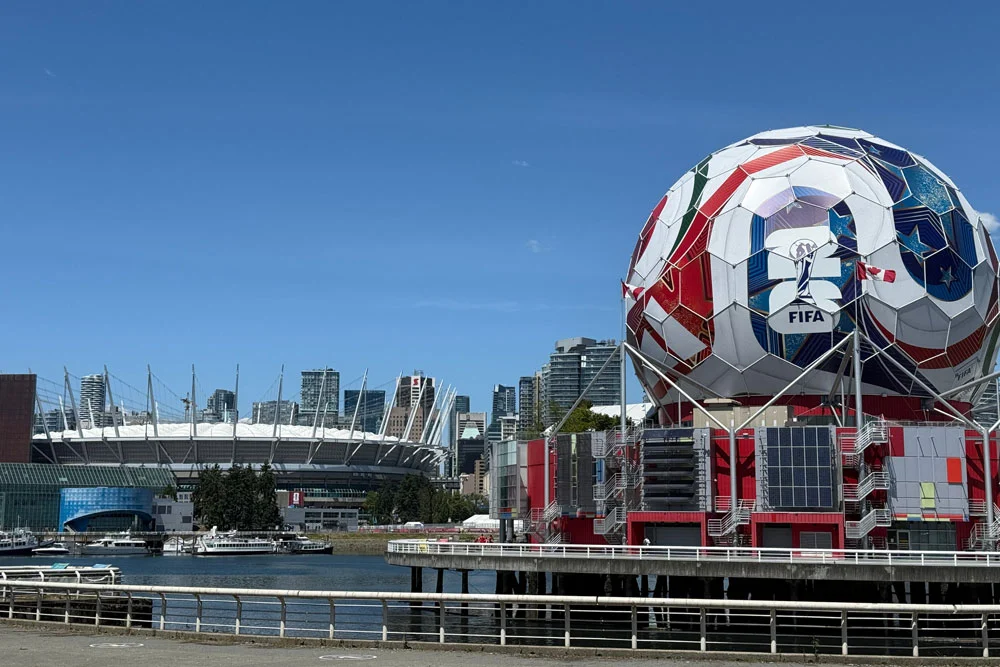
The FIFA World Cup 2026 has transitioned from a highly anticipated sporting event into a masterclass in strategy, resilience, and global cooperation. As the tournament unfolds across sixteen host cities in Canada, Mexico, and the United States, the spectacle has provided more than just athletic entertainment; it has offered a profound set of parallels for the global affiliate marketing industry. From the logistical triumphs of the first-ever 48-team tournament to the dramatic upsets on the pitch, the event serves as a microcosm for a multi-billion-dollar marketing sector that relies on many of the same principles: teamwork, agility, and a refusal to succumb to complacency.
The Historic Context of the 2026 FIFA World Cup
The 2026 tournament marks a significant departure from previous iterations of the World Cup. It is the first to feature 48 nations, an expansion from the 32-team format that had been the standard since 1998. This expansion resulted in a massive logistical undertaking, requiring 104 matches to be played over 39 days. The sheer scale of the event—spanning three time zones and diverse climates—mirrors the complexity of modern digital marketing ecosystems, where brands must navigate fragmented audiences across various geographical regions and technological platforms.
Observers noted the cultural impact early in the tournament. Flights from major European hubs, such as the London-to-Boston route, were frequently occupied by the "Tartan Army"—the dedicated supporters of the Scotland national team—highlighting the global mobility and passion that fuel such large-scale events. For industry analysts, these movements represent more than just fan travel; they symbolize the interconnectedness of global markets. In the same way that a soccer tournament brings together disparate nations, affiliate marketing connects brands with diverse consumer bases through a network of strategic partnerships.
The Evolution of Teamwork: Beyond Individual Brilliance
One of the primary takeaways from the 2026 World Cup has been the limitation of individual talent when unsupported by a cohesive collective. Despite the presence of legendary figures like Croatia’s Luka Modrić and Portugal’s Cristiano Ronaldo, their respective teams faced significant hurdles. Croatia’s inability to overcome Portugal in key stages, and Portugal’s subsequent exit at the hands of Spain in the Round of 16, underscored a fundamental truth: even the most skilled individuals cannot carry a team to victory without a robust supporting structure.
In the realm of affiliate marketing, this principle is equally applicable. For over a quarter-century, industry veterans have observed that an affiliate management agency is only as effective as the synergy between its team members. Furthermore, the success of an individual affiliate program is rarely dependent on a single "super-affiliate." Instead, long-term revenue protection and high-quality lead generation are achieved through diversification.
Data from the Performance Marketing Association suggests that programs relying on a single marketing channel—such as coupon sites or social media influencers—are significantly more vulnerable to algorithm changes and market shifts. To build a resilient "team," affiliate managers must integrate various marketing channels, including:
- Content Creators and Bloggers: Providing high-funnel awareness and SEO value.
- Review Sites: Offering mid-funnel social proof and comparison data.
- Loyalty and Cashback Portals: Driving high-volume conversions and customer retention.
- Niche Influencers: Engaging highly targeted demographics with authentic messaging.
Just as a soccer coach balances a roster with defenders, midfielders, and strikers, an affiliate manager must balance their program with a mix of affiliate types to ensure sustainable growth.
The Rise of the Underdog: Disrupting the Status Quo
The 2026 tournament will likely be remembered for the "Year of the Underdog." The Group Stage delivered one of the most significant shocks in World Cup history when Curaçao, making its debut on the world stage, held Ecuador to a 0-0 draw. This trend continued into the knockout rounds, where Egypt led the defending champions, Argentina, 2-0 for a significant portion of their Round of 16 match.
These sporting upsets provide a direct analogy to market disruption in the affiliate space. A prominent example is the rise of Nectar Sleep. When the brand launched its affiliate program in early 2017, it entered a "mattress-in-a-box" market already dominated by established giants like Casper, Saatva, and Purple. To many observers, Nectar Sleep was the underdog, facing brands with massive venture capital backing and years of head-start in brand recognition.
However, through a focused and aggressive affiliate strategy, Nectar Sleep achieved what many thought impossible. Within exactly one year and five days of its launch, the brand’s affiliate program ascended to the number one position on its affiliate network, surpassing over 5,000 other brands, including household names like Wayfair, Reebok, and the NFL.
This case study illustrates that being an underdog is not a sentence to mediocrity. In both sports and business, the underdog advantage often lies in agility, the willingness to take calculated risks, and a deeper focus on performance-based results. For smaller brands, the affiliate model provides a level playing field where quality of execution often triumphs over the sheer size of a marketing budget.
The Danger of Complacency: A Chronology of Declining Giants
Perhaps the most sobering lesson from the 2026 World Cup is the rapid fall of traditional powerhouses. Italy, a four-time World Cup champion, failed to qualify for the tournament entirely, marking a period of prolonged struggle for the "Azzurri." During the tournament itself, the Netherlands was eliminated by Morocco in the Round of 32, and Brazil—often considered the gold standard of international soccer—was knocked out by Norway in the Round of 16.
Norway’s success is particularly noteworthy. Before 2026, the nation had not qualified for a World Cup in nearly three decades. Their advancement to the Quarterfinals serves as a reminder that the hierarchy of success is never permanent.
In affiliate marketing, the "rest on your laurels" trap is a common pitfall for established brands. The digital landscape is inherently dynamic, characterized by constant shifts in consumer behavior, regulatory environments, and technological capabilities. What generated significant ROI five years ago—such as basic cookie-based tracking or unoptimized banner ads—is often obsolete today.
Key factors currently disrupting the affiliate marketing landscape include:
- Privacy Regulations: The implementation of GDPR, CCPA, and the phasing out of third-party cookies have forced a total overhaul of tracking and attribution models.
- Artificial Intelligence: Generative AI is transforming how content is created and how affiliates optimize their sites for search engines.
- Shift to Video: The rise of short-form video on platforms like TikTok and YouTube Shorts has changed how consumers discover products.
Industry experts emphasize that continuous education is the only defense against obsolescence. Professionals who fail to attend industry conferences, such as the Affiliate Summit, or ignore emerging marketing technologies, risk finding themselves in the same position as the traditional soccer giants who failed to adapt to the modern game.
Broader Impact and Industry Implications
The parallels between the FIFA World Cup 2026 and affiliate marketing highlight a broader shift in how global business is conducted. The tournament’s success in North America has demonstrated the power of collaborative hosting, much like how "co-opetition" in marketing—where brands and affiliates work together toward mutual goals—has become the industry standard.
The economic impact of the 2026 World Cup is estimated to be in the billions, with host cities seeing surges in tourism, infrastructure development, and local business revenue. Similarly, the affiliate marketing industry is projected to reach a valuation of over $17 billion globally by the end of the decade. As the industry grows, the lessons of 2026 remain clear:
- Resilience is built through diversity: A diverse portfolio of partners protects against volatility.
- Agility beats size: Small, performance-focused entities can outmaneuver legacy brands.
- Constant evolution is mandatory: In a dynamic environment, standing still is equivalent to moving backward.
As the final whistle blows on the 2026 World Cup, the strategies employed on the pitch will continue to resonate in boardrooms and marketing departments worldwide. The tournament has proven that while talent is a prerequisite for entry, it is teamwork, the courage to disrupt, and a commitment to continuous improvement that ultimately secure the championship—whether in sports or in the competitive world of affiliate marketing.