Nana Wu
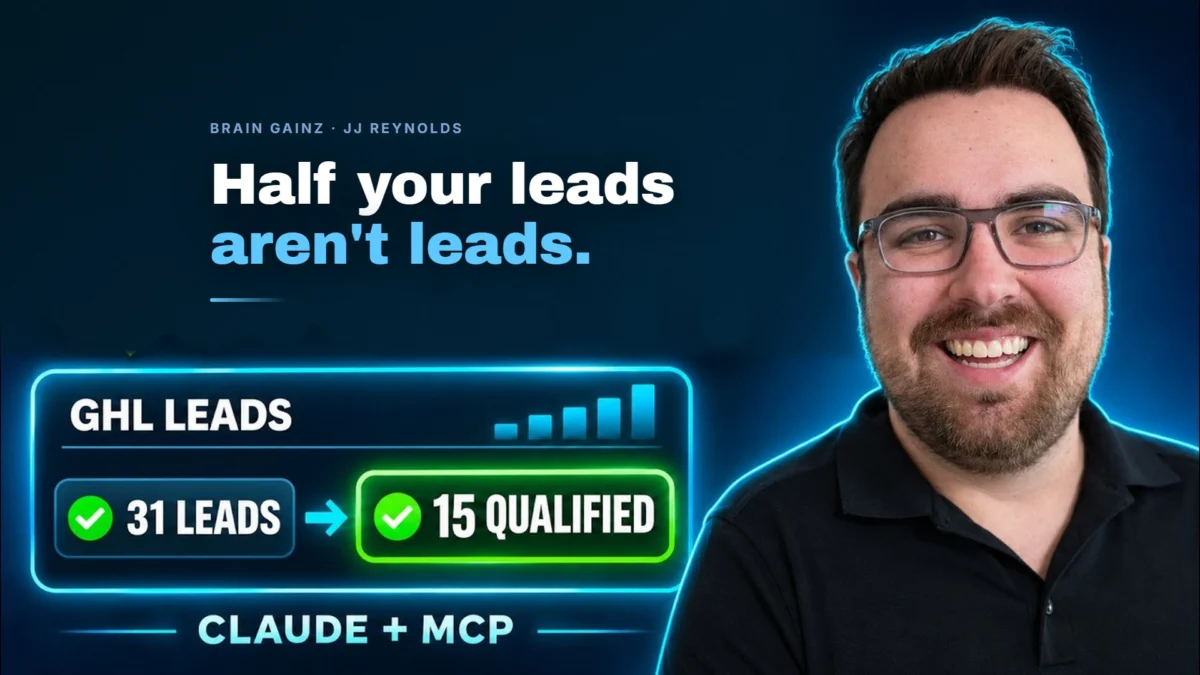
The landscape of digital advertising is currently undergoing a fundamental shift, driven by increased privacy regulations, the deprecation of third-party cookies, and the rising costs of customer acquisition. During a recent MeasureU "Brain Gainz" session, JJ Reynolds, founder of VisionLabs and developer of HelloConversions, presented a comprehensive framework for businesses utilizing the GoHighLevel (GHL) platform to reclaim lost data and optimize ad spend. The session highlighted a growing crisis in digital marketing: while click-through rates (CTR) in many sectors are rising, actual conversion rates are declining, creating a "margin compression" that threatens the profitability of DIY tracking setups.
The Crisis of Traditional Tracking and the Rise of Margin Compression
For several years, the standard approach for small to mid-sized agencies using GoHighLevel involved manual "duct-tape" solutions—custom webhooks, complex Google Tag Manager configurations, and manual data pipelines. However, Reynolds argues that these DIY methods are no longer viable in an era where browser-based tracking is increasingly blocked by operating system updates, such as Apple’s iOS 14.5, and privacy-focused browsers.
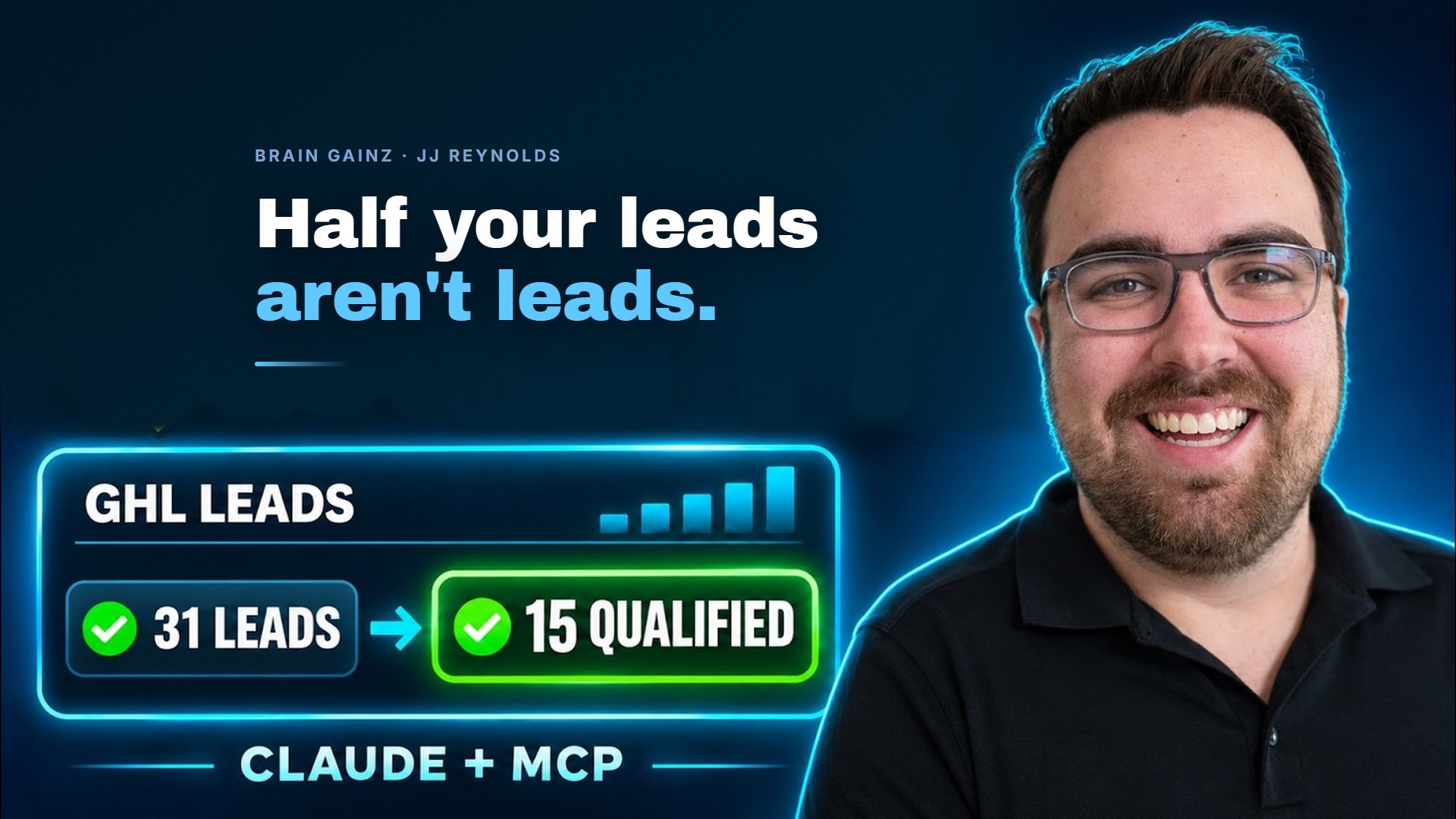
According to industry data shared during the session, the inefficiency of traditional tracking leads to a significant loss of signal. Many businesses are currently operating with a 30% to 40% "blind spot" in their conversion data. This means that for every 100 sales or leads generated, Meta or Google may only "see" 60 to 70 of them. This data gap prevents ad platform algorithms from learning who the ideal customer is, leading to higher Cost Per Mille (CPM) and Cost Per Click (CPC) as the platforms struggle to optimize delivery.
Reynolds noted that the current market environment is characterized by "brutal" margin compression. As competition increases, the cost of attention rises. When businesses waste 15% to 20% of their budget on inefficient tracking infrastructure or "leaky" data pipes, they lose the ability to scale. The solution, according to the VisionLabs framework, is to transition GoHighLevel from a simple CRM into a sophisticated Customer Data Platform (CDP).
A Three-Part Framework for High-Performance Tracking
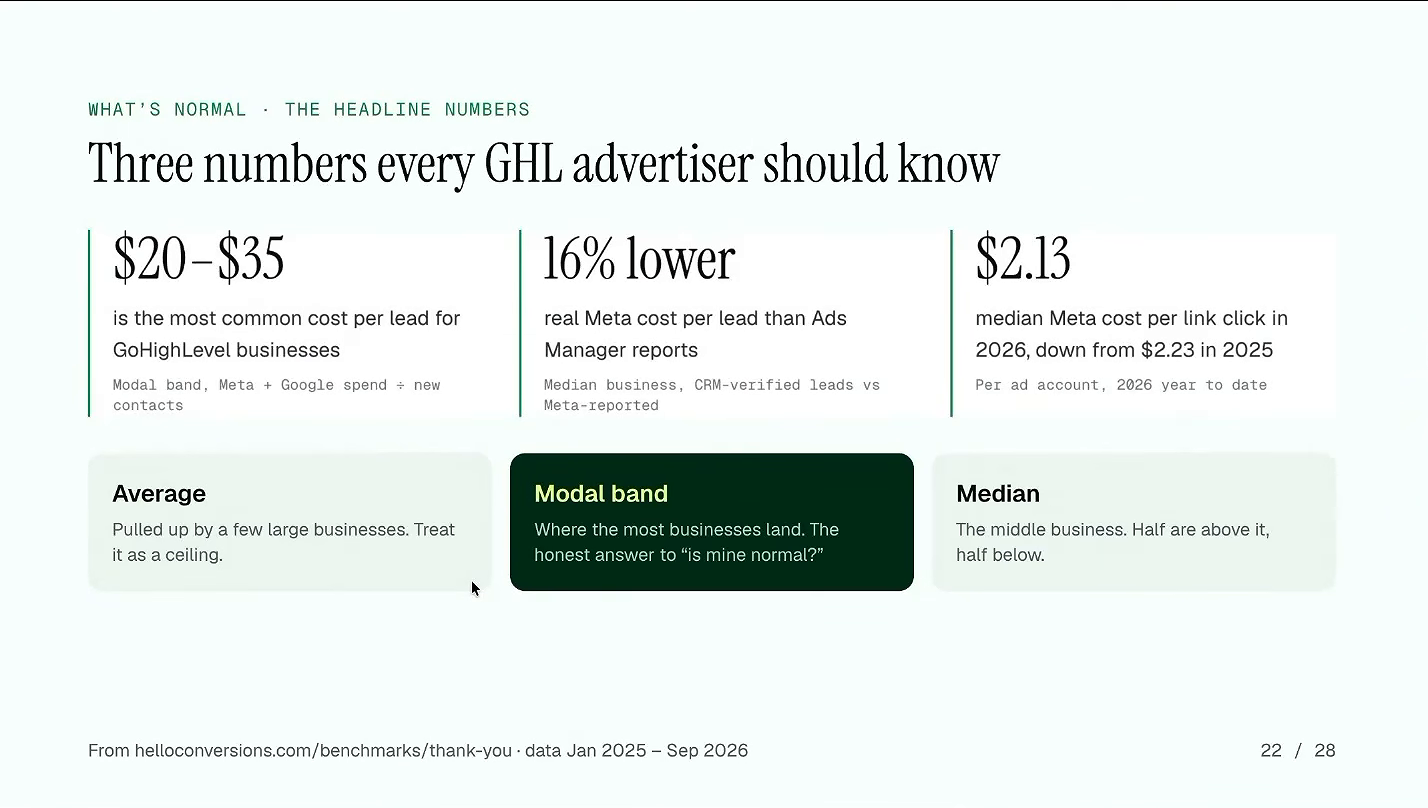
The methodology presented by Reynolds focuses on three critical pillars: the implementation of server-to-server tracking, the filtration of lead quality before data transmission, and the enrichment of contact records with deep-level tracking identifiers.
1. Server-to-Server (S2S) Implementation
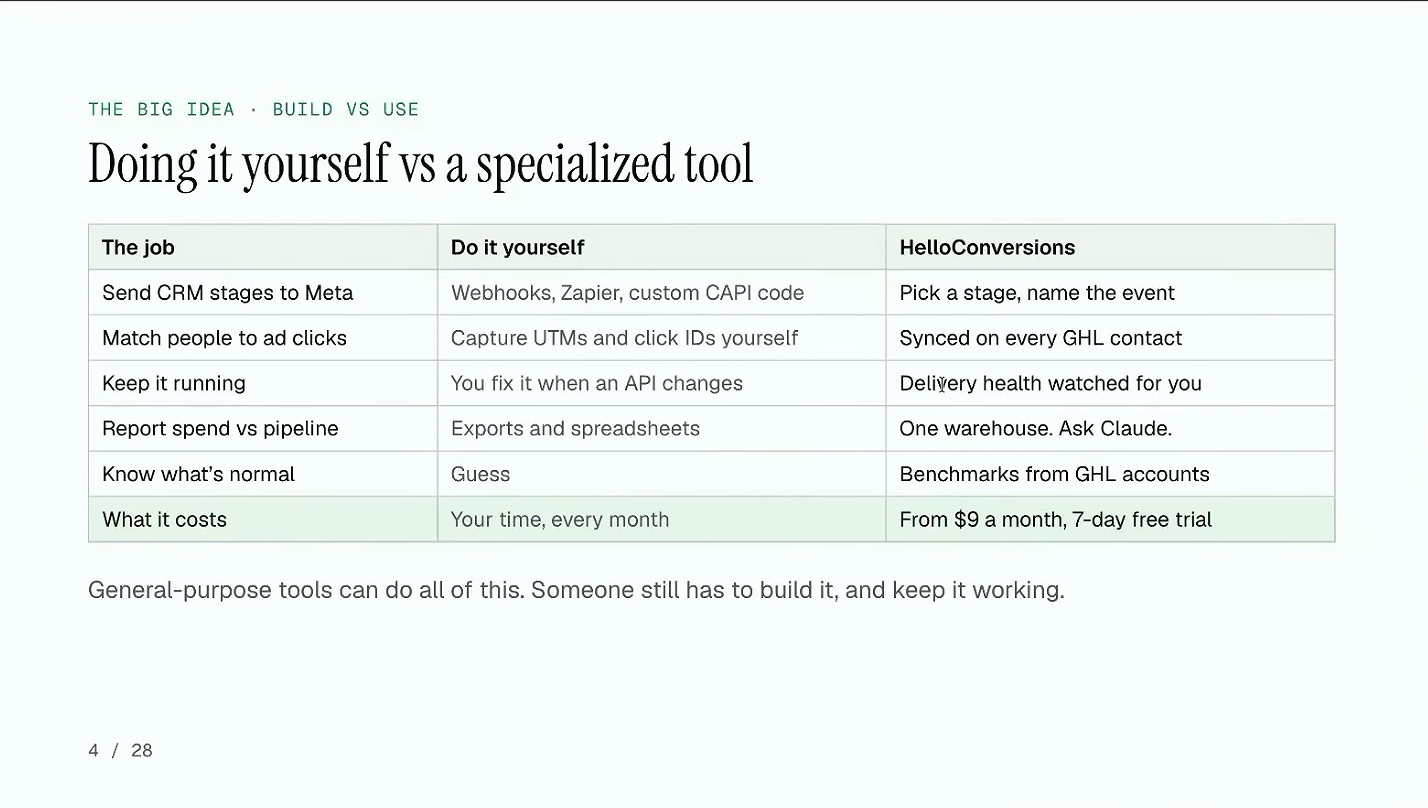
The Meta Conversions API (CAPI) has moved from being a "luxury" feature to a mandatory requirement for performance marketers. Unlike browser-based pixels, which rely on the user’s browser to send data to Meta, server-to-server tracking sends data directly from the GoHighLevel server to Meta’s servers. This bypasses ad blockers and avoids the limitations of browser timeouts. Reynolds demonstrated that automating this process can now be achieved for as little as $9 per month, a fraction of the cost of hiring a dedicated data engineer or developer.
2. Filtering Leads for Algorithmic Training
A common mistake among GHL users is sending every lead signal back to the ad platform. Reynolds emphasized that sending "noisy" data—such as bot form fills, fake email addresses, or unqualified leads—actively damages campaign performance. When an ad platform’s algorithm is trained on low-quality leads, it optimizes for more of the same.
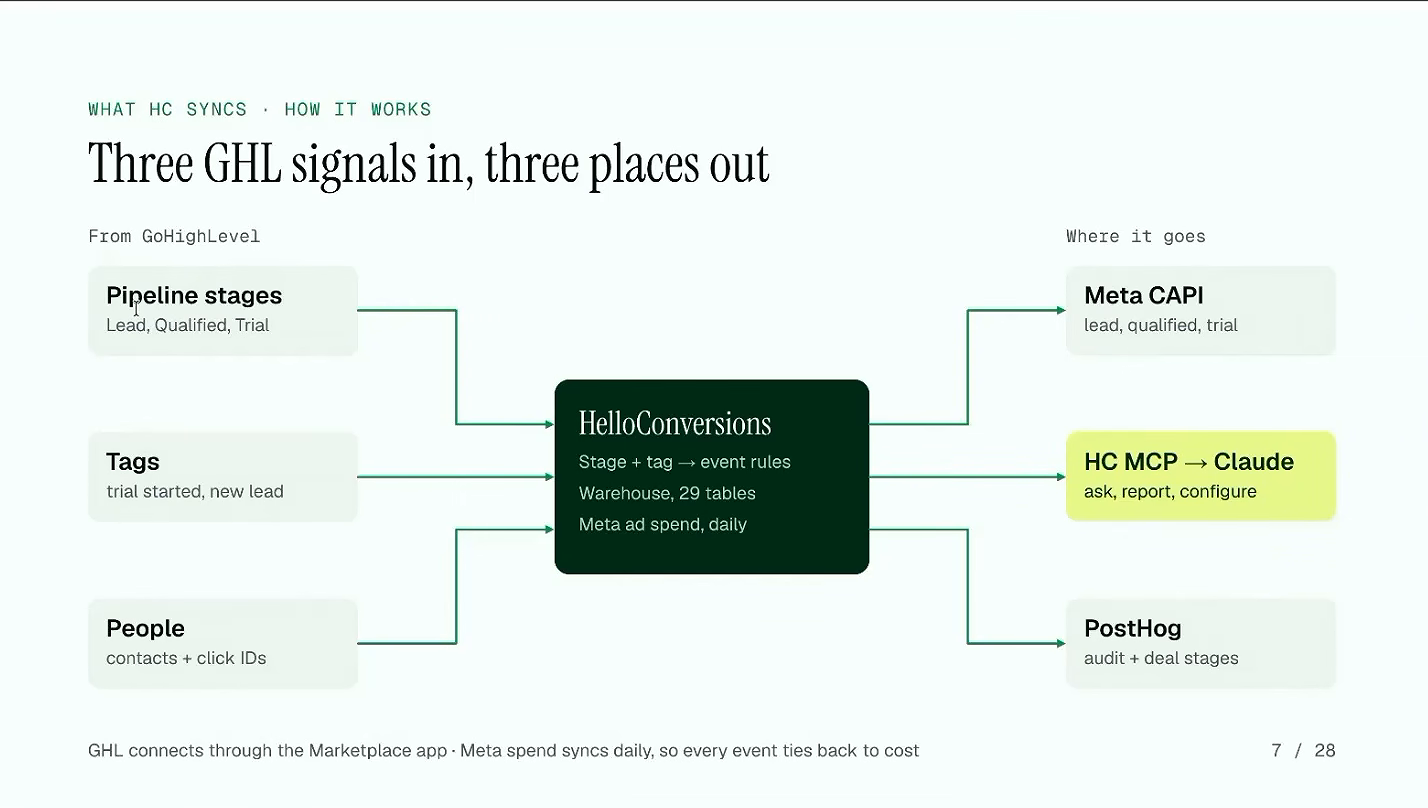
The framework suggests a "Filter Before You Feed" approach. By using GoHighLevel’s pipeline stages, businesses can ensure that only "Qualified Leads" trigger a conversion event in Meta. This creates a cleaner signal, allowing the algorithm to focus exclusively on high-intent users who meet specific business criteria.
3. Capturing Deep Tracking Identifiers
To function as a legitimate CDP, GoHighLevel must capture and store specific identifiers for every contact. These include:
- UTM Parameters: Tracking the source, medium, campaign, and content of the first and last touch.
- Click IDs: Capturing the
fbclid(Facebook Click ID),gclid(Google Click ID), and browser identifiers likefbcandfbp. - Contextual Data: Recording the referrer URL and the specific landing page where the conversion occurred.
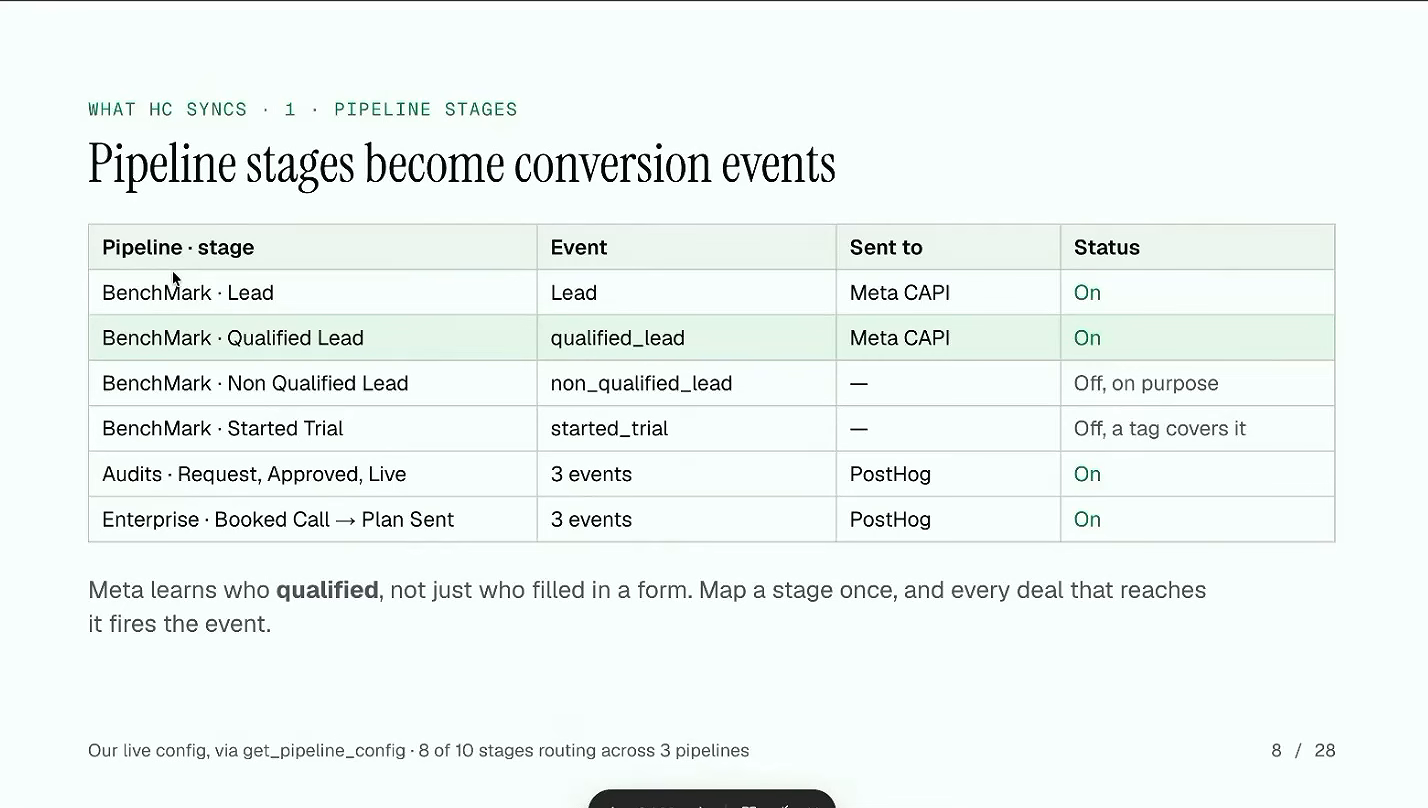
Reynolds demonstrated a setup where this data is appended to the contact record in real-time. In one case study, a new lead was captured, qualified, and the signal was transmitted to Meta in just 32 seconds, providing the ad platform with near-instant feedback on its targeting accuracy.
The 21-Action Benchmark and Industry Data
A significant portion of the MeasureU session was dedicated to the "21-Action Benchmark." Ad platform algorithms, particularly Meta’s, require a consistent volume of data to exit the "learning phase." Reynolds posits that a campaign needs at least 21 conversion actions per week to maintain optimization.
When a campaign falls below this threshold, the algorithm essentially "guesses," which often results in erratic performance and spiked costs. For businesses with low lead volumes, the framework suggests moving the conversion event "up-funnel" (e.g., from "Purchase" to "Qualified Lead") to ensure the 21-action minimum is met, provided that strict qualification filters are in place.
Supporting data from the "GoHighLevel Benchmarks Report" revealed several key findings for the median GHL user:
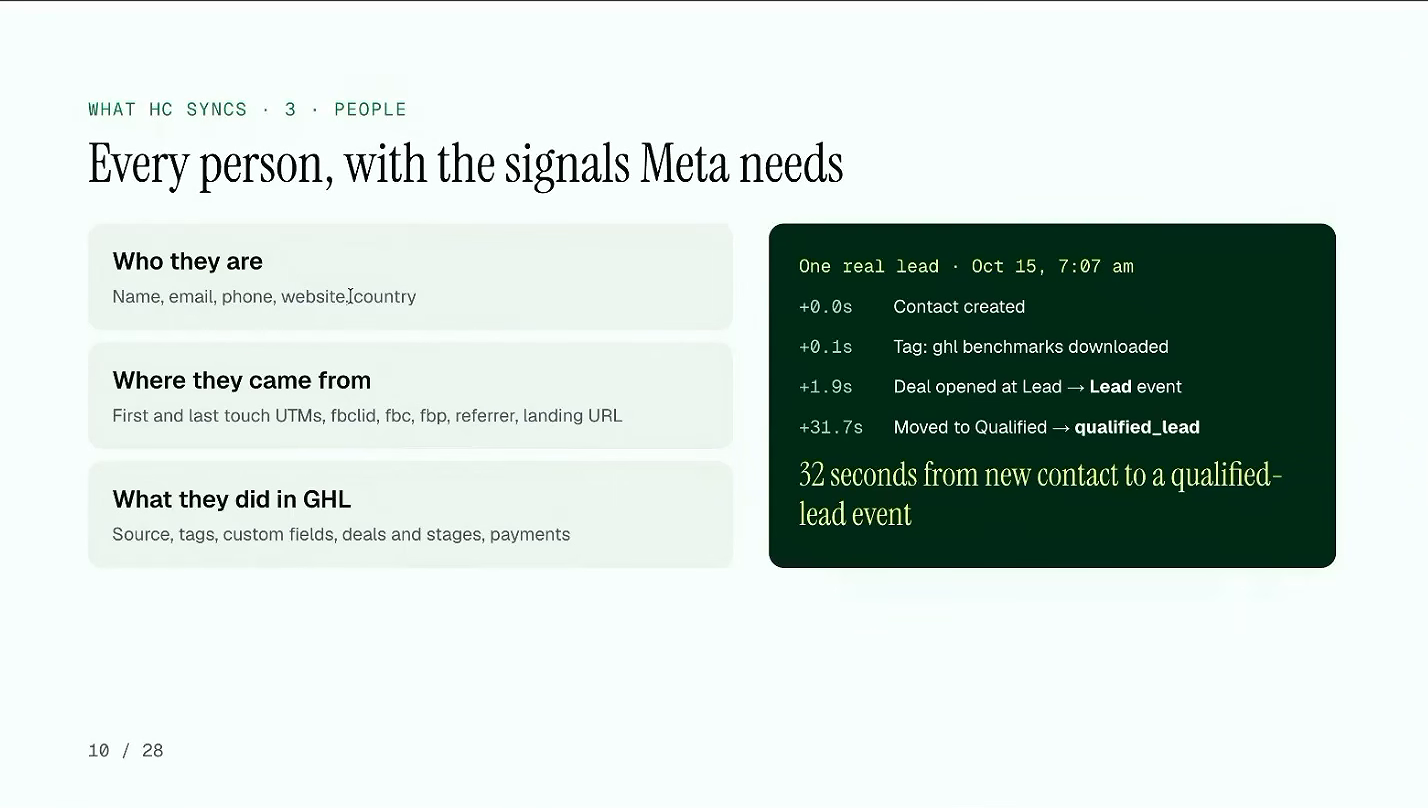
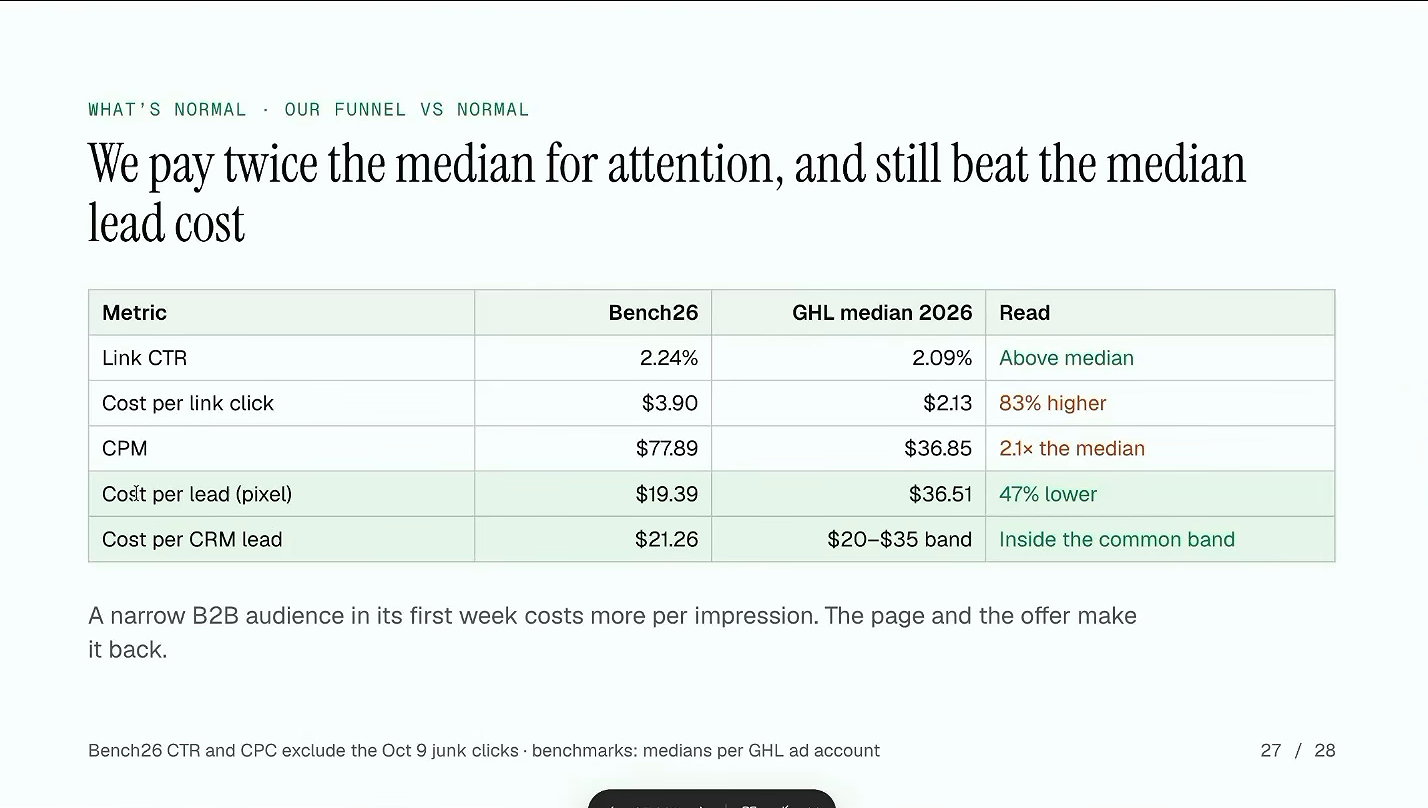
- Cost Per Lead (CPL): The median cost per lead for businesses on the platform typically falls between $20 and $35.
- The Reporting Gap: There is a median 16% discrepancy between Meta Ads Manager and CRM data. Ads Manager often over-reports conversions because it counts every "pixel fire," whereas a CRM counts unique, verified individuals.
- Link Clicks: The median cost per link click is approximately $2.13.
Reynolds’ own campaign data showed that even with a CPM and CPC significantly higher than the industry median, he was able to achieve a Cost Per Qualified Lead at the lower end of the benchmark. This success was attributed not to creative "magic," but to the precision of the tracking signal being sent to the ad platform.
AI-Driven Analytics and the Model Context Protocol (MCP)
The most technologically advanced aspect of the presentation involved the integration of AI through the Model Context Protocol (MCP). As AI tools like Claude and ChatGPT become more prevalent in business operations, the ability for these models to interact directly with marketing data is becoming a competitive advantage.
HelloConversions has introduced an MCP that allows users to query their GoHighLevel tracking data using natural language. This eliminates the need for manual dashboard construction. For example, a user can ask an AI assistant, "What is my cost per qualified lead this week compared to last week?" or "Which ad creative is generating the highest quality leads in the ‘Discovery’ pipeline stage?"
The AI then translates these plain-English questions into database queries, retrieves the data, and presents an analysis. This integration also allows for:
- Creative Analysis: Evaluating ads based on "Thumb Stop" rates and conversion efficiency rather than just vanity metrics.
- Match Quality Monitoring: Real-time tracking of how well conversion events match back to Meta’s user database.
- Automated Reporting: Pushing daily summaries of "junk clicks" versus "qualified leads" into Slack or email.
Broader Implications for the Marketing Industry
The shift toward automated, server-side tracking and AI-integrated analytics has profound implications for the agency model. Traditionally, agencies charged high retainers for the technical setup of tracking and reporting. As tools like HelloConversions democratize access to sophisticated data engineering, the value proposition for agencies is shifting from "technical setup" to "strategic interpretation."
Furthermore, the data discrepancy findings suggest that many businesses have been making budget decisions based on inflated numbers. The realization that Meta Ads Manager may be over-reporting leads by 16% or more could lead to a more conservative and disciplined approach to ad spend across the industry.
The "qualification gap"—the difference between a raw lead and a sales-qualified lead—is the space where most marketing waste occurs. By using GoHighLevel as a central hub for data filtration, businesses can ensure that their marketing spend is an investment in quality rather than a gamble on volume.
Conclusion and Future Outlook
The MeasureU session concluded with a clear directive for GoHighLevel users: the era of "set it and forget it" browser pixels is over. To remain competitive in a high-cost advertising environment, businesses must adopt a CDP-centric mindset. This involves moving away from manual data pipelines and embracing automated server-to-server solutions that provide clean, filtered signals to ad platforms.
As AI continues to lower the barrier to entry for complex data analysis, the businesses that succeed will be those that have the cleanest data foundations. The integration of MCPs and AI chat interfaces represents the next frontier in marketing, where the speed of insight becomes as important as the quality of the creative. For the modern marketer, the goal is no longer just to generate a click, but to ensure that every click is tracked, qualified, and leveraged to train the algorithms that dictate the cost of future growth.

 Siti Muinah

 Suro Senen